
Why Marseille calls Notre-Dame de la Garde its Good Mother
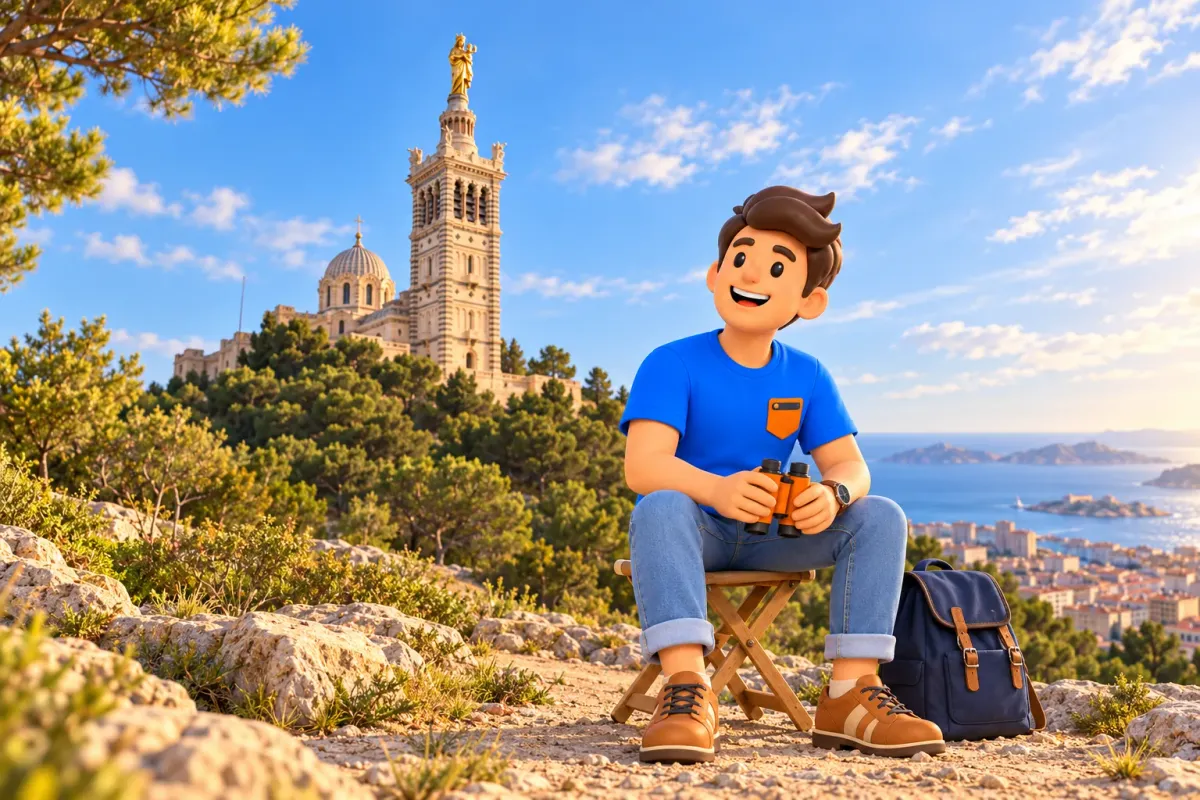
The golden figure above Marseille is familiar long before you reach its hill. It appears beyond the boats, between buildings and over the everyday movement of the city. Notre-Dame de la Garde is its formal name; la Bonne Mère, the Good Mother, is the affectionate name that tells you something more about the relationship.
The nickname expresses a protective role associated with the Virgin Mary, especially among sailors, fishermen and the people of Marseille. It is rooted in devotion, then carried into the city’s wider identity. Understanding that relationship changes a visit: the basilica becomes more than a panorama to photograph. Look for the connection between a distant landmark, personal offerings and a place where worship continues.
A protective name, expressed with affection
Bonne Mère is not another architect’s title for the building. It gives a human warmth to the idea of Notre-Dame watching over Marseille. The motherly language makes a great landmark feel close: something seen above the city can also belong to personal concerns. For a believer, this relationship has a spiritual meaning. A visitor with different beliefs can recognise the attachment without adopting those beliefs or treating every inhabitant as religious. The useful starting point is to listen to the nickname as an expression of affection and protection, rather than search for a single dramatic incident that must explain it.
You do not need an invented founding miracle or an exact day when the whole city supposedly agreed on a name. The association becomes clearer through the place itself: the elevated silhouette, the maritime setting and objects offered in thanks. Each gives the protective idea a different scale, from a person’s private experience to a view shared across the city. Start the visit with a simple question: why has this figure remained meaningful to people looking up from below? That question is more rewarding than treating the basilica as merely the last point in a list of viewpoints.
Let RoadMe work out a complete personal Marseille trip around your interests, days and pace. The app makes it much more convenient and effective to give meaningful visits, neighbourhood discoveries and time to look the right place across the whole journey.
A city of departures looking towards its hill
Marseille’s harbour makes the maritime link easy to understand. A journey across water has a departure, people left behind and the hope of return. In a religious tradition, asking for protection and expressing gratitude after danger naturally acquire a place. The basilica’s association with sailors and fishermen belongs to this world. That is not a claim that every voyage followed the same ritual, or that the monument acted as an official lighthouse. It is a way to see why protection could become an intimate idea in a city whose life has long been connected to the sea.
Look at the hill from the harbour before thinking about looking down from it. That reversal makes the relationship visible: the building is first a presence within Marseille, then somewhere you can visit. Its silhouette appears from many places, although buildings, weather and position change what you see. Our two-hour Old Port walk offers one way to spend time with the harbour setting. You do not need to join the port and the hill in one continuous walk for the connection to make sense. A distant glimpse on one day can become the beginning of a more attentive visit on another.
The small boats speak of gratitude
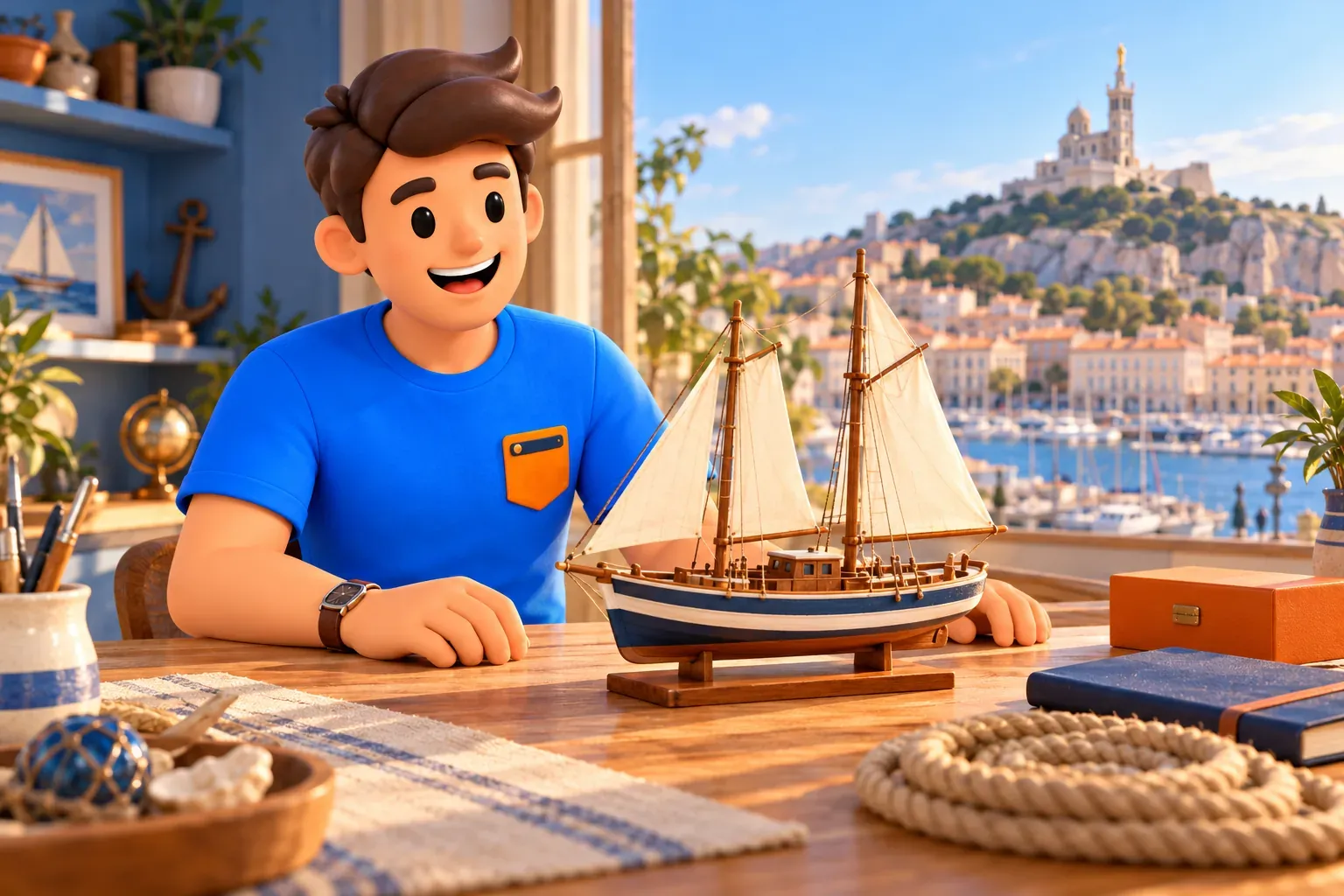
Inside the sanctuary, ex-votos give the protective relationship a personal form. In Christian tradition, an ex-voto is an offering of thanks for a grace received. A ship model is therefore more than nautical decoration; a painting or plaque can also carry a particular experience of danger, relief or gratitude. The collection is not confined to the sea, and not every maritime offering needs to represent a shipwreck. Let the diversity matter. The same place can hold a monumental architectural story and evidence of individual concerns that would otherwise disappear behind it. These objects ask for attention rather than a rapid glance upwards.
Choose a small number of visible objects instead of trying to inventory the whole collection. Notice the difference between a vessel carefully made in miniature and a written expression of thanks, without guessing a donor’s story from appearance alone. Read available information when you want to know a specific history. The sanctuary rotates objects and keeps some in reserve, so a photograph does not guarantee that the same piece is on view. Our illustration uses an invented ship model in a fictional room to evoke the maritime theme; it is not a reproduction of an identified offering or an actual museum interior.
An old sanctuary and a nineteenth-century basilica
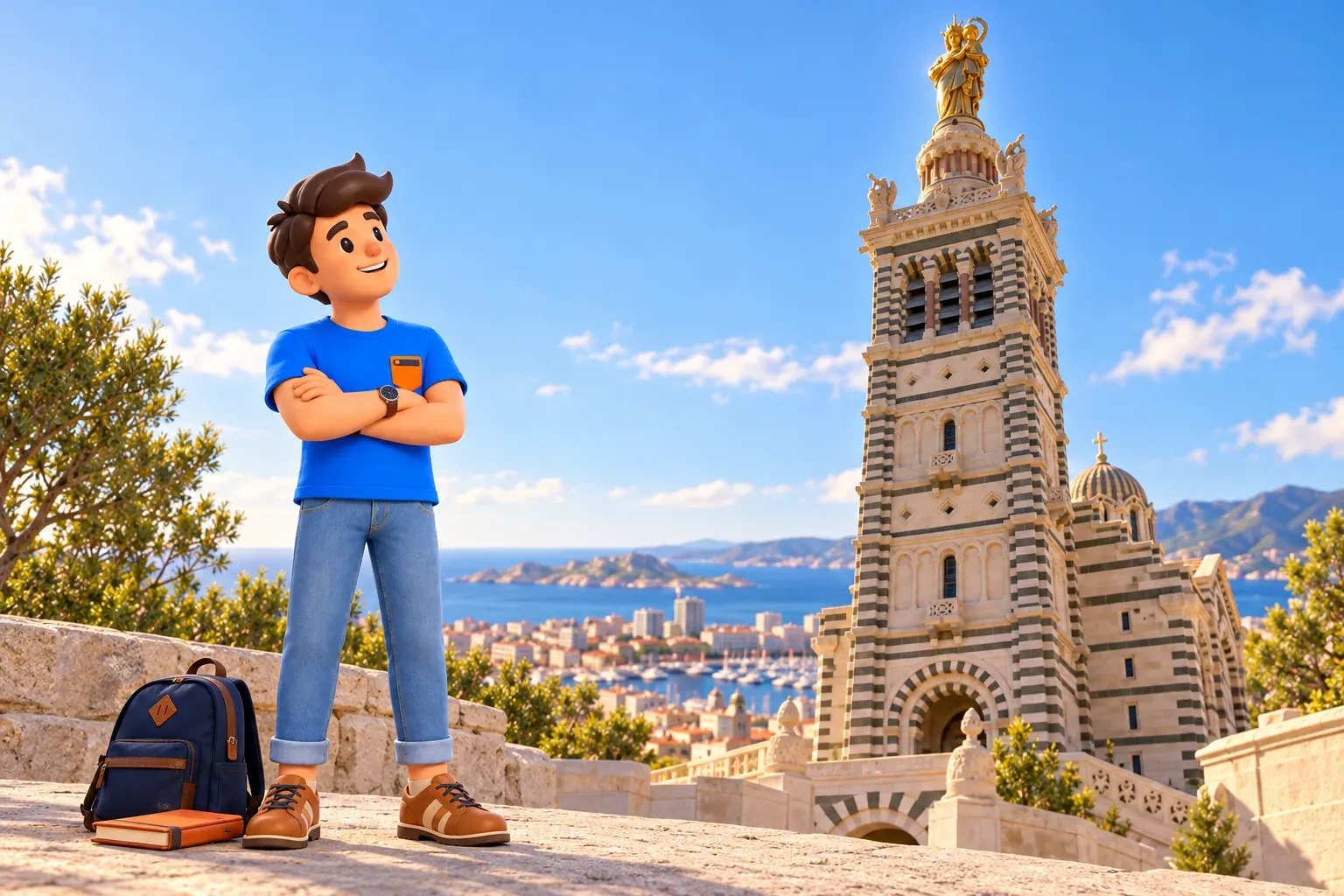
The attachment to this hill is older than the building seen today. The sanctuary traces its origins to a chapel dedicated to the Virgin in 1214, which became a place of pilgrimage for sailors and local people. The distinction matters: the long history belongs to the site and its devotion, while the present basilica belongs to a later architectural project. An old religious association does not make every wall medieval. Keeping those layers separate helps the place feel more interesting, because the familiar silhouette becomes a transformation of an earlier sanctuary rather than a building that has supposedly stood unchanged for eight centuries.
In the nineteenth century, the project of a larger church was entrusted to Henri-Jacques Espérandieu. The new church was consecrated on 5 June 1864. The monumental gilded Virgin and Child above the bell tower followed in 1870, designed by Eugène Lequesne and made by Christofle in Paris. Those few milestones are enough for an introductory visit. You can recognise that the chapel tradition, the large church and the crowning figure belong to different moments without memorising a complete chronology. The museum at the sanctuary offers a separate way to explore more of that history if it is a subject you want to give additional time.
Read the architecture at two different scales
From outside, alternating stone colours and the square bell tower make the basilica recognisable even before the gold at the top catches the light. Its Romanesque-Byzantine language brings together domes, polychrome stonework and richly decorated surfaces. Look at one detail, then step back mentally to the whole silhouette. The contrast between patterned architecture and a small figure high above it explains some of the landmark’s visual strength. You do not have to identify every decorative element for the building to become more than a distant white shape. The exterior can reward a little sustained looking before you turn to the city view.
The sanctuary has a lower church, the vaulted crypt, and an upper church with mosaics and coloured marble. They are distinct experiences, not two names for the same hall. If access permits, notice how scale, decoration and atmosphere change, while remembering that this is an active place of worship. The statue’s existence does not make its interior or the view through its eyes a public attraction: that access is closed to visitors. Ordinary sanctuary visiting, its museum and special accompanied activities also have separate conditions. A rewarding first visit can stay with the accessible church and exterior rather than assume every unusual space belongs in it.
A familiar presence that remains a living place
A city symbol can mean different things to different people. Someone may come to pray; someone else may recognise a childhood view, appreciate the building or look for a clearer understanding of Marseille. These relationships need not be flattened into the claim that everybody shares one faith. The affectionate nickname can circulate more widely than an individual act of devotion. That is part of what makes the Bonne Mère interesting to a traveller: a monument can be unmistakably religious while also helping people describe the place they call home. Its position in the skyline and its personal meanings work together.
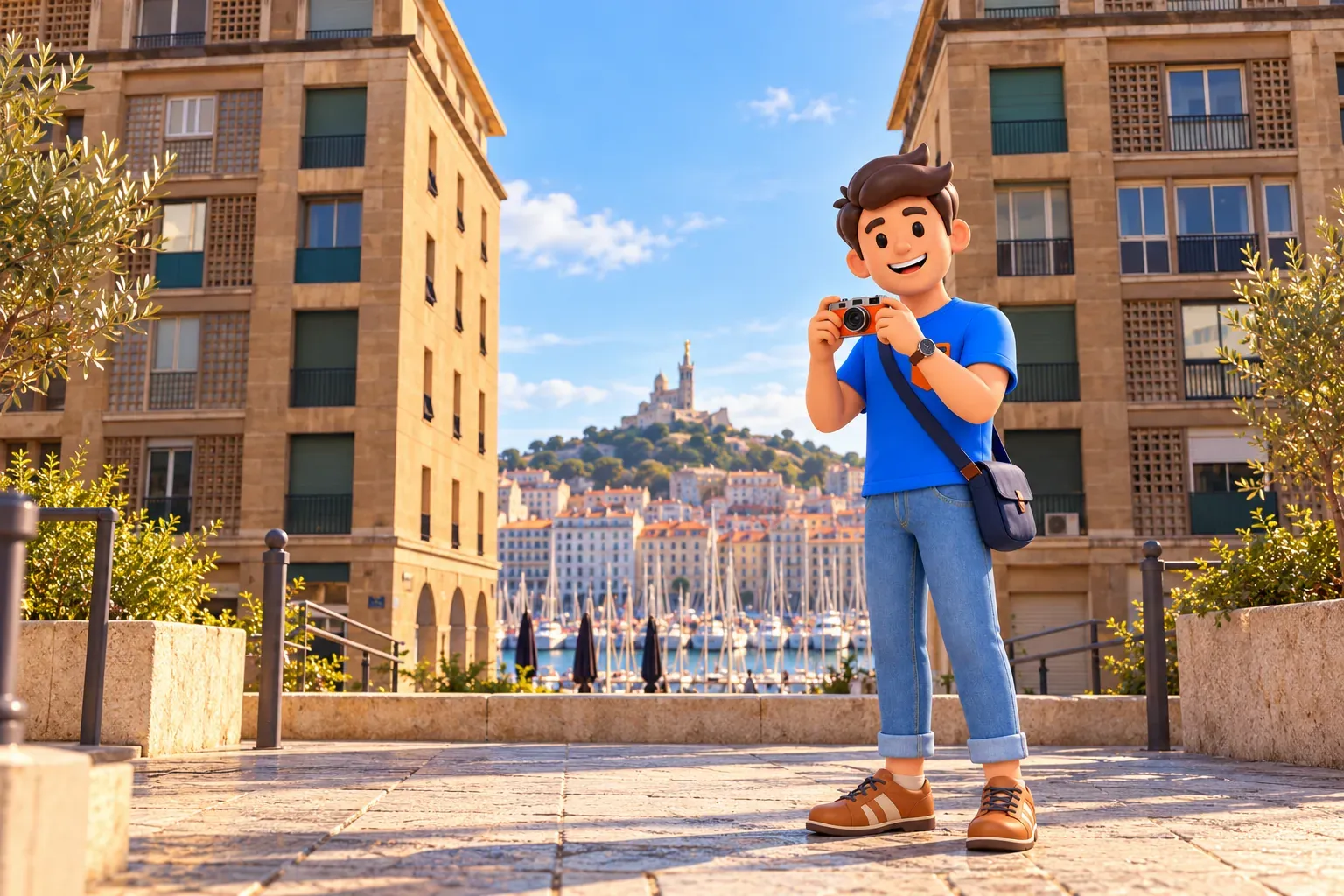
This relationship is maintained, not simply inherited. The sanctuary describes the regilding of the monumental statue in 2025, with a renewed figure shown in 2026. The bright surface is also the result of care, materials and restoration work. Look at it with that thought rather than assuming an old landmark has no present life beyond tourism. The distant harbour view in our illustration uses a staged pedestrian foreground, not an exact street approach. What matters to the story is the small, recognisable silhouette among ordinary buildings: a way for the city’s daily life and its hilltop symbol to occupy the same view.
RoadMe creates a personal plan for your entire trip, connecting the experiences that matter to you. Use the app to arrange a richer Marseille stay around your interests, with a rhythm that leaves room to enjoy its places rather than just collect them.
Make room for one attentive visit
Choose whether this visit is mainly about architecture, the maritime offerings, worship or the view. You can combine an outside look with a selected part of the sanctuary without making every possible activity compulsory. Give the approach, arrival and return enough space, especially if you intend to walk uphill. Our walk through the Puget garden towards Notre-Dame de la Garde explains a separate outing with climbing. It is an option to consider for suitable conditions and energy, not a requirement for understanding the Bonne Mère. A different way of reaching the site can leave more attention for the place itself and the people travelling with you.
Check current access and transport before leaving. Interior sightseeing is limited during services and sometimes during special events; follow local instructions and keep the quiet character of the space. The sanctuary asks for respectful dress, including on its esplanades. If you choose a special guided activity or the museum, verify its actual arrangements instead of assuming ordinary entry includes everything. Our Marseille advance-planning guide explains those distinctions more broadly. Finish with one remembered detail, whether a small boat, a patterned arch or the golden silhouette. You will have a clearer answer to why Marseille says Good Mother, without turning a living sanctuary into an exhaustive checklist.


