
Walk to Notre-Dame de la Garde through the Puget garden
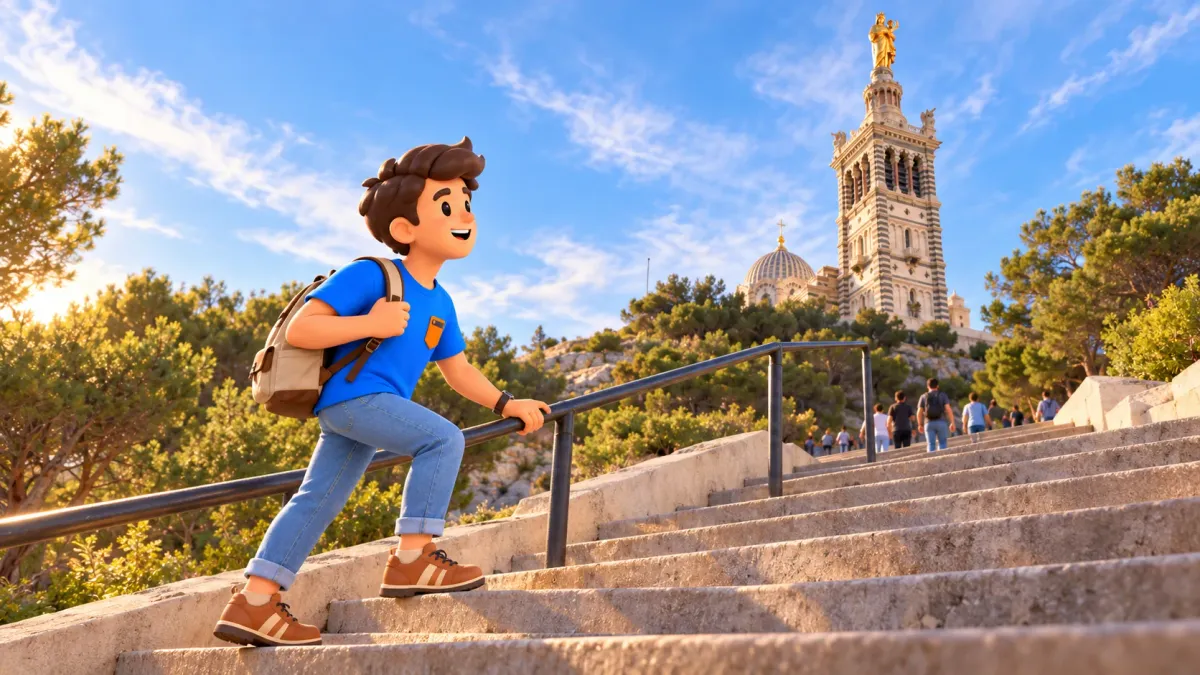
For a walk that makes the ascent part of the visit, begin around cours Pierre-Puget, explore the Jardin de la Colline Puget and continue uphill through public streets towards Notre-Dame de la Garde. Allow roughly two and a half to three hours to reach and visit the sanctuary, with rests included. Plan the descent or return transport separately.
This is a hillside city walk, rather than a level garden stroll with a church immediately beyond the gate. The garden is one stage of the climb; streets and the final sanctuary approach still follow. Choose it when the walking itself appeals to you. If reaching the basilica is the main aim and slopes would spoil the visit, use transport for the ascent and give the garden its own shorter outing.
Decide what you want from the climb
The simplest structure is a gentle start near cours Pierre-Puget, a garden section, a pause before continuing through the neighbourhood and a proper visit at the top. The word gentle describes your chosen pace, not the terrain. Expect changes of level and possible stairs. Start with people’s actual comfort rather than the distance between the two attraction markers; that distance does not describe the complete pedestrian route.
As an editorial time budget, reserve about fifteen minutes to find the appropriate open garden entrance, twenty-five to thirty-five in the garden, thirty to forty-five for the remaining uphill route and forty-five to sixty at the sanctuary. Keep another fifteen to twenty minutes flexible for rests and crossings. These are estimates, not measured journey times. A longer stop or slower walker can make the outing take more than three hours.
Make one decision before leaving: will you walk back, use transport, or decide at the top after checking the available connections? You can keep that choice flexible, but keep enough time and energy for it. The route ends at Notre-Dame de la Garde; a return to the harbour does not happen automatically within the same time allowance. Avoid planning a fixed appointment immediately after the estimated finish.
Let RoadMe work out a personal itinerary around your interests, time and preferred pace: it is much more convenient than assembling the garden, hill visit and rest of the day separately. Try the app to make this Marseille outing part of a trip planned for you.
Start near cours Pierre-Puget, south of the central harbour
Use cours Pierre-Puget as your meeting area on the southern side of the centre. Your journey there from accommodation or the Old Port is separate from the hill walk. Arrive with water, comfortable shoes and a light bag, and take a moment to identify the garden entrance you will actually use. The park has several approaches, with different relationships to streets and stairs. An open gate is more useful than the nearest point on a map.
The garden is associated with the city’s early public promenades: the project began in the nineteenth century as an extension of the promenade on the former southern ramparts. That context explains why it is interesting in its own right. It is a landscaped piece of the hillside between city and sanctuary, rather than a purpose-built shortcut to the basilica. Give it attention before looking for the fastest possible exit.
Before entering, check the posted closing time and any temporary notice. The garden has seasonal hours and can close during weather alerts. If the gate is shut, do not try another entrance simply to get around a closure. Decide whether to postpone this particular walk or use a suitable public-street route to the sanctuary. A closed garden changes the character of the proposal; it should not become an invitation to improvise through restricted space.
In the Puget garden: climb in small, worthwhile stages
Once inside, follow open public paths and let the changes of level set the rhythm. The garden’s slope is part of its character. Instead of trying to visit every branch of the paths, choose a progression towards an appropriate open exit for the onward route. Pause on a level section when you want to look around. Do not stop a group across steps or use planted slopes as a way to save distance.
Notice how trees, paths and glimpses of the city make the ascent feel different from an ordinary pavement climb. A break here has a purpose beyond catching your breath: you begin to see how Marseille occupies hills close to the water. The garden’s own views are not a guarantee of a clear panorama at every bench. Look for the relationships visible from where you are, rather than hunting for an exact photograph.
Beyond the garden: the streets are a separate uphill section
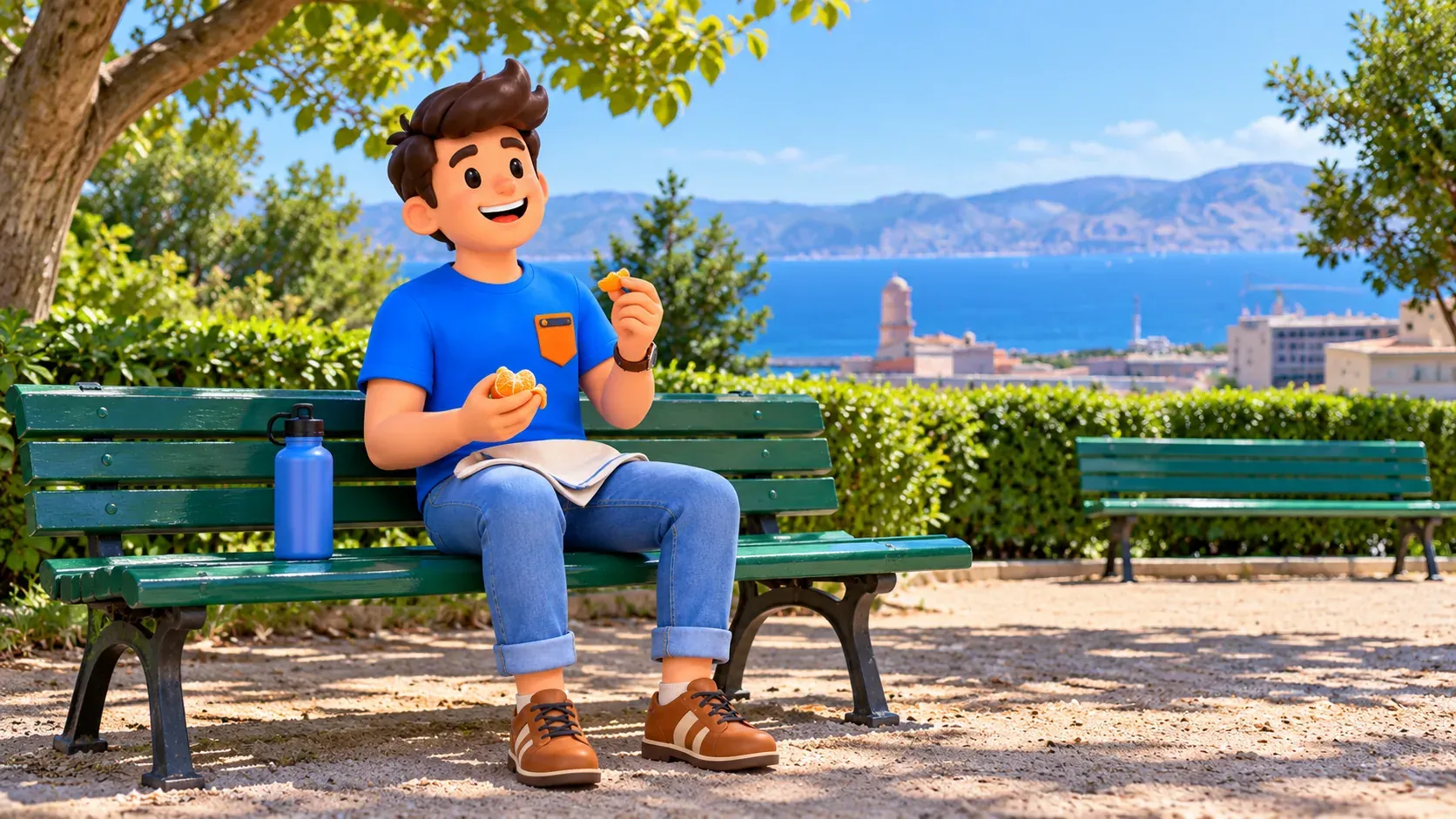
Leave through an appropriate permitted exit and reconnect with the public street network towards the sanctuary. The rue Vauvenargues side is one of the garden’s listed approaches, but the exit you can use and the route that suits you must be checked locally. Do not imagine a single continuous garden path all the way to the basilica. Read the next part of the journey before setting off again, particularly if you wish to limit stairways.
Keep the direction towards Notre-Dame de la Garde and use a current pedestrian route to its public approach around rue Fort-du-Sanctuaire. A clear route on a map still needs attention at junctions and crossings. Pavements, slopes and steps create a different experience from the park paths. There is no advantage in choosing an unfamiliar staircase solely because it looks shorter. A more comfortable permitted connection is a better fit for a leisurely visit.
Reserve the thirty-to-forty-five-minute block for this remaining ascent with room to slow down. If you need a rest, choose an appropriate place before you feel pressed to continue. Let faster walkers wait at an agreed open space rather than disappearing around several corners. If the climb has stopped being enjoyable, changing to a suitable transport option is a reasonable change of plan, with its own approach and waiting time.
The final approach: arrive with enough attention left
As the basilica becomes the immediate destination, keep something in reserve for the last approach and movement within the site. Seeing the building above you does not mean the climb is already over. Follow the permitted entrances and current directions. For specific mobility needs, confirm the usable approach and internal access with the sanctuary before the day; this itinerary does not certify a continuous accessible route through garden, streets and sanctuary.
At a suitable level resting point, put away the walking distractions before beginning the visit. A little water and a few quiet minutes can make the difference between merely reaching the hill and actually enjoying it. Keep clear of entrances and moving visitors. The site is a working sanctuary as well as a destination for views, so access arrangements and the atmosphere can differ from those of a public park.
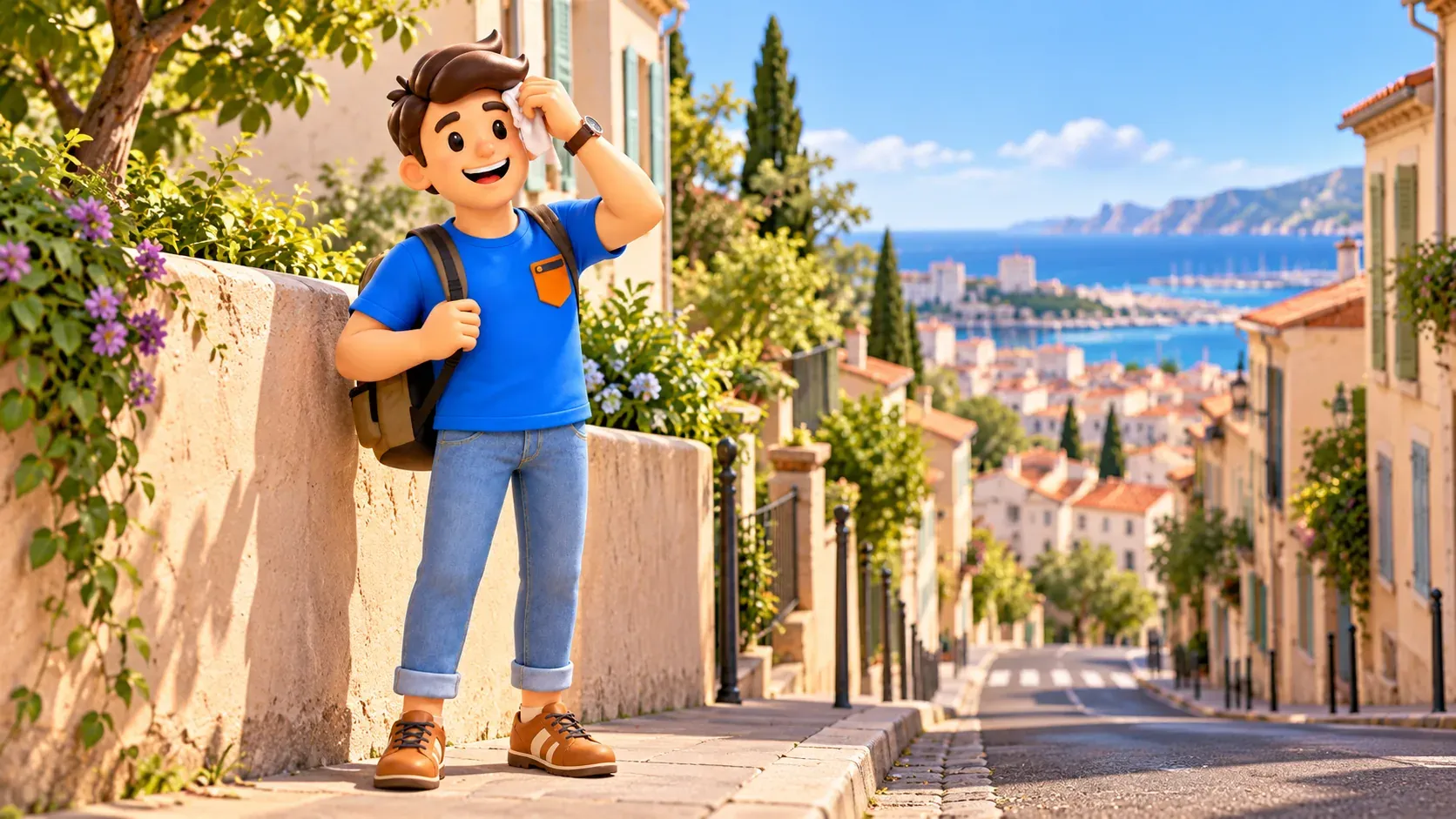
The striped stonework, square tower and figure above it make the basilica recognisable from across Marseille. Having approached through the hillside gives that familiar silhouette a different scale. Look at the building before taking out the camera. Choose a viewpoint where you can stand safely without edging towards barriers or blocking stairs. The best part of the arrival need not be the most dramatic possible photograph.
At Notre-Dame de la Garde: views and meaning
Give the ordinary sanctuary visit and surrounding permitted viewpoints about forty-five minutes to an hour, adapting to the day’s access and your interest. The place known affectionately as the Bonne Mère has a long relationship with local people and sailors. Its history began with a hilltop chapel before the present basilica. This short context makes the maritime setting meaningful without turning the walk into a detailed architectural history lesson.
Inside, notice the devotional atmosphere as well as the decoration, and remain attentive to worship. The opening of the sanctuary does not mean unrestricted sightseeing during every celebration. Check the current visitor arrangements and respect the areas reserved for prayer. An ordinary public visit is separate from the museum, special guided visits, interior balconies or restricted terraces. Those options require their own conditions and extra time; they are not included automatically in this walk.
Outside, use the view to reconnect the city below with the effort of the ascent. Identify the harbour area and the broader pattern of ridges, buildings and sea rather than trying to name every distant feature. If visibility is poor, the building and the journey still have value. Avoid extending exposed viewpoints in uncomfortable weather merely to justify the climb. A shorter thoughtful visit can be more satisfying than waiting for an ideal panorama that may not appear.
Choose your way down before adding another attraction
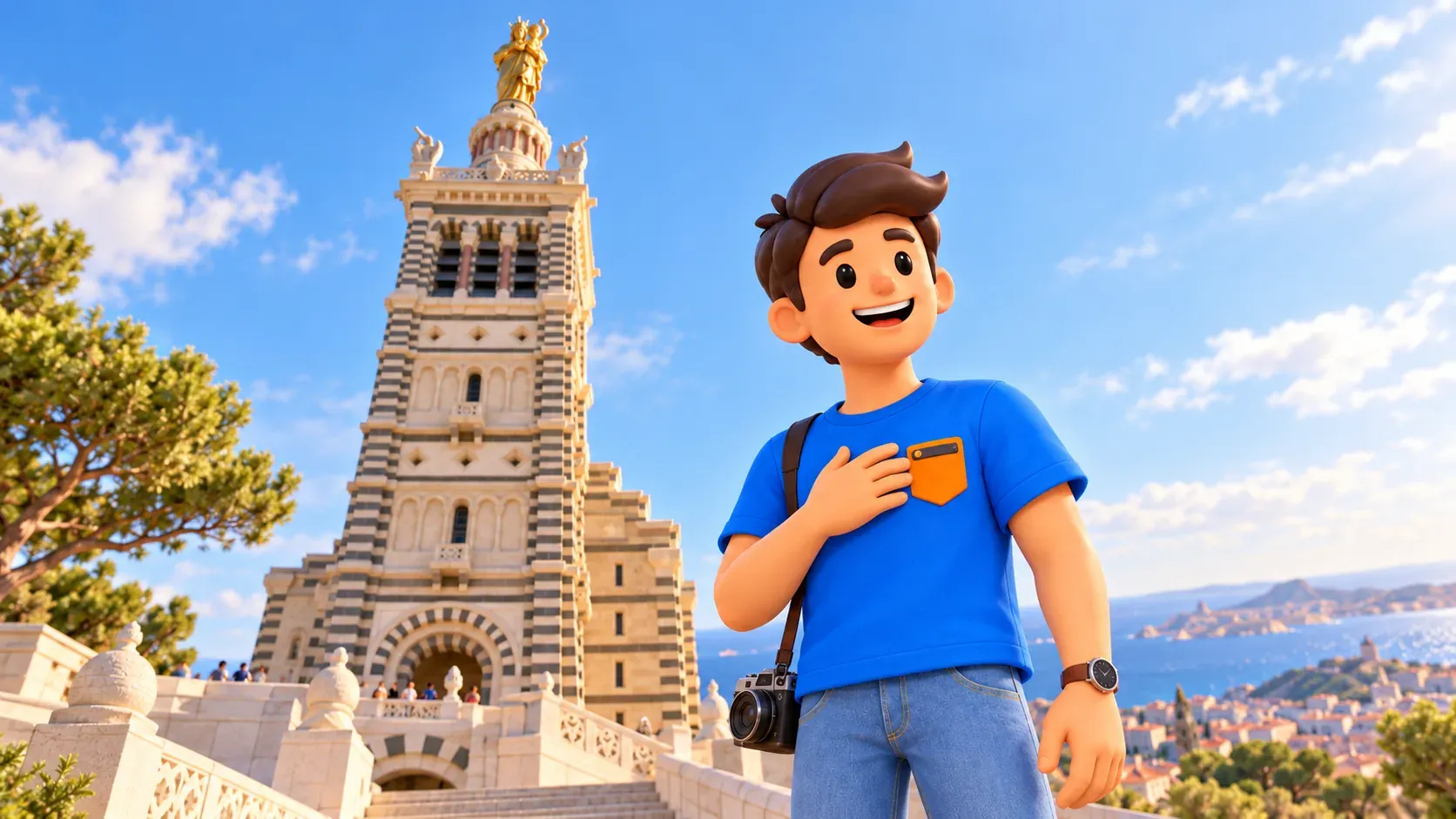
At the top, decide what the next part of the day should feel like. Walking down is still walking: slopes and steps can be tiring, especially after a long ascent. If you return through the garden, its gates must still be open and the route appropriate for your party. If you choose another public-street descent, treat it as a new leg with its own time, rather than an effortless conclusion to the outing.
For reduced effort, use a suitable current transport connection for one direction. Check RTM’s information for your travel date, stop, direction and any disruption; do not infer a return departure from a vehicle you saw going uphill. Allow time to reach the stop and wait. This article does not fix a bus number, fare or frequency, and transport to the sanctuary does not guarantee that every part of the remaining visit is without steps.
You can also separate the two interests completely: visit the garden on a short central walk and reach the basilica by transport on another occasion. That makes sense when steep walking is the obstacle, rather than lack of interest. If both fit comfortably today, finish the hill visit before deciding on lunch or another neighbourhood. The garden and sanctuary already provide a coherent outing, without an obligatory coastal extension.
RoadMe makes the wider trip easier to organise by creating a personal programme around what you want to experience. Let the app plan the balance between neighbourhood walks, cultural visits and time by the sea.
Fit weather, opening arrangements and your companions into the plan
Choose the start time around the conditions you will actually meet. In warm weather, an earlier ascent can be more comfortable, provided the garden and sanctuary are open. Keep sun protection and water with you. In rain, allow additional care on steep surfaces; strong wind or an official weather closure may justify postponing the garden route. Neither a pleasant forecast nor a general opening schedule overrides a notice at the entrance.
For families or mixed walking abilities, agree on rest points and a decision point in the garden. A play stop should be real time, not something squeezed into the margin needed for the final climb. If someone needs a route without stairs or steep slopes, investigate a different approach before leaving. The presence of accessible facilities at an attraction does not establish the accessibility of the entire route between two attractions.


