
Jeongdong in Two Hours: Stone Walls, Brick Facades and Seoul History

For a short walk through Seoul's historic centre, begin at Daehanmun, follow the Deoksugung wall towards the art museum, then turn towards Chungdong First Methodist Church and continue to Jungmyeongjeon and the park with the former Russian legation tower. In around two hours, the area reveals palace, religious, diplomatic and contemporary urban architecture within a compact district.
This is an exterior walk with short stops. A full palace visit, museum exhibition or theatre performance needs additional time. Jeongdong Park is the finish; add the journey back to your station or accommodation separately.
Give two hours a clear shape
Choose daylight, comfortable shoes and a relaxed pace. The idea is to follow changes of scale: from substantial palace gates to a street beside the wall, individual public buildings and a small park. Every stop does not need to become a complete interior tour.
Fitting this walk into a trip is much more convenient with RoadMe: the app develops a personal plan around your interests, dates and pace. Choose history, architecture or art as a priority to make the outing work more effectively with your other Seoul days.
| Block | Time guide | What it includes |
|---|---|---|
| Daehanmun and the wall | About 25 minutes | Starting point and first observations |
| Museum facade and church | About 30 minutes | Approaches and exterior viewing |
| Jungmyeongjeon and park | About 35 minutes | Historical context and finish |
| Reserve | About 30 minutes | Pause, crossings and personal pace |
This is an editorial allocation of two hours, not a measured journey. Shorten optional approaches if access is restricted or your pace is slower. If returning to the station must fit the same two hours, finish earlier, for example after Jungmyeongjeon.
Begin at Daehanmun: palace meets city street
The starting point is Deoksugung's principal gate near City Hall station. Identify the entrance, then choose somewhere to stop without obstructing pedestrians. Notice how closely the historic residence approaches a major contemporary intersection.
Deoksugung is associated with the Korean Empire proclaimed in 1897. The palace, then known as Gyeongungung, became the imperial residence. Traditional court organisation and Western architectural forms meet in its history. That is enough context for this outing; exploring its halls remains a separate programme.
Look at the gate's layered roof, timber supports and transition from stone base to painted details. Avoid trying to inspect the entire palace through the entrance. From outside, the useful subject is the boundary between residence and street: the walk continues along it.
Follow the wall and the changing street
From the gate, choose the public street along the southern side of the wall towards the museum approach and Jeongdong-gil. Curves, roof tiles, trees and the urban background change the scene over a short distance. Stop where others still have room to pass.
The road itself becomes the experience. Compare larger foundation stones, smaller elements and the dark roofline. Look in the opposite direction too: contemporary facades and everyday movement show that the historic setting continues to function within a large city.
The name Stonewall Walkway does not promise unrestricted access to every part of the perimeter. Individual connecting passages can have their own arrangements. Public streets are enough for this short route; completing a full circuit of the palace is unnecessary.

SeMA: a facade with a new purpose
Pause at the approach to Seoul Museum of Art's Seosomun Main Branch. Its architecture combines the former Supreme Court facade with a contemporary museum building. It offers a useful example of preserving a visible piece of the past while giving a site a new public function.
For the short version, look at the entrance composition and accessible exterior space, then return towards the main street. The museum approach may involve an incline. With mobility requirements, identify a suitable entrance beforehand rather than assuming a visible staircase is the only option.
If an exhibition interests you, change the day's format. Give the museum a separate block and check its calendar and last admission. A two-hour exterior walk and a meaningful gallery visit are different programmes. Squeezing them into the original time usually reduces attention to both.
A brick church introduces another architectural language
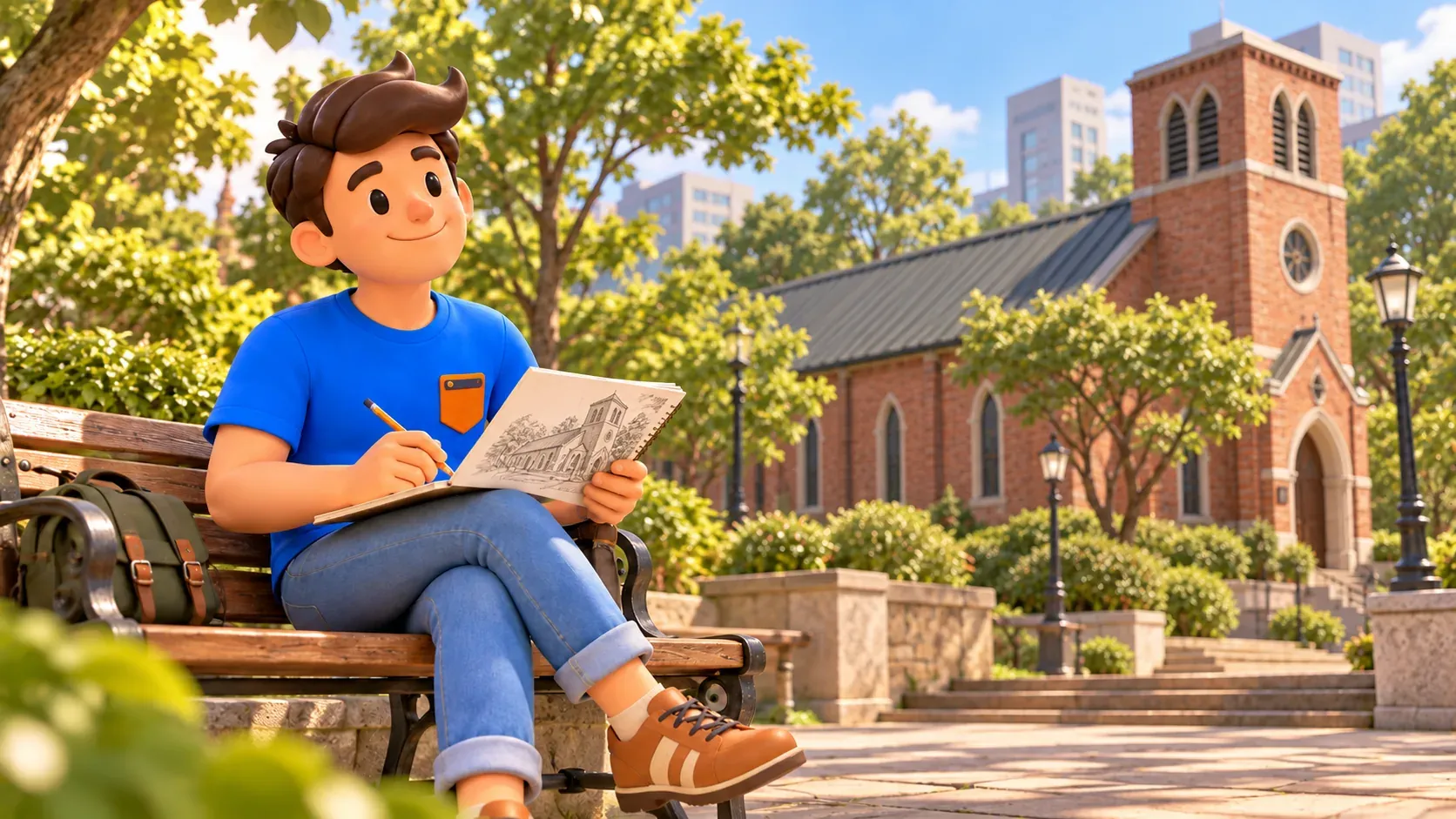
Continue along Jeongdong-gil towards Chungdong First Methodist Church. After the palace wall, red brick and window shapes provide a different visual vocabulary. Find a position for looking at the facade without entering service passages or blocking the entrance.
The congregation's history began in 1885 and is associated with missionary Henry Appenzeller. Keep the historical point modest: religious, educational and diplomatic institutions helped change the capital's appearance around the turn of the twentieth century.
This remains an active church. An open door does not automatically mean sightseeing access, and worship should not be treated as a visitor performance. Exterior viewing preserves the walk's value whether entry is possible on your date or not.
Jungmyeongjeon: a small building with substantial history
Next choose the permitted approach towards Jungmyeongjeon near the theatre part of the district. The building belongs to Deoksugung's history although it stands separately from the main palace enclosure. Historic residence and present-day boundary do not always coincide.
Jungmyeongjeon is associated with the events of 1905 and the Eulsa agreement that deprived Korea of an independent foreign policy. That context changes how a relatively modest brick building is understood. A place's significance depends on the decisions made there as well as scale or decoration.
In the short version, an exterior introduction and a pause to understand the palace connection are sufficient. If access to the grounds is closed, do not search for a way through neighbouring courtyards. Continue along public streets and plan a separate visit around a suitable calendar.
Jeongdong Park and the former legation tower
The final block leads towards Jeongdong Park and the surviving tower of the former Russian legation. Allow for an uphill approach and use an actual public route. Keeping time in reserve here is more helpful than an extra unplanned stop earlier.
Gojong took refuge in the Russian legation in 1896. The complex later suffered substantial destruction, and its surviving tower recalls the late nineteenth-century diplomatic district. Understand it as a fragment of a larger ensemble, rather than an intact surviving diplomatic compound.
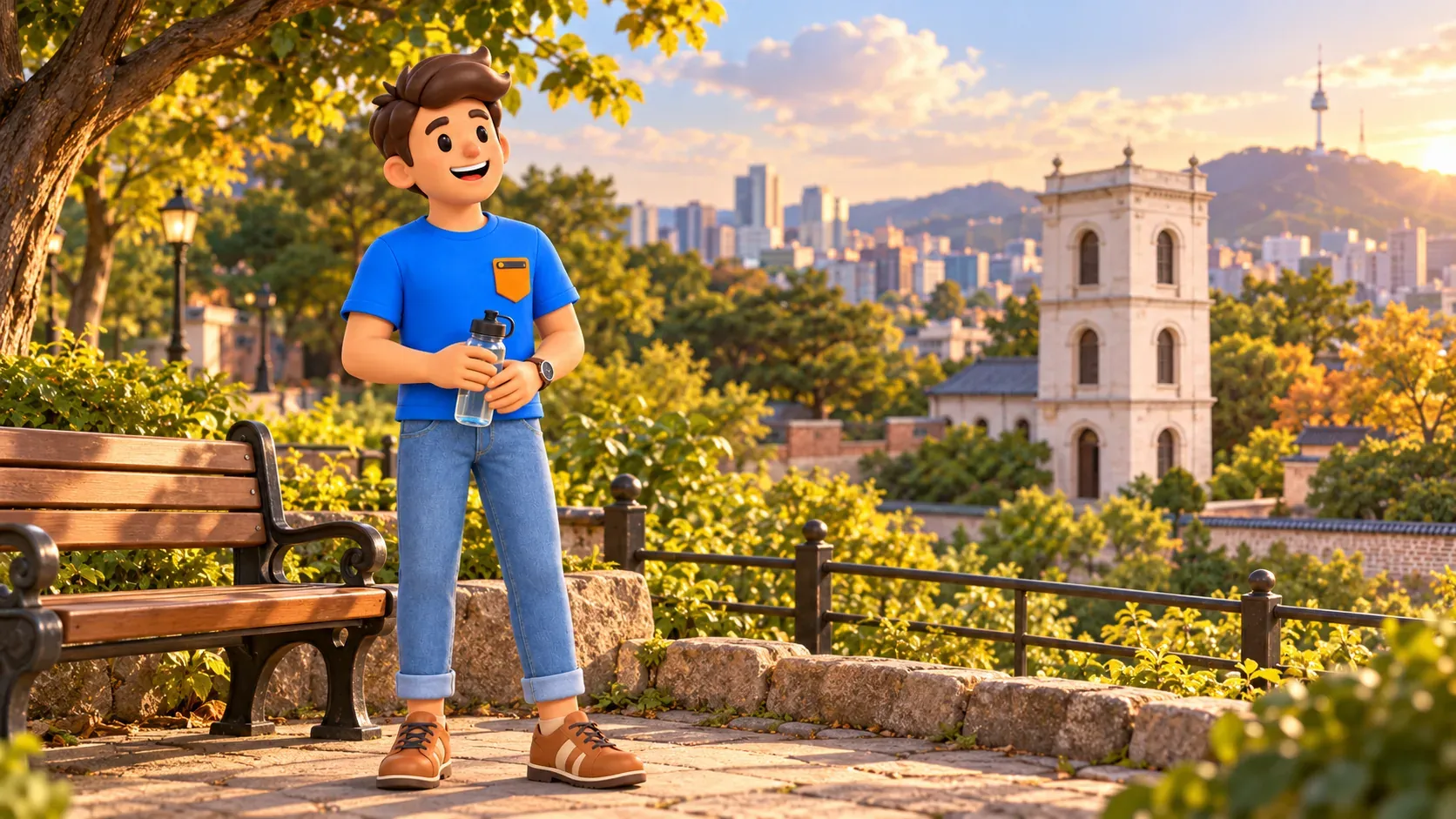
Look at the tower's position among trees and neighbouring buildings. End with a brief pause to connect what you have seen: palace boundary, museum facade, church and diplomatic heritage reveal different aspects of one small area. Calculate the journey to your next destination separately.
Choose one addition when you have more time
The clearest extension is a full Deoksugung visit. In that case, begin inside the palace before joining the street beside the wall. Add time for admission, halls, courts and rest. The original two-hour budget cannot absorb that experience unchanged.
An exhibition at SeMA is another option. If contemporary art matters most, make it the principal visit and reduce the street section to the wall and church. This gives the outing a clear subject without depending on completing every stop.
Jeongdong Observatory can provide an elevated view over Deoksugung, but it requires a separate return towards the municipal building and confirmation of access arrangements. It is not the compulsory finish of this short route. Likewise, treat a Jeongdong theatre performance as its own activity with a fixed starting time.
When you want to add a palace, exhibition or evening activity, RoadMe makes the trip easier to organise: the app creates a personal plan around your preferences and pace. Interesting additions receive their own time and fit more comfortably into the wider itinerary.
Choose daylight and adjust to conditions
Daylight makes materials and the spaces between buildings easier to read. Autumn trees add colour, but the walk does not depend on a particular foliage week. In other seasons, architecture and history remain its subject while clothing, pauses and outdoor conditions change.
In rain, shorten exterior viewing in favour of a specifically chosen open exhibition. Do not assume the museum is a guaranteed spontaneous shelter without checking. With children, look for changes between stone, timber, brick and glass. This provides a simple shared activity without a lengthy lecture.
Respect normal access boundaries around schools, churches and diplomatic buildings. Attractive gates do not all lead to public courtyards. These are working city streets: let people pass, photograph without obstruction and stay off the roadway when looking for a clear composition.
Fit Jeongdong into the rest of Seoul
This route suits a calm first walk after travelling, an available morning or another visit to a familiar centre. After a long flight, shorten it and leave more rest. Two hours is an opportunity, not an obligation to complete every part immediately.
For a longer trip, use the three-day plan with a palace, art and the Hangang, giving Jeongdong a separate short block. On a return visit, compare the neighbourhood ideas beyond the main sights. A good Jeongdong walk reveals connections between periods while leaving room for the rest of the city.
Before setting out, save the Korean names of your selected stops and the public approaches you intend to use. Distinguish a building's visitor entrance from a general map pin. This small preparation makes the walk easier without turning it into a rigid timetable.
If you only have a short gap before another appointment, choose the first section and finish near the museum approach or church. The route still has a coherent story: the transition from palace wall to another type of civic architecture. Its value does not depend on reaching the last tower.


