
Following Hürrem Sultan: Haseki, her mausoleum and a historic hammam
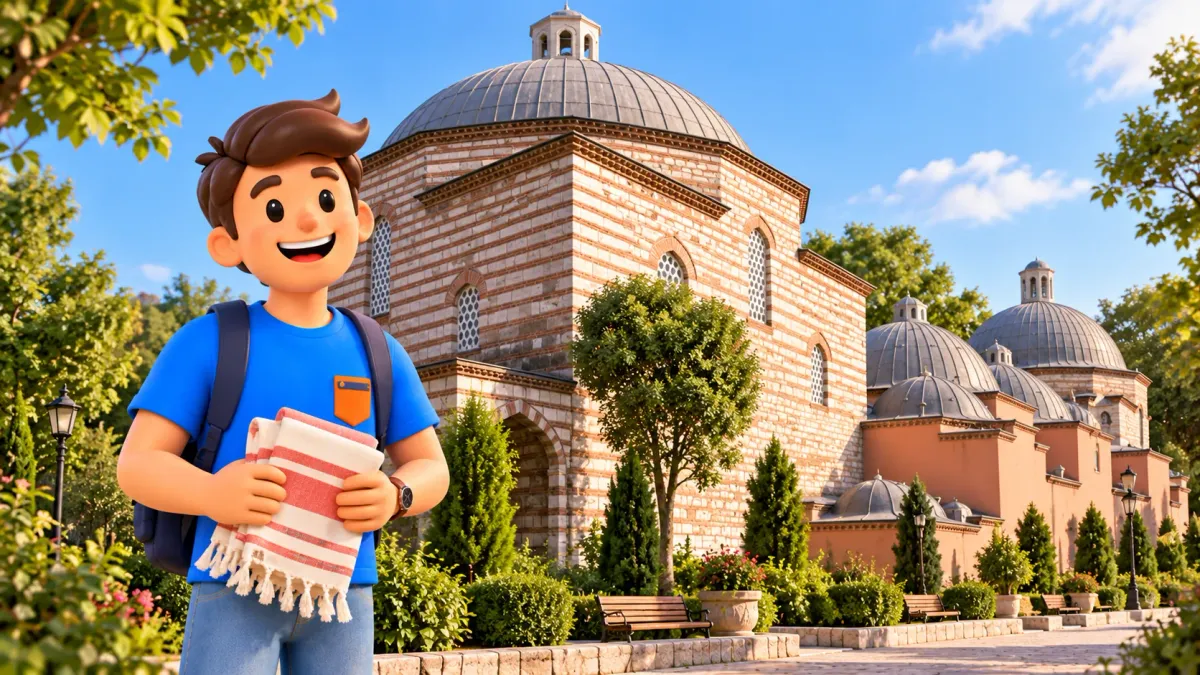
A day following Hürrem Sultan becomes more interesting when the city takes priority over palace intrigue. The Haseki complex introduces charitable patronage, her mausoleum at Süleymaniye brings a quieter subject of remembrance, and the Sultanahmet hammam connects historic public architecture with a working business today. These three places turn a familiar name into several different urban experiences. The itinerary suits visitors who want to connect Hürrem’s story with actual buildings, without treating television scenes or popular dramatic retellings as evidence for what happened inside them.
Allow approximately five to six hours after reaching the Haseki complex. The basic plan includes exterior visits, permitted context at Süleymaniye, the mausoleum when entry is allowed, lunch and connections. Travel from your accommodation and the return from Sultanahmet are additional. All timings are editorial estimates rather than measured journeys. A bath treatment is not included in these hours: it needs its own reservation and additional time for the complete visit. Looking at a historic hammam and purchasing a bathing service are different ways to finish, so decide which one you want beforehand.
Three stops with three different meanings
The order is Haseki, Süleymaniye, then Hürrem Sultan Hammam in Sultanahmet. It connects different parts of the historic peninsula rather than neighbouring courtyards. Choose the first transport connection according to current services and your walking preferences, and assess the second link by the usable route. The point is to compare three ways a name remains in the city. A full Topkapı visit, the palace harem or a substantial bazaar circuit would require a different allocation of time. They are not automatic additions simply because they share a historical association or sit within the same broad part of Istanbul.
RoadMe makes planning the whole trip much more convenient by working out a personal itinerary around your interests, available days and pace. Bring Hürrem’s history, architecture and other Istanbul experiences into a coherent journey designed around you, rather than copying someone else’s schedule unchanged.
Leave fifteen minutes for orientation and forty-five to sixty for public exterior approaches at Haseki. Budget thirty-five to fifty for the connection to Süleymaniye, then forty-five to sixty for its selected accessible context and the mausoleum. Lunch needs forty to fifty minutes, and the link towards Sultanahmet approximately thirty-five to forty-five. Allow twenty-five to thirty-five outside the hammam, fifteen to finish and about thirty as general breathing room. Adapt the distribution to actual access and transport. These intervals describe the chosen programme, not separate allowances for every building within each complex.
Decide what matters most before leaving. Some visitors want public architecture, others the place of remembrance, and others a bath experience in a historic setting. For a treatment, agree an arrival time and the duration of the entire appointment with the operator. For an architectural day, keep the hammam as an exterior stop. That choice prevents an expectation of a free tour through working bathing rooms and avoids rushing the quieter middle of the itinerary to fit an unexpected booking.
Haseki: begin with buildings for the city
The Haseki complex is in the Haseki part of Fatih, not beside the hammam between Hagia Sophia and the Blue Mosque. Similar names make this distinction worth establishing at the planning stage. Here you are visiting the setting of a sixteenth-century religious and charitable foundation associated with Hürrem and Sinan. Starting with institutions, rather than private palace rooms, changes the subject of the day. An exterior walk can still be meaningful when access to individual buildings is limited, provided you understand the different purposes gathered under the complex’s name.
Its historic components included a mosque, a medrese, a primary school, a fountain, an imaret and a hospital. Think of the imaret as a charitable kitchen, not a present-day restaurant for your lunch. The combination connects architectural patronage with prayer, learning, food and assistance. This broad context is enough for a first visit. You do not need to identify a particular former routine behind every closed window. The useful change in perspective is seeing a familiar person’s legacy expressed through institutions serving the city, rather than exclusively through a palace narrative.
The components were built in phases, and the mosque was subsequently enlarged. Its current form should therefore not be presented as the untouched first design. From public streets, notice the volumes, entrances, materials and relationships across the road. One historical name does not provide a visitor pass into every former institutional space. Do not expect a museum circuit through old hospital, teaching or administrative rooms. Respect their current use and any access restrictions as you would at an ordinary institution.
If a mosque visit is permitted outside prayers, follow local clothing and footwear requirements. Otherwise keep the exterior encounter without following staff through restricted entrances. The forty-five-to-sixty-minute allowance is for a selected introduction, not a search for every possible doorway. Ask how architecture made charitable activity visible within a neighbourhood. Scale, boundaries and the placement of entrances can help you consider that question. A detailed biography is not necessary for this stop to have value, and the purpose remains clear even if you only see the accessible public-facing parts.
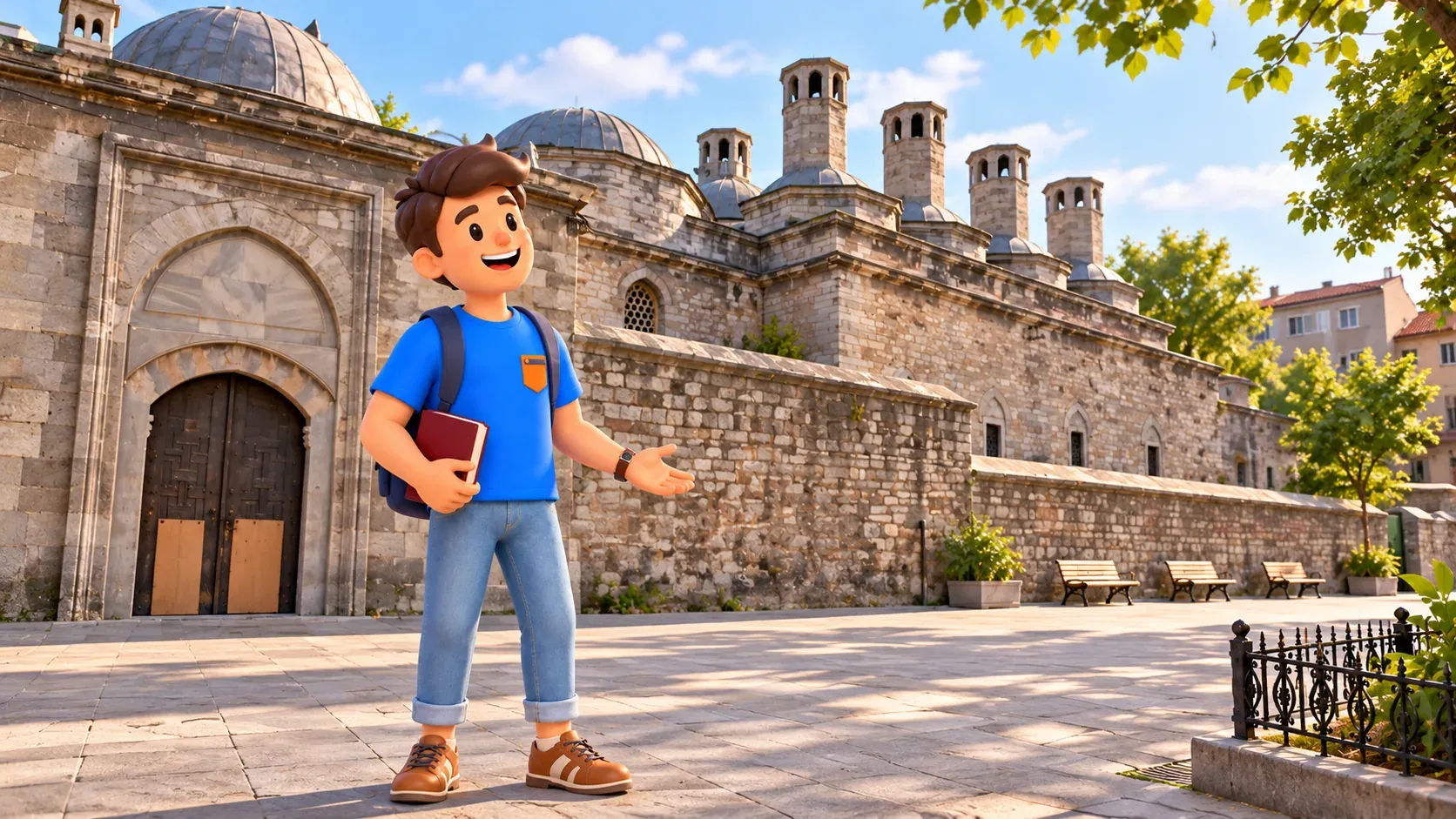
Continue to Süleymaniye with a different question
Allow thirty-five to fifty minutes for the chosen connection, including approaches and waiting. This is a planning estimate, not a promise for a specific service. Check current stops and a practical approach to Süleymaniye before setting out. If you walk the entire link, assess the time and effort separately rather than retaining the old schedule automatically. The subject now shifts from institutions supporting urban life to remembrance. A small pause between them helps distinguish these encounters instead of making the day feel like one continuous inspection of old stone buildings.
A complete tour of the main mosque, every courtyard and the surrounding streets is unnecessary today. Süleymaniye matters here as the setting of Hürrem’s mausoleum. Distinguish the great mosque from the separate funerary building: an image of the famous mosque’s dome is not an image of her tomb. Find the permitted visitor approach and establish actual access to the garden and mausoleum. An open mosque entrance does not establish that every neighbouring part is open simultaneously.
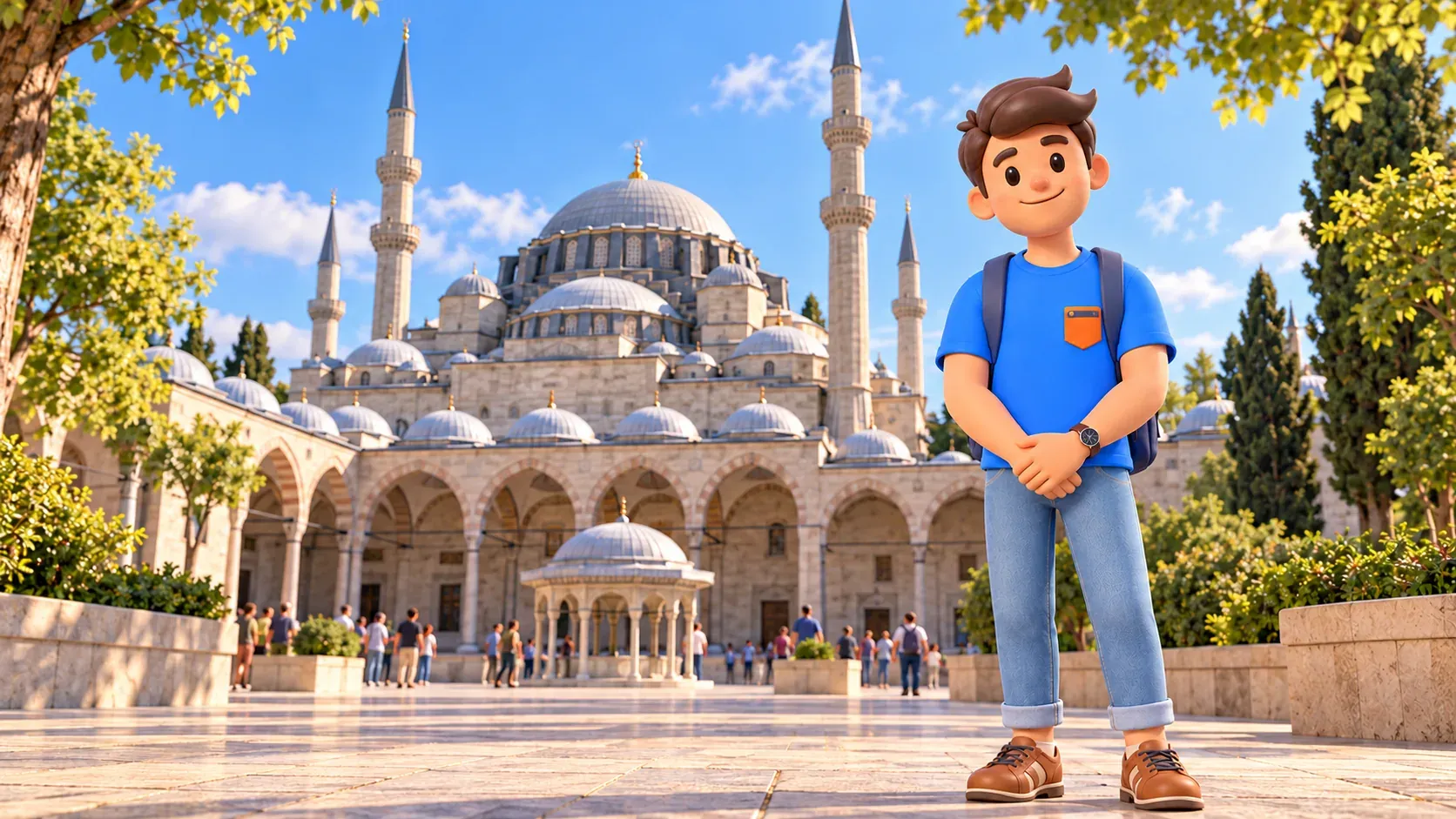
The mausoleum: a smaller scale for remembrance
Hürrem died in 1558 and was buried within the Süleymaniye complex. Her mausoleum is a work associated with Sinan. Its separate domed volume introduces a more intimate scale than the great mosque. The story moves from provision for the city to the preservation of a person’s memory. There is no need to supply unverified final words, secret symbols or imagined motives at court. The actual place and a few established facts provide enough substance without turning an architectural visit into a scene borrowed from a fictional drama.
When an interior visit is permitted, notice floral tile decoration and the relationship between colour, light and a relatively small space. Choose one detail instead of trying to decode every inscription or assign a hidden meaning to every flower. Keep quiet, follow local instructions and avoid touching screens or memorial elements for a photograph. If the garden or tomb is inaccessible, retain only the permitted exterior context. Do not promise others an entry that depends on current visitor arrangements.
The forty-five-to-sixty-minute allowance covers your selected Süleymaniye context together with the mausoleum. It is not a fresh allocation for each part of the complex. If waiting becomes prolonged, choose between remaining longer and protecting lunch and the final stop. Avoid restricted ground even when it appears to offer a shortcut. This is a particularly suitable place for a small programme: after Haseki’s institutional scale, another architectural purpose changes how you behave. Quiet attention becomes more useful than producing the maximum number of photographs from every possible side.

Lunch and the move towards Sultanahmet
Take forty to fifty minutes at an open place with a clear menu. Check prices before ordering and do not make the entire day depend on a guaranteed panoramic table. Consider two different impressions: what the institutional complex showed and what changed near the mausoleum. If tired, extend the break and keep the finish short. Choosing a treatment merely because the day seems to require a special finale is less useful than following your actual interest.
Allow approximately thirty-five to forty-five minutes towards Sultanahmet using your selected current route. Conditions depend on where you finish lunch and how you choose to travel. Do not turn this link into a compulsory market circuit: shopping, major museum entries and queues need their own time. If you have booked a treatment, protect the agreed arrival and registration margin. An exterior finish has more flexibility, but it is still best reached before exhaustion.
Hürrem Sultan Hammam: architecture and a modern appointment
Sinan designed the Sultanahmet hammam in 1556–1557 on Hürrem’s commission. This is the separate building between Hagia Sophia and the Blue Mosque, not a bathing room inside the Haseki complex elsewhere in Fatih. From a public exterior approach, look at the elongated building, substantial domes and contrast between larger and smaller volumes. Twenty-five to thirty-five minutes is enough for a selected architectural view. Purchasing a treatment is not necessary to understand the stop’s role: after institutions and remembrance, it introduces another form of public architecture that continues to be used today.
Men’s and women’s sections are separate, and a present-day treatment is arranged with the operator. The basic itinerary does not promise a free dry tour of bathing rooms or a brief interior look without a service. If you want to bathe, choose a package beforehand and confirm its current charge, rules and total time from arrival to departure. Treatment minutes are not necessarily the complete visit once changing and rest are included. Add the entire appointment beyond the basic day. Do not assume every programme allows your whole group to visit together in the same section.
The exterior version has its own conclusion: compare provision for the city, remembrance and a public tradition. You do not need to reconstruct Hürrem’s daily routine or claim she personally spent time in a particular room. Architectural patronage and documented personal presence are different kinds of evidence. That distinction keeps the history interesting without inventing scenes. Leave fifteen minutes to finish and reach your selected onward transport. If you have booked a treatment, build the rest of the evening around its actual end rather than the earlier timetable for an exterior-only visit.
Choose another day according to what interested you
For a broader look at the architect’s work, choose the separate three-mosque Sinan day. For a lighter central outing, consider the short Sultanahmet walk. Neither needs to be attached to today because individual places are nearby. Hürrem’s route already offers a clear view of the city through different institutions and architectural tasks. Let those distinctions settle, then choose the next day according to the question you most enjoyed. That is more rewarding than expanding the list until every stop loses its own character.
Bringing these interests into a coherent trip is easier and more effective in RoadMe, which works out a personal itinerary with suitable days and a comfortable pace. Download Istanbul beforehand while online to use maps and navigation offline afterwards.


