
Sultanahmet in Two Hours: A First Walk Through Old Istanbul

With just two hours in Sultanahmet, getting to know the space is more rewarding than trying to enter every famous building. The former Hippodrome, the Blue Mosque's exterior and a view towards Hagia Sophia make a compact first walk. Together they explain something about Istanbul's historic centre while leaving major museums and long admission queues for another day.
This plan begins near Sultanahmet tram stop and finishes around the central square. Two hours means time already at the destination: travel from a hotel, airport or railway station is additional. It suits a first introduction, a gap between other plans or an easy outing without required interior visits. It does not promise to fit all of Istanbul's major sights into one short interval.
What two hours can comfortably include
Choose three anchors: the former Hippodrome, the Blue Mosque from outside and Hagia Sophia viewed across the park area. The spaces between them deserve attention as well. Pauses let you compare their scale and architecture. The walk remains worthwhile if interiors are unavailable that day, or if you simply prefer to spend your limited time outdoors.
Planning those two hours is much more convenient in RoadMe, which develops a personal route around your interests, available time and pace. If the walk becomes the start of a longer stay, the same preferences can shape a complete trip rather than a disconnected list of places.
A possible allocation is fifteen minutes to get oriented, thirty-five around the Hippodrome, thirty for the Blue Mosque and its setting, and twenty-five for the park and Hagia Sophia exterior. Keep the final fifteen minutes for a pause and a clear finish. These are editorial planning estimates rather than measured walking times or a timetable for guided visits.
Do not add Topkapı Palace, the Basilica Cistern and Hagia Sophia's interior to the same two hours. Each involves its own approach, admission and visit. If one interior is the main purpose of your outing, give it the available time and reduce the walk. A short plan works better when you understand its limits before leaving your accommodation.
Start at Sultanahmet and understand your surroundings
Sultanahmet stop on the T1 tram provides a useful meeting and starting reference. The name matters: Topkapı tram stop is not the entrance to Topkapı Palace. Save Sultanahmet and check the direction of your tram before travelling. This small practical decision can contribute more to an easy start than memorising a long sequence of historical dates.
After getting off, avoid immediately following the largest group. Find somewhere to stand without blocking others, identify the direction of the square and agree on a meeting point if travelling together. Saying “by the mosque” is vague in this area. Choose a particular exterior landmark and save its name or a photograph so everyone has the same reference.
The German Fountain is a useful early landmark. Its compact pavilion offers a different scale from the area's large religious buildings and introduces the former Hippodrome's open space. For a first walk, notice how a small piece of public architecture relates to the square. You can appreciate that relationship without learning every detail of the fountain's history.
Take a few minutes to read the present surroundings too. Where is the shade? Which way are most people moving? Is the approach comfortable for your group? These observations matter with children, older companions or anyone tired after travelling. A short itinerary can begin calmly; getting oriented is part of the outing rather than time wasted before it starts.
The Hippodrome: imagine a very different public space
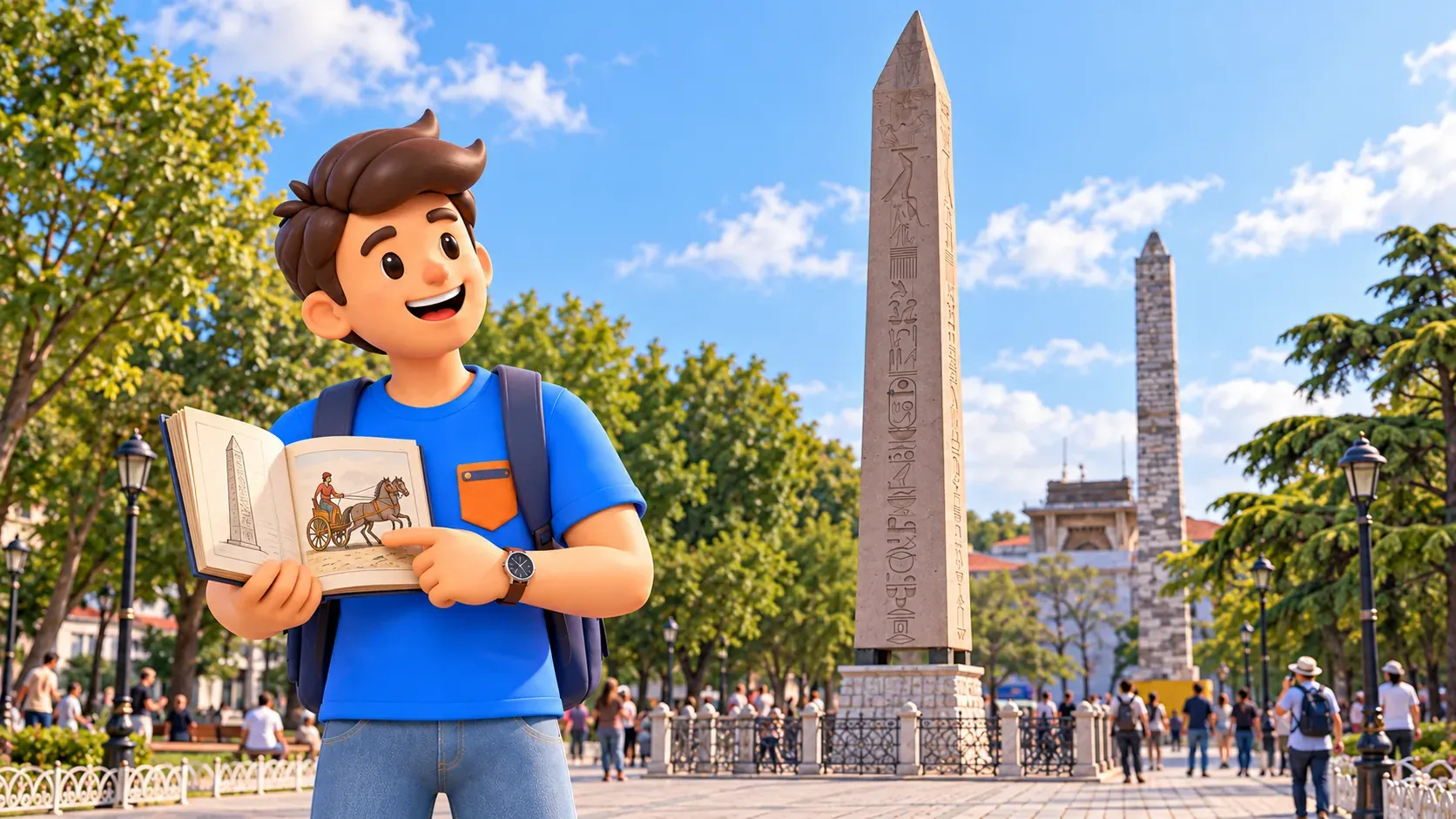
The former Hippodrome adds another layer to Sultanahmet beyond its familiar mosques. This was a place of chariot racing and public life in the Byzantine capital. Today it reads as an open square containing monuments. For a moment, look beyond the present paths and imagine a space shaped around movement, spectators and large gatherings.
The aim is not to memorise every column in sequence. Choose two or three monuments along the square's axis and compare their materials, heights and condition. A stone obelisk and the surviving bronze shaft of the Serpent Column tell different visual stories. That contrast is accessible even without a detailed guide explaining every event connected with them.
The Serpent Column also shows how an ancient monument can survive in fragments. Do not expect a complete sculptural group simply because you have seen a reconstruction elsewhere. Look at what actually remains and its relationship to the ground around it. Attention to an authentic detail is more rewarding than searching for a perfect match to a promotional image.
Allow approximately thirty-five minutes here, including photographs. In hot conditions, shorten the time spent reading on your phone in direct sun and find a suitable pause. You do not have to learn the entire square's history while standing beside it. One clear impression of the Hippodrome is easier to keep than a hurried collection of disconnected facts.
The Blue Mosque: see how the whole building works
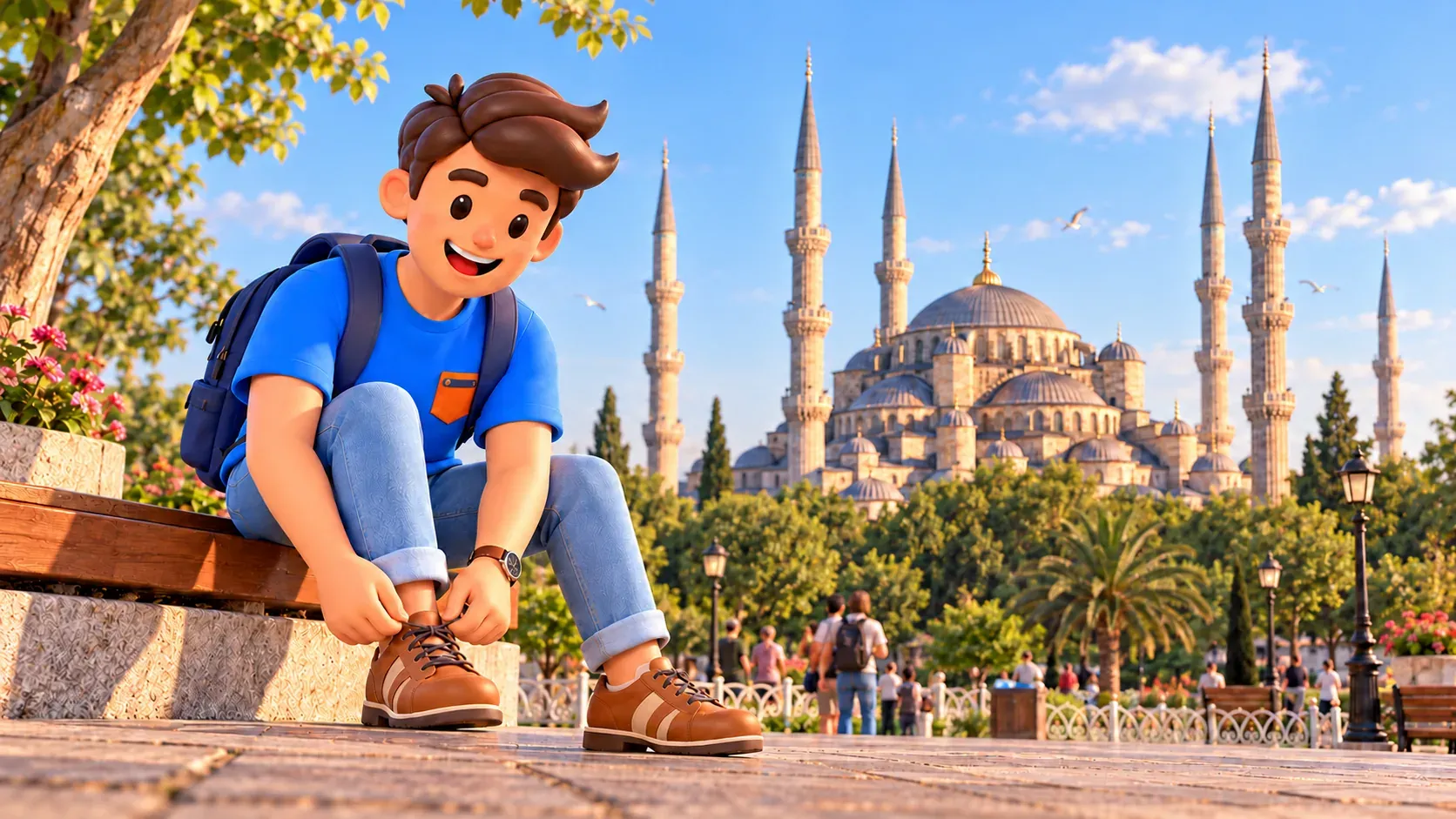
Continue to an exterior view of the Blue Mosque. Its early seventeenth-century Ottoman architecture brings a different historical layer after the Byzantine Hippodrome. Notice how the main dome and surrounding volumes build the silhouette, while minarets extend it into the sky. Six minarets are a recognisable feature, but appreciating the building involves more than counting them.
The familiar “Blue” name relates to tiles inside. Outside, do not expect enormous blue walls: stone, light and the relationship between the building's parts matter more. Understanding the name can prevent a mismatch between expectation and experience. It also suggests a useful question for another visit: how differently might the same building feel from within?
An interior visit is optional in this plan. The mosque is active, and visitor access depends on worship and local arrangements. If entry is permitted, the wait is short and your time allows, you could replace part of the flexible pause with a brief visit. Otherwise, continue outside. The walk does not become unsuccessful because you have not entered.
For any possible visit, bring suitable clothing and follow local instructions about footwear and head covering. Keep your voice low and respect worshippers' personal space. Taking photographs should not be the condition that makes entry worthwhile. The order and quiet of an active religious building matter more than achieving a planned number of images from a short outing.
Observe the surrounding space as well: how the scale changes as you approach, where people pass and which views reveal more of the silhouette. There is no single compulsory angle. Choose a safe place that leaves the passage clear. Roughly half an hour gives a first impression if you do not turn this stop into a full interior tour.
Across the park towards Hagia Sophia
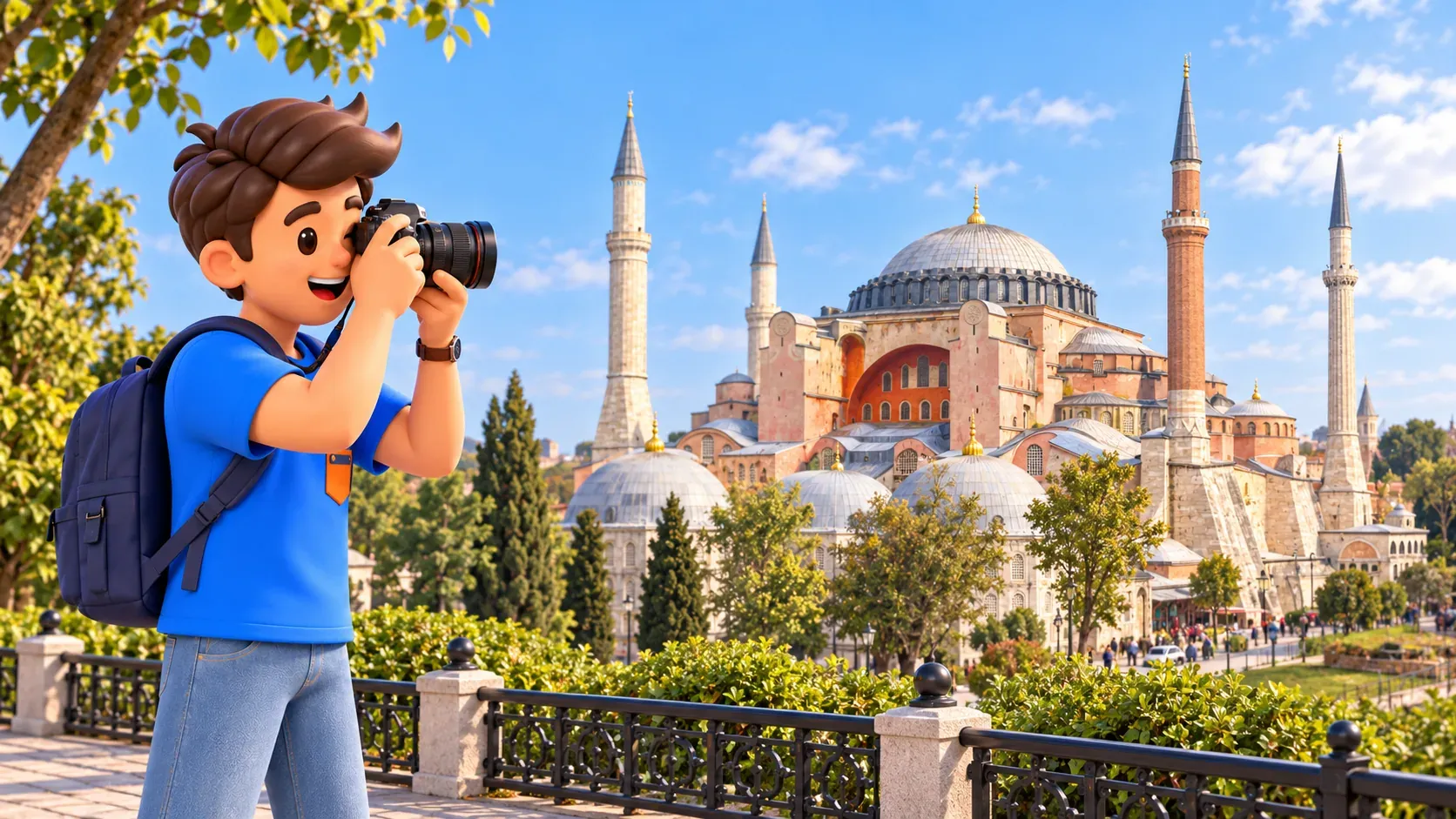
The next section connects views of the Blue Mosque and Hagia Sophia through the square and park area. Treat it as more than a transfer. Different periods of the city sit remarkably close together here. Look back and then ahead: comparing the two silhouettes can explain more about Sultanahmet than reading another long description while walking.
Hagia Sophia belongs to Istanbul's Byzantine architectural heritage. Its history includes a Christian cathedral, an Ottoman mosque and a museum period. For this outing, concentrate on the exterior and that layered history. Notice the broad dome, substantial surrounding forms and minarets. A full account of changing uses and interior mosaics deserves a separate visit without a two-hour countdown.
Do not assume every queue nearby leads to the space you intend to visit. The historic building and a separate museum experience with a related name are different attractions. If you return later, check the particular entrance and current conditions first. For now, let Hagia Sophia remain an exterior anchor rather than turning the walk into an unpredictable wait.
This part of the route also makes a good place to pause. If an appropriate seat is available, put the phone away and watch the square. The city appears through more than monuments: people meet, talk and cross on ordinary errands. A few quiet minutes can hold an impression together before it disappears into the search for the next saved location.
Allow about twenty-five minutes for the park, exterior views and photographs. If an event or restriction affects part of the area, adapt to the passages actually available. Do not step around barriers to reproduce a familiar internet photograph. This plan describes a walking idea, not a guarantee that every piece of the square is accessible at all times.
Try to leave with one question you want to follow later, rather than a tally of sights. Why do such different monuments stand together? How do the buildings' domes compare? That curiosity can shape the next day. One person may want an interior, another a museum collection and another a longer walk through surrounding streets.
Keep the finish flexible
Leave the final fifteen minutes open for a drink, a return to your starting reference or deciding what comes next. Do not immediately fill that margin with another compulsory attraction. It is especially helpful if you have a train, meeting or booked activity afterwards. The journey to that commitment still needs its own allowance beyond this walk.
In heat, shorten exposed stops and rest in suitable shade. In rain, do not treat any interior as an automatic shelter: museums need time and their own admission arrangements, while a mosque remains a place of worship. Sometimes a shorter walk ending in a suitable cafe is more enjoyable than trying to preserve every stop regardless of conditions.
With children, make observation simple: compare monument materials, look at domes or notice the shadow of a minaret. Long explanations and fast walking rarely work well together. If step-free access is essential, check particular approaches and entrances. A photograph of an apparently level square does not describe the whole journey from the tram platform to each viewpoint.
Using the personal plan for both this walk and the wider trip is easier in RoadMe, where your interests and available days shape the itinerary. Download Istanbul beforehand with an internet connection to use maps and navigation offline afterwards.
If more time becomes available, choose one direction according to your interests. A substantial historic interior and a longer outdoor walk are both possible next steps, but neither has to be added automatically because it is nearby. Making that choice deliberately keeps a short introduction enjoyable and gives you something clear to return for.
Our one-day Istanbul itinerary offers a framework when you can give the historic centre longer. For now, three clear impressions are enough: the Hippodrome as a memory of public life, the Blue Mosque as a coherent silhouette and Hagia Sophia as a meeting of periods. Two hours can be an excellent beginning when they are allowed to remain one.


