
Sinan’s Istanbul: one day among three great mosques
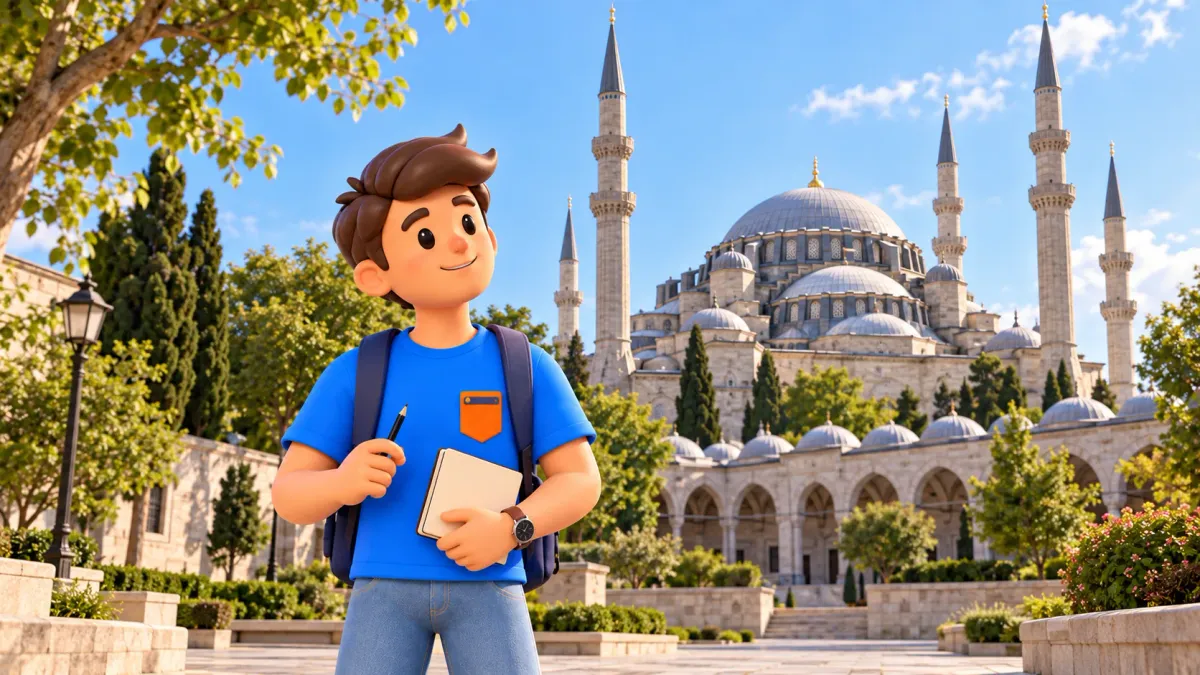
A Sinan day in Istanbul works best as a comparison rather than a mosque count. Şehzade introduces a clear system of domes, Süleymaniye a large ensemble on an urban hill, and Rüstem Pasha a more intimate scale and tilework. All three belong to the historic peninsula and connect through city streets. Scale, light and the building’s relationship with its surroundings change between stops. You need no architectural training to notice how one designer addressed different tasks, or why three mosques need not produce three versions of the same experience.
Allow around six to seven hours after arriving at Şehzade. Travel to the start and from Eminönü comes separately. The allowance includes selected visits, walking, lunch and reserve for active religious use. Interior access depends on local permission and prayer times; three guaranteed entries are not promised. These are editorial estimates, not measurements from an author’s completed route. Tombs, a full market circuit and a ferry are not compulsory extras. Each needs separate time and changes the day’s architectural focus.
Plan the day from dome systems to tiles
Keep fifteen minutes for orientation and sixty to seventy-five for Şehzade. Allow twenty-five to thirty-five for Süleymaniye’s approach and seventy-five to ninety for a selected look at the ensemble. Lunch gets forty to fifty minutes. The downhill link towards Rüstem Pasha takes roughly twenty-five to thirty-five, followed by thirty-five to forty-five for the stop. Leave twenty minutes to finish around Eminönü and protect half an hour of general reserve. Adjust the distribution to actual access rather than preserving a neat sequence for its own sake.
Planning the whole trip is more convenient in RoadMe, which creates a personal itinerary around your interests, dates and preferred pace. Choose architecture, history or more relaxed walking so a Sinan day belongs to a considered trip designed for you.
For the full version, choose a day that allows visits to fit around prayers. Friday daytime is awkward for expecting successive tourist entries into three active mosques. If access pauses, do not follow worshippers inside as a workaround. Keep the permitted exterior and architectural question, or return at a suitable time after recalculating the programme. Lunch can move accordingly. Flexibility helps you remain an attentive visitor rather than someone frustrated by the ordinary life of the religious place you came to see.
Prepare clothing that follows mosque rules and be ready to remove shoes before prayer halls. Check local head-covering requirements and the visitor area. Keep quiet, avoid crossing prayer space for a symmetrical photograph and ask about photography. Sightseeing does not mean free access to minarets, roofs or service areas. The permitted common visitor space is enough for this route. Architecture can be understood from an ordinary position without seeking exceptional passages or unusual angles that interfere with the building’s present purpose.
Şehzade: begin with a clear order
The intended Şehzade Mosque is in Fatih, at Şehzadebaşı on the historic peninsula. Do not confuse it with similarly named places elsewhere in the city. Start with exterior, courtyard and, where permitted, interior. There is no need to learn technical terminology immediately. Choose one question: how does a large central space connect to its surrounding parts? The exterior dome silhouette and the interior’s overall volume answer from different directions. Together they help you see a system rather than simply an attractive surface.
Sinan’s mosque was built in 1544–1548 in memory of Prince Mehmed, Suleiman’s son. Move from that short history to the building. The central dome relates to four semi-domes, while two minarets provide external verticals. The numbers need not become a quiz. Notice how repeated forms organise the silhouette and create a sense of balance. Carry that impression to Süleymaniye, where the same architectural language addresses a different arrangement. A useful comparison starts with what you can actually see, rather than a predetermined ranking.
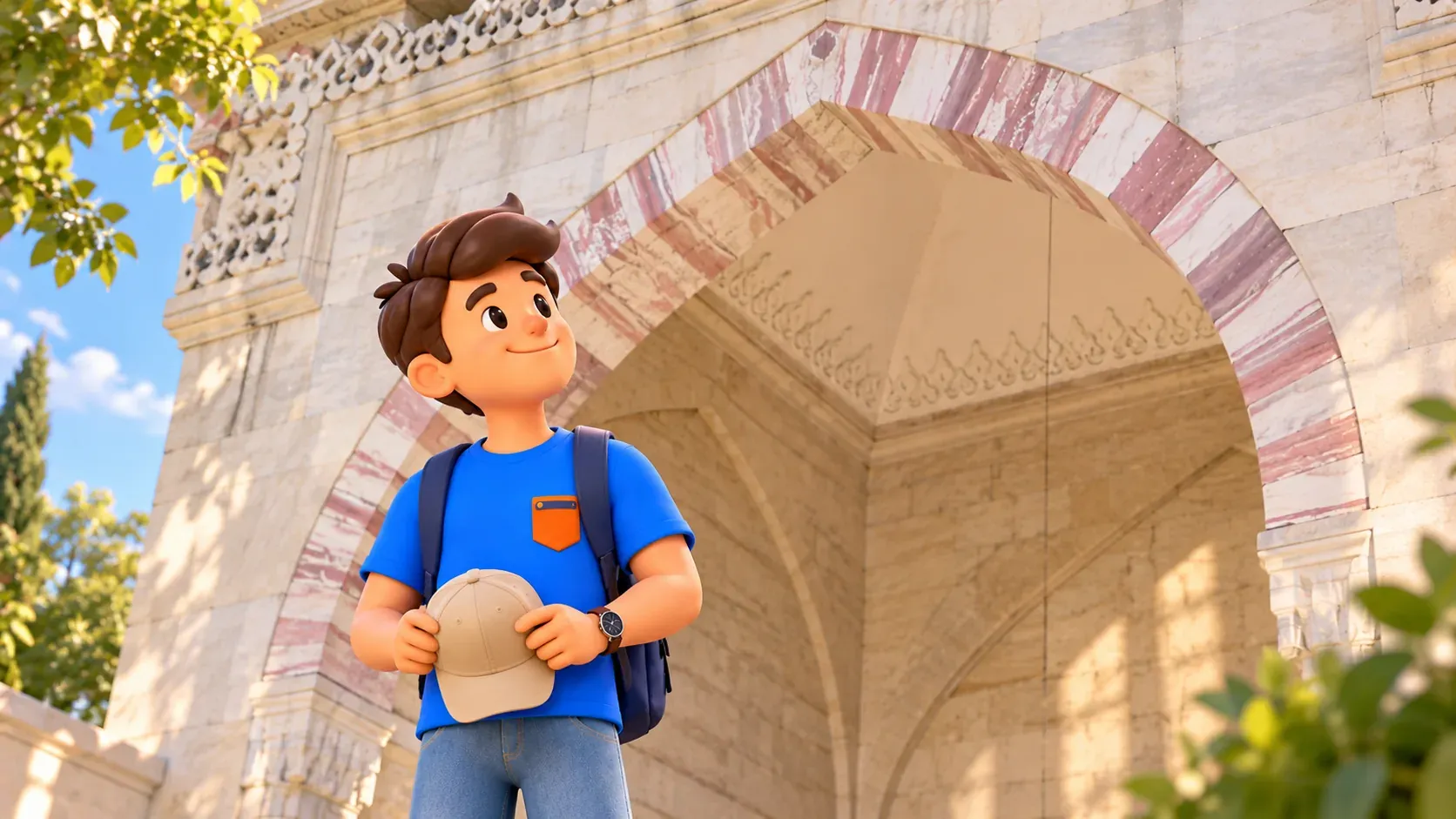
On the permitted approach, notice the smaller scale too: stone, an arch and the transition from open to covered space. One detail may explain more than numerous overall photographs. Find a change in light and compare the feeling before and after. Do not assign every feature a secret symbolic meaning without support. Visible material, rhythm and the human size of an entrance provide enough. This leaves room for curiosity without turning the walk into a retelling of unverified legends about the architect’s ingenuity.
Walk towards Süleymaniye through the city
Allow twenty-five to thirty-five minutes on public streets. This is not a separate comprehensive tour of every object between the mosques. Avoid adding each appealing façade simply because it is nearby. Keep the chosen direction and observe changing scales: street, doorway, enclosure wall and open space. The link explains that these mosques belong to an active city, not a vacant architectural exhibition site. The area between them has not been arranged solely for visitors, and that everyday setting belongs to the experience.
Terrain and the usable public route matter more than a straight line between points. Use permitted crossings and avoid shortcuts through closed courtyards. If steps or slopes are unsuitable, establish a workable approach beforehand. This day is not presented as step-free. A group with different walking speeds can shorten an optional exterior loop instead of making someone catch up continually. Architecture needs attention; a rushed link can consume it before the second ensemble and make distinct places begin to feel like repetitions.
Before Süleymaniye, recall just one observation from Şehzade, perhaps repeated form or the courtyard’s relationship with the hall. You need not retain the entire historical account. One clear subject supports the next encounter. Comparison remains personal when you discover differences rather than seek confirmation of a learned verdict. Three stops make sense when each changes the question, instead of adding another dome photograph to a growing travel collection.
Süleymaniye: the scale of an ensemble
Süleymaniye was built in 1551–1557 for Sultan Suleiman. Here Sinan worked with a large ensemble and its urban position. Begin in permitted outside space to understand mosque, courtyard and terrain together. A single famous panorama is unnecessary. The arrangement already explains why the building feels different from the first stop. Look around as well as upward: architecture shapes approach, pause and the movement between outside life and the prayer hall. The place can be understood through that sequence before an interior visit begins.
The main dome is supported by two large semi-domes, and four minarets contribute to the silhouette. After Şehzade’s four semi-domes, notice a different organisation without deciding that one solution is automatically superior. What matters is the whole. If entry is permitted, begin with space and light, then details. Do not start by trying to photograph every ornament. First understand what holds the volume together, then choose an element worth remembering or studying. A selected detail works best when its place within the building is clear.
Quiet can form part of the visit even if architecture brought you here. Pause in the permitted area and let your eyes adjust. Avoid judging a mosque only by the quantity of decoration or intensity of colour. Restraint also shapes an impression. Compare with Şehzade without demanding an instant professional explanation. Sometimes the useful observation is your own pace: where you wanted to move and where you preferred to remain looking. That difference is a legitimate way to begin understanding space before finding words for it.
Seventy-five to ninety minutes cover a selected visit, not every neighbouring room and tomb. Mausoleums have their own meaning and arrangements; they are not automatic extensions of the prayer hall. If they particularly interest you, allow a separate block and reduce another part. For today’s theme, mosque and accessible ensemble space are sufficient. Süleymaniye then remains a substantial central stop rather than a reason to spend every spare minute and reach Rüstem Pasha already tired.

Lunch and the descent towards trading streets
Allow forty to fifty minutes for food in an operating place along your route. Read menu and prices without depending on a guaranteed panoramic table. Discuss one difference between the mosques that you noticed yourselves. If you want longer, shorten an exterior loop afterwards. Lunch is not wasted time between important buildings: it helps the third visit remain a separate impression. Without a pause, tilework can become merely an attractive background that is difficult to study after hours of continuous walking.
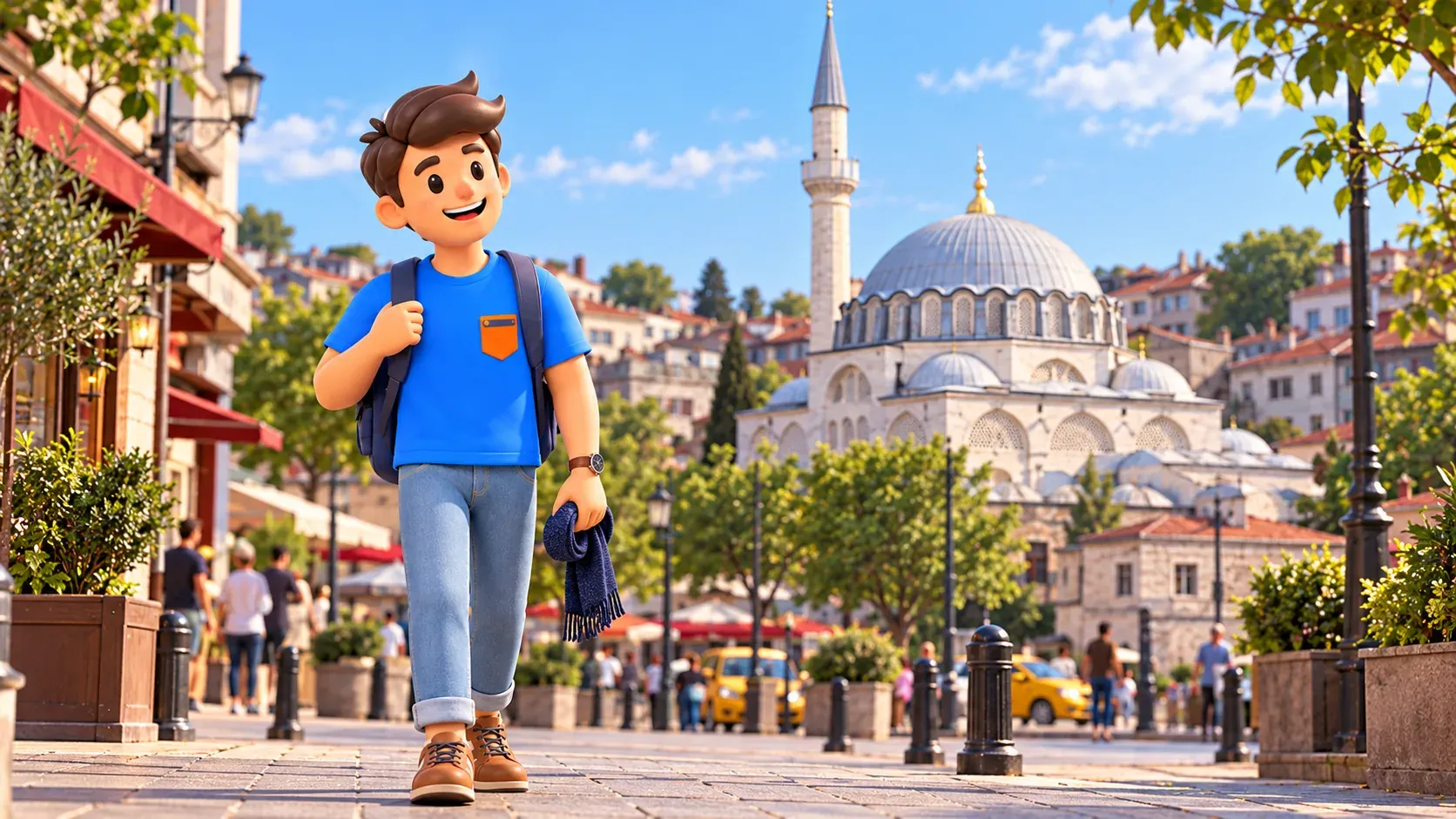
Continue towards Rüstem Pasha on the current public downhill route into Tahtakale. Twenty-five to thirty-five minutes are a guide, not a guarantee of any tempting short passage. Changing streets explain the new architectural task: a mosque within a dense trading environment rather than a large open ensemble. Avoid converting the link into a full market circuit. Shopping and a substantial bazaar walk need their own time. Today’s subject is how Sinan’s architecture works at another urban scale and how the approach changes the visitor’s impression.
Rüstem Pasha: closer to the tile pattern
Rüstem Pasha Mosque stands in Tahtakale and belongs to Sinan’s sixteenth-century work, associated with Grand Vizier Rüstem Pasha. Its raised position within dense streets and renowned tile decoration are the useful subjects here. The approach differs from an expansive imperial courtyard. Find the actual visitor entrance and account for steps rather than assuming any passage among shops leads inside. Small size does not mean entry at every moment. This is an active place of prayer, with its own present rhythm and permitted visitor space.
Where viewing is permitted, choose one floral motif and follow its repetition and variation. İznik ceramics bring the architecture close through colour and pattern. There is no need to seek a hidden meaning in each petal, and not every surface should be called tile: stone, plaster and painted elements also contribute. Compare a near detail with the overall volume. After Süleymaniye, the shift from generous space to a small surface makes the third stop different. It gives the day another way of looking rather than merely another mosque.
The thirty-five to forty-five minutes are for a selected introduction without interrupting religious life. If visitors cannot enter the hall, retain a permitted outside look instead of photographing through an unavailable doorway. The day’s conclusion needs no inspection of every room: at Şehzade you considered a dome system, at Süleymaniye an ensemble and space, and here pattern at a close human scale. That thread preserves three distinct solutions by one architect even when actual interior access is smaller than originally hoped.
Finish in Eminönü and choose another day
Keep twenty minutes for a relaxed finish around Eminönü, then account separately for waiting and the journey to your accommodation. A ferry is not compulsory for an attractive ending. For another programme near Süleymaniye, choose a separate walk towards the Spice Bazaar. For historical layers, consider Zeyrek and the Valens Aqueduct. These are independent options for other days. After architectural comparison, a clear impression is more useful than immediately attempting everything still nearby on the map.
Combine those interests more conveniently and effectively in a personal itinerary with RoadMe, which develops the trip around suitable days and a comfortable pace. Download Istanbul while connected to the internet beforehand to use maps and navigation offline later.
A Sinan day unfolds through three ways of looking: structure, large space and a tile detail. With pauses and respect for the mosques’ active use, the architecture becomes understandable without a long reference book or a race to see everything at once.


