
A duke, an empress and two allegories: Geneva’s lakeside monuments
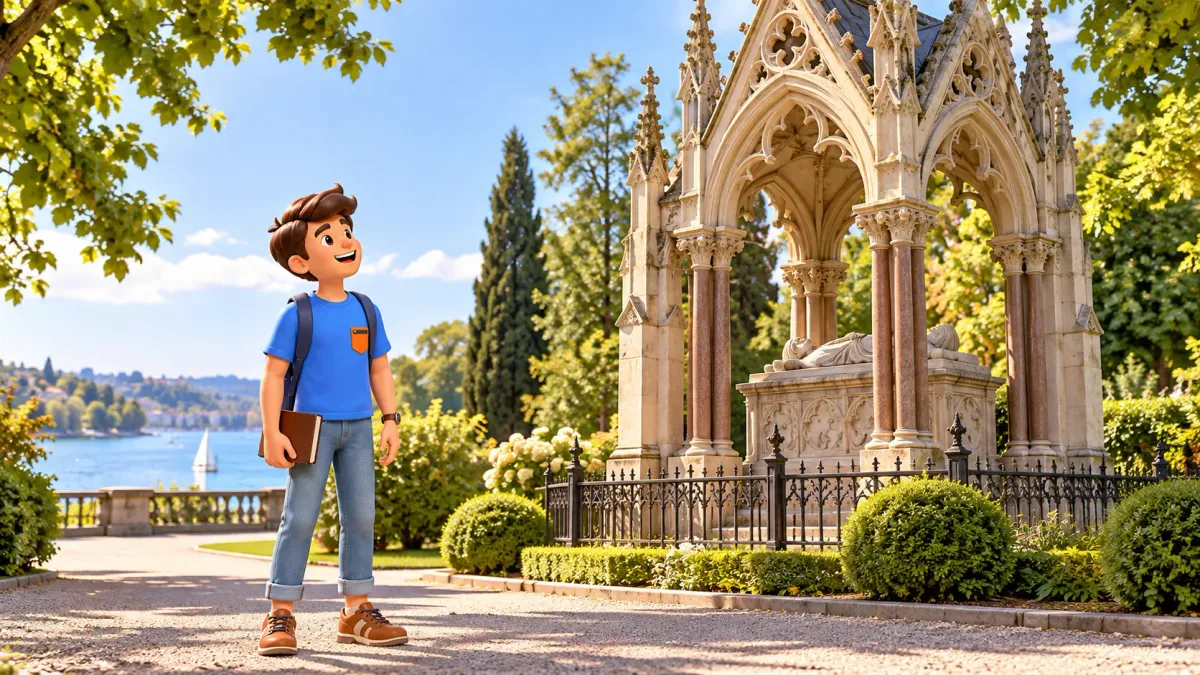
Geneva’s harbour offers a walk through three different kinds of memory as well as attractive water. The Sissi memorial recalls a human life, the Brunswick mausoleum a duke’s will, and two bronze figures in the Jardin anglais speak through allegory.
Connect the stops across the two banks. Begin on Quai du Mont-Blanc with Empress Elisabeth’s memorial, continue to Brunswick, then cross towards the Jardin anglais. The story changes with the architecture, urban setting and view of the lake.
Arrange the three stops
Allow roughly 60–90 minutes for an unhurried outing with pauses. This is a planning suggestion, not a measured duration. The principal stops are exterior visits; burial interiors and any climbs inside are not included.
RoadMe makes it much easier to turn this idea into a complete personal walk or trip plan. The app helps develop a route around your interests and pace, bringing monument stories, suitable walking sections and time beside the water into a coherent day that is enjoyable to use while travelling.
- Sissi memorial at the Rotonde du Mont-Blanc.
- Brunswick mausoleum in the Jardin des Alpes.
- An available pedestrian crossing of Pont du Mont-Blanc, then the National Monument in the Jardin anglais.
Sissi is slightly northeast of the mausoleum on the right bank. This order then leads towards the bridge without extra retracing. If Brunswick is a more convenient start, a small return section is reasonable: your actual arrival matters more than a perfect sequence on paper.
For a short free window, keep just the right-bank pair. If already in the Jardin anglais, the National Monument can be an independent episode. Three different subjects do not require crossing both banks to make the outing worthwhile.
A shared question is simple: what does the city ask us to remember? A person, a condition in a will, or a union represented by two figures? It connects the stops without making them interchangeable monuments with different names.
Sissi: an individual life beside an everyday quay
Empress Elisabeth of Austria, known as Sissi, was assassinated in Geneva on 10 September 1898. The memorial sculpture at the Rotonde du Mont-Blanc recalls that event. For this walk, the fact of remembrance is enough without a detailed account of violence.
Pause at a respectful distance and consider how one human image occupies an ordinary urban setting. People continue along the waterfront, with water and trees nearby, while the memorial holds a particular life within the city’s ongoing activity.
Distinguish the person from the memorial image. A sculpture is not an event scene to reenact or reconstruct exactly. It offers a moment to consider how a city preserves memory and gives it a place in public space.
For a photograph, include a little of the surrounding quay. The wider view connects the memorial with Geneva more clearly than an isolated close-up. A dramatic angle is unnecessary; a quiet look suits the stop.
With companions, exchange one observation about the figure’s form or position. Everyone need not know a full biography to notice its difference from the larger architectural mausoleum that comes next.
Continue towards Brunswick along a suitable public route. There is no need to turn a brief memorial pause into a search for every location associated with the empress’s last day. This outing has its own unhurried scale.
Brunswick: a will translated into architecture
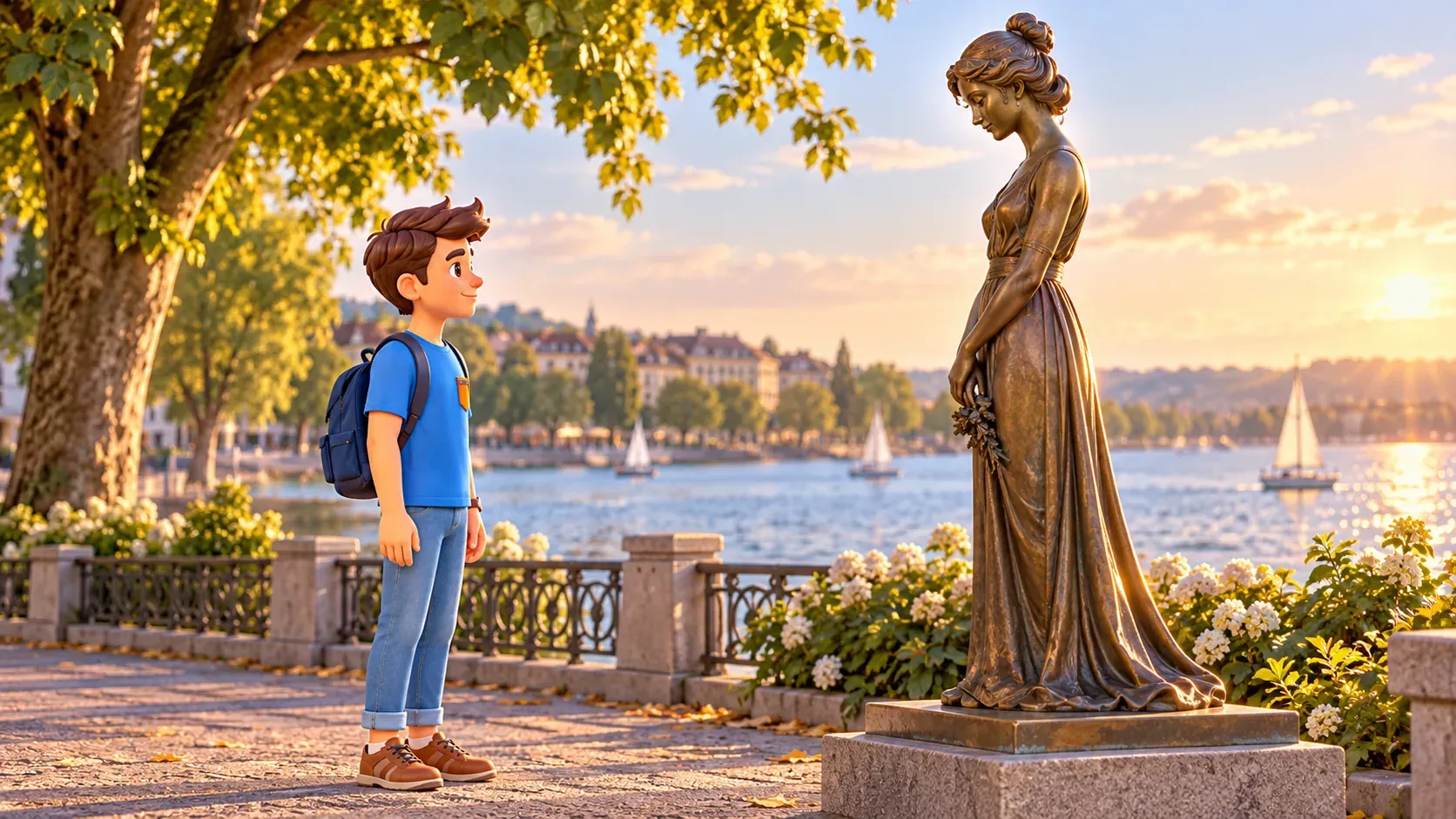
The Brunswick Monument is the mausoleum of Charles, Duke of Brunswick. Its creation relates to a condition in his will. That changes how you look at the striking structure: it is not simply decorative Gothic Revival architecture, but a material trace of an arrangement about remembrance.
Its form was inspired by medieval tombs in Verona. Slender supports, arches and vertical details attract attention from a distance. Using a historical architectural language does not make it a medieval Geneva building, however.
Begin with the overall outline. How does it appear against greenery and open space? Then select one detail: an arch, support or ornament. Moving from whole to part helps reveal the monument without identifying every sculptural element.
A personal condition becoming a city monument is already an unusual subject. A will usually feels like a private document; here its trace remains before people in public space. Consider how one individual’s wish acquires architectural form and becomes part of other people’s ordinary lakeside walks.
The Gothic Revival form may feel unexpected beside the harbour. Notice that: urban space gathers different periods and artistic references. The monument tells us about the duke and also about the appearance people choose for memory.
This route includes an exterior look from public space. Seeing the mausoleum does not imply access to the burial area or permission to climb every step and platform. Follow actual boundaries and conditions around the structure.
If you want to linger, choose somewhere comfortable without blocking movement. Looking for an interior entrance is not required for a complete stop. The silhouette, the will’s story and the waterfront relationship already offer enough for a short encounter.
Compare the scale with the previous stop. A memorial figure concentrated attention on one person; here remembrance expands into architecture. Even without a detailed biography, the difference is visible: one image beside a whole arrangement of supports, arches and detail. The monuments become different artistic choices as well as names and dates.
Pont du Mont-Blanc: change banks and scale
Continue towards the bridge and cross only using the available pedestrian route, following current directions and restrictions. The bridge remains part of a working city. An actual permitted passage matters more than a straight line between two attractive places.
Open water can feel different from space beside trees and facades. Wind, rain and pedestrian movement alter comfort. In unpleasant conditions, the right-bank section can be a complete version, leaving the National Monument for another outing.
When the weather suits, the crossing is a useful interval between stories. You have considered an individual life and an architectural testament; now the harbour opens broadly. It changes your attention before a different kind of sculpture on the left bank.
Photograph only where pausing is comfortable and does not obstruct movement. There is no need to obtain a panorama on the narrowest section. The crossing stays more pleasant when a picture fits the real urban situation.
National Monument: two figures, one union
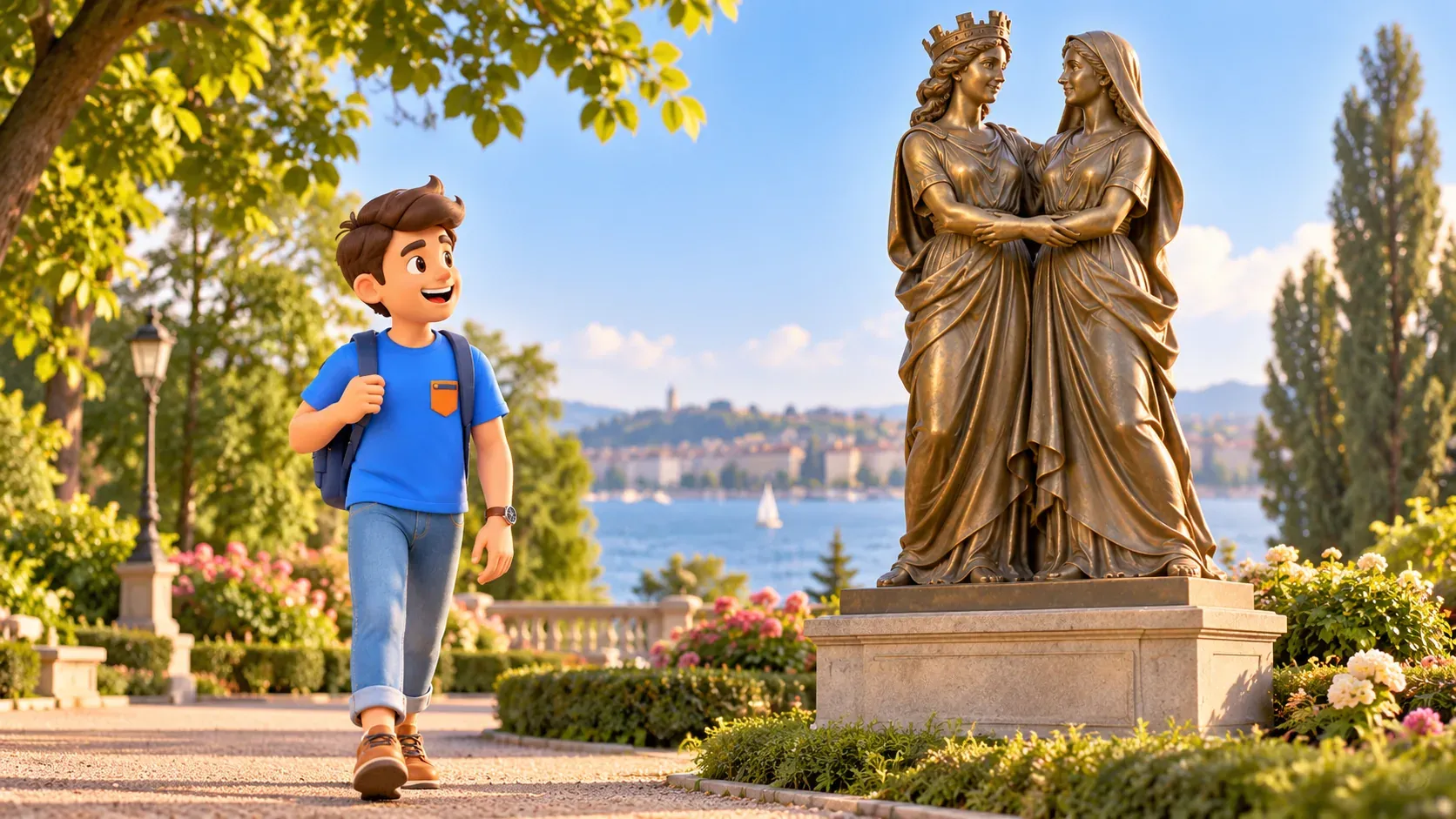
In the Jardin anglais, find Robert Dorer’s Monument national, inaugurated in 1869. The two women represent Geneva and Helvetia, Switzerland. They are allegories rather than portraits of two empresses or another version of Sissi.
An allegory gives human form to an idea or community. Look at the relationship between the figures: they form one monument expressing connection. After a memorial to an individual, the stop shows how differently sculptural language can work.
The chronology has several layers. The Federal Diet voted for Geneva’s admission on 12 September 1814; the act of union was signed on 19 May 1815. The 1869 monument came later. Its date should therefore not be taken as the date of accession itself.
For a first look, notice the shared gesture and position on the pedestal. Then consider details of Geneva’s symbolic image. There is no need to identify every attribute immediately: the joint composition already expresses the central idea.
Compare the impression with the earlier stops. Memory there related to a person’s life or an individual condition. Here it concerns a political community. Three objects beside one harbour show three different reasons for creating a public monument.
This approach works in other cities too. First consider whether you are looking at a portrait memorial, a funerary monument or a symbolic composition. A historical fact then fits a form you have already noticed. Geneva makes those differences easy to explore within one modest waterfront outing.
Look at the garden too. The sculpture stands among walking, greenery and water views rather than in a separate museum room. You can continue with ordinary rest instead of adding another compulsory historical visit.
A pause after three stories
In the garden or a suitable harbour section, choose an available resting place. A free bench and particular weather are not promised. If finishing without a long pause suits you better, the walk has already provided its experience.
Write three brief words: life, testament, union. They recall the differences without copying biographies and chronology. A useful note returns your own view; further detail can be explored separately if you want.
For a personal photo album, vary the scale: a figure within the city, an architectural detail and an overall view of the joint sculpture. The walk then looks like a sequence of stories rather than three similar pedestal photographs.
Fit the route into your Geneva day
Choose the actual finish around your next activity. A day remaining on the right bank would require an additional crossing back. If you want to continue in the left-bank centre, the Jardin anglais is a logical ending. That simple decision preserves time for the monuments instead of unnecessary retracing.
If already on the right bank, begin at the stop you can reach conveniently and decide whether to cross. Near the Jardin anglais, the National Monument can begin a separate left-bank walk. The full order is a useful idea rather than an examination to complete.
Connecting this walk with the rest of the trip is easier in RoadMe. The app helps develop a complete personal plan around your interests and available time: cultural subjects, walking sections and rest become a clear sequence. Using it is much more convenient and efficient than assembling the day from scattered notes.
Before leaving, consider arrival, available passages and the return. An outdoor route does not establish access to every interior, service or works area. Use public paths and the actual conditions of your day.
For another lakeside mood, see our comparison of Geneva’s shores. If you would rather linger over one view after the monuments, try our viewpoint ideas. Giving a few stories time is enough for the harbour to become more than an attractive background.


