Which bank of Lake Geneva should you choose for a walk?
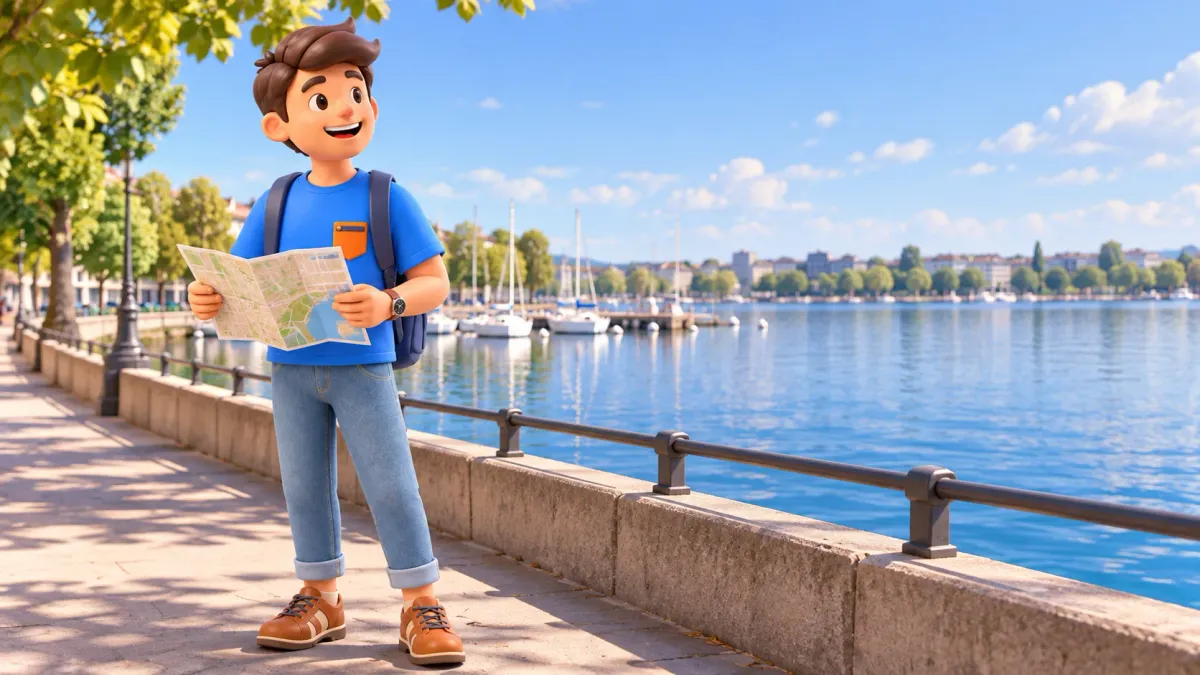
Geneva’s lakeside offers several quite different walks. On the left bank, La Grange and Eaux-Vives bring estate parks, mature trees and open lawns. On the right bank, Pâquis feels closer to everyday harbour life, while Mon Repos and Perle du Lac farther north continue the story of lakeside gardens.
Rather than choosing the “most beautiful bank” in general, choose an activity for this particular day. Do you want a park walk, water alongside urban life, or a quiet seated pause in greenery? One suitable section can be more enjoyable than an obligatory circuit of every place on both sides of the harbour.
Two banks and three useful versions
The left-bank idea combines La Grange, neighbouring Parc des Eaux-Vives and an optional visit to the beach area. Divide the right-bank choice in two: Pâquis with nearby quays for an urban mood, or Mon Repos with Perle du Lac for a park outing. All three can stand alone.
RoadMe makes it much easier to turn a choice of shore into a complete personal walk or trip plan. The app helps develop a route around your interests and pace, bringing parks, water views and pauses into a coherent day that is enjoyable to use, instead of trying to connect every harbour stop yourself.
| What appeals today | Which walk to choose |
|---|---|
| Trees, lawns and an estate landscape | Left bank: La Grange and Parc des Eaux-Vives |
| Urban harbour life and a short water view | Right bank: Pâquis and nearby quays |
| Neighbouring green spaces and an unhurried pause | Right bank farther north: Mon Repos and Perle du Lac |
Pâquis, Mon Repos and Perle du Lac are on the same right-bank side. The connection between Pâquis and the northern parks is a walking section, not two neighbouring gates of one garden. With limited time, arrive directly at the area you actually want to explore.
Choose the length around your pauses, arrival and weather. No measured full-circuit duration is given here. A short version can be one park or a modest stretch of quay; a longer version can connect neighbouring spaces on your chosen side without crossing the harbour to finish a list.
Left bank: La Grange and the landscape above the lake
Parc La Grange developed from the Favre family’s private estate. Old trees, a historic villa, lawns and a rose garden retain the character of a substantial landscaped garden. The interest is not simply the nearby lake: the green space itself deserves attention.
Begin at an available public entrance and choose one suitable path. Watch how the view changes between trunks, open grass and the house. It is pleasant to follow impressions rather than immediately searching for every object in a guide.
The park has changes of level and sits above the shoreline strip. A path view and a direct visit to the water are different parts of the outing. If gradients or surfaces matter, choose the specific connection separately. The entire walk should not automatically be described as level or fully accessible.
The rose garden adds another subject when the season suits, but flowers are not a condition for enjoying the visit. Without roses, read the park through tree crowns, perspective and the villa’s relationship with its landscape. Your trip then does not depend on matching a photograph from a particular month.
Choose somewhere you want to slow down. A few minutes looking towards water or at an old tree can matter more than another circuit. Empty lawns and a free bench are not promised; ordinary city use is part of the setting too.
Check gate hours for your date before setting out. A seasonal park schedule is not round-the-clock access, and institutions or services within it have their own arrangements. This is particularly useful when planning an early start or evening finish.
Parc des Eaux-Vives and the beach are different places
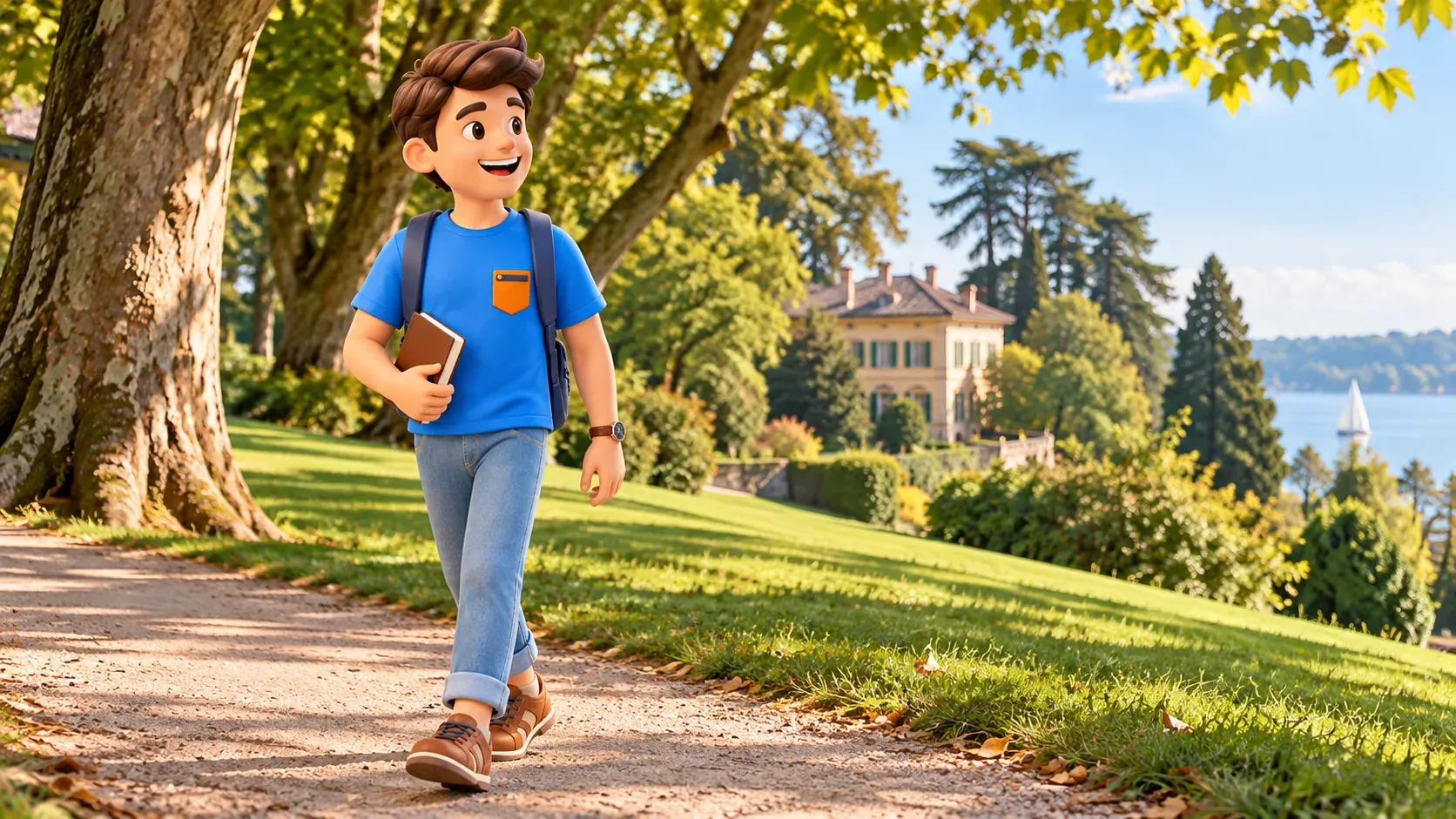
Neighbouring Parc des Eaux-Vives also preserves the feel of a former private estate through lawns, an old house and landscape views. Add it after La Grange if you want more park time. You need not explore both with identical thoroughness to appreciate the relationship between lakeside gardens.
Compare one detail: how the house appears, where the slope feels stronger, or how water opens between trees. That makes the second park a new impression rather than a repeat. If you no longer feel like noticing differences, finish earlier without concern.
Plage des Eaux-Vives is a separate waterside space, not another name for the park. Its definitive public opening in 2020 added a contemporary place for lakeside leisure. Reaching it from park paths involves suitable public connections and crossings.
Swimming is optional and is not part of this walking plan. Look at the shore and continue with your day if that suits you. The neighbouring lagoon is a separate natural area: observe from permitted places rather than treating it as open access for approaching wildlife.
If you want a beach day specifically, prepare it separately using current conditions. This article compares walks and does not assess today’s water quality or swimming arrangements. Being able to see the lake does not establish that every seasonal service operates throughout the year.
Right bank: Pâquis and the harbour’s urban mood
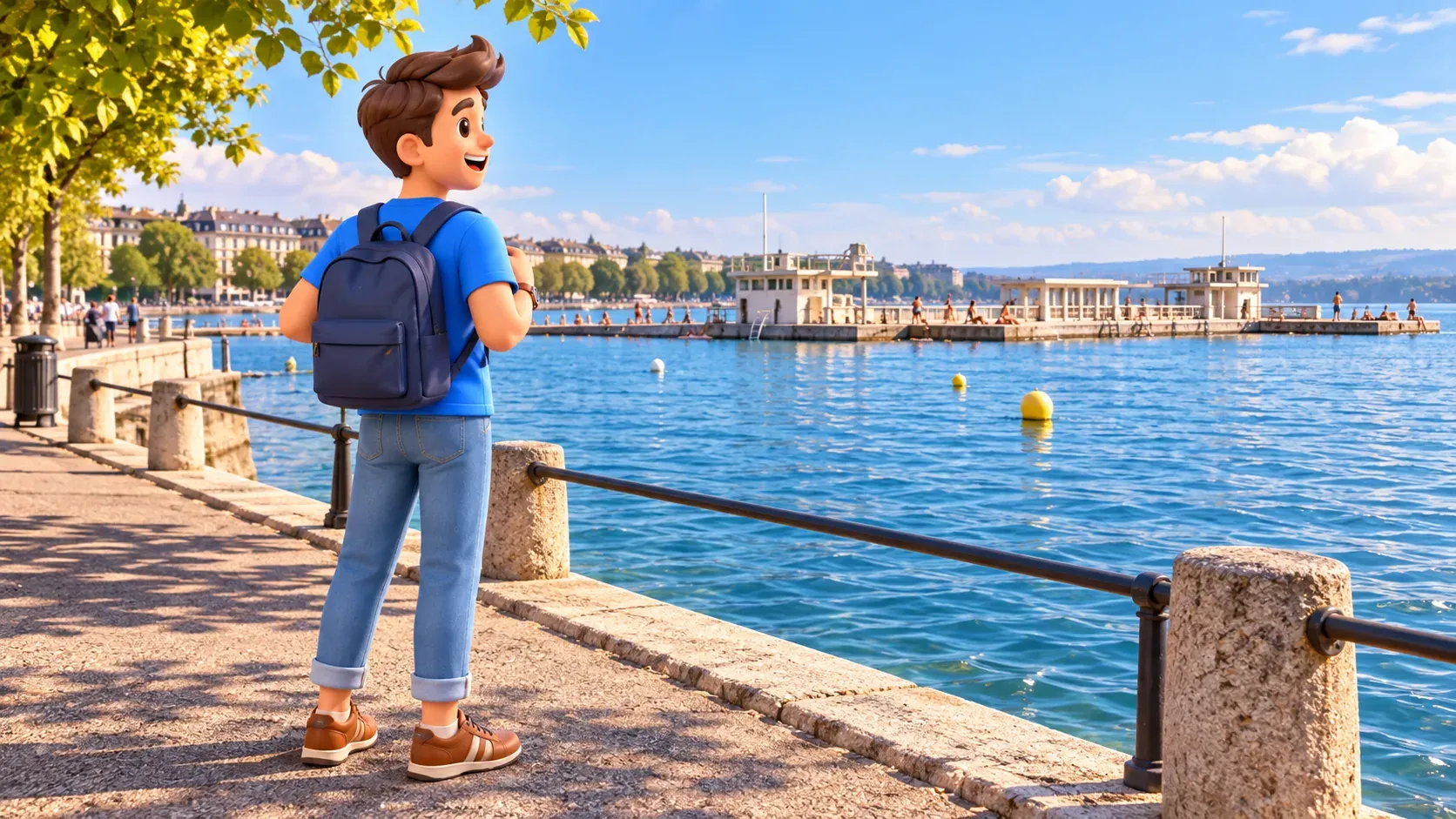
Pâquis suits a wish to stay close to city quays and watch harbour life. Water, passing people and the distinctive bathing jetty create the impression. This is a different walking environment from the large landscaped parks on the other side.
The Bains des Pâquis are a managed complex rather than a name for all the district’s public waterfront. The baths have a nineteenth-century history; residents preserved the 1930s concrete ensemble after a referendum in 1988. That background helps explain its importance as a Geneva public place.
Distinguish an ordinary walk from entering the baths, using the beach, sauna or hammam, and eating. Each activity has separate arrangements. If your aim is a short harbour view, there is no automatic need to add every service or assume it is included in reaching the waterfront.
Choose a comfortable place on a permitted public approach and look at the jetty’s shape, the water between it and the shore, and the movement around it. A wider photograph can show how leisure infrastructure sits directly within an urban harbour.
In wind, an exposed section can feel different from a sheltered street. If continuing is unpleasant or a temporary restriction is present, stay on an available broad promenade. The walk remains worthwhile without reaching the farthest possible point.
For a more specific right-bank plan, use our Quai du Mont-Blanc walk towards Pâquis. It helps choose an urban day without automatically attaching the whole chain of northern parks.
Farther north on the same bank: Mon Repos and Perle du Lac
Mon Repos and Perle du Lac lie farther north along the right bank. Treat them as their own combination of neighbouring green spaces. If gardens are your interest, you do not need to visit Pâquis first before beginning the main outing.
Mon Repos connects with the Plantamour family’s estate history, while Perle du Lac surrounds Villa Bartholoni. These are distinct houses and parks. Their modern relationship shows how historic lakeside estates became part of the city’s public leisure environment.
Choose one pleasant section in Mon Repos, then continue by available public paths into Perle du Lac. There is no need to remain continuously on the most exposed waterline. Tree-lined paths and brief views can alternate according to what feels comfortable now.
Shade and wind change, and resting space depends on the day. Being near the lake does not guarantee cool conditions or calm water. Look first at the real setting, then decide where to linger and how much farther to continue.
For a ready direction, see our walk through Mon Repos and Perle du Lac. Add a museum, cafe or event because it interests you and fits its current schedule, rather than simply because it is nearby on a map.
Choose a bank for your own rhythm
With several days in Geneva, separate different moods rather than fitting both banks into one outing. Choose La Grange and a little of Eaux-Vives one day, then an urban episode at Pâquis another. The northern parks can become a quiet outing when you want greenery after a more intensive cultural programme.
For a small personal photo series, try three scales: the setting as a whole, one architectural or natural detail, and the water. The pictures then show the place’s character rather than a repeated horizon. You do not need a new landmark every time; look closely at what surrounds a comfortable path or resting place.
For garden landscape, start with La Grange and decide whether the second park appeals. For a short urban episode, choose Pâquis and nearby quays. For greenery and pauses, arrive directly at Mon Repos or Perle du Lac. This is a choice of walking character rather than a contest between banks.
To make your chosen shore part of the whole trip, develop a personal plan in RoadMe. The app helps bring places that interest you, walking sections and rest into a complete sequence. Using it on the day is much more convenient and efficient than connecting scattered notes before each outing.
For a shared walk, first agree on the main activity. One person may want to move while another would prefer sitting beside water. Choose a common section and give the pause enough time. A small distance can become a satisfying shared day instead of constant waiting for the next stop.
Avoid comparing banks only through a weather-perfect photograph. Under cloud, tree forms, architecture and water colour remain interesting; in bright light, choose a useful foreground and real resting places. The view need not match a promotional image for the walk to work.
Plan an ending on the same side: a convenient exit, onward transport or your next appointment. If steps, gradients or the distance to a stop matter, check the actual connection. No universally step-free circuit of every park, jetty and water approach has been established here.
One chosen bank can be enough. At the end, remember a park or urban moment, one water view and a good pause. The other side remains a separate idea for another day, when the same harbour may appeal in a different mood.