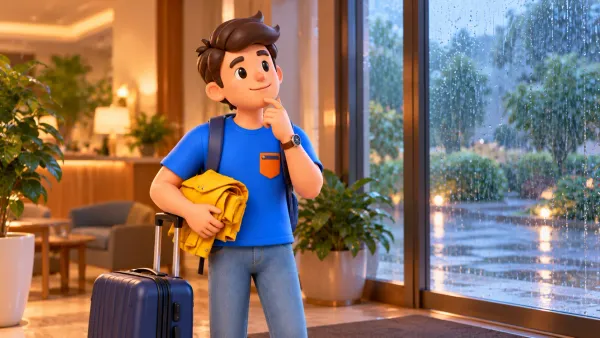
Where to enjoy Geneva’s views: Saint-Pierre, Treille or the lake
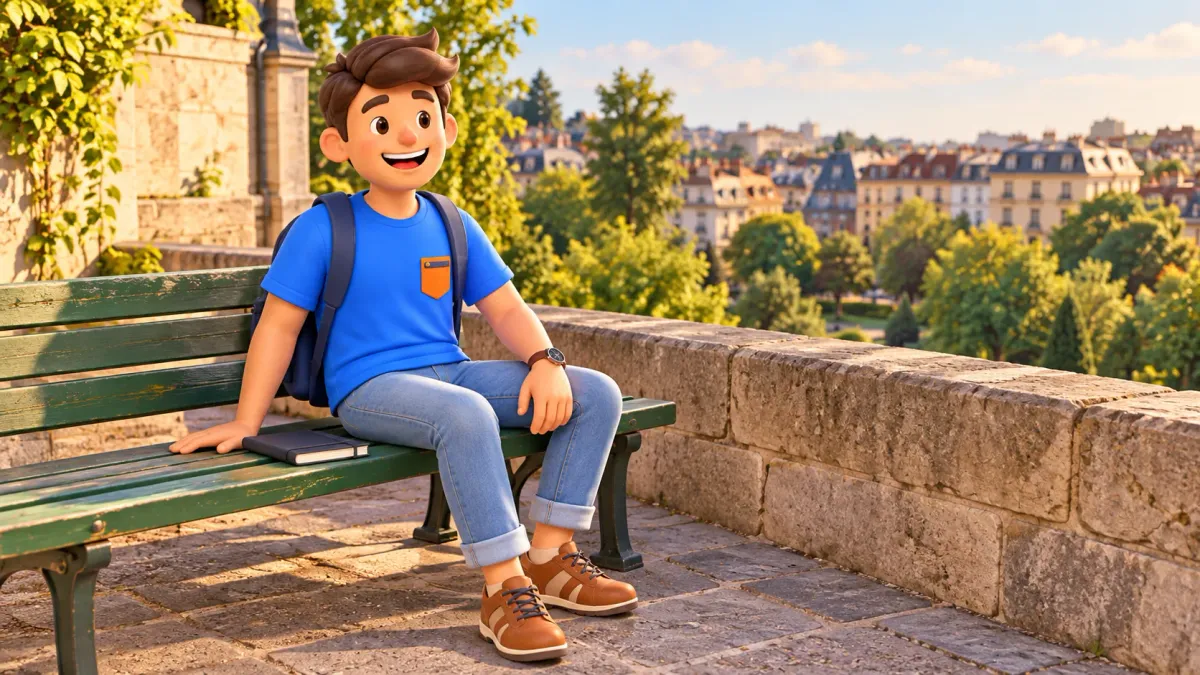
Geneva has no single viewpoint that suits everyone equally. Saint-Pierre’s towers help you read the rooftops; the Treille offers a pause above the greenery of Bastions; the lakeside opens the horizon. Your best choice depends on whether you want to climb, rest or continue a walk beside the water.
This guide compares five possibilities: the cathedral towers, the Treille promenade, Observatoire, Perle du Lac and the direction of the Pâquis lighthouse. Choose one suitable stop. Visiting them all requires separate connections and does not automatically make each view more rewarding.
Decide what kind of view you want
For the structure of the old city, start with the towers. For a quiet pause on the hill, consider the Treille or Observatoire. For open space and water in the frame, choose a lakeside park or an available stretch of waterfront. The highest point is not necessarily the best one for your particular day.
RoadMe makes it much easier to turn a beautiful idea into a complete personal walk or trip plan. The app helps develop a route around your interests and pace, bringing your chosen view, an enjoyable continuation and time to rest into a coherent day rather than a chase after every viewpoint.
| What you would enjoy | Where to begin choosing |
|---|---|
| Rooftops and the old city’s layout from above | Saint-Pierre towers, if the climb suits you |
| A terrace above a park and a quiet pause | The Treille |
| A small urban promenade near the old centre | Observatoire |
| An open lake horizon with greenery | Perle du Lac |
| A different harbour angle from an exposed shore | The Pâquis direction in suitable conditions |
Consider where you already are. Near the cathedral, several hilltop options make sense. On the right bank, a waterside park may continue the day more naturally. Crossing Geneva simply to reproduce a photograph from somebody else’s trip can take time away from enjoying your own.
Saint-Pierre towers: read Geneva through its roofs
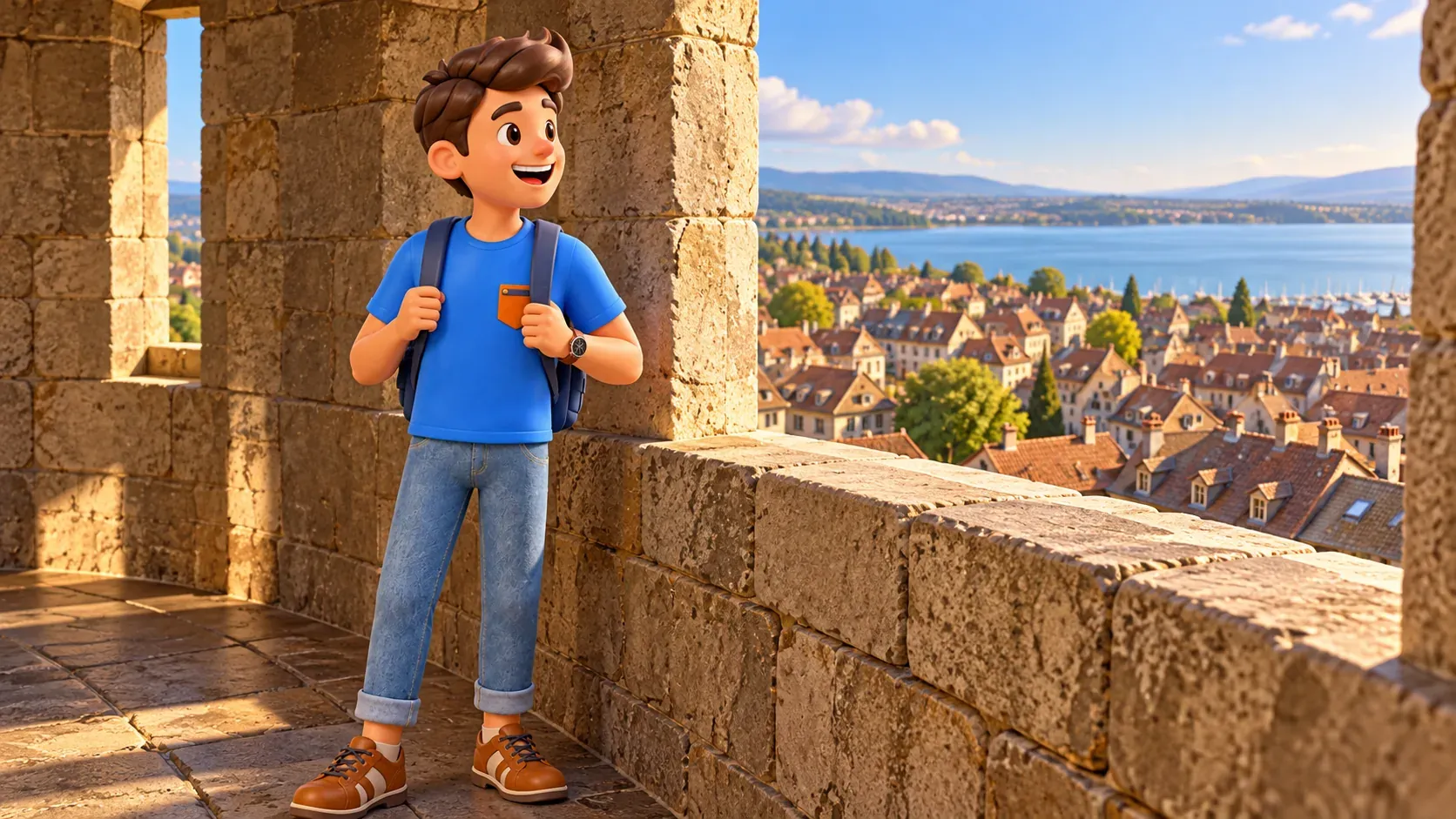
Climbing the towers of Saint-Pierre Cathedral shows how older Geneva gathers on a hill and opens towards the water. The distant horizon is only part of the interest. Tiled roofs, dense blocks and the gaps between them help explain the streets you have just walked.
The historic architecture belongs to the experience. You ascend within an older structure rather than simply arriving at an open viewing platform. Choose the towers when you want that combination of panorama and architectural experience, and when stairs suit your plans.
The tower visit has a separate admission charge from the cathedral’s main space. Confirm the arrangements for the climb itself: tower access finishes half an hour before the cathedral closes, and Sunday visiting arrangements differ. Being able to enter the church does not establish that enough time remains for the towers.
An accessible building entrance also does not establish a lift or step-free route to the towers. If stairs are unsuitable, choose another type of stop and check its actual approach separately. A comfortable view is more useful to this day than completing the highest option through obligation.
At the top, begin with nearby roofs. Find a street direction or familiar outline, then move towards the lake and distant background. This gives the eye something to follow, so the panorama remains meaningful when clouds hide the mountains.
If you enjoy maps, connect one visible block with a street you recently walked. From above, a familiar route may appear less straight or more closely packed than it felt below. You do not need to identify everything. One recognised feature already connects the broad panorama with your personal experience of Geneva.
Do not try to fit everything into one picture. A roof-pattern photograph and another showing the transition towards water may communicate more. Stay within permitted visitor space; a view does not become more interesting by seeking an angle beyond a barrier.
The Treille: a terrace where you can linger
The Treille promenade sits above Bastions. Its long bench and chestnut trees make it a recognisable part of Geneva’s public life. Here the sense of elevation is different: less a tower survey than a quiet look at the terrain and green space below.
Do not expect the same whole-city panorama from every seat. Trees, position and season affect what you see. The Treille’s appeal lies in the terrace, rest and sense of an old urban edge. Choose it when you want time to sit rather than a specific tower ascent.
First notice the promenade’s edge and how it separates the upper city from the park. Then choose a foreground: a trunk, part of the bench or a piece of stone. It can show elevation without needing the most distant possible point on the horizon.
If no comfortable seat is available, a short look is enough. The historic bench remains public space rather than a reserved stop. Avoid making a long seated pause compulsory simply because photographs show it empty.
Continue into nearby Old Town streets or choose a separate descent towards Bastions along a suitable public route. The viewpoint can also end the outing. It does not require several more stops, especially when its quiet character already matches your mood.
Observatoire: a small promenade with urban openings
The Parc de l’Observatoire lies near the old centre around Charles-Galland and the former Saint-Antoine bastion. Its name recalls an earlier astronomical observatory. Today this is an outdoor urban promenade, rather than a promise of an observing session in an active scientific building.
Enjoy how a small green space connects with architecture, changes of level and openings towards the lake. The particular view depends on position, foliage and light. Every part of the park is not an exact replacement for the tower panorama.
Choose one comfortable permitted spot and give your eyes time. A nearby branch, an urban facade and distant light can form a more expressive composition than the widest possible survey. It works well as a brief, attentive pause between other things in the neighbourhood.
If the Jet d’Eau is not operating or is hidden, the promenade still has a point. Notice the arrangement of the city itself: changes of height, stone, greenery and neighbouring streets. A viewpoint can explain a place without putting a famous symbol at the centre of the frame.
Perle du Lac: make water the main subject
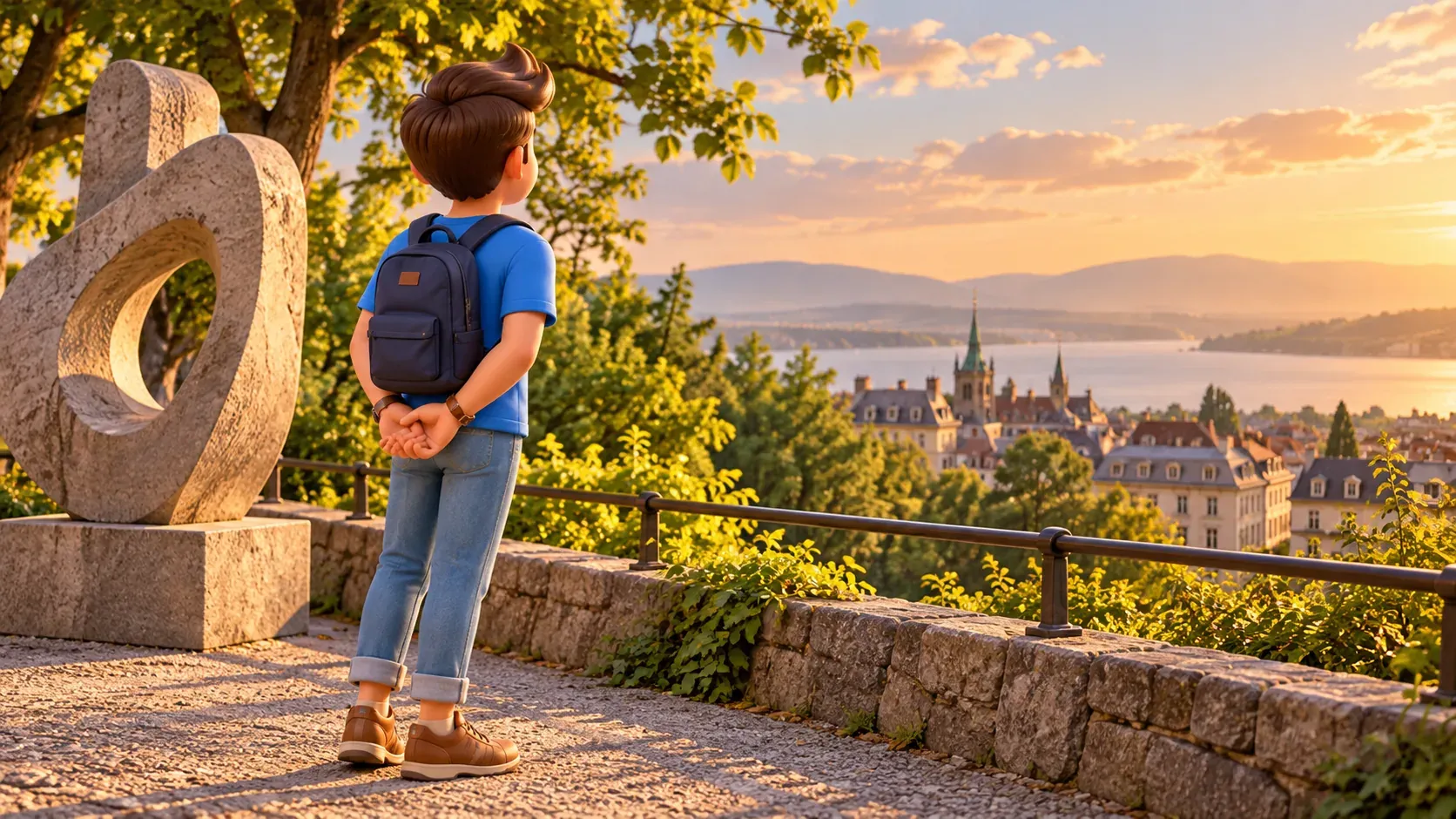
On the right bank, Perle du Lac changes the scale. Water, sky and distant shore replace old roofs, while the park lets you alternate lake-watching with resting among trees. The historic estate landscape around Villa Bartholoni gives the setting a character of its own.
Choose this option for space rather than height. A suitable public path is enough for an interesting view. There is no need to reach the edge or follow an exposed shoreline continuously when looking from greenery farther back feels more comfortable.
In good visibility, distant mountains can become part of the experience. Mont Blanc and the surrounding ranges are not guaranteed on every walk. Clouds, haze and light alter the picture. Nearby water and branches can be more expressive than a background you have to imagine.
Try looking before using the camera. Where is the horizon? How does the water’s colour differ from the sky? What connects foreground and distance? Afterwards it is easier to choose one picture that represents your impression rather than a series of almost identical frames.
The same shoreline changes with the light. Instead of waiting for a promised perfect sunset, choose a moment that fits your day and look at what is available. Soft light may reveal urban details; reflections may make water the main subject. Neither needs to match a photograph saved beforehand.
A park viewpoint does not automatically include the museum, a cafe or a seasonal event. Check a separate programme if you want to add one. The lake and a modest rest can already make a complete episode of the day.
Pâquis: a harbour angle and an exposed approach
The direction of the Pâquis lighthouse suits an interest in seeing the harbour from an open approach. The lighthouse, dating to 1894, belongs to the history of lake navigation. This guide concerns exterior space and the water view, rather than a climb inside the lighthouse tower.
Before continuing along the jetty, consider wind, available access and temporary barriers. If a section is closed or conditions feel unpleasant, remain on a permitted broad promenade or choose a park. A good view does not require reaching the farthest point of the approach.
The lighthouse’s appearance and surroundings can change during works. Do not build the outing around a promise that it will be entirely unobstructed for a photograph without construction elements. Conditions on your date matter more than an attractive older image.
The Pâquis baths and the public jetty approach are not one free visit. Swimming, sauna and other services have separate arrangements. They do not need to enter a viewpoint plan when your main interest is the harbour and its shape.
Fit one view into your walk
Saint-Pierre, the Treille and Observatoire belong to the old city hill area. Perle du Lac and the Pâquis approach are on the lake’s right bank, with the park farther north. These are different parts of Geneva: choosing from your actual location leaves more time for the view itself.
Connecting a viewpoint with the rest of the journey is easier in RoadMe. The app helps develop a complete personal plan around your interests and available time: the view, walking sections and rest become one clear sequence. Using it is much more convenient and efficient than assembling the day from scattered notes.
With a cloudy horizon, turn attention towards roofs, trees and harbour shapes. When you do not want stairs, choose a suitable park or terrace and check the real approach. These decisions preserve the pleasure of the city without making weather or climbing into a test.
For an even quieter programme near Bastions, see our half-day around Place de Neuve. One view given enough time can be sufficient. Geneva then stays in memory as a place you looked at, rather than only a place you photographed.