
Gazhane, Feshane and Çubuklu: Istanbul’s industrial second lives

Industrial Istanbul often stays outside a first impression of the city. Palaces, mosques and boats take the foreground, while buildings that supplied light, manufactured goods or stored fuel seem incidental. Gazhane, Feshane and Çubuklu’s silos change that perspective. They share neither an original function nor a neighbourhood. What connects them is a new urban role: industrial heritage becomes a setting for culture and meeting. For travellers, they reveal an Istanbul whose value also lies in structures made for everyday work rather than ceremonial display.
Three names in one article do not mean a short walk through neighbouring courtyards. Gazhane is in Hasanpaşa, Kadıköy; Feshane is in European Eyüpsultan beside the Golden Horn; Çubuklu is in Asian Beykoz on the Bosphorus. Choose one for your interests and the rest of the day. This is a comparison of histories and ways of looking, not a compulsory marathon. Decide whether you want to explore a former energy site, a textile complex or the unusual geometry of storage tanks beside the water.
What a new life for an industrial building means
Production gives architecture a particular logic: large volumes, repeated supports, practical daylight and space for equipment or moving materials. Changing the function does not automatically erase that logic. It becomes part of the experience. In a cultural venue, notice what distinguishes it from a purpose-built museum room. Why this scale? Why the repeated windows? How does today’s visitor path coexist with the older structure? Those questions make the place legible without requiring a technical understanding of every operation that once happened there.
RoadMe makes finding places like these much easier by developing a personal plan for your whole trip around your interests, available days and comfortable pace. The app brings industrial architecture, exhibitions, walks and rest into a coherent journey rather than a collection of distant addresses.
Restoration does not restart the factory or turn every surviving mechanism into an attraction. Today’s entrances, barriers and authorised paths define the visit. An industrial staircase is not for climbing simply because it looks appealing in a photograph. A closed section need not be accessible just because a courtyard is open. Separate three layers: former work, surviving form and current use. New activity then adds to memory instead of hiding everything beneath the broad label of an arts space, a description that can sound the same for very different buildings.
Gazhane: a place that helped light the city
Müze Gazhane grew from the Hasanpaşa gasworks, operating from the late nineteenth century to meet urban demand for lighting and fuel. Production ended in 1993; the restored complex opened in its cultural role in 2021. This is not a factory-like backdrop invented for a cafe. It belongs to the infrastructure supporting everyday streets and homes. That connection gives the technical volumes a human meaning. You do not need to arrive knowing machinery to understand that a city’s familiar life depended on places of work like this.
Observe relationships between low buildings, open structures and spaces in between. The complex reads through several scales rather than one façade. Where does a frame hold your attention, where a window sequence, where a path or planting? Do not identify every original purpose from shape alone. The site’s history explains some things and its current organisation explains others. A courtyard used for meeting today is connected to industrial work without recreating its routine. The interesting experience lies between preservation and change, not in pretending that every contemporary detail belongs to the past.
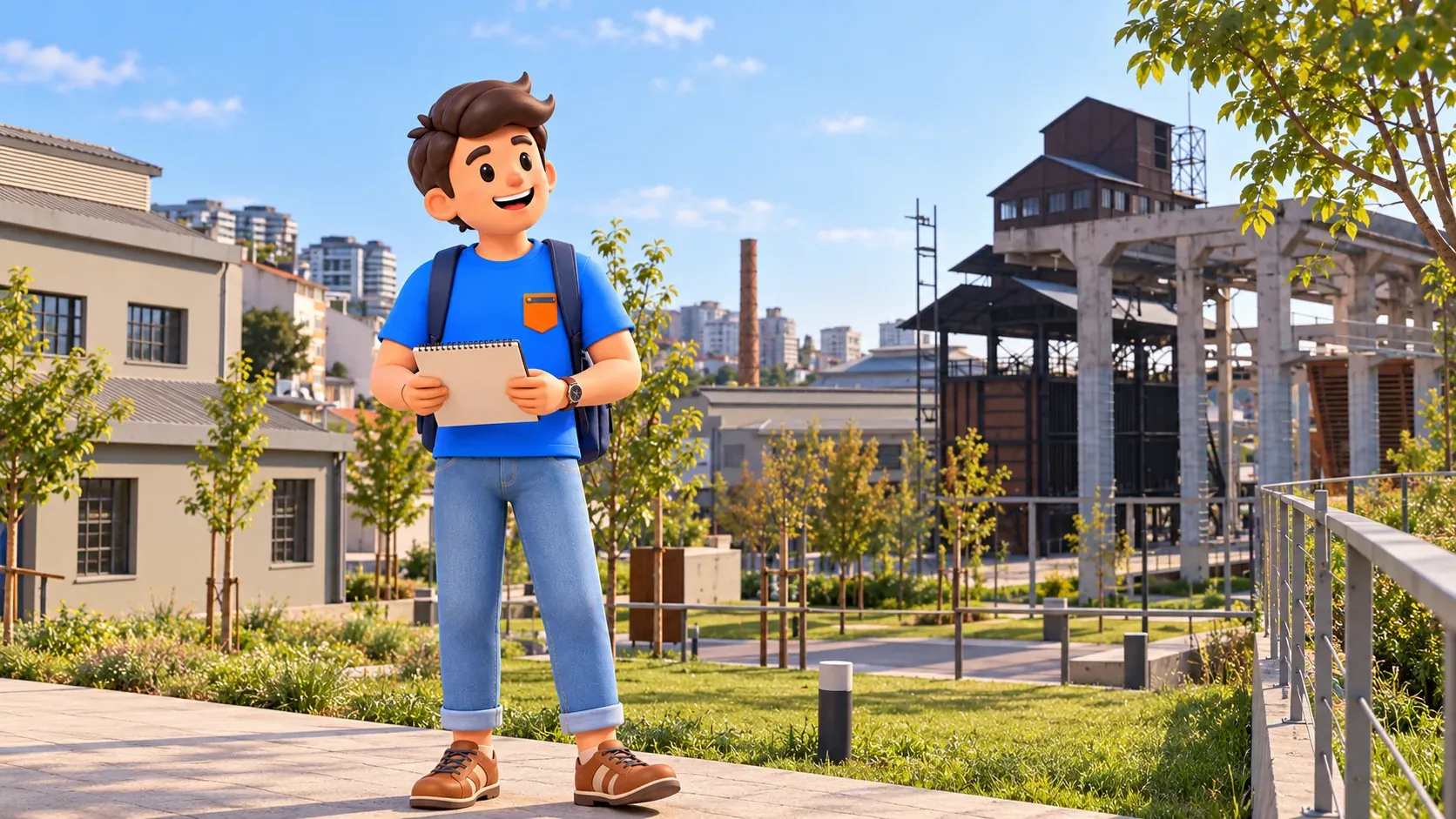
A name containing “museum” does not make the entire complex a single room with one timetable and one ticket covering everything. A gallery, library, event and ordinary time on site can have different arrangements. Choose a principal aim: architecture, a particular exhibition or something in the current programme. Check registration and participation separately for a concert or workshop. Avoid promising a child an activity from an old poster. A worthwhile visit does not require entering every door or attending an event discovered only after you arrive.
Feshane: from headwear to a hall for art
Feshane is associated with fez manufacture and the nineteenth-century textile industry. Behind an apparently personal item of clothing lay organised labour, equipment and a shift towards factory scale. That story reveals more than an attractive brick-and-stone wall. The complex experienced fires, rebuilding and alterations; it is not an untouched time capsule, and visible parts need not all be contemporary. After renewed restoration it reopened as Artİstanbul Feshane in 2023. The cultural function adds another chapter to a long biography rather than cancelling everything that came before.
Outside, notice the length and repeated arched windows. An emphatic entrance does not make the whole place a palace: its meaning is tied to production. A small object, the fez, calls for a large collective setting once manufacturing moves beyond an individual maker. You do not need the full process to grasp that change of scale. It suggests a useful question: how do things that seem personal organise many people’s labour and leave substantial buildings in the city? The façade becomes evidence of an economic and social story as well as a pleasing surface.
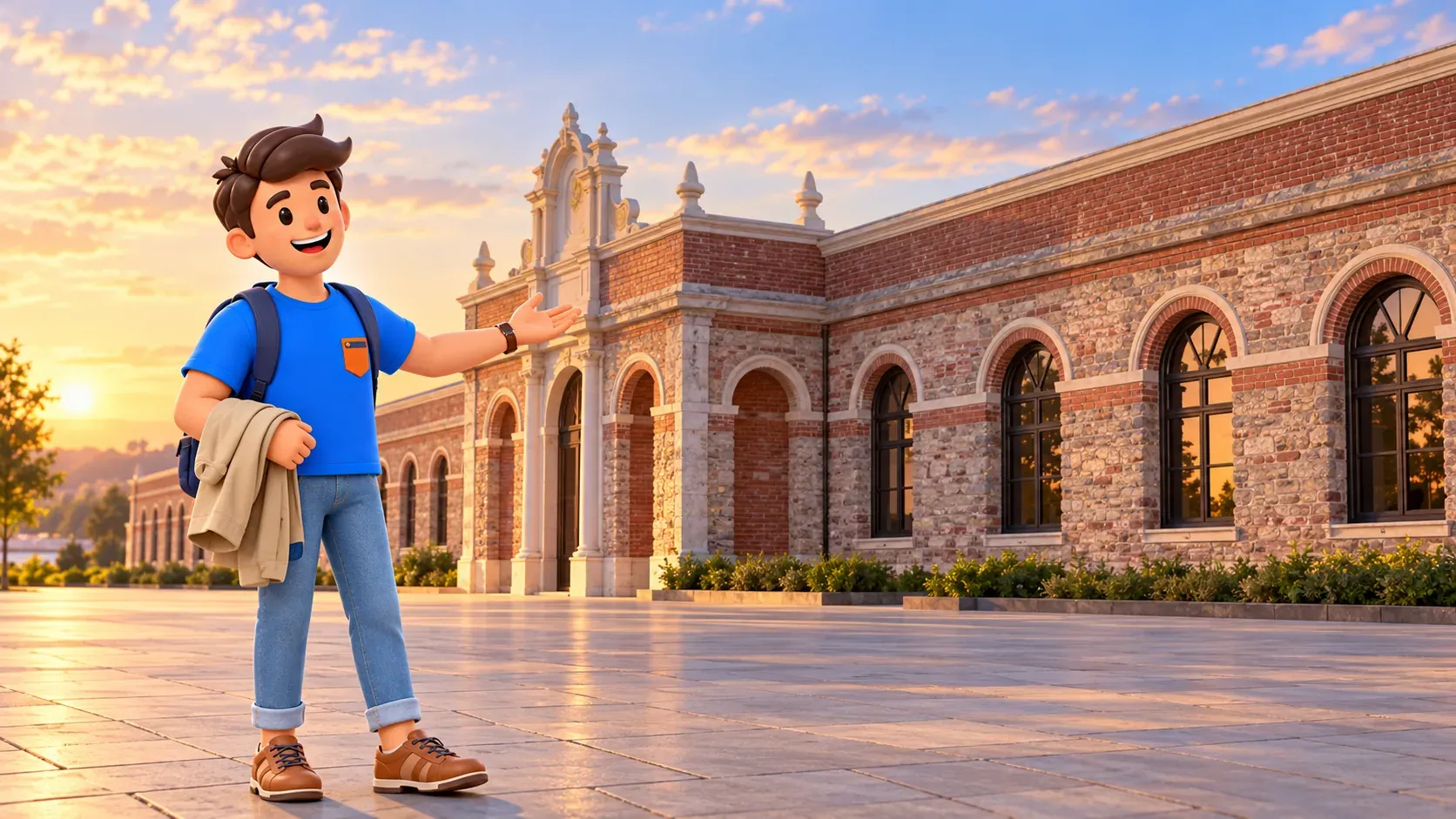
A current exhibition is an independent reason to come, but check its identity and content for your date. A major past international show does not become permanent because its photographs circulate widely. Concert crowds in an image likewise do not describe an ordinary day. Separate architectural interest from expectations of particular artworks. If art is the main reason for travelling, consult the present programme. The journey should not depend on a display that ended earlier. Feshane’s industrial history remains understandable as the cultural content changes, without freezing the site at its most photographed event.
Çubuklu: cylinders with a fuel-storage past
The word “silos” can suggest grain, but this particular site is associated with petroleum storage. Tanks were installed here from the 1930s. Their cylindrical shape is neither an architectural whim nor a palace motif: it recalls the former function. Following restoration, the complex gained a cultural life in 2024. New spaces occupy and accompany volumes originally made for something very different from ordinary public visits. That contrast is the starting point. Knowing what was stored here prevents a generic industrial label from producing an entirely mistaken story.
Look at rounded tanks, new openings and the urban landscape beside the Bosphorus. A person nearby helps convey scale. You need not climb a technical stair to understand a cylinder; authorised visitor paths remain the basis of the encounter. A cultural centre also does not guarantee that every museum section opens simultaneously. Individual spaces may close for exhibition preparation. Do not make the entire day depend on an imagined interior. Architecture, a selected current programme and a walk are connected reasons to come, but they remain distinct experiences with different practical conditions.
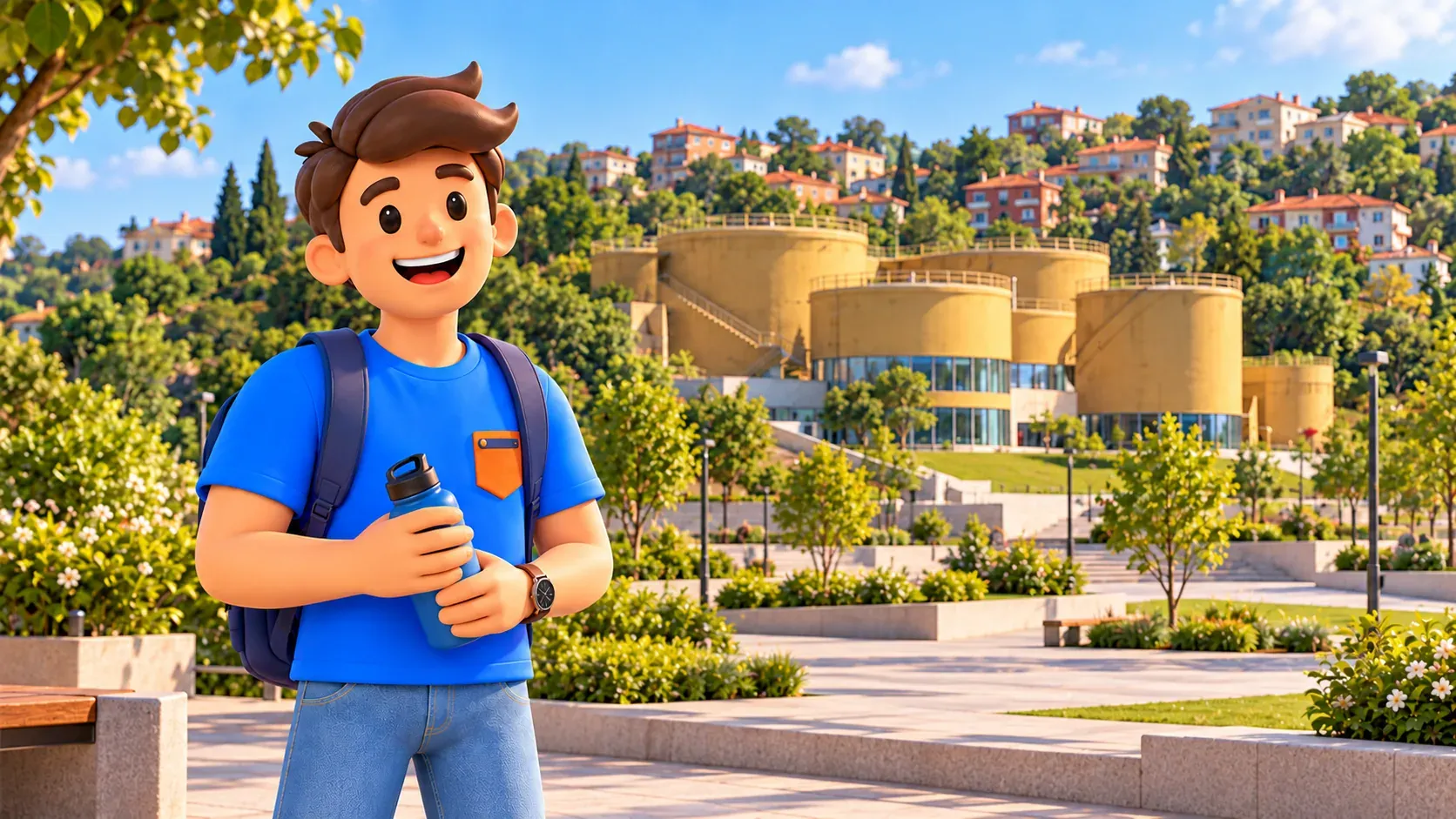
Being near water does not turn these three places into neighbouring piers. Çubuklu occupies a different part of the Asian shore from Kadıköy, while Feshane belongs to the Golden Horn. Even movement between Asian districts needs separate travel time. Avoid choosing everything on the vague basis of being “over there”. First decide where the rest of the day takes place and how much energy you want to spend moving. A shared architectural theme does not remove Istanbul’s geography or make transfers disappear from the available hours.
How to choose one site
Choose Gazhane for urban energy history and several cultural uses within a former working complex. Feshane offers textile history, a long historic hall and changing art programmes. Çubuklu attracts interest in unusual fuel tanks and their adaptation beside the Bosphorus. This is not a ranking or a promise of identical facilities. Your theme and location matter. A place that fits naturally into the day can be more rewarding than crossing the city because a name appeared on someone else’s list of supposedly indispensable stops.
Allow an approach, your chosen open component and a pause, with travel counted separately. A universal duration helps little: a particular exhibition and a brief exterior look need different attention. Do not automatically add every library, museum and cafe shown on a site plan. You can keep a clear purpose and finish without treating a missed door as failure. If avoiding steps or joining a particular activity matters, clarify those exact conditions. A large campus does not guarantee the same convenience in every building or across all the links between them.
What a surviving structure can tell you
You can compare the three stories after visiting only one. Recall differences between a production space, a long hall and a storage volume. Industrial architecture is not one visual style. Gas, textiles and fuel created different requirements. Culture now uses those distinctions: an open site here, a repeated window line there, an expressive enclosing shell elsewhere. Modern lighting, glazing or signs do not have to be historical. Recognising previous purpose and present adaptation is more useful than expecting every element to have the same age or belong to one untouched moment.
These places also recall people whose work supported the city, even though this article does not reconstruct individual workers’ biographies. A frame stood within labour; a tank belonged to a chain of storage and movement; a factory hall accommodated repeated operations. You need not romanticise former conditions to value preservation. Notice instead how practical forms survive changed needs and find another audience. Culture becomes more than an exhibition placed inside old walls. It continues an urban biography in which useful, technical and ordinary things also deserve attention and a place in memory.
A simple question can guide the visit: what did production need here, and what serves today’s visitor? Do not confidently invent a technical answer when no explanation supports it. Noticing the question is worthwhile. Compare a window with a room, an external stair with an authorised path, a curved wall with a new entrance. This small practice adds substance without a lecture or specialist training. It also travels with you. A reused warehouse somewhere else may stop looking like an incidental old building between more celebrated monuments.
Continue the theme without overloading the day
For a separate Asian Bosphorus plan, see the article on Çubuklu and the Hidiv area, where access to different components is treated separately. If collections and technology interest you more, consider a day at the Rahmi Koç Museum. That is another format, not an obligatory extension of all three sites. One chosen place with a clear theme can offer more than several superficial stops. Save the next industrial story for another day, leaving room to notice how a building returns to ordinary city life.
RoadMe makes planning more convenient and effective by preparing a personal itinerary for the whole trip around your interests, time and pace, including room for walking and rest. Download Istanbul beforehand while connected to the internet to use maps and navigation offline afterwards.
Gazhane, Feshane and Çubuklu matter for more than making former workplaces attractive. They show different ways to preserve practical architecture and give it a new purpose. Urban history continues after production stops. Begin with one place, distinguish its original role from its current life and avoid asking it to provide everything at once. Beside the familiar Istanbul of palaces and mosques, another city emerges: one of lighting, labour, storage and new encounters within older structures.


