
Çubuklu in half a day: waterfront silos and Hıdiv Pavilion
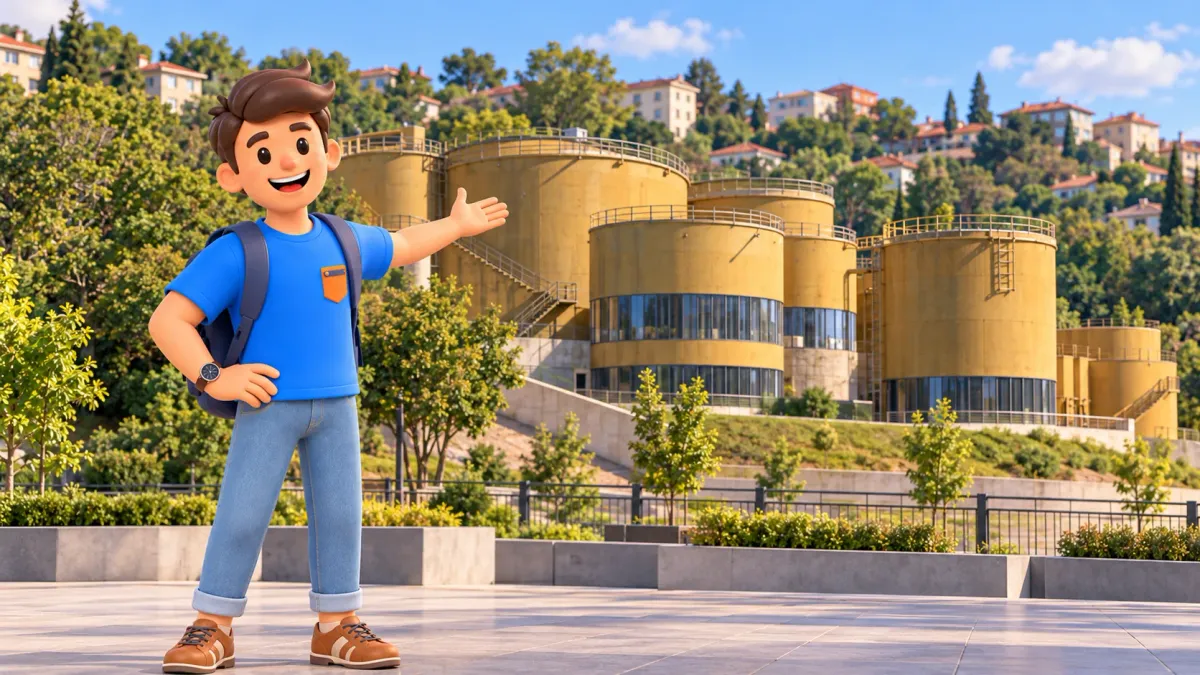
Çubuklu offers an unusual Istanbul contrast: former industrial storage tanks beside the water and a historic pavilion among trees higher on the slope. This half-day suits an interest in contemporary art, expressive buildings and a green pause. The essential planning point is the hill. The silos and Hıdiv Pavilion may look close on a map, but they are not linked by a short, level waterfront stroll.
Allow approximately four to five hours after reaching the silos. The core plan includes one selected open art area, a separate urban ascent, a walk through accessible grove paths and the pavilion exterior. Palace interiors, the tower and the historic lift are not included. Travel from your accommodation and a descent back towards waterfront transport are additional. The timings below are editorial estimates rather than measurements of an author-tested walk.
A half-day plan from the silos to the grove
Give yourself fifteen minutes to orient yourself, seventy-five to ninety for an open art section, forty to sixty for the uphill link, and forty-five to sixty for accessible grove paths and the pavilion exterior. Protect thirty to forty minutes for rest and another twenty as a buffer. The route finishes at your chosen grove exit uphill. Add any descent to the shore before calculating the total time you need for the day.
RoadMe makes it much easier to turn Çubuklu into a personal plan for your whole trip, developing the route around your interests, available days and preferred pace. Choose more contemporary art, architecture or green breaks so that your Istanbul day is thought through for you.
This order gives the art visit a clear place while leaving the length of the green walk adjustable. Treat the climb as a real part of the workload, especially after standing in exhibition spaces. If a hill is unsuitable, keep the silos and an accessible waterfront break as a shorter programme. There is no need to preserve the full duration once you have removed its most demanding section.
Decide what matters most before you arrive. A digital-art enthusiast may want longer in one genuinely open section; someone seeking architecture and trees can choose a focused art visit without attempting every room. A group with different walking speeds benefits from agreeing on a rest point before climbing. A clear priority makes it easier to stop adding places simply because they are already saved in a list.
Çubuklu Silos: industrial structures with a new purpose
Çubuklu Silolar is industrial heritage, not a palace. Former fuel-storage tanks received a cultural role after restoration, reopening in their new form in 2024. The interest extends beyond whichever exhibition happens to be showing. A structure once devoted to storage now invites people to look, pause and spend time. Its cylindrical volumes remain recognisable, allowing the previous use to become part of the experience rather than disappearing behind a new façade.
Begin from an accessible public area and look at the repeated curves, differing heights and the meeting of older shells with new entrances and glazing. Ask a simple question: what remains from the former purpose, and what was added for visitors today? You do not need specialist knowledge of industrial storage to see why reusing a building feels different from replacing it entirely.
Then choose one open art section. At the time of preparation, the municipal schedule lists the Nature and Science Museum as temporarily unavailable during exhibition preparation, so it is excluded from this core plan. One closed section does not make the entire complex closed, but neither should you expect everything to be accessible. Check the actual digital-art programme and the conditions of the area that gives you a reason to come.
Use the seventy-five to ninety minutes for attentive viewing rather than rushing past every sign. A digital work may have a sequence or a changing rhythm of light that is hard to appreciate in seconds. Give a selected work some time, then step outside its visual flow for a short pause. This is advice on looking, not a promise of a particular installation or fixed running time: programmes change.
The overall site timetable is not the opening time of every component. A library, exhibition and café may finish at different hours. The museum programme normally closes on Mondays, while other areas have their own arrangements. Avoid arriving for one section on the strength of a later closing time elsewhere in the complex. Check the specific space and any queue before making the rest of the day depend on it.
The uphill link needs its own place in the plan
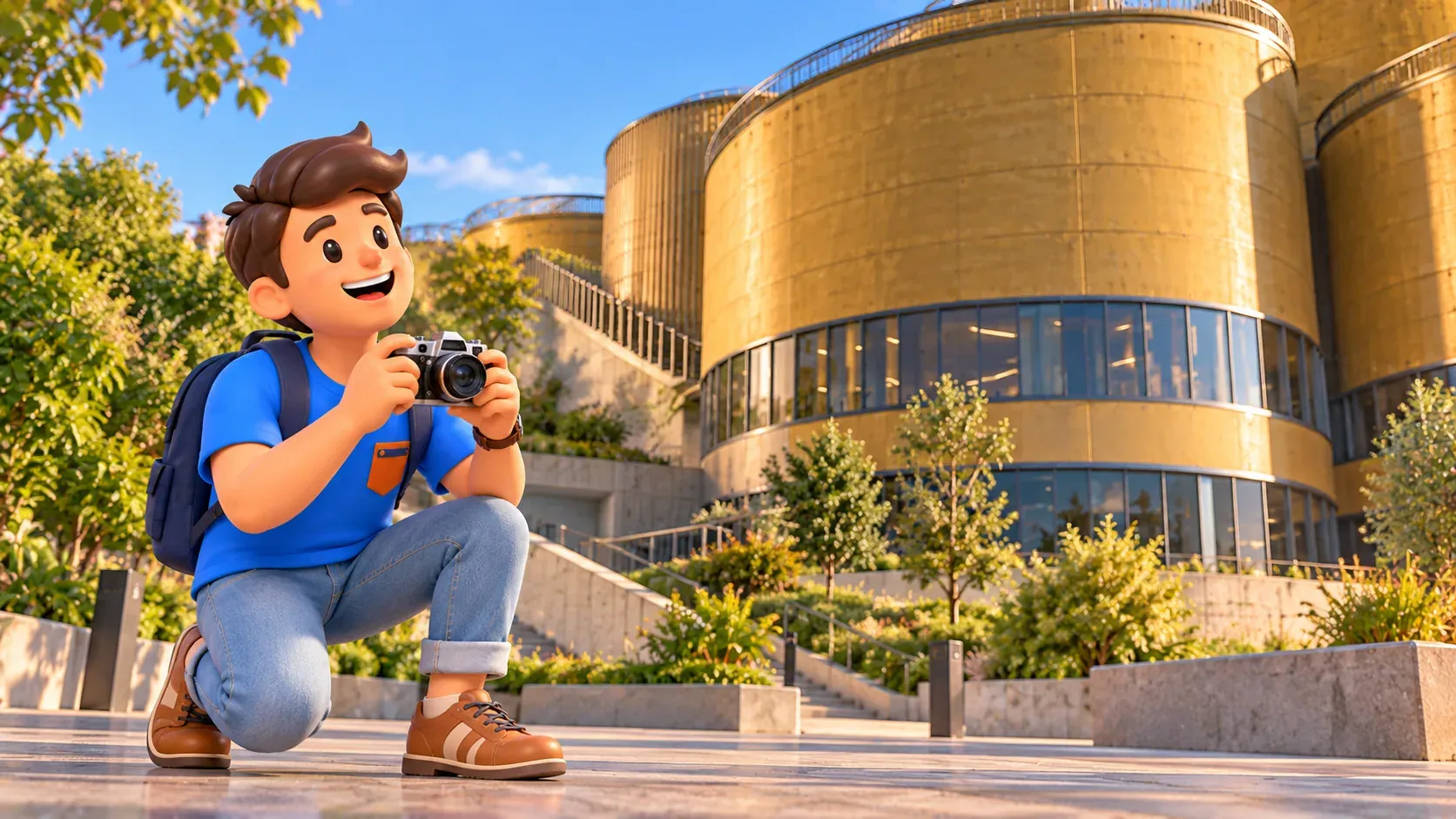
After the selected visit, take the public route actually open towards a usable entrance to the Hıdiv grove. The pavilion is southwest of the silos and above the shore. Streets, boundaries and the permitted gate determine the journey, not a straight line between two pins. Do not look for passage behind the tanks or through a closed gate. Forty to sixty minutes is an estimate for a gentle ascent and may increase with the chosen approach.
Before starting, consider energy and drinking water. If you already want a long sit after the exhibition, rest below and reassess the hill. The ascent does not become compulsory because the art visit finished early. A suitable separate transport option can be considered after checking actual arrangements, but do not assume a guaranteed shuttle between the places. Sometimes keeping the pavilion for another day preserves the pleasure of what you have already seen.
For a walking link, suitable shoes and an ordinary usable pavement matter more than a constant water view. Slopes, narrow sections and road traffic may affect the approach. Use permitted crossings and avoid private-property shortcuts. If steps are unsuitable, establish the access of the particular entrance beforehand. This article does not guarantee a continuously step-free path from the silos to the upper grove.
The journey also changes the character of the outing. After industrial cylinders and screen light, trees and softer lines gradually take over. There is no need to fill every metre with another attraction. Pause where you do not obstruct anyone and look back only from a safe position. If buildings block the view, that is an ordinary part of the neighbourhood rather than a reason to search for a compulsory panorama.
Hıdiv Pavilion among the trees
Hıdiv Pavilion was built in 1907 for the Egyptian khedive Abbas Hilmi. Its Art Nouveau character and grove setting offer a different architectural language from the silos. Instead of repeated industrial shells, the interest comes from the relationship between a building, its tower and surrounding greenery. A little historical context gives the exterior visit substance without turning it into a complete architectural inventory.
The operator, Beltur, describes restoration works and service at the separate roadside garden restaurant. The core plan therefore does not promise palace rooms, a tower climb or use of the historic lift. Mentioning a feature in an architectural description does not establish tourist access today. Check the actual restrictions before travelling, while keeping the central idea intact: accessible grove paths and an exterior impression rather than an assumed interior tour.
From an open path, notice how the building appears between the trees. You do not need the full façade and entire tower in one photograph. A partly concealed volume can explain the relationship with the grove just as well. Stay outside barriers. An older elevated Bosphorus photograph is not proof of access to the same viewpoint, and seasonal foliage can change the experience even along an ordinary permitted path.
The forty-five to sixty minutes here include an exterior look and a small loop on genuinely accessible paths. They are not intended for exploring the entire grove or seeking every viewpoint. Choose one pleasant stretch of trees, one architectural detail and somewhere suitable to pause briefly. A limited focus completes the art-and-greenery combination without turning the relaxed ending into another test of endurance.

Choose the day and keep the workload reasonable
Leave enough daylight for the ascent and your eventual exit. In heat, bring more water and shorten exposed stretches; in rain, account for wet surfaces and the slope. Wind at the shore and conditions among trees may feel quite different. Keep a light layer in a small bag. If the weather makes the hill unpleasant, a shorter silos visit with a break remains a complete option rather than a wait for improvement.
Each component has its own costs and conditions. An exhibition, recreation ground and food order do not automatically form a single ticket or service package. Check the current price of the specific visit and the menu where you intend to stop. Do not base the day on a promised inexpensive breakfast or an empty table beside the pavilion. Service, access and seating need separate confirmation, particularly during events or restoration restrictions.
Think about onward transport before leaving the shore. The silos’ proximity to ferry infrastructure does not guarantee your direction or timetable. Finishing uphill adds another task: reaching the chosen stop or descending towards the water. That return is not hidden inside the four-to-five-hour estimate. If an appointment follows, add time for leaving the grove, the approach, waiting and the actual journey rather than counting only the minutes spent aboard transport.
For a group, agree on a shorter alternative before climbing. If someone remains below, a later meeting needs a clear separate arrangement. For a shared walk, the slowest comfortable pace is usually the useful one. With children, do not make the Nature and Science Museum the guaranteed centre of the day until reopening is confirmed. Let the outing depend on an available programme rather than an appealing department name.

A break and Çubuklu’s place in your trip
Keep thirty to forty minutes of rest separate from the green loop. Choose an operating café on your way or an available place to pause, without relying on a particular empty bench. Put the screen away and compare two impressions: an industrial volume and a historic building among trees. A short conversation can finish the route meaningfully. Do not add another neighbourhood merely because a little time remains; a substantial journey home may still lie ahead.
For another art-and-greenery combination, keep Emirgan with the Sabancı Museum and park for a separate day. A more intimate historical plan on the Asian side is Küçüksu with Anadolu Hisarı. Choose between these routes according to your interests rather than stacking them together. Çubuklu already provides its own change of setting and height, which is easier to appreciate in an independent half-day.
Keeping and using the whole personal plan is more convenient and effective in RoadMe, where your interests and selected places form a considered trip itinerary. Download Istanbul while connected to the internet beforehand to use maps and navigation offline later.
Çubuklu stays memorable through the transition from a new cultural space to an older pavilion in greenery. Give the art time, account honestly for the climb and finish with a relaxed break. Two different architectural worlds can then become one complete small outing rather than two distant pins on a map.


