
Along Dubai Water Canal: An Evening Walk Between Three Footbridges
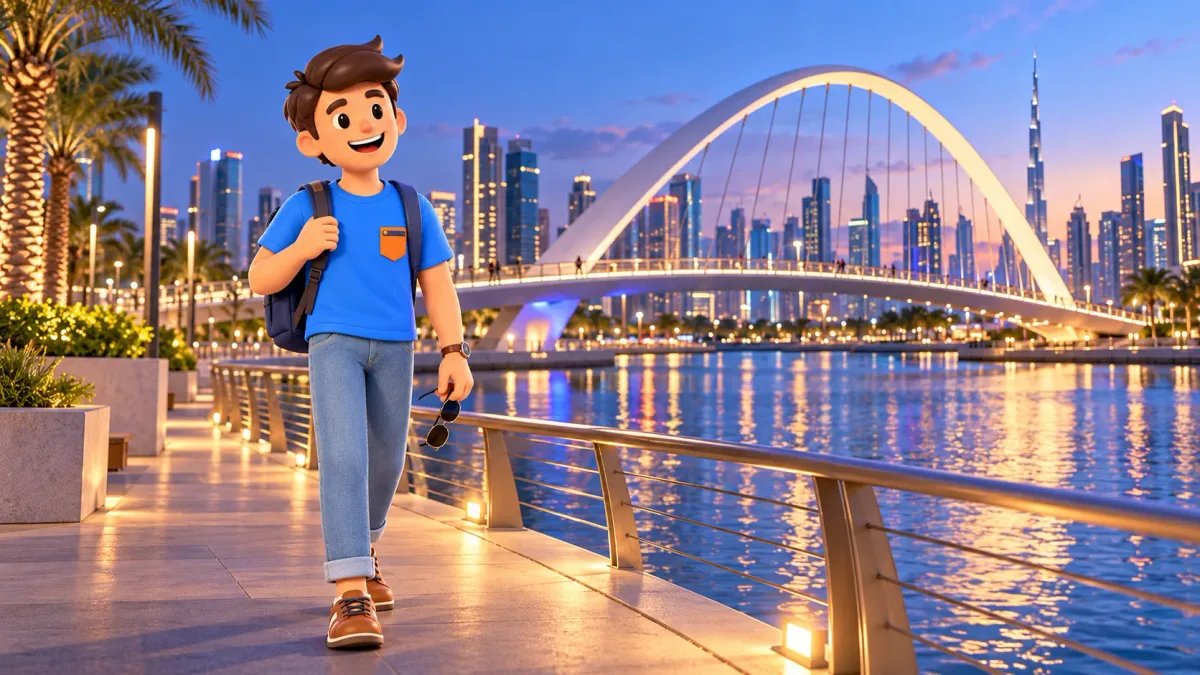
The most rewarding part of a Dubai Water Canal walk may be the bridges rather than the length of the waterfront. A cable-supported deck, a high arch and a turning frame offer three different answers to the same practical task: getting people across water. In the evening, changing light makes those differences especially easy to notice.
This outline follows the first pedestrian bridge, Tolerance Bridge and the Twisted Bridge, moving along the canal towards the coastal side. Allow roughly an hour and a half to two hours for a selective walk with pauses. That is an estimate, not a measured route. The waterfall beneath Sheikh Zayed Road is an optional separate look if the current operation and access suit your plan.
Choose your finish before choosing every crossing
RoadMe can build a personal route or whole trip plan around your interests, available time and pace. Try planning the canal walk in the app: it is much more convenient to connect bridges, pauses and the return journey than to coordinate separate sightseeing lists.
Use the three bridges as viewing points rather than a requirement to cross every one in both directions. Each crossing changes your bank and affects the next section. Decide which side you intend to finish on, then use the actual public paths and connections available that evening.
A practical sequence begins around Footbridge 1 near the Sheikh Zayed Road part of the canal, continues to Tolerance Bridge and ends towards Footbridge 3, commonly called the Twisted Bridge. Check the specific names and locations before leaving. Similar-looking canal photographs do not establish that two places are adjacent.
Keep a flexible block for walking between the bridges, with perhaps fifteen to twenty minutes of attention at each and a genuine pause. Do not fill every minute before you know the access arrangements. If a section is unavailable or the group wants less walking, two bridges can provide a complete outing.
Evening does not automatically mean cool conditions. Choose a suitable time for your group, carry water and take the whole journey into account, including reaching the canal and returning from the final bank. The plan is a short city walk, not a commitment to follow the entire waterway.
Footbridge 1: follow the cable lines with your eyes
The first pedestrian bridge uses a cable-stayed arrangement with bifurcated supports. The branching pylons and lines towards the deck give the crossing its recognisable shape. It introduces a different visual language from the single large arch of Tolerance Bridge.
Start from an accessible public approach and look at the relationship between the supports and the level walking surface. You do not need to calculate loads to notice that the cables connect different parts into a system. Form and practical support are visible together.
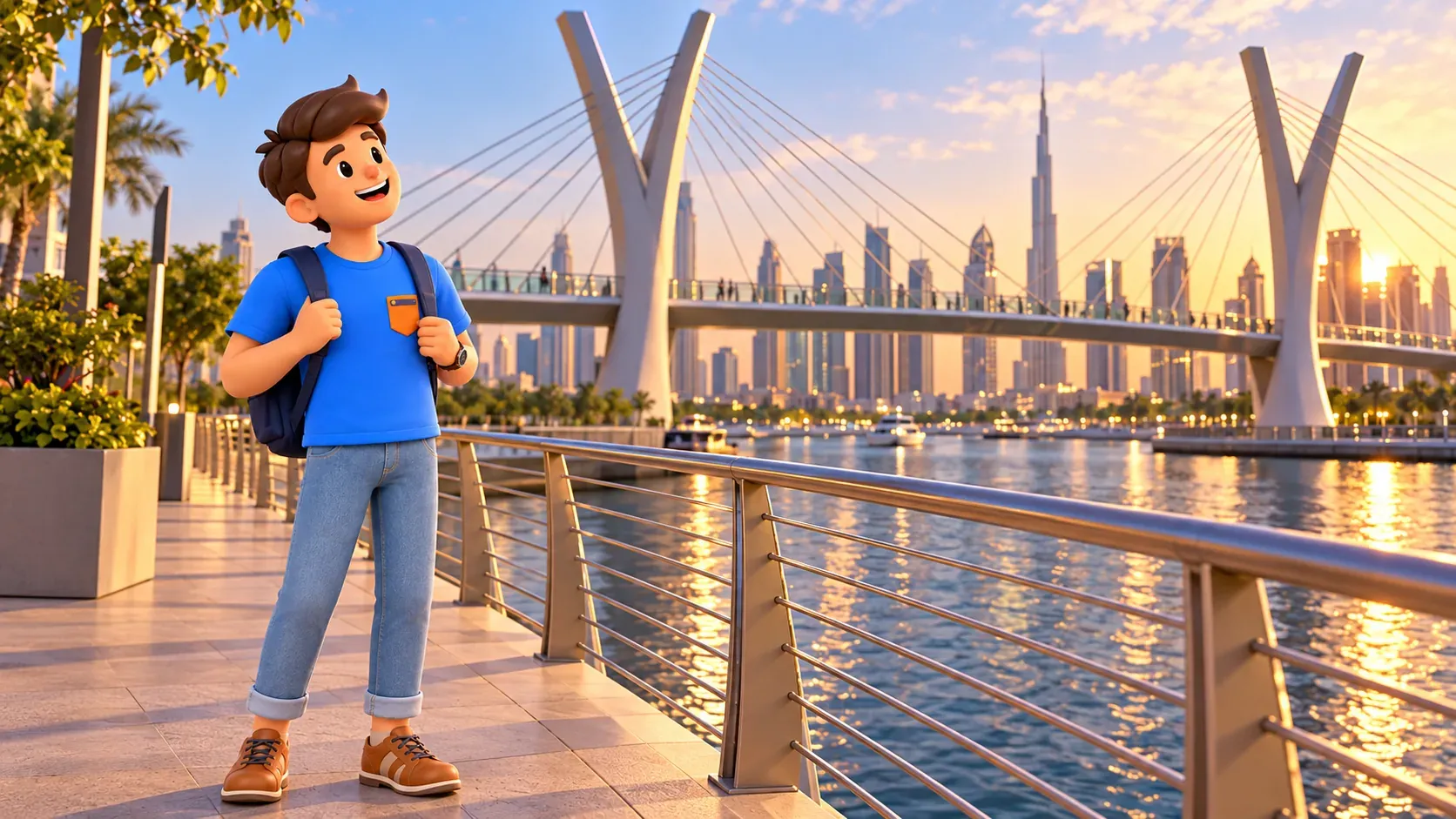
The bridge was built as part of the wider canal-making project, not simply dropped over an ancient natural river. Construction of the crossing and transformation of the waterway belonged to the same process. That context makes the infrastructure part of modern Dubai's urban history.
Compare the outline from the bank with the experience on the permitted walking deck. From outside, the whole system reads at once. During a crossing, the cable pattern changes around your body and the opposite bank gradually becomes the destination rather than the view.
Keep moving areas clear when stopping for photographs. A bridge remains a route for other people, even when it is your main sightseeing subject. Choose a position where you can pause safely and avoid leaning beyond the railings for a dramatic angle.
Tolerance Bridge: an arch above a changing walking line
Tolerance Bridge is distinguished by its high arch and curved pedestrian deck. Its walking line has an S-shaped character, so the direction of the view changes as you move. The arch and hangers are not seen from one constant angle throughout the crossing.
The interesting comparison is between the large, clear arch and the smaller changes beneath it. Look at how the hangers relate to the deck and how the curve affects what you can see ahead. A bridge can organise a sequence of views as well as transport people between banks.
From a public waterside point, the reflection may provide another outline. The apparent arch on the water changes with surface movement, while the structure above remains fixed. This is an easy way to notice the relationship between engineering and landscape without turning the visit into a technical lesson.
Give the bridge enough time for one wider view and a short crossing or approach, according to your chosen bank plan. There is no need to search every angle. A clear relationship between arch, walking line and water is a more useful memory than a large set of nearly identical pictures.
The name adds a public meaning to the infrastructure, but you can appreciate the structure without making the walk a lesson in slogans. Stay with what you can observe: the shape, changing viewpoint and way a large crossing can feel visually light.
The Twisted Bridge: a turning frame around a clear path
Footbridge 3, often called the Twisted Bridge, belongs to the three pedestrian crossings designed by AE7. Its structure uses rectangular openings that change orientation along the length. The frame seems to turn around the traveller while the pedestrian deck maintains a clear line.
That distinction is the key to the experience. The bridge's name does not mean the walking surface turns into a spiral or a sequence of tilted steps. The expressive movement is in the surrounding structural form, which changes how the water and city are framed.
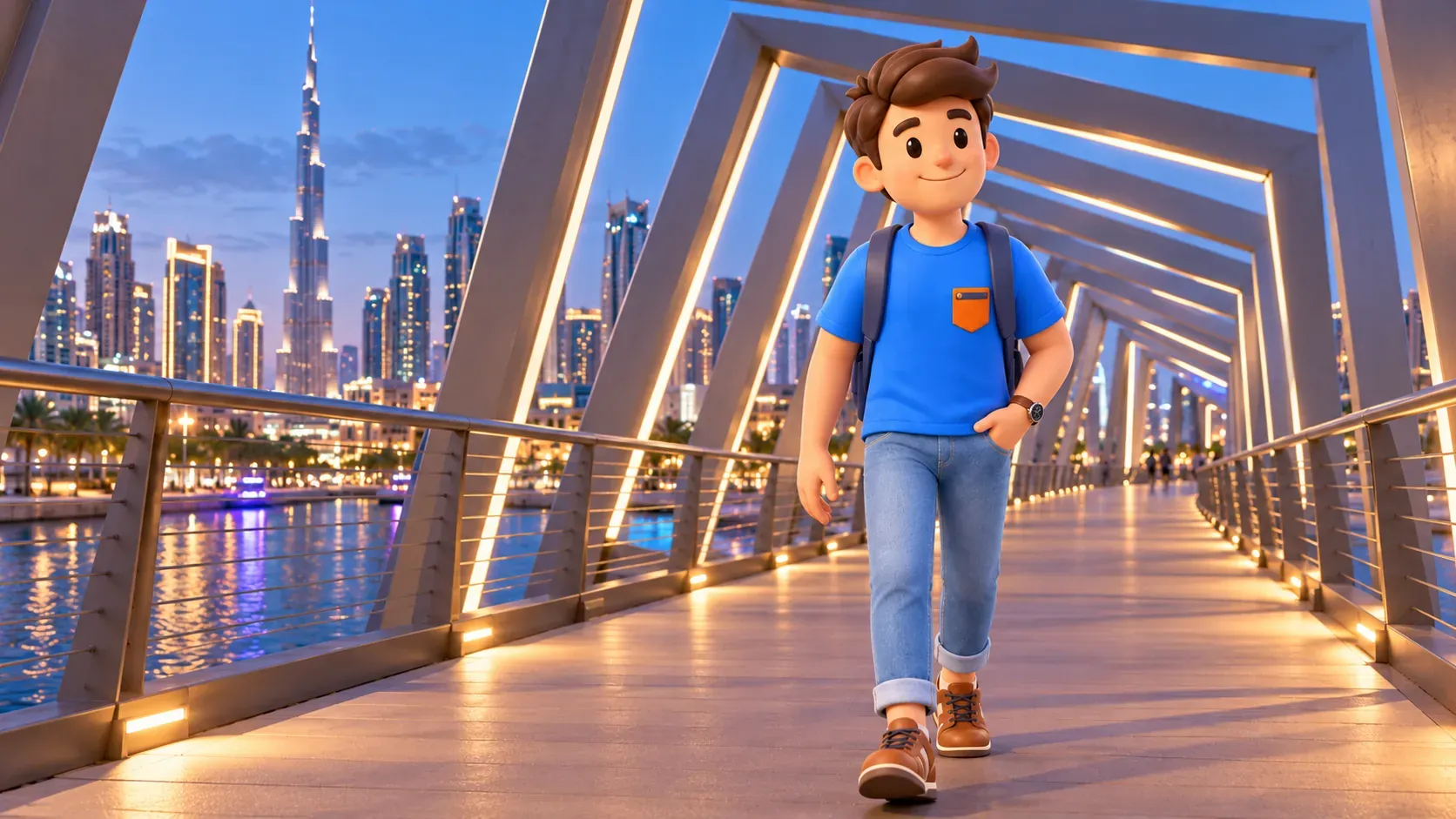
Look along the bridge to see several frames together, then choose one section. The overall impression of movement comes from the sequence, while an individual opening remains a simple geometric element. Repetition and gradual change create the larger effect.
During construction, a temporary platform beneath the deck allowed work to continue after the canal had been filled. It was later removed by barge at high water. This small piece of construction history shows how building a bridge depended on the changing conditions of the waterway below.
For a photograph, let the frame lead the eye along the path without occupying the centre for too long. Wait for a suitable gap rather than expecting others to become part of your composition. A short attentive view is enough to understand the geometric idea.
Leave space for the evening itself
The light between late afternoon and evening can be a subject in its own right. Structures, sky and reflected water change at different speeds. There is no need to predict an exact perfect minute or treat illumination as a show with a guaranteed start.
Choose a permitted place to pause on the bank. Sit if suitable seating is available, drink water and decide whether you want the remaining section. Physical energy and appetite for another bridge are different things. Ending after two can still give a satisfying comparison.
If you want refreshments, use an actual clear offer rather than assuming every canal section has a café. A small pause can work without a meal. Keep your chosen finish and transport within reach rather than allowing a search for food to quietly extend the route into another district.
Photography in lower light benefits from stopping before framing. Watch the actual path and the people around you, then take the picture from a permitted position. The point is to enjoy the changing scene, not to create a shot at the expense of ordinary movement.
With children, compare three simple shapes: branching support, arch and turning rectangle. These differences are enough for a shared game. They do not need the same long explanation that might interest an adult who enjoys engineering.
The waterfall is an option, not the promise of the walk
The canal waterfall sits beneath the road bridge carrying Sheikh Zayed Road. It is a different object from the pedestrian arch bridges, and it should not be confused with the indoor waterfall at Dubai Mall. Its setting uses the underside of major transport infrastructure as a visual accent.
In the designed system, the water curtain can pause for vessel passage through sensor-controlled operation. That relationship between decorative water and navigation is an interesting idea. It does not establish that the installation is running on the evening you visit.
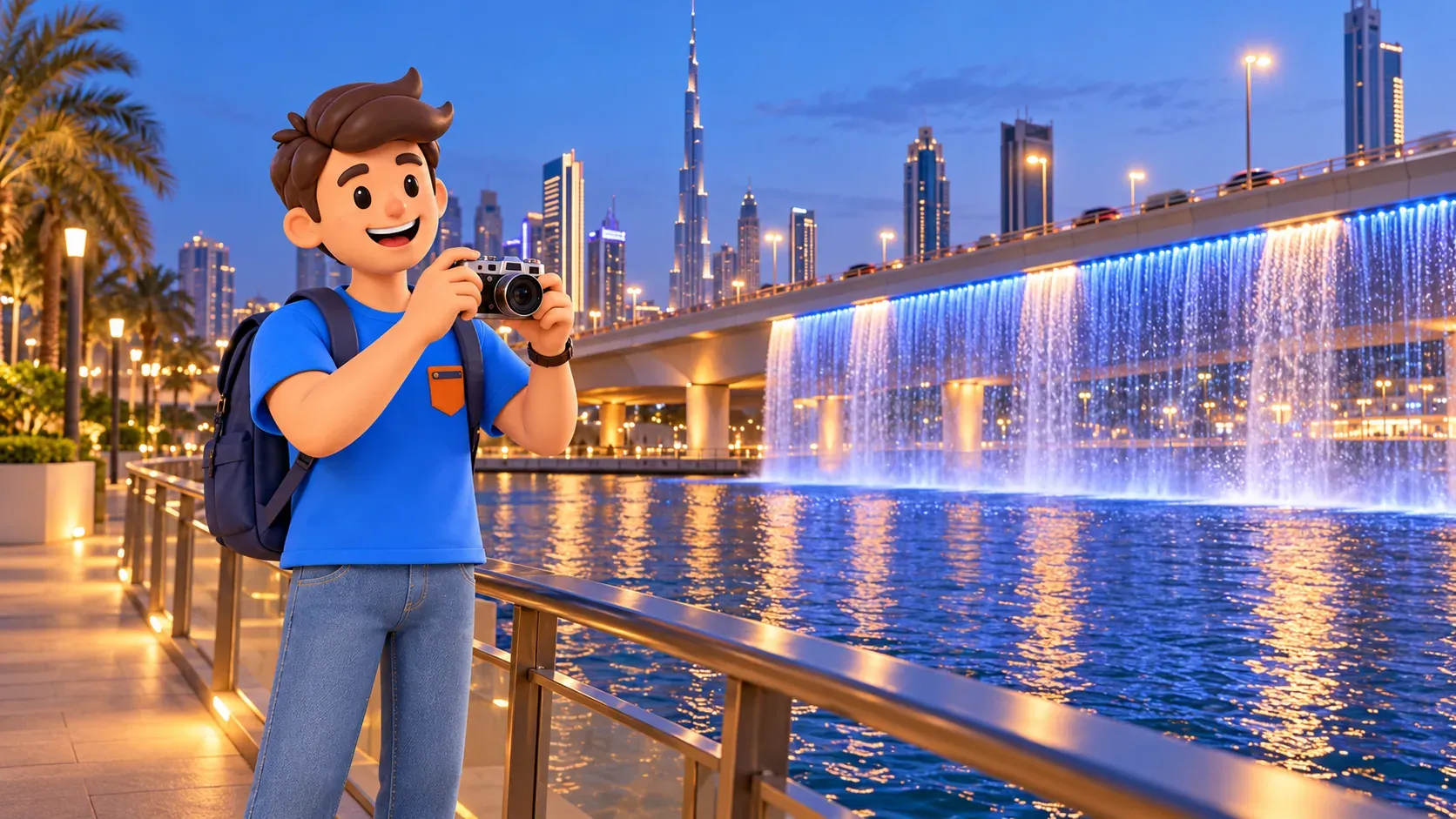
If seeing it operate matters, check the current situation separately and allow the extra approach. Keep it as an addition near the relevant part of the canal, not an automatic final stop after walking in the opposite direction. A short route becomes longer if you need to retrace sections.
When it is inactive or access does not suit the day, the bridge walk remains complete. Arch, cable system and rotating frame already provide three subjects. You have not lost the reason to visit merely because one possible visual effect is absent.
Make the return part of the plan
Save a specific starting point, the bridges you actually intend to see and the bank where you will end. Then choose a realistic onward journey. A road visible above the canal is not automatically a convenient pickup point, and the closest map label may not correspond to the accessible exit.
Use public paths and the access available that day. If you require a step-free route or another specific arrangement, confirm the actual connection before setting out rather than inferring it from a broad modern deck. The whole journey includes approaches, not just the span over water.
A light bag, comfortable shoes and water make the short outing easier. Keep enough time after the last bridge to reach transport calmly. The route's end is the chosen departure point, not simply the moment when you finish taking pictures.
RoadMe can connect this evening walk with a personal multi-day trip based on your interests and pace. Use the app to organise the whole stay more efficiently, so the canal fits naturally beside architecture, heritage and time to rest.
For distinctive building façades farther into the district, our Business Bay architecture walk concentrates on The Opus and O-14. For a different urban waterside scene, the two-hour Downtown route uses the park, lake and Opera. Choose a separate outing or shorten the combinations deliberately.
The bridges give the evening a simple structure: support lines, an arch and a frame that turns. You leave with three ways to understand a crossing, and with the water as the connection between them rather than a distance that must all be covered.


