
Downtown Dubai in Two Hours: A Walk Around Burj Khalifa
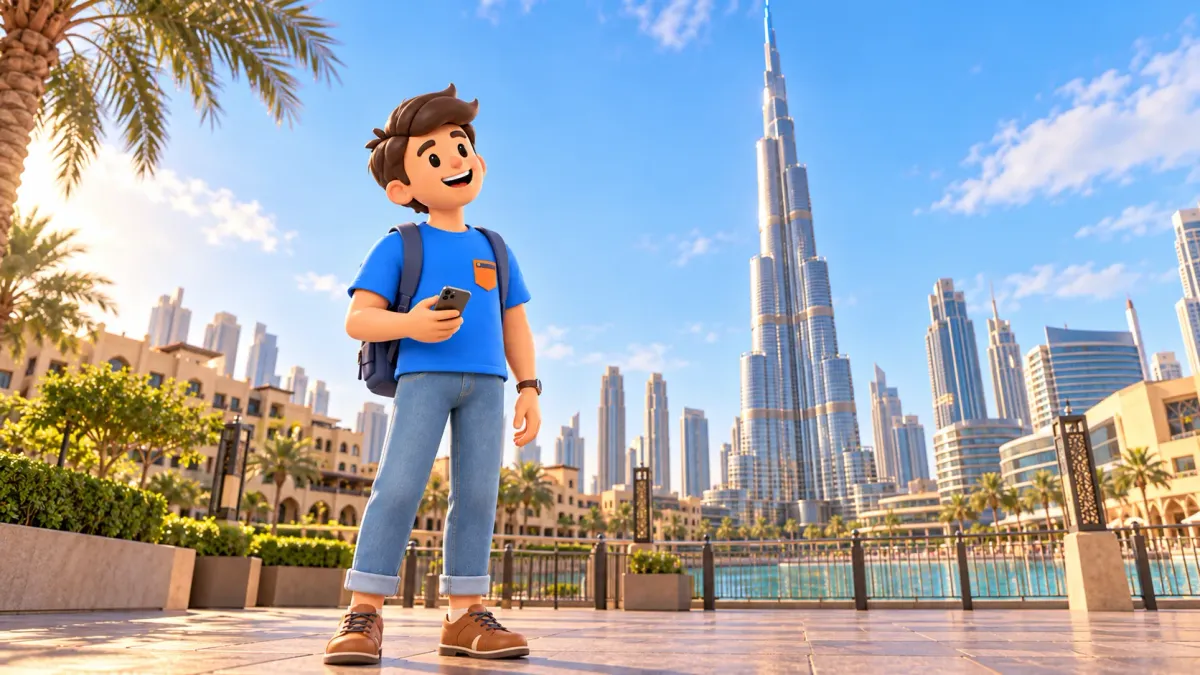
You can meet Burj Khalifa without starting with a lift reservation. From ground level, the tower is part of a larger composition: water leaves space around it, low buildings frame it and a park introduces the scale of trees and people. A short walk makes those relationships easier to notice.
This two-hour outline starts around Dubai Opera, moves towards Burj Park and the lake, then finishes around Souk Al Bahar or a convenient nearby exit. It is an outdoor architecture walk, not a promise to complete the entire shoreline. Use the public paths and connections actually available on the day, and choose a period when walking feels pleasant.
What two hours can comfortably include
RoadMe can build a personal route for your interests, available time and preferred pace. Try planning Downtown in the app: it is much more convenient to connect this short walk with your whole Dubai visit than to coordinate separate attraction lists yourself.
A useful planning envelope is twenty minutes around the Opera exterior, thirty-five for the park and nearby views, twenty-five by the water, twenty around Souk Al Bahar and twenty left for orientation, a pause and the exit. These are editorial estimates rather than measured walking times or guaranteed access periods.
Keep the main idea small. You are seeing Downtown from public ground-level spaces, not entering every landmark. Burj Khalifa's observation decks, an Opera performance or tour, a full Dubai Mall visit and a fountain show each have their own conditions and time demands. They can shape another outing.
Before leaving, check any event-related access arrangements affecting the park or your intended route. Save a clear arrival point and a sensible finish. Being close to the same lake does not mean every waterfront edge forms one uninterrupted public circuit, and the most direct line on a map may not be a usable passage.
For hot conditions, keep this walk short or use our mostly indoor Dubai day plan instead. Sunset is not a guarantee of comfortable weather. Choose according to the actual conditions and your group rather than treating two outdoor hours as a fixed obligation.
Start with Dubai Opera, a low building beside a very tall one
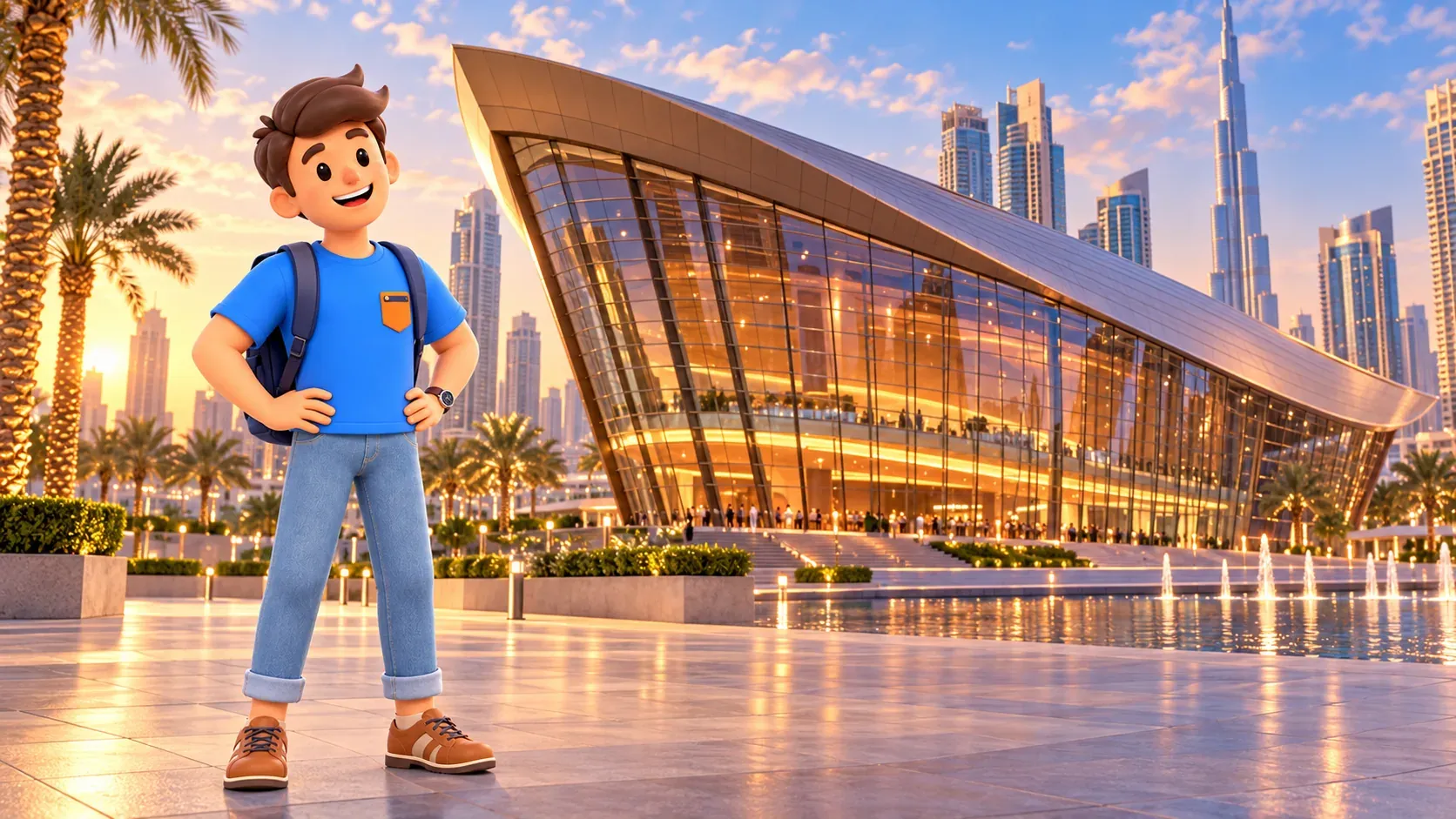
Dubai Opera introduces a different scale from the tower. Opened in 2016, it was designed by Atkins under architect Janus Rostock. Its flowing shape refers to a traditional dhow, but it is not a literal boat placed among high-rises. The reference helps organise the curved volume and glazed exterior.
From an accessible public viewpoint, look at the way the roof and façade move together. The building's horizontal emphasis gives the eye something different to follow after the vertical skyline. You can appreciate that relationship without entering an auditorium or knowing the programme of performances.
The interior is designed for different performance arrangements, another reminder that the place has a working cultural function. Exterior sightseeing is not the same experience as a performance or an authorised building tour. If you want either, check the current offer and plan it separately rather than expecting to enter simply because you are walking past.
Stay clear of working entrances, queues and any event setup. A theatre forecourt changes according to what is happening inside. A good photograph and a short architectural look are enough for this stop; there is no need to search every side for a supposedly perfect angle.
As you move towards the park area using available public paths, keep the Opera in mind. Downtown becomes more interesting when you compare shapes and purposes: a performance building, a landscaped pause, commercial space and an exceptionally tall tower occupy the same urban setting.
Burj Park: understand height through open space
Burj Park provides a landscape pause in the composition around Burj Khalifa and the artificial lake. Its main contribution is not a long list of activities. Open ground, greenery and distance let surrounding buildings be seen together rather than as isolated façades.
From a suitable accessible area, notice the tower's gradual narrowing. The broad lower mass gives way to setbacks and then the slim spire. Trees, paths and people in the foreground offer familiar scales against which the height becomes more legible.
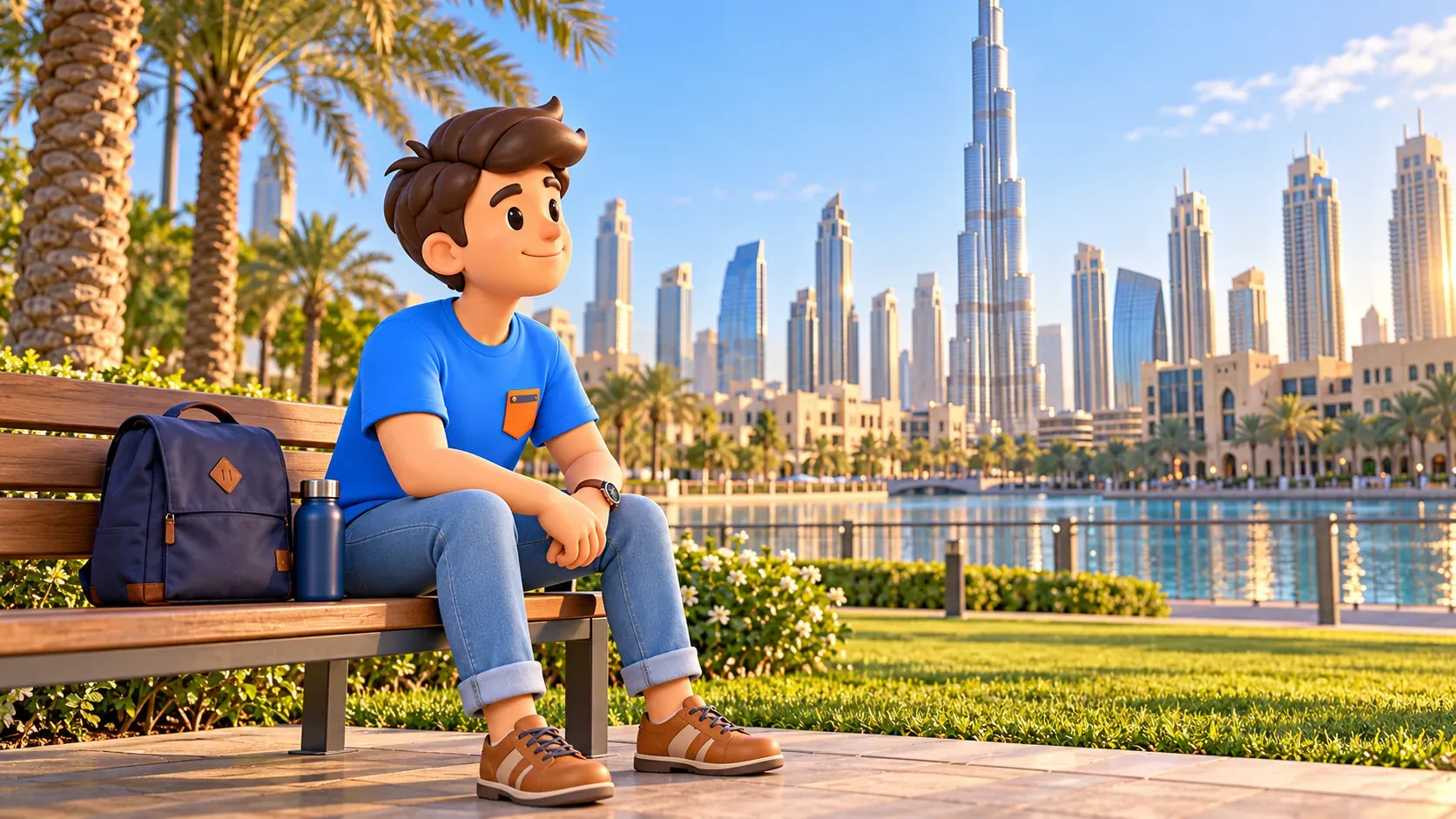
Burj Khalifa opened in 2010 and rises to 828 metres. The number is striking, but the walk offers something a measurement cannot: the changing relationship between the tower and its surroundings. A small movement to one side can alter what overlaps, what opens up and how much sky remains visible.
Keep to the paths and areas open for visitors. Park access and usable sections can be affected by events or other arrangements, so this itinerary does not promise unrestricted entry at every hour. If your intended section is unavailable, choose an accessible public viewpoint nearby and keep the architectural theme.
A short seated pause, where permitted, can be part of the visit. Look for the difference between foreground, water and distant buildings rather than immediately checking the next pin. Giving your eyes a few minutes makes the park a meaningful part of the route instead of a strip crossed on the way elsewhere.
At the lake, look for relationships rather than a complete circuit
The water opens a broad horizontal plane before the buildings. That separation is one reason the skyline reads clearly: façades do not merge into a single wall, and reflected light changes the lower part of the scene. Water here is an element of urban design as well as a setting for entertainment.
Choose one or two public viewpoints and compare them. In one, the tower may dominate; in another, a low arcade or bridge may provide the frame. You are not looking for a universal best photo spot. A useful view is one where you can stop comfortably without blocking the people around you.
Take photographs from permitted spaces and keep clear of barriers and service edges. A screen can tempt you to step backwards without looking, especially when trying to include a tall building. Pause, choose your position, then compose the picture rather than walking while looking only through the phone.
The Dubai Fountain belongs to the lake's wider setting, but a performance is not required for this route to work. If seeing a show matters to you, check the current operating programme independently and allow its own time. Do not assume a particular timetable from an old post or build the whole walk around a hoped-for start.
Nor does the title around Burj Khalifa mean a complete perimeter walk around the tower or lake. The aim is several linked perspectives within the time available. Turn back or shorten a section when actual access makes that the sensible choice.
Souk Al Bahar: traditional forms in a modern district
Souk Al Bahar adds a more intimate scale beside the tall buildings and open water. Its name means the sailor's market, but it is a contemporary development, not an untouched old trading quarter. Its traditional-looking forms are an architectural interpretation within modern Downtown.
Passages, arches and smaller spaces create a different rhythm from Dubai Mall's large interiors. The link towards the mall includes a bridge across the lake, but use it according to current public access and any controls on the day. Do not assume every attractive restaurant terrace is a public route.
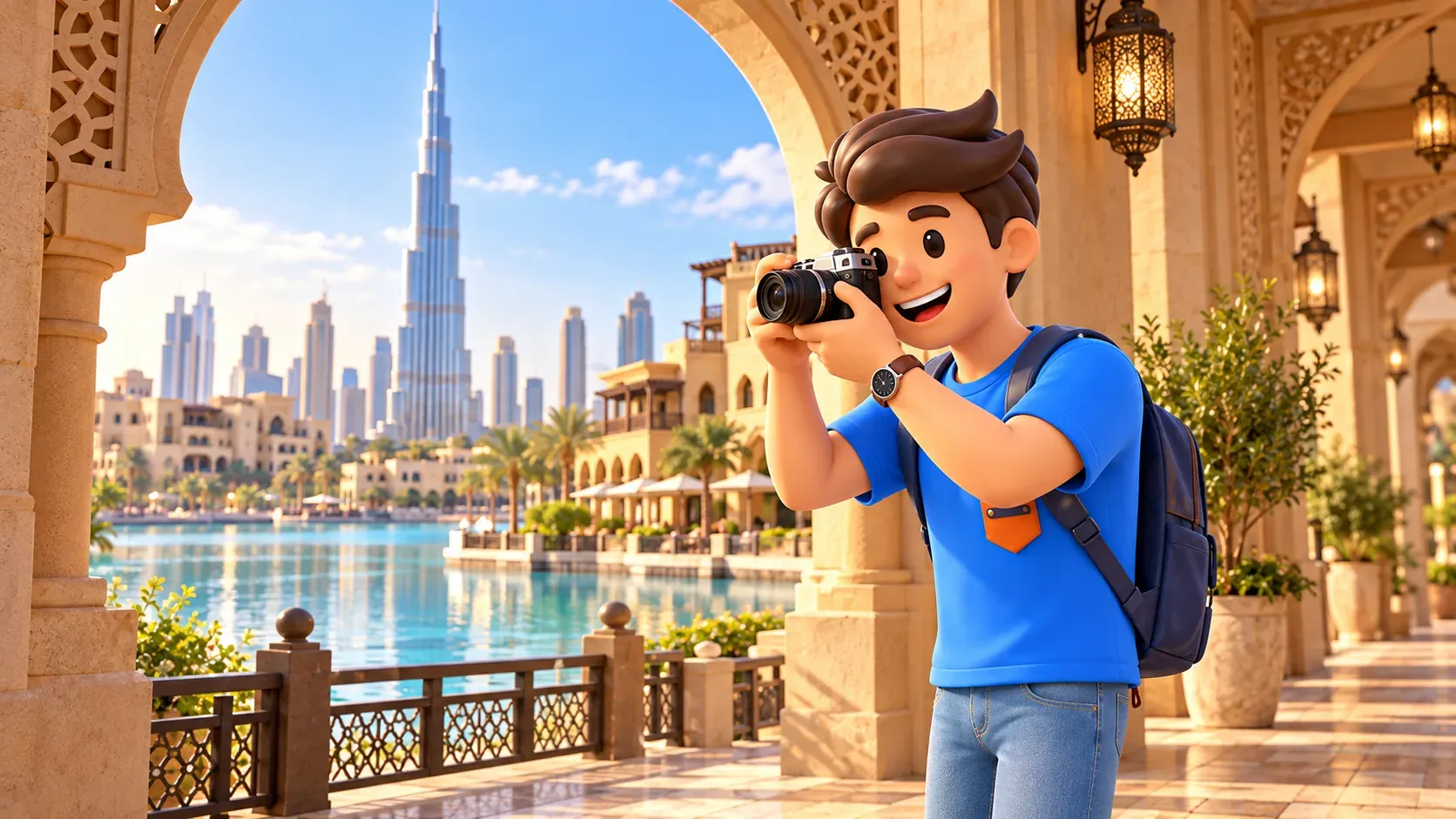
Where access allows, look at how an enclosed passage opens onto a distant view. The close detail of an arch and the much larger skyline occupy the same frame. That contrast is a more useful reason to stop than the idea that every traditional-looking building must be old.
You can enjoy the setting without shopping or reserving a waterside meal. If you want refreshments, choose a place with a clear offer and leave enough time for the service involved. A full restaurant experience may be better treated as the end of the two-hour walk rather than something squeezed into its last five minutes.
Finish near a convenient accessible exit or continue to your chosen transport point. A route ending by the mall does not require a long indoor detour afterwards. The mall's scale can make an unplanned search for the right door feel like another excursion.
How to make the walk yours
For an architecture-focused version, spend more time comparing the Opera, tower and low arcades. For photographs, pick fewer viewpoints and wait for a clear composition. For a gentle introduction after arrival, reduce the number of sections and preserve a proper pause. The same district can support different outings.
If you travel with children, try a simple shape game: curved and straight, high and low, solid and reflected. There is no need for a technical lecture about skyscrapers. Let the landscape provide familiar reference points, and shorten the route if attention or comfort changes.
Anyone who wants detailed public-art stops can give that subject a separate walk. Sculptures belong to the setting, but looking closely at several works competes with the time reserved here for architecture and water. Choose a main theme instead of adding a second full itinerary halfway through the first.
A tower ascent is also a separate choice. Its appeal is seeing the city from above, while this walk is about experiencing the tower's surroundings from below. Both can be worthwhile, but they should not share the same two-hour promise unless you have deliberately planned a much smaller ground section.
Finish with a clear next step
Save the start, intended finish and onward transport before you set out. Carry water, use comfortable shoes and keep the bag light. Follow current venue and public-space rules. A simple plan is most useful when it includes the ordinary edges of a visit, not only its most photogenic centre.
RoadMe can place this short route inside a personal multi-day plan shaped by your interests and pace. Use the app to organise the whole trip more efficiently, so Downtown fits naturally beside old quarters, art or time at the coast.
If you want the contrast with Dubai's earlier trading city, our one-day old-and-new Dubai itinerary provides a wider framework. With more time, the three-day city plan keeps heritage, skyline and the coast in separate, more relaxed chapters.
Two hours in Downtown are enough to see a famous tower as part of a place. Opera, park, water and arcades give it context. You leave with an understanding of the setting, not just a photograph taken beneath a very tall building.


