
Two Days in Venice: Famous Sights and Neighbourhood Walks
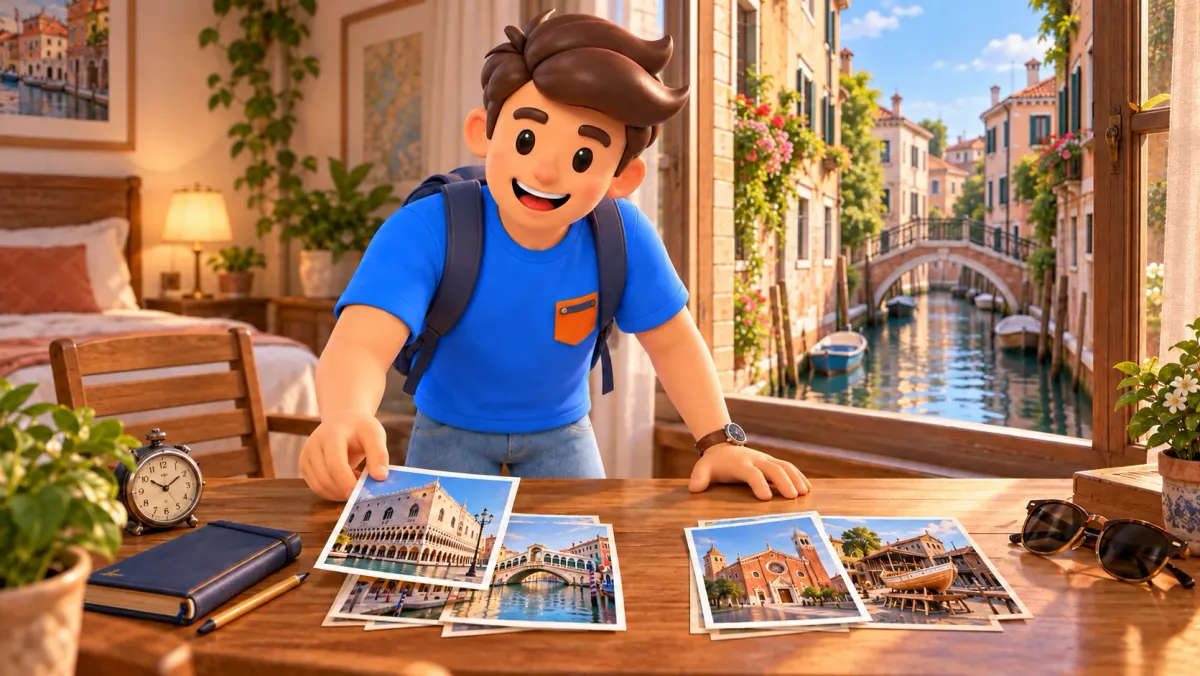
Two days in Venice work well as two different stories. Spend the first on Rialto, San Marco and one substantial visit in the centre. Use the second for art in San Polo and a walk through Dorsoduro towards the waterfront. This gives the trip a clear rhythm and lets the famous sights coexist with smaller neighbourhood experiences.
The plan assumes two full days on the ground. Arriving after lunch and leaving the following evening gives you considerably less time; use the shorter options below. All durations are planning estimates rather than measured journey times. Your accommodation, booked entrances and departure arrangements determine where each day should actually begin and end.
Give each day a different purpose
Day one combines commercial and ceremonial Venice: Rialto and St Mark’s Square offer two contrasting settings. Day two begins around the Frari and San Rocco, then follows small squares towards San Trovaso, the Zattere and Salute. Accademia provides a useful final landmark instead of becoming one more rushed obligation at the end of a crowded checklist.
Choose one main interior for each day. On the first, that could be the Doge’s Palace or St Mark’s Basilica. On the second, choose the Frari or Scuola Grande di San Rocco. Museum enthusiasts can expand the programme, but should shorten some outdoor sections.
For a complete two-day programme tailored to you, try RoadMe: the app creates a personal trip plan using your dates, interests and preferred pace. It makes arranging the sequence more convenient, so your chosen experiences form a coherent visit rather than a collection of separate ideas.
| Part of the trip | Main plan | Decision |
|---|---|---|
| Day one morning | Rialto and the approach to San Marco | Start near your accommodation or the station |
| Day one midday | The square and one substantial visit | Palace or basilica |
| Day one evening | Piazzetta and the waterfront | Continue towards San Zaccaria or stop |
| Day two morning | Frari and San Rocco area | One main art interior |
| Day two afternoon | Santa Margherita, San Barnaba, San Trovaso | Your walking pace and pauses |
| Day two finish | Zattere, Salute and Accademia | The full section or an earlier return |
Fix the main entry times before deciding when to leave your accommodation. If either day falls on a Sunday, check church sightseeing hours especially carefully. Swapping the two days can preserve the overall idea while avoiding an inconvenient wait outside a closed entrance. A flexible order is more useful than loyalty to the numbers in the headings.
Day one morning: Rialto and commercial Venice
Starting from Santa Lucia, allow approximately an hour to an hour and a half to reach Rialto with initial stops. Crossing Ponte degli Scalzi and walking through Santa Croce is one option. If your accommodation is nearer San Marco, do not travel back to the station simply to reproduce the starting point. Join at the nearest useful part of the sequence.
At Rialto, look at the bridge from the bank before crossing it. The arch, shops and boats on the Grand Canal reward different viewpoints. The present stone crossing belongs to the late-sixteenth-century rebuilding associated with Antonio da Ponte. That small piece of context helps place it within a trading neighbourhood rather than treating it only as a photograph.
The fish market is on the San Polo side. Its trading calendar matters if you want to see working stalls, so do not assume the same activity every morning. When the market is closed, keep a short walk around the area and continue. Leave room for other pedestrians when stopping on the bridge or in narrow passages.
Cross towards San Marco and continue to the square. Around half an hour to an hour with pauses is a reasonable planning allowance. Avoid adding several interior visits along the way: you already have a main admission ahead.
Day one after midday: San Marco with a clear priority
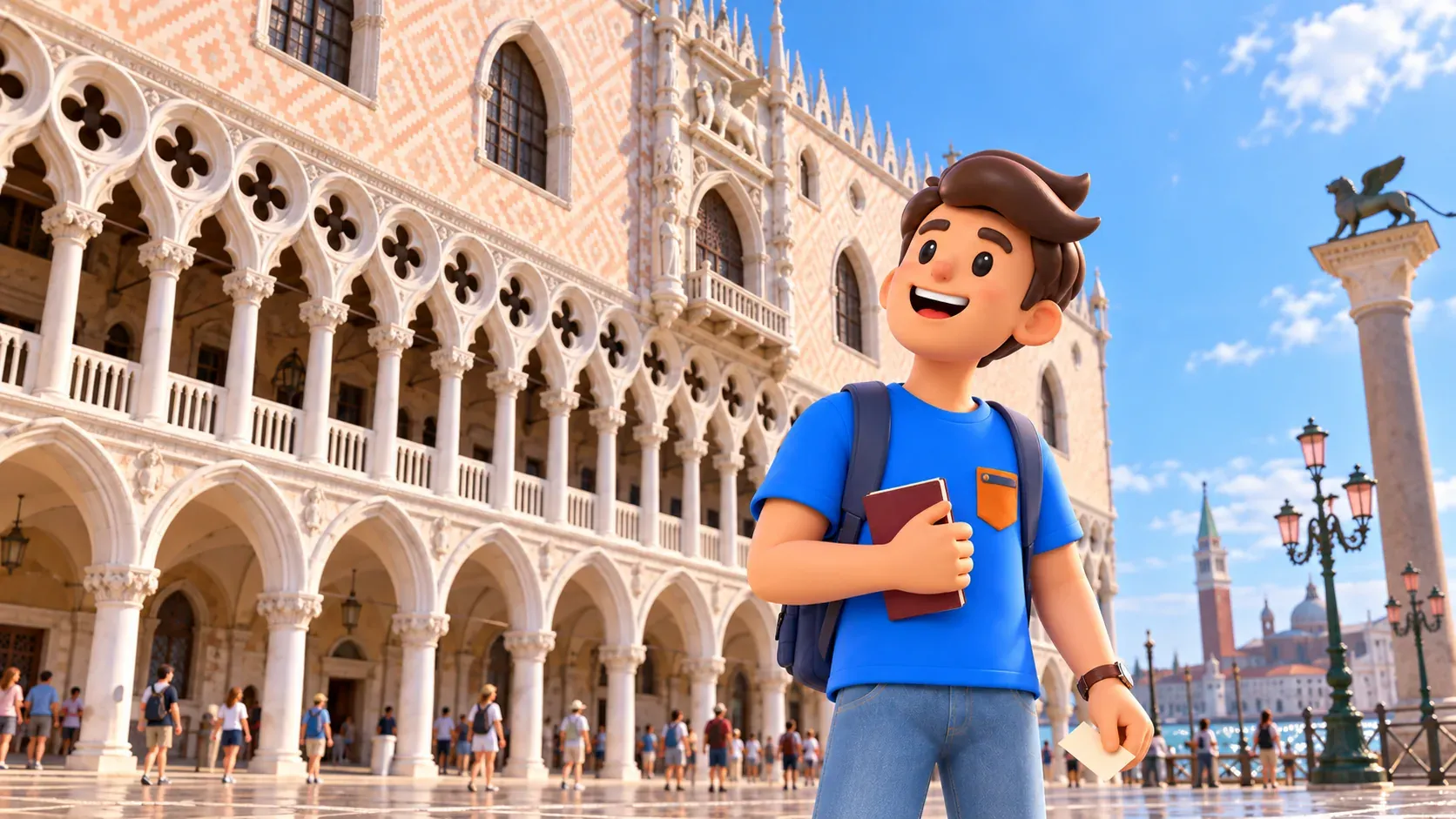
Begin with the whole setting of the square: basilica, campanile and Procuratie fronts. Then move closer to a few details of the church facade, such as its marble, sculpture and mosaics. A first walk needs some memorable visual anchors, not an exhaustive account of every decorative element.
The Doge’s Palace introduces the government of the Venetian Republic. Choose it for civic power, ceremonies and the organisation of a major historic complex. Make the basilica your focus if religious art and the church interior interest you more. Both deserve an exterior look whichever ticket you choose; paying for one does not prevent you from appreciating the other.
Allow roughly two hours for the palace or one to one and a half hours for your chosen basilica visit, plus about an hour for lunch and rest. Visiting both on day one is possible only with suitable available admissions and a shorter evening walk. Having two calendar days does not automatically make every combination comfortable.
Conditions checked on 17 October 2026 list palace hours of 09:00–19:00 from April to October, last entry 18:00, and 09:00–18:00 from November to March, last entry 17:00. An untimed St Mark’s Square Museums ticket permits palace admission from noon. The basilica is outside that museum ticket’s listed inclusions.
The basilica’s tourist opening normally starts at 09:30 Monday to Saturday and 14:00 on Sundays and religious holidays. Last admission is 16:45 and closing 17:15; worship can change arrangements. The museum and loggia operate separately, so Sunday morning museum access should not be mistaken for access to the basilica itself.
After your chosen visit, walk through the Piazzetta towards the water. Continue in the direction of San Zaccaria if you have energy, or stop here and find dinner at your own pace. This is deliberately an open evening. Another tower or museum is not compulsory simply because it happens to be nearby.
Day two morning: choose the Frari or San Rocco
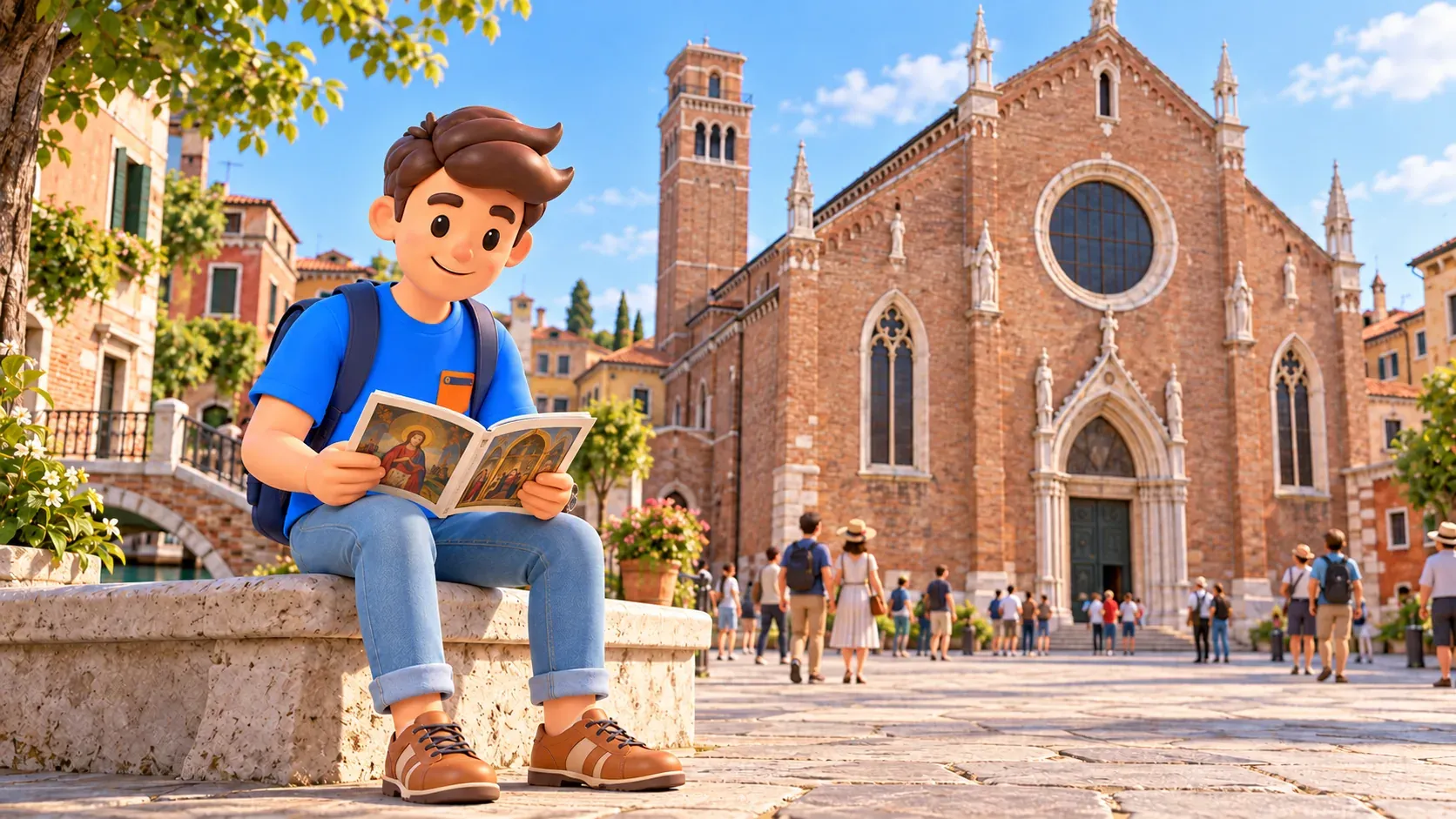
Begin the second day in San Polo. The Frari and Scuola Grande di San Rocco are neighbours but offer different experiences. The Frari is a working basilica with a large religious interior. San Rocco introduces Tintoretto’s art and Venice’s confraternity tradition. Choose where you want to spend time and initially appreciate the other building from outside.
The word scuola here does not mean an ordinary school. Venetian associations of this kind supported religious life, mutual assistance and charitable work. That brief background explains why such an institution occupied an impressive building. At San Rocco, the relationship between paintings and rooms matters alongside the individual works, making a slower look worthwhile.
The official San Rocco schedule checked for this article gives 09:30–17:30, with the ticket office closing at 17:00. The Scuola is closed on New Year’s Day, Christmas Day and Easter, with exceptional changes listed separately. The adjacent church of San Rocco has its own schedule; do not transfer its hours to the confraternity building.
The institution also states that it does not sell admission tickets online. This matters when comparing third-party offers: an organiser’s tour and an entrance ticket sold by the institution are different products. For an ordinary visit, leave time to obtain admission on site. No assumption about guaranteed immediate entry is built into the day.
At the Frari, sightseeing starts at 13:00 on Sundays and holidays. Choose San Rocco that morning, or switch the order of your two days. If the Frari is your main priority, visit after lunch and shorten the later walk. Special services can also temporarily interrupt tourist access, so the church calendar matters.
As an estimate, give one major visit around an hour to an hour and a half, followed by a break. If you decide to study both interiors properly, reduce the rest of the day.
Day two afternoon: Dorsoduro squares and San Trovaso
From the Frari area, walk towards Campo Santa Margherita, then San Barnaba. This section is about the transition between squares and small canals rather than a list of compulsory admissions. Choose lunch along the way after checking the menu and service conditions. Being away from San Marco does not establish a universal price level.
Ponte dei Pugni near San Barnaba can provide a short pause. A small story about a place name is enough here; the walk does not need to turn into an extended lecture at each bridge. Continue towards San Trovaso, where a craft theme gives the route another dimension before it opens towards the waterfront.
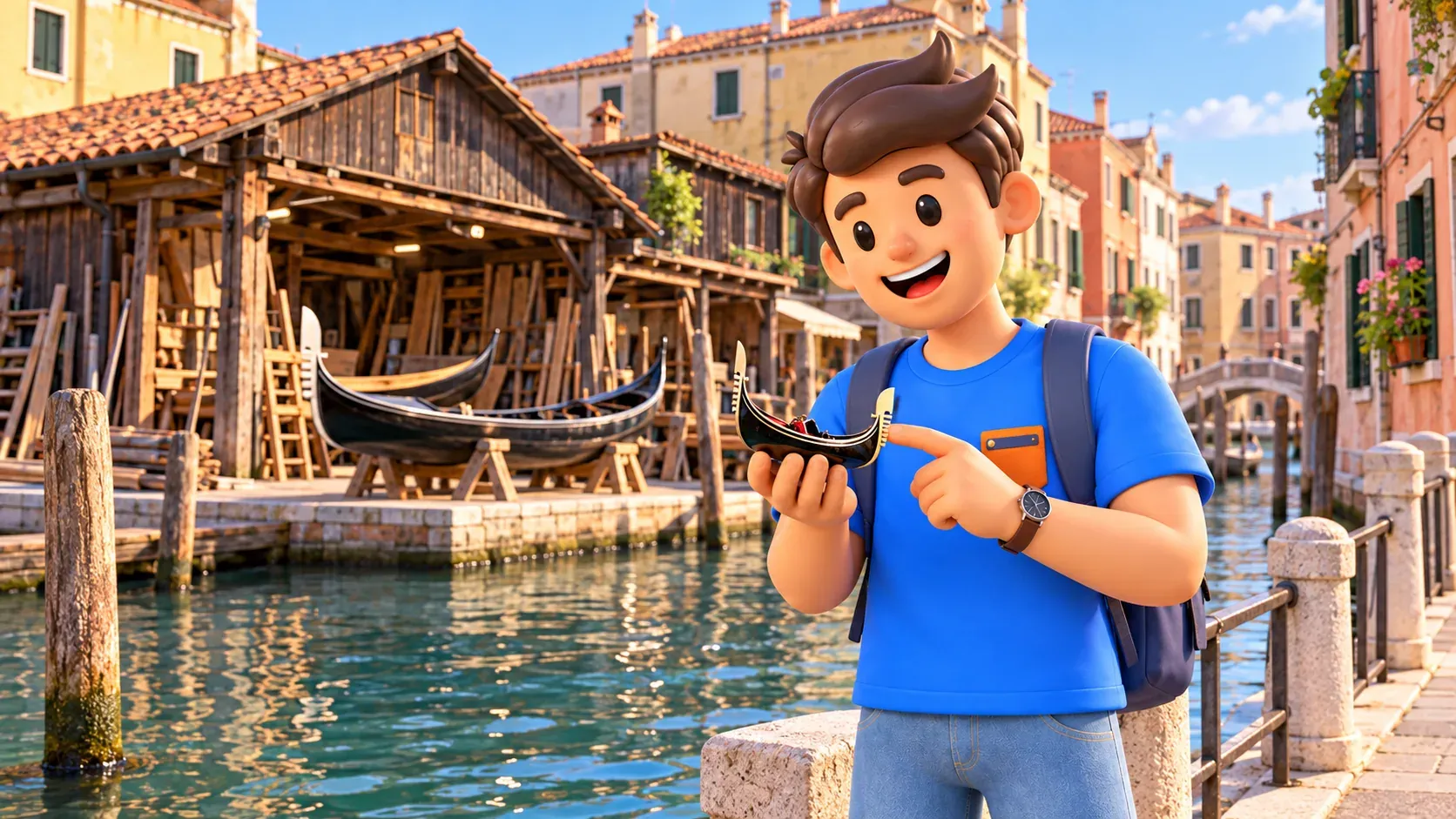
Observe Squero di San Trovaso from the public opposite bank. It is a working space: looking from outside is not permission to enter, nor a guarantee of a boatbuilding demonstration. If you want a dedicated craft visit, establish its arrangements separately and treat it as a planned activity with its own time allowance.
If you want more painting, crafts or neighbourhood walking on the second day, let RoadMe work out a personal programme around that preference. The app plans the route according to your interests and pace, making your chosen theme the basis of the day rather than a last-minute addition.
The Gallerie dell’Accademia and Peggy Guggenheim Collection are further Dorsoduro options, but not mandatory extra entrances. For an art-focused trip, make one of them the main visit instead of the Frari or San Rocco. This creates a different, equally purposeful second day rather than another layer of stops on top of the same plan.
A waterside finish: Zattere, Salute and Accademia
From San Trovaso, reach the Zattere and continue towards Punta della Dogana and Salute. Allow about an hour to an hour and a half with stops, or longer if you prefer. This is not all walking time: the allowance includes views, short rests and the option to stay by the water without needing another objective.
Salute is a votive church associated with the seventeenth-century plague. Following the smaller neighbourhood spaces, that history gives meaning to its monumental scale. For this route, the steps, domes and position at the entrance to the Grand Canal provide a worthwhile exterior stop. Entering the church is not a condition for completing the walk.
You can then return through the neighbourhood to Accademia and finish with a view of the Grand Canal. This is not a continuous waterfront promenade. If your train leaves in the evening, decide in advance when to head back. Getting to the station, waiting for a waterbus and retrieving luggage all need their own allowance.
Adjust the plan to the trip you actually have
With a late arrival, keep Rialto and an exterior introduction to San Marco on the first day, then move your principal visit to the second. The San Polo art interior becomes optional. If you have only one complete day, use the shorter first-visit itinerary rather than compressing two programmes together.
In rain, extend the chosen interior and shorten the waterfront section. If tired, finish at Santa Margherita or San Trovaso. This route is not presented as step-free: bridges and steps require a separately checked approach for pushchairs or limited mobility. Match each admission to the actual dates of your trip.
Separate admission, food and transport costs instead of buying a bundle only for the number of places it includes. Check the city’s Contributo di Accesso calendar too: on 17 October 2026 the official portal reports the end of the 2026 experiment, while later periods need separate decisions. Two rewarding days come from suitable choices and enough time between them.


