
Around Ca’ d’Oro: a walk to Ponte Chiodo and the Gesuiti
Allow two and a half hours to explore the neighbourhood around Ca’ d’Oro: start on Strada Nova, walk through San Felice to a public-bank view of Ponte Chiodo, then continue by public streets to Campo dei Gesuiti and Fondamente Nove. The core plan includes exterior stops, local walking and coffee. Finish on the public waterfront by the exit of Salizada degli Specchieri, without an island boat trip.
There are two essential boundaries. At the check on 17 October 2026, Ca’ d’Oro was closed for works, with reopening planned for spring 2027. This is a neighbourhood walk, not a gallery visit. Ponte Chiodo is private: look from the public bank rather than using it as a crossing. Neither restriction prevents a worthwhile outdoor outing.
Notice how the scale changes between streets and water
Begin where Calle Ca’ d’Oro meets Strada Nova. A shopping street gives way to smaller canals and passages, then an open waterfront at the northern lagoon. That change of scale supplies the walk’s theme. A palace address, a private bridge and a church square reveal different relationships between buildings and the city.
Try RoadMe for a personal plan of your whole trip, shaped around your dates, interests and pace. The app makes organising neighbourhood walks, substantial visits and rest much more convenient, with room for what matters to you.
The 150-minute framework allows 40 minutes for all local walking, 60 for looking outside, 30 for coffee and 20 of flexibility. These are editorial estimates, not measured timings. Walking includes reaching the café, small bridges and the planned return from Chiodo towards Strada Nova. A full lunch, your approach from accommodation and the journey afterwards are extra.
Increase the margin for photography or slower steps. If you prefer mainly walking, shorten the stops. No ticket appointment controls the outdoor route, but that does not mean every spare minute needs another attraction. Agree on one main interest with your companions before leaving: palace history, bridges or the church setting.
What the Ca’ d’Oro closure means
Ca’ d’Oro is a fifteenth-century Venetian Gothic palace associated with Marino Contarini’s commission. Its name, House of Gold, recalls gilding on parts of the former decoration. It does not describe an entirely golden building today. This brief history explains the address’s significance without requiring an unavailable collection visit.
The museum authority announces closure from 2 February 2026, with reopening planned for spring 2027. Works include exhibition arrangements, building systems and entrance spaces. Do not build your current day around the courtyard, mosaic floor, galleries or an internal view over the Grand Canal. An older guide’s opening hours do not override the owner’s closure notice.
The formal façade faces the Grand Canal. Reaching the land entrance and seeing that whole frontage from a useful distance are different tasks. This route starts on Strada Nova and promises no full façade panorama from its neighbouring lane. For another day, our walk-and-vaporetto plan explores canal-facing buildings from the water, with separate transport arrangements and time.
If the museum has reopened by your travel date, confirm actual access and its new visiting arrangements first. An announced season is not a guaranteed opening date. Give the collection its own block afterwards. A genuine interest in painting deserves more than an extra museum squeezed unnoticed into a short outdoor route.
A sequence of public landmarks
| Part | Direction | What is included |
|---|---|---|
| Strada Nova at Calle Ca’ d’Oro | Ponte San Felice and Campo San Felice | A street start, without the gallery |
| Fondamenta della Chiesa | A public-bank view of Chiodo | Looking, not crossing the private bridge |
| Return section | Back through San Felice to Strada Nova | Retracing is included in walking time |
| Corte dei Pali and Calle Priuli | Public iron bridge to Calle de la Racheta | No private garden shortcut |
| Ponte Molin | Fondamenta Santa Caterina and Fondamenta Zen | Approach to Campo dei Gesuiti |
| Gesuiti exterior | Salizada degli Specchieri to Fondamente Nove | A public waterfront finish |
Check individual turns on a current map. The short return towards Strada Nova is deliberate: it provides a clear public connection onwards. It is not an error to correct by going across Chiodo. An open private door and a garden visible beyond it do not turn a property into a city street.
Starting on the street also separates the walk from arrival by transport. From the Ca’ d’Oro boat stop, leave the boarding area and follow the lane up to Strada Nova. If approaching on foot, find the same junction. The boat ride or the walk from the station comes before these 150 minutes.

San Felice and Chiodo: look without crossing
Use the public Ponte San Felice to reach the campo, then follow Fondamenta della Chiesa towards the view of Chiodo. The church is an exterior landmark here. There is no need to wait at its door in the hope that a short outing must include another interior. This stage takes you from the wider street to a small canal.
At Chiodo, notice the absence of parapets. That simple difference changes how you perceive the stone arch over the water. Look from the public bank and consider its connection with a private entrance. It does not link two public continuations for this itinerary, so crossing it for a photograph is unnecessary.
Do not turn the missing parapets into proof that every Venetian bridge once looked identical. Materials, forms and alterations varied. The visible feature and private character are enough for this stop. A city’s history becomes more interesting when one unusual detail is not made into a universal rule for hundreds of structures.
With children, compare Chiodo with the bridge you have just used: where is the edge, how does the slope rise and what lies on the far side? Discuss it on the bank rather than testing the crossing. Keep the passage clear and avoid treating someone’s doorway as a setting for a staged photograph.
For a picture, include a little water or neighbouring wall so the arch has context. Reflections depend on light and movement, and are not a required outcome. You can remember the relationship between bridge and door without waiting for a perfectly still canal. An ordinary observation can be more rewarding than chasing an expected image.
Continue through Racheta and Molin
Retrace the public approach through San Felice to Strada Nova. Continue through Corte dei Pali già dei Testori and Calle Priuli, crossing the public iron bridge into the streets connected with Calle de la Racheta. Head towards Ponte Molin, then follow Fondamenta Santa Caterina and Fondamenta Zen to Campo dei Gesuiti. Private accommodation is not a through-route.
Change the scale of attention along the way. A narrow passage may offer one doorway or window to notice; beside a canal you can read an entire façade. You do not need to stop at every building. If one person photographs, others can wait on a clear widening rather than gathering across the street.
Near Palazzo Zen, look for the relationship between Gothic and Renaissance elements. The palace façade becomes part of the connection between canal and square. Historical references to exterior paintings do not promise that complete frescoes remain visible today. For this walk, the overall form and its position beside the public waterfront are sufficient.
The Gesuiti: another scale and a different name
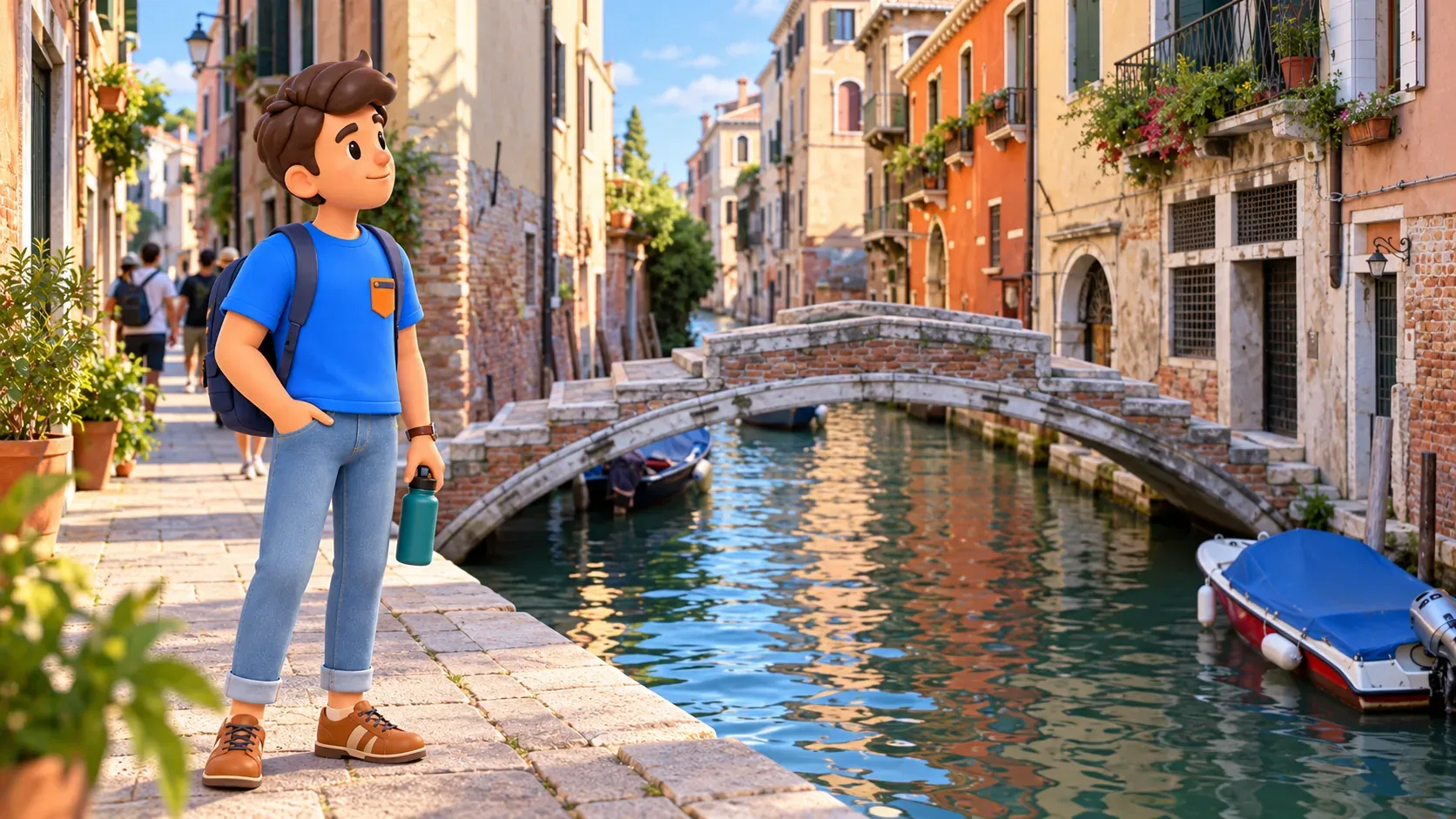
The elongated campo draws attention to Santa Maria Assunta, known as the Gesuiti. Its present architecture is associated with the eighteenth century, Domenico Rossi and support from the Manin family; the façade was designed by Giambattista Fattoretto. After the smaller canals, take a broader look at this more ceremonial setting without making an interior compulsory.
The Gesuiti in Cannaregio and the Gesuati on the Zattere are different churches in different parts of Venice. Check the Italian name and district when saving an address. Also distinguish this Santa Maria Assunta from the basilica of the same dedication on Torcello. Matching names do not establish proximity, shared admission or a quick walk between them.
The nearby complex includes the Oratorio dei Crociferi. The setting recalls religious and charitable life followed by the Jesuits’ presence. Our route uses the public campo. A courtyard, oratory, exhibition or accommodation area has separate access arrangements; an open arch does not automatically include all those spaces in an outdoor visit.
To enter the church, add an estimated 45 minutes for looking and 15 for entry, taking the outing towards three and a half hours. The owner’s timetable is valid until 25 October 2026: Monday, Tuesday and Thursday, 10:30–13:00 and 16:00–18:30; Friday, Saturday and Sunday, 10:00–13:00 and 15:00–19:00. Wednesday is closed.
Sunday Mass is listed at 11:30, so do not plan artistic sightseeing as an ordinary tourist visit during the service. After 25 October, obtain a new timetable rather than extending these hours automatically. The exterior route can still end at the lagoon without an interior. Confirm the particular admission conditions separately.
Compare this approach with Ca’ d’Oro: there, the land street does not reveal the formal canal frontage; here, the façade addresses the campo in front of you. Neither arrangement needs to be judged better. Notice instead how distance and the direction of arrival change your impression of a building.
Coffee and the northern lagoon finish
Use the half-hour break at a suitable café after checking the menu and seating arrangements. It is time for a drink and rest, not a full lunch. Sit on a proper chair rather than church steps, a wellhead or the waterfront edge. If the first option is full, use the flexibility or continue elsewhere.
RoadMe makes preparing a personal plan for the whole stay much more convenient, with your interests and pace guiding the choices. Try distributing museum days, shorter walks and rest so that new experiences do not depend on constant rushing.
Leave the campo along Salizada degli Specchieri for the public Fondamente Nove waterfront. Finish by the street exit, clear of boarding areas. The more open water completes the theme of changing scale. An island trip, waiting for a vaporetto and returning to your accommodation are not included; leave separate time for whichever follows.

The two-hour version keeps the same sequence: 30 minutes for all walking, 45 for looking, 25 for coffee and 20 spare. Assess actual conditions around steps, bad weather or barriers; a step-free route is not established. For another day, choose the western Cannaregio walk from Tre Archi to Guglie, with its own start, finish and duration.


