
Western Cannaregio: a walk from Tre Archi to Guglie
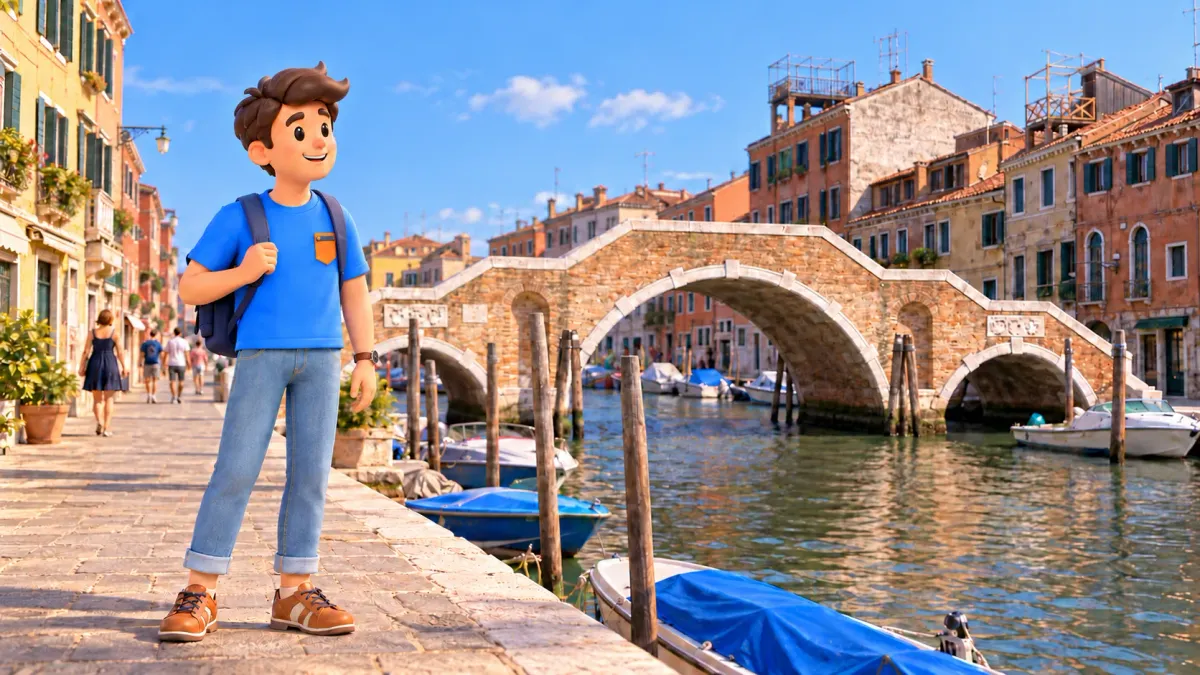
Allow two hours for this walk through western Cannaregio. Begin at the north-eastern end of Ponte dei Tre Archi, cross to the San Giobbe side and look at the church outside. Follow the canal towards Ponte delle Guglie, cross back to its north-eastern bank and finish by Rio Terà San Leonardo. There is time for a café break between the main stops.
The core route includes two canal crossings, a church exterior and palace façades. It does not include a church tour, Savorgnan Park, university interiors or a vaporetto ride. Both main bridges span the Cannaregio Canal; neither crosses the Grand Canal. Getting to Tre Archi and travelling onwards after the finish require separate time.
Give a small part of Venice enough attention
Choose this walk when you want to look at the relationship between water and streets without arranging a major museum visit. A bridge carries people across the canal, a fondamenta follows its bank, and the church campo creates a different kind of open space. Those changes provide the subject of the walk.
Try RoadMe for a complete personal trip plan shaped around your dates, interests and pace. The app makes it much easier to fit short neighbourhood walks, substantial visits and rest into days that work for you.
The suggested 120 minutes comprise 30 for all local walking, 45 for looking outside, 25 for coffee and 20 of flexibility. These are planning estimates, not timings measured on the ground. The walking allowance includes reaching a café and both main crossings. A proper lunch, your approach from accommodation and the journey afterwards are additional.
If you enjoy photography or take steps slowly, allow more flexibility. If your main pleasure is walking, you may finish sooner. No museum appointment controls the core route, so there is little reason to enforce a minute-by-minute schedule. Protect the break rather than treating it as time left over after every possible stop.
The route and its two crossings
| Stage | What to do | Boundary |
|---|---|---|
| Tre Archi, north-eastern end | Look at the bridge, then cross south-west | The clock starts at the bridge |
| Campo San Giobbe | Reach the church by public streets | Exterior in the core route |
| Canal and Crea area | Return to the bank and continue towards Guglie | Use the public crossing by Crea |
| Fondamenta Savorgnan | Notice the palace façade along the way | No park or palace interior included |
| Guglie | Cross from the south-western to the north-eastern bank | Finish by Rio Terà San Leonardo |
Save the actual bridge ends rather than relying on the name Tre Archi alone: it can refer to a bridge, accommodation or a boat stop. If you are already on the San Giobbe bank, start there. There is no need to cross twice just to satisfy an arbitrary opening sequence; simply acknowledge that your starting point has changed.
The railway station is an approach option, not the start of these two hours. Walking from Venezia Santa Lucia, arranging luggage and returning for a train all take additional time. For a visit between trains, establish the protected return allowance first. This walk should fit within the usable city time, rather than consume every minute until departure.
Tre Archi: look from the bank before crossing
Find a clear place on the public waterfront where you can see the openings. A larger central arch sits between two smaller arches. The name refers to these three spans, not three neighbouring bridges. From the top, attention naturally follows the canal; the side view is better for understanding the structure itself.
The bridge’s present history is associated with Andrea Tirali’s work in 1688. Its earlier name, San Giobbe Bridge, connected it with the nearby church. That small piece of history is enough to place it within the neighbourhood. It remains a working crossing, shared with people carrying out ordinary journeys.
Notice how the parapet rises towards the middle, then cross to the south-western side. Keep the steps and narrow sections clear. For a photograph, use a stable position away from the main flow instead of sitting on the parapet or reaching over the water. A straightforward view from the bank already explains the bridge’s distinctive form.
With children, compare the size of the three arches before climbing. One simple observation gives the stop a purpose without turning the bridge into a playground. Finish the conversation on the bank if someone needs to pass. You can remember the shape without obtaining a perfectly empty photograph.
San Giobbe: charity and a Renaissance rebuilding
From the south-western end, follow the public approaches to Campo San Giobbe, checking the short connection on a current map. An open university entrance is not a necessary shortcut. Leave space around the church doorway when you stop. The main walk looks outside and does not depend on an interior visiting session.
The site’s history begins with charitable provision. In 1378, the priest Giovanni Contarini established a hospice for poor people with an adjoining oratory. Franciscans subsequently took responsibility for the place. During the fifteenth century, Doge Cristoforo Moro supported a Renaissance rebuilding associated with Pietro Lombardo; the church was reconsecrated in 1493.
Think of those connections as a way into the building’s significance: care, religious life, patronage and changing architecture. The present church should not be understood as an untouched survival of the fourteenth-century oratory. Its history accumulated in stages. There is no need to identify every sculpture to appreciate that change of ambition.
Take one broad look at the façade and then choose a smaller feature around the entrance. What makes the doorway seem larger or smaller: its frame, the surrounding wall or the distance to a window? Describe what you see before trying to attach an architectural term. The exercise keeps attention on the actual building.
Make an interior visit a separate choice
At the check on 17 October 2026, Chorus listed artistic visits on Mondays, Tuesdays, Fridays and Saturdays from 10:30 to 13:00, with last admission ten minutes before closing. That is a narrower arrangement than a general Monday-to-Saturday sightseeing day. Check the artistic visiting calendar again if the interior is your reason for coming.
Allow an estimated 45 minutes inside and another 15 to organise entry. Adding that hour makes the outing approximately three hours, rather than squeezing the visit into the existing two. A short visit is a selection, not a survey of every work. Worship hours and artistic visiting arrangements are different.
Do not arrive expecting Bellini’s original San Giobbe Altarpiece to remain here. Works from the church, including paintings by Bellini, have moved to the Gallerie dell’Accademia. A list of historic commissions does not necessarily describe what hangs in a church today. The interior has its own interest, but it needs an accurate expectation.
If the session does not fit your day, keep the outdoor route. Spend longer considering the setting or taking the planned break. A closed interior does not require several distant substitutes. The attraction of this outing is its compact shape, and a modest adjustment can preserve that quality.
Return to the canal and continue through Crea
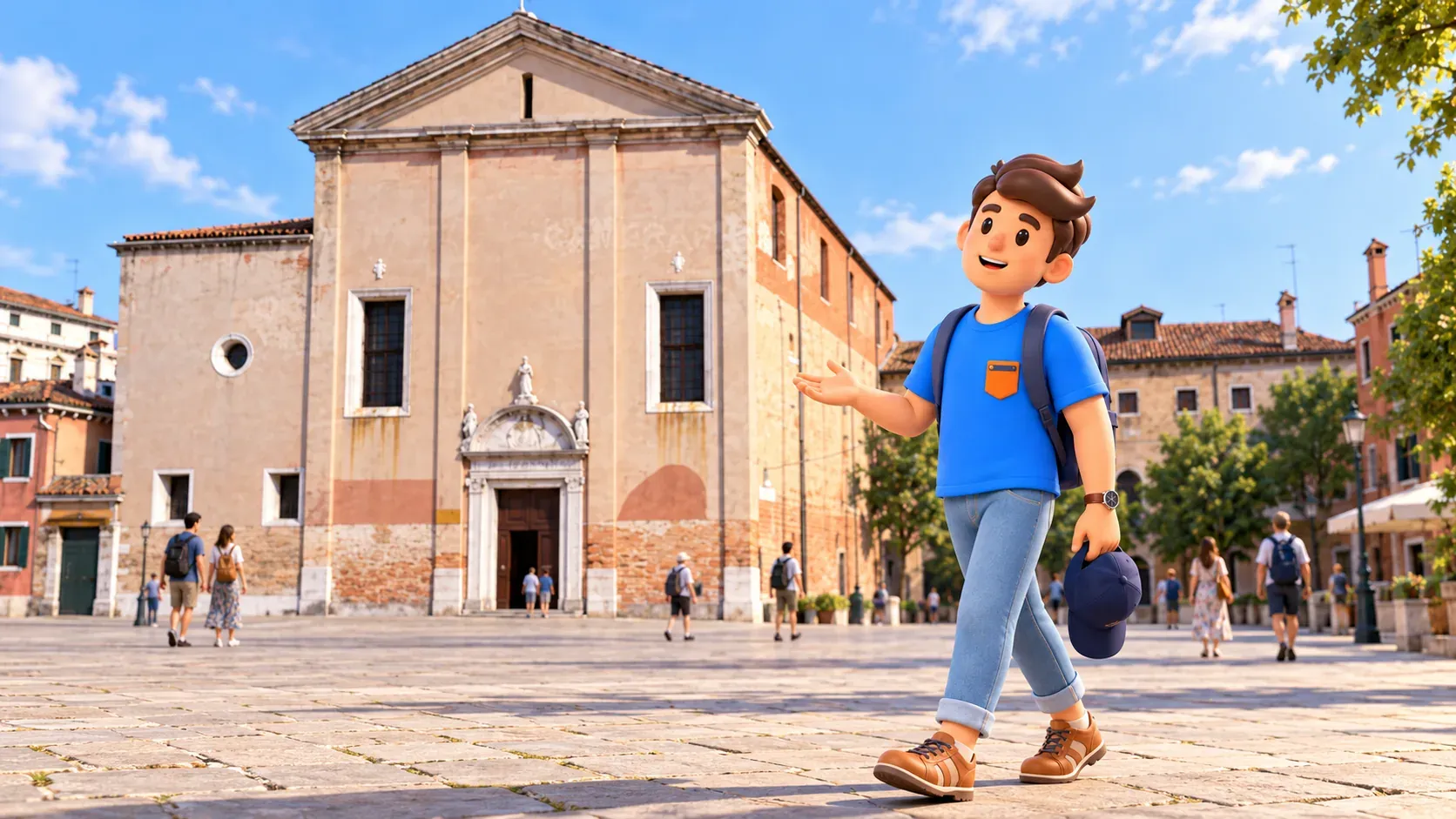
Return to the public waterfront and head towards Guglie, using the public connection by Crea, then continue along Fondamenta Savorgnan. Check individual turns on your map. You do not need to cut through a university courtyard or a garden. The canal gives the broad direction, while smaller crossings still require attention.
San Giobbe is also part of contemporary university life: Ca’ Foscari’s economics campus is here. It is a working educational setting. Information about access within its buildings does not establish that this entire city walk has no steps, or turn the campus into an ordinary visitor museum. Keep the route on public streets.
Along the bank, compare the rhythm of windows and entrances. A close view shows surfaces and details; looking across the canal helps reveal a whole façade’s proportions. Both are useful, and neither requires boarding a boat. Stop clear of landing stages and let people reach transport without stepping around your group.
Palazzo Savorgnan dates to the late seventeenth century and is associated with Giuseppe Sardi’s design. Notice its imposing character and heraldic decoration from outside. A historic palace occupied by an institution does not automatically offer access to its rooms. For this walk, the façade provides the observation rather than an unplanned interior detour.
Savorgnan Park lies within this palace setting, but is not part of the two-hour core. For a separate green outing, use our guide to choosing Venice’s gardens and parks. Do not depend on the park as an always-open shortcut: public green spaces have opening arrangements and can close in adverse weather.
Let the break remain a break
Choose a café when you find somewhere suitable and check its menu and service conditions before ordering. If sitting matters, establish that a seat is available. Cannaregio is not a guarantee of uniformly low prices, silence or spare tables. A drink and a comfortable pause are enough for this particular outing.
Use a proper café chair rather than church steps, a bridge parapet or the edge of the waterfront. Keep food away from birds. If a suitable place is busy, use the flexible allowance or continue to another option. There is no obligation to discover the neighbourhood’s supposedly most authentic address.
Let RoadMe develop a personal plan for the whole trip around your interests, with time for culture, walking and rest. The app makes it more convenient to give a short Cannaregio outing its place without overloading the rest of the day.
Guglie and a clear finishing point
Look for the four pinnacles at the bridge’s corners: they explain the name Guglie. Compare its single span with the three openings at the start. Once again, this is the Cannaregio Canal. Cross from the south-western side to the north-eastern bank and finish by Rio Terà San Leonardo, leaving the bridge clear for movement.
For a shorter, 90-minute version, keep the same sequence with 20 minutes of all walking, 30 of looking, 20 for coffee and 20 of flexibility. Both main crossings remain. If steps are unsuitable, you might start already on the San Giobbe side or end before Guglie on the south-western bank. Those are changed endpoints, not a certified step-free alternative.

In rain or forecast high water, assess actual conditions and follow posted public diversions. An old announcement about works does not describe today’s route automatically. For a different outing after this finish, our Cannaregio half-day walk explores the Ghetto, Ormesini and Madonna dell’Orto with its own time allowance.


