
Venice on Foot and by Vaporetto: A Three-Hour Water-and-Walking Plan
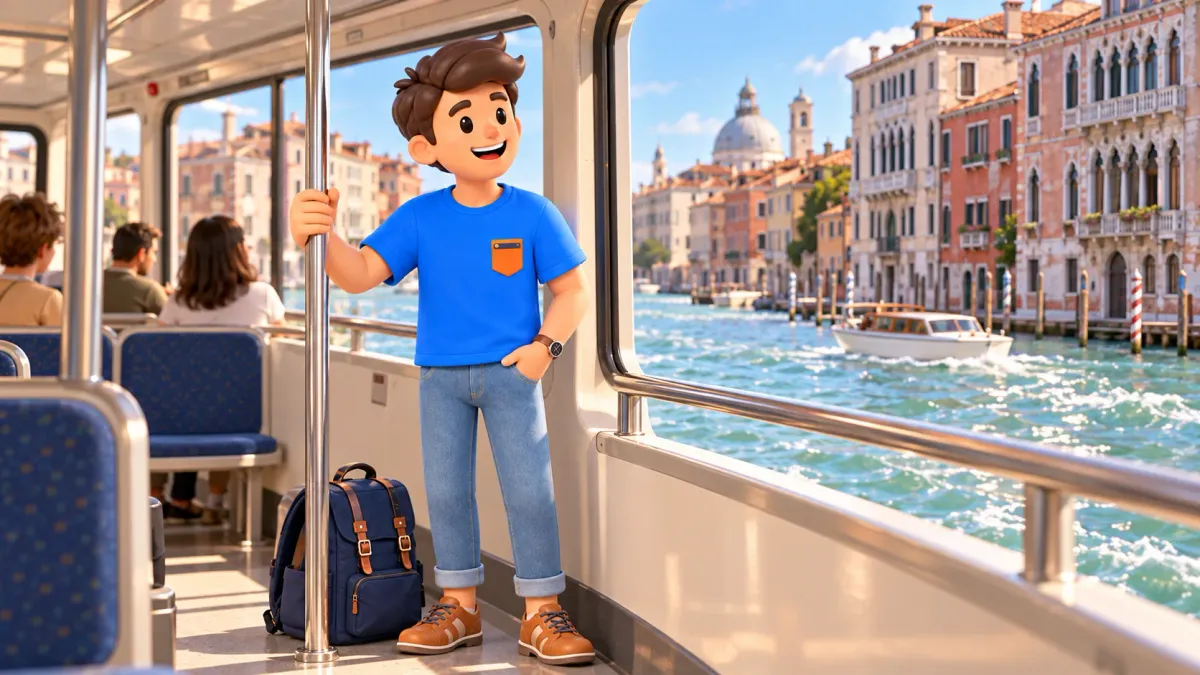
Combine Venice’s waterbuses and walking routes with one straightforward plan: take vaporetto line 1 from Ferrovia, outside Santa Lucia station, to Accademia, then explore Dorsoduro through San Vio and San Gregorio towards Salute and the public waterfront at Punta della Dogana. First come canal-facing palaces from the water, then smaller squares, passages and an open waterfront on foot.
Allow about three hours, including boarding, coffee and rest. The plan contains one uninterrupted boat ride and one walking section. Returning to the station and a full meal are extra, while museum interiors are outside the budget. With less time, use the two-hour alternative ending at San Vio.
Two ways of seeing Venice in one manageable outing
From the water, façades are easier to read as part of a continuous sequence along the canal. On foot, doorways, small bridges and the rhythm of a neighbourhood become more apparent. The experiences complement each other. One well-chosen ride followed by a limited area to explore can provide plenty of variety without repeatedly boarding and disembarking.
Try RoadMe to develop a personal plan for your whole trip around your interests, dates and pace. It makes arranging neighbourhood walks alongside the rest of your stay much easier, leaving room for the experiences you most want to enjoy.
| Part of the plan | Estimated time |
|---|---|
| Ticket purchase and checks, boarding and waiting | 25 minutes |
| Boat ride from Ferrovia to Accademia | 35 minutes |
| All walking on land between the start and finish | 25 minutes |
| Selected exterior views after disembarking | 40 minutes |
| Coffee stop | 25 minutes |
| Rest and general flexibility | 30 minutes |
The total is 180 minutes. These are editorial planning estimates, not measured walking times or a guarantee for a particular sailing. The land-walking allowance includes reaching the boarding point from the station forecourt and the whole walk after Accademia. Boarding time covers procedures and waiting, without counting the same approach twice.
The route is one way, starting in the public forecourt of Santa Lucia and ending outside Punta della Dogana. If you have an evening train, add the return journey and a sensible departure margin first. Three hours for exploring and three hours between two trains are different circumstances. In the latter case, this outing may be too long.
Board at Ferrovia and check the direction
Ferrovia means railway and identifies the stops outside Venezia Santa Lucia in historic Venice. Venezia Mestre is a different station on the mainland; getting from there to this starting point is additional. Piazzale Roma is another separate location served by line 1. Establish your actual starting place before comparing journey times.
You need line 1 towards Lido, leaving the boat earlier at Accademia. A destination board saying Lido does not mean you should travel all the way to the island. Check the direction, stopping pattern and current boarding pontoon on the operator’s information. Pontoon letters can depend on service arrangements, so one memorised letter is not a reliable instruction for every departure.
The timetable in force from 14 September 2026 confirms the sequence through Ferrovia, the Rialto area, Ca’ Rezzonico and Accademia. We allow about 35 minutes for the selected boat section. Check the actual departure for your date and time, including temporary changes and evening variations. This allowance does not describe the duration of the entire route to the Lido.
If the next boat is busy, boarding depends on conditions and the crew’s instructions. Waiting for another sailing may extend the day. Use the flexibility allowance or shorten the later walk. Do not try to recover time by rushing aboard or insisting on a place at the bow. This is public transport used by other passengers, rather than a private sightseeing boat.
Choose a few things to notice from the water
Pick a handful of landmarks instead of trying to identify every palace. At Ca’ d’Oro, look for the delicate Gothic façade. The name, House of Gold, recalls the former gilding of parts of the decoration; it does not promise an entirely golden building today. A little historical context can make a façade memorable without turning the ride into an architecture test.
Around Rialto, notice the stone bridge’s single arch and the shops across it. The present crossing is associated with Antonio da Ponte and construction in the late sixteenth century. Seeing it from the water provides a different impression from climbing its steps. Remain aboard here: a market visit and a walk through San Polo are separate activities.
Farther along, observe the relationship between buildings and water: canal entrances, formal façades, changing heights and rhythms of windows. There is no need to chase a single perfect side of the vessel. Other passengers, movement and your available position affect the view. Use permitted spaces and leave passageways clear, even when something interesting appears on the opposite bank.
Enjoy the ride without competing for a particular seat
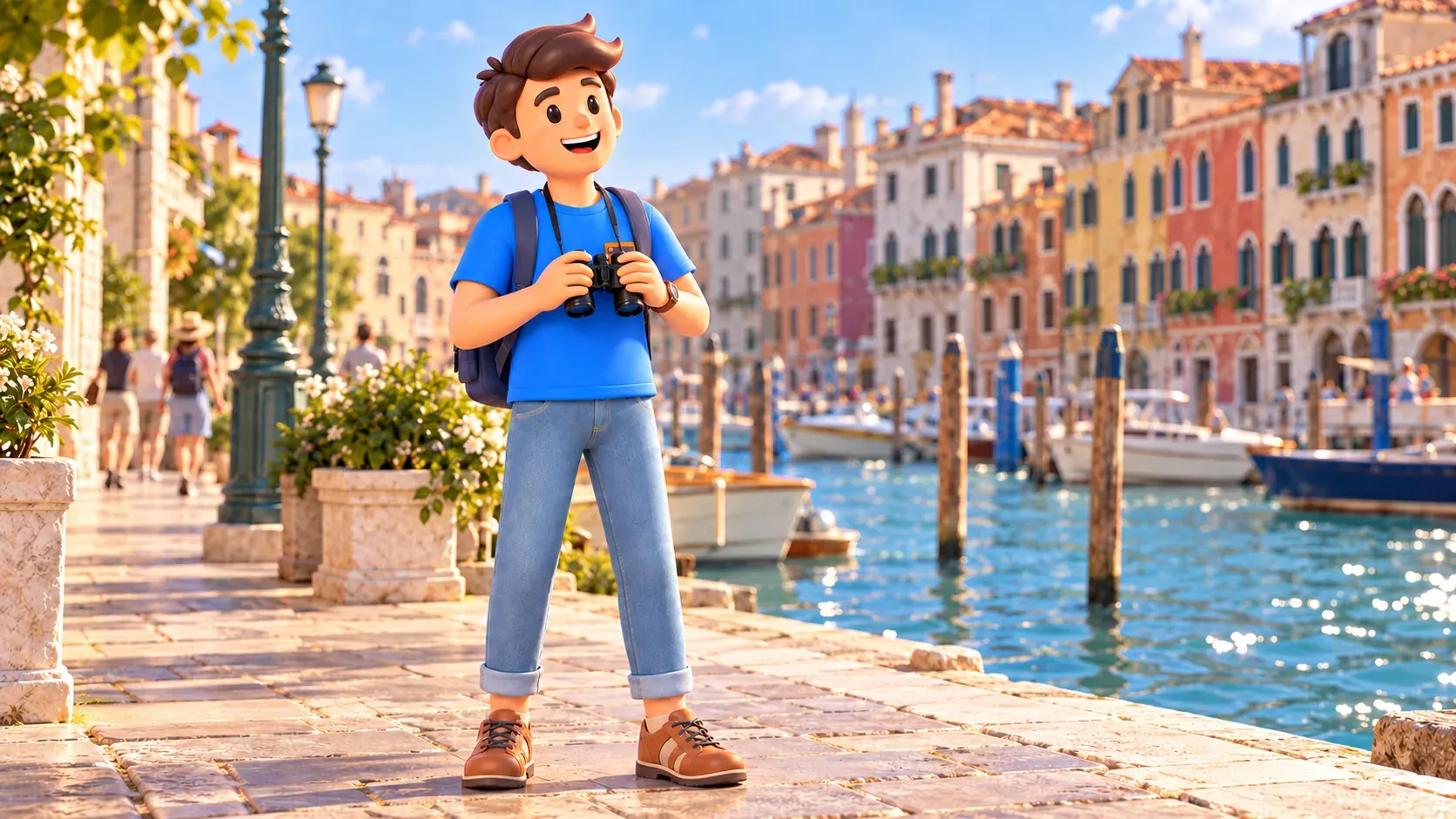
An ordinary vaporetto ticket does not reserve a window seat or an outside place. Seating and visibility depend on the vessel and how full it is. Look for a few large architectural forms and save smaller details for the walk. If standing, use the provided support and follow crew instructions. A photograph is not a reason to occupy the disembarking area.
The scheduled ride does not itself include a guided commentary or guaranteed audio programme. Knowing two or three names beforehand may be enough to enjoy the canal without constantly searching on a phone. This plan ends its boat section at Accademia. Salute and the more open space around the point belong to the walking continuation.
Match the ticket to the journeys you will actually make
You need an ACTV ticket valid on waterborne services for the whole boat journey. The standard 75-minute Rete Unica ticket runs from first validation. Its clock keeps running while you are on land. Taking an hour’s walk does not pause the ticket, and boarding again does not create a fresh 75-minute period.
The main plan uses one uninterrupted journey to Accademia. If you want to leave the boat at Rialto, explore for a while and board again, recalculate both time and ticket validity. Returning several hours later also needs valid travel cover. The ticket must remain valid throughout the required journey; boarding just before expiry is not enough.
A daily product may make sense when your wider itinerary includes several boat journeys. Compare it with all travel during its validity period rather than buying automatically for this one section. Venezia Daily Pass lasts 24 hours from first validation. The similarly named Mestre Daily Pass covers a different set of services and does not replace a ticket for Venice’s waterbuses.
Products have specific network exclusions. Do not automatically treat an urban ACTV ticket as an Alilaguna ticket or any airport transfer. Reduced fares also depend on their own eligibility conditions. For this article, choose suitable ordinary travel on line 1; a complete comparison of transport products is best made against your whole stay, including the return.
Prepare the ticket before entering the boarding area
Arrange purchase before entering the boarding zone, using a ticket office, machine or an appropriate official channel. For online purchases, check whether you have a usable travel document or a confirmation requiring a collection step. A saved picture of an order does not by itself establish that the ticket is ready for validation.
Use the required validation process at each new boarding. For a card or electronic travel medium, follow the validator instructions; a green signal and sound confirm successful validation. Digital formats can have their own activation steps. Check the result beforehand and retain the travel document throughout the journey. An open turnstile alone does not prove correct validation.
After Accademia: explore one compact part of Dorsoduro
On disembarking, stay on the Dorsoduro side near the Gallerie dell’Accademia. There is no need to cross the Grand Canal to continue towards Salute. The bridge is a useful landmark, but climbing it for a panorama would be an additional activity. Look around its foot and follow public passages towards Campo San Vio.
Continue through the lanes near the Guggenheim Collection’s land entrance towards San Gregorio and Salute. Check turns on a current map. There is no continuous Grand Canal promenade throughout this section: going inland between canals is normal. The museum garden and internal passages should not be assumed to provide a free shortcut.
Salute is associated with Venice’s vow during the seventeenth-century plague and Baldassarre Longhena’s design. From outside, observe the domes, the overall volume and large architectural scrolls. This brief background helps explain its commanding place in the waterfront view. The interior, sacristy and climb have separate visiting conditions and are outside the three-hour calculation.
Finish on the public waterfront at Punta della Dogana. The former customs complex recalls the commercial role of this entrance to the Grand Canal. Following Tadao Ando’s restoration in 2009, the building became a contemporary art venue. Its galleries require a separate visit. Your finish is outdoors, with views towards San Marco and San Giorgio rather than an exhibition admission.
Coffee, belongings and a shorter finish
RoadMe makes developing a personal itinerary for the whole stay much more convenient, with your interests and pace shaping the plan. Try spreading water views, neighbourhood walks and museum visits across different days, so each experience has room to be enjoyed.
Use the 25-minute coffee allowance at a suitable business along the way, checking opening and service arrangements. It covers a drink and a short rest, not a full lunch. For an unhurried meal, extend the outing or finish earlier. Keep the 30 minutes of general flexibility available instead of allocating it to extra attractions before you start.
Plan luggage separately. Aboard, bags including backpacks go on the floor or in designated spaces, keeping seats and passages free. Larger items depend on the operator’s rules and boarding conditions. After disembarking, your belongings still need to cross the smaller bridges with you. A short city outing is easier to enjoy with a light bag.
For mobility needs, check the actual pontoon, boarding arrangements and entire land route. Being able to use water transport does not establish that every later walk is accessible. Steps and historic paving remain on land. In poor weather, assess both parts too: a covered boat cabin does not shelter the walk that follows.
The two-hour alternative keeps the ride but ends at San Vio: 25 minutes for boarding and waiting, 35 aboard, 15 for all land walking, 20 for exterior views, 15 for coffee and 10 spare. That totals 120 minutes. Salute, Dogana, museum admission, lunch and the return are excluded. Shortening should change the finish, rather than simply demanding a faster pace.
For another day, save the standalone two-hour Accademia-to-Salute walk. Today, enjoy the contrast between a façade seen from the canal and the neighbourhood behind it. One clear change from boat to walking provides a coherent experience, while unallocated time lets you linger where Venice catches your interest.


