
Bruges Station to the Centre: Make Your Arrival a Walk

You can make the walk from Brugge railway station to the city centre the first part of your visit. Follow the southern approach to Minnewater, pass the lock house and the Beguinage, then continue along Mariastraat and Dijver to Markt. Allow around 90 minutes for this scenic arrival, including short stops, rather than treating it as the quickest way to reach the central square.
The distinction matters: the official visitor information gives roughly 20 minutes for a direct station-to-Markt walk. The route below takes a deliberate detour through the southern old town. Its approximate 2–2.7 kilometres and suggested timings are planning estimates, including looking around. Start the clock after dealing with your luggage and leaving the station; the route ends at Markt and does not include a return journey.
Choose your arrival before choosing your first attraction
This walk suits a light daypack, comfortable shoes and a generous gap before your next appointment. You get a sequence that feels like an introduction: open water first, a small residential courtyard, historic buildings beside a canal, then the main square. There is no need to add a museum ticket to make that journey worthwhile.
Use RoadMe to turn your arrival into a personal trip plan shaped around your interests, available time and pace. Having the rest of your visit worked into one programme makes it much more convenient to decide how long to linger on the way into town.
For a heavy suitcase, a tired child, persistent rain or a fixed check-in appointment, deal with the practical journey first. A direct walk, a bus or a taxi can be the sensible choice. You can return to Minnewater later without losing the meaning of your visit. The useful question is whether you want to get somewhere now or begin sightseeing on the way.
Also check where you actually need to finish. Markt is a clear destination for a first-time visitor, but an address near Mariastraat may make the southern part of this route enough. Use your accommodation or meeting location as a real destination rather than walking past it simply to complete a suggested itinerary.
Before leaving the station: luggage and the Centre exit
Check that your arrival station is Brugge, rather than Brugge Sint-Pieters. At Brugge, follow the signs towards the Centre exit and Stationsplein. Find your next destination on the map while you can stop comfortably. A short orientation pause is more useful than walking out, choosing a direction at random and then retracing the first part of your journey.
Brugge station has luggage lockers. If you intend to use one, check the operator’s current arrangements for the date and size you need; the presence of lockers does not establish that a suitable compartment will be available when you arrive. Storage is a separate paid service, and the transaction is outside the 90-minute walk described here.
Leaving luggage at accommodation is another possibility, but ask the property about its policy. An early arrival does not automatically mean that your room is ready or that bags can be stored. If your bag stays at the station, add a separate return and collection allowance to the end of the day. This is a one-way walk, so it will not bring you back to your belongings.
The station tourist office can help with local orientation and a city map when it is open. The route itself does not depend on entering the office. Keep the key local names available: Stationsplein, Begijnenvest, Minnewater, Wijngaardplein, Begijnhof, Mariastraat, Dijver, Wollestraat and Markt. They are more useful for finding your way than a long list of translated attraction names.
Minutes 0–25: from Stationsplein to Minnewater
Leave on the Centre side and use the marked crossing with traffic lights to pass the ring road. Then follow the southern approach towards Begijnenvest and the Minnewaterbrug area. Check the crossing and the turns on your map rather than aiming straight at a distant tower: the water and surrounding streets influence the actual walking route.
Allow roughly 15 minutes for leaving the forecourt, crossing and reaching the lake area. This is an allowance for an unfamiliar arrival, not a measured walking time. Follow any temporary diversion and give yourself more time if you are still sorting out your bearings. You do not need to make the first section feel like a race.
Use the next ten minutes for a first look at Minnewater. The lake sits at the southern edge of the historic centre, with greenery and the old-town approach around it. Let the larger area of water be the scene, rather than immediately trying to find the next landmark. You are choosing a short viewpoint stop here, not completing a full circuit of the park.

Minutes 25–40: Sashuis and the Beguinage approach
Continue towards Sashuis and Wijngaardplein. The small lock house gives the water a practical story: this was a place for managing the levels of the city’s waterways. The present house dates from the sixteenth century, while the lock system has older roots. Keep those two histories distinct as you look at the building and the water beside it.
This brief exterior stop helps connect the lake with the canals you will encounter farther into town. It also changes the scale of the walk, from a broad waterside view to a smaller piece of urban infrastructure. A shop or exhibition inside is a separate visit with its own hours; the suggested route relies on looking from the public approach.
The Beguinage is nearby. If the courtyard gate is open, use a little of this fifteen-minute block for a quiet look inside; if it is closed, stay with the entrance and waterside setting and continue. There is no need to search for a way through a closed gate or to make the route depend on a particular courtyard being accessible.
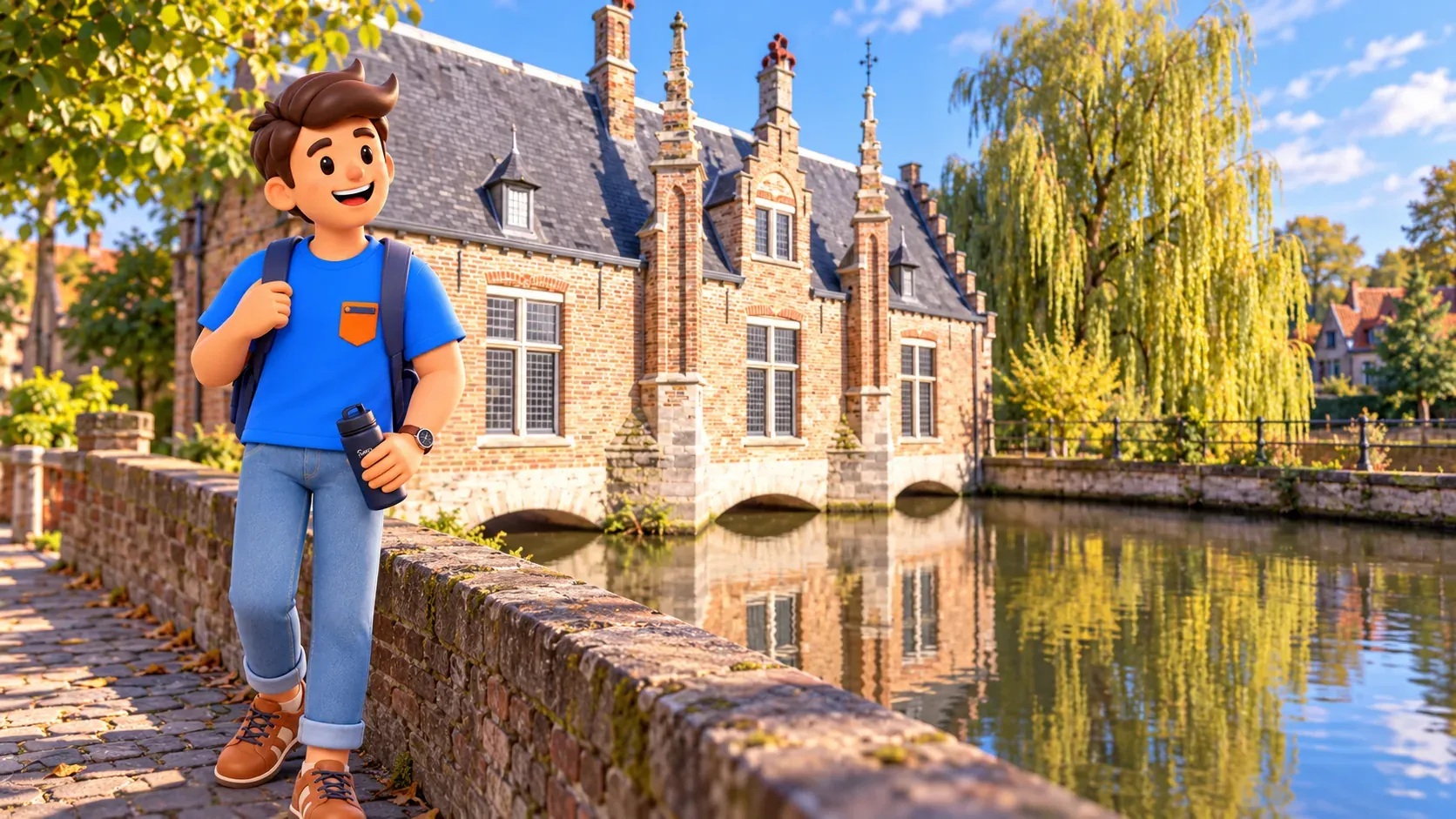
A short visit that respects a living place
Founded in 1245, the Beguinage was a community of devout laywomen, the beguines. Its white houses and communal garden make a clear contrast with the busier approach streets, but it remains a residential setting. Walk quietly on the visitor paths, keep out of private doorways and avoid treating the houses as a backdrop that exists only for photographs.
The communal courtyard visit is free, and its gates have opening hours. Access to a church, exhibition or private space is a different matter. For this arrival walk, a brief observation is enough. If you want a deeper visit, give it a separate block of time instead of assuming that everything inside the surrounding buildings belongs to the same short stop.
Consider the surface as well as the distance. The main bridge into the Beguinage is steep, and an alternative approach near the lock house still involves uneven paving. Travellers who need a particular access arrangement should check the official accessibility information for the exact approach. A small point on a map can still require a more considered route.
Minutes 40–60: Mariastraat and the museum quarter
Continue through Wijngaardstraat towards Mariastraat. Allow about ten minutes for the connection and another ten to look around the historic hospital and Church of Our Lady area. You are now moving from the southern residential and waterside setting into one of the city’s important cultural areas, while still keeping the arrival walk simple.
St John’s Hospital preserves a hospital building with twelfth-century origins; the museum inside tells stories of art and care. From outside, notice its substantial scale and relationship with the water. Across this part of the quarter, the Church of Our Lady adds another large architectural landmark. You can recognise their importance without trying to explain every window, collection or building phase.
If this area contains your hotel, a booked visit or the place where you will meet someone, finish the arrival walk here. Otherwise continue towards Dijver. Entering a museum, sitting down for lunch or climbing a tower changes the time budget. Those can be excellent next choices, but they are not hidden extras within the same 90 minutes.
Minutes 60–90: follow Dijver to Markt
Continue along Dijver towards Wollestraat, which leads to Markt. Allow around fifteen minutes for the waterside connection and short observations, then use the final fifteen for arriving on the square, orienting yourself and absorbing any delay. Keep an eye on your destination so that a tempting side street does not accidentally turn the arrival into another complete walk.
Markt gives the journey a clear finish. Look for the Belfry, then take in the stepped gables and Provincial Court around the square. The contrast with the lake is part of the value of this route: you have arrived at the centre through several different city settings rather than moving directly between two transport points.
Once you reach the centre, RoadMe can develop the next part of your trip around what has caught your interest, from art and architecture to longer walks. A personal plan makes it easier to organise the remaining day or several days without rebuilding the programme from scattered suggestions.

Continue the day, or take the shorter approach
If the journey has become tiring, choose the direct route between the station and Markt instead, using the King Albert I Park, ’t Zand and Steenstraat approach. Treat the official twenty-minute figure as an approximate direct-walk reference, with your pace and baggage affecting the result. Bus and taxi options are also available; check current services for your actual destination.
After a scenic arrival, leave a pause before adding another long programme. For a compact exploration starting at the square, use the two-hour first walk through Bruges, allowing its full time separately. For the shape of a longer visit, the one-day itinerary helps you choose a single interior and make room for lunch.
Before moving on, check the practical ending of your own day: where the bags are, where you will stay and when you need to be back at the station. The scenic walk has done its job when it gives your arrival a pleasant shape and leaves enough time for what comes next.


