
Bruges in the Evening: a Gentle Walk After Sightseeing
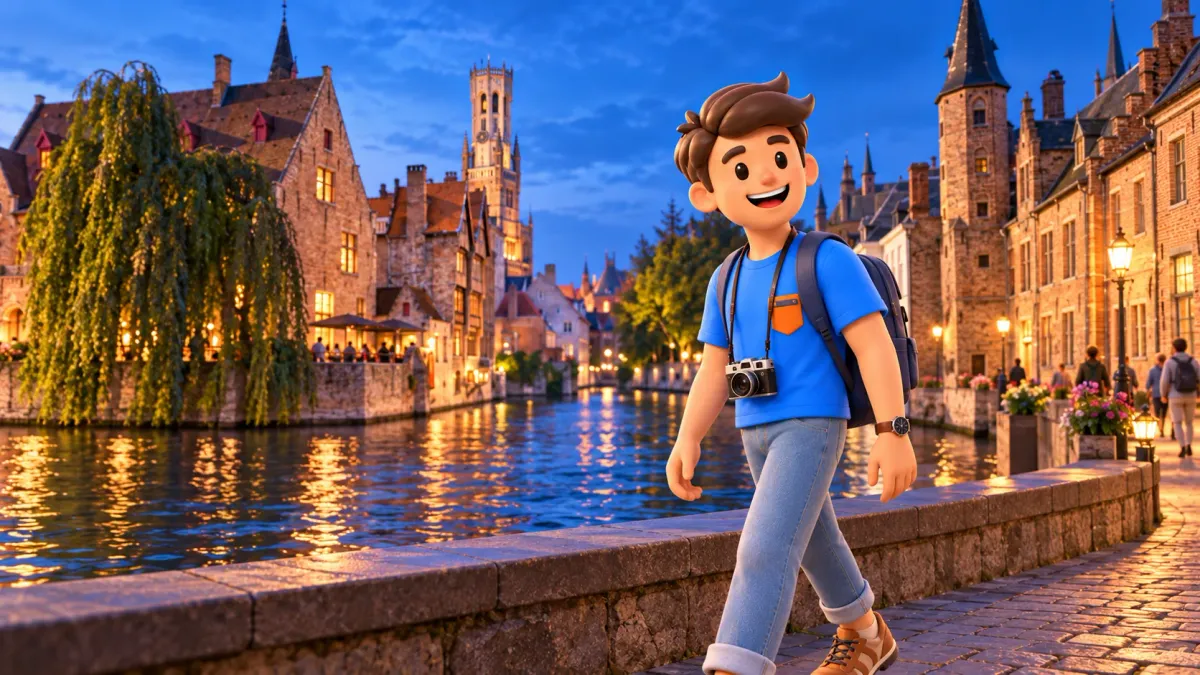
For an easy evening in Bruges, keep to a small loop between Markt, Burg, the Fish Market, Rosary Quay and the Dijver. Allow roughly 60–75 minutes for about 1–1.5 kilometres, including a few pauses. These are planning estimates, and the short stretch along the Dijver is an out-and-back; dinner and the journey to your accommodation or station need their own time.
The appeal is seeing familiar buildings under a changing sky and beside the water. You can enjoy this walk even after visiting the centre during the day. It uses outdoor streets and squares, so there is no need to fit another museum, tower climb or courtyard opening into the evening.
Give the evening a different pace
Choose one thing you want from the walk: a view over the canal, a little architecture or an unhurried transition to dinner. That choice determines where to linger. After a long sightseeing day, a shorter route with two satisfying stops often feels better than adding every landmark that is nearby.
Use RoadMe to build a personal trip plan around your interests, available time and preferred pace, including a lighter evening after a busy day. Keeping the whole visit organised in the app makes it much more convenient to balance walks, cultural visits and time to rest.
If dinner has a fixed time, work backwards from the restaurant address and leave a margin for the final walk. The route starts and finishes on Markt, but a table near Burg or the canal may make a different finishing point more useful. There is no reason to complete the loop simply because it is described as a loop.
Pick a starting time for your actual date. Summer evenings stay light later than winter ones, so “after dinner” does not describe the same scene throughout the year. Starting before sunset lets you watch the transition; arriving after dark gives a different experience. Neither requires a universal timetable for switching on the city’s monument lighting.
Start on Markt with a fresh look at the square
Begin where you can see the Belfry and the surrounding stepped gables without blocking other pedestrians. Look at the relationship between the tower and the lower buildings. By evening, the outline against the sky may matter more than the small details that caught your attention in daylight. Give yourself permission to observe one view for a few minutes.
Markt works well as a starting point because it is also a clear meeting place and a simple place to reassess the plan. You might already have visited the square in the morning, when you were concentrating on finding entrances or deciding what to see. Returning with those tasks settled gives you a different reason to be here.
The Belfry and Provincial Court help frame the space. This route includes their exteriors rather than an evening admission. Lighting can emphasise parts of the buildings, but maintenance, events and operating arrangements can affect what you find. Enjoy the actual scene instead of expecting every façade to match a photograph taken on another evening.
Before leaving, decide whether you have time for the full hour or just a short return to the water. Keep the names Markt, Burg, Rozenhoedkaai, Dijver and Wollestraat available on your map. They form a useful outline without turning the walk into a checklist of every building on the way.
Follow Breidelstraat to Burg
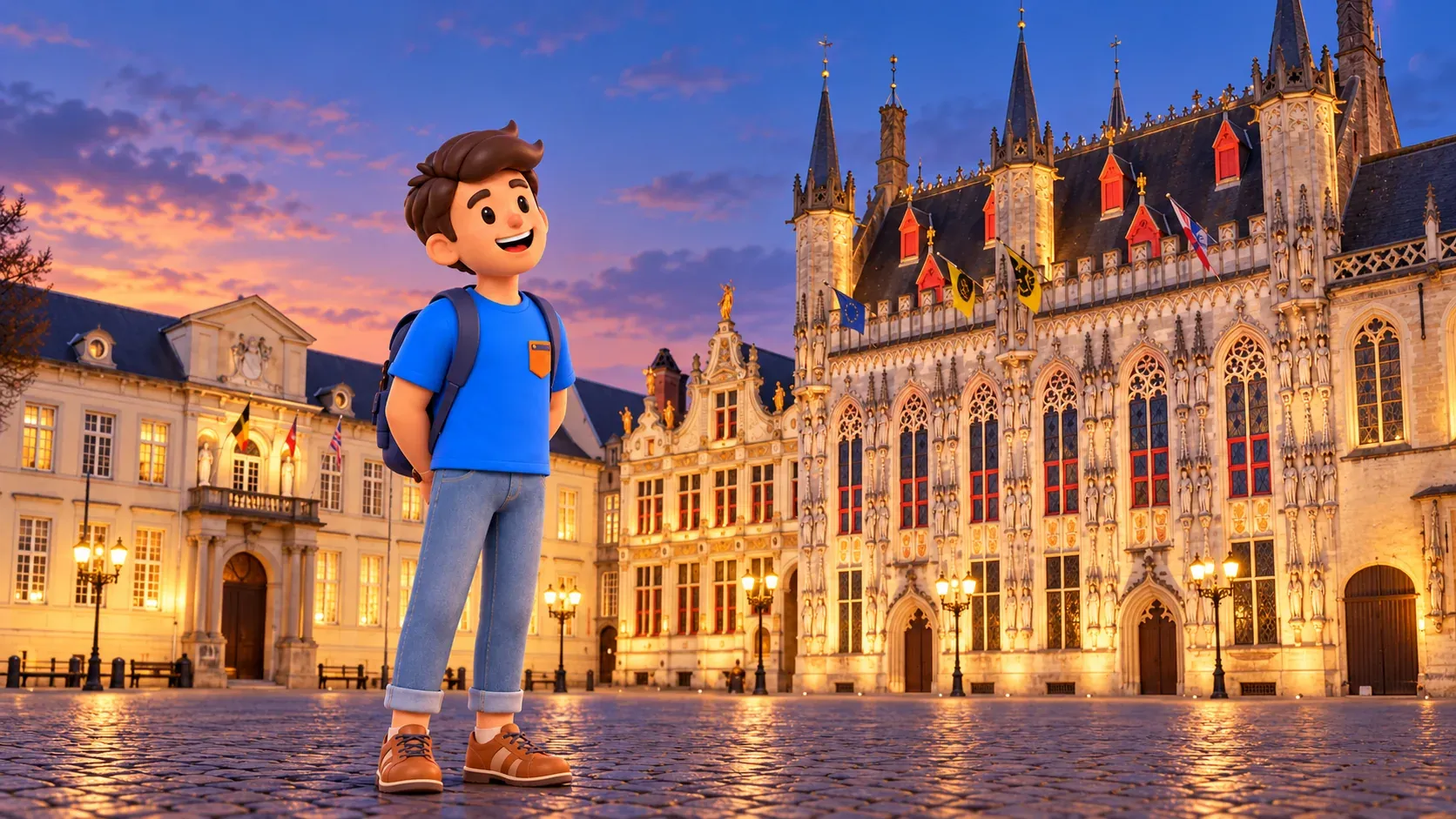
Take Breidelstraat from Markt to Burg. The connection is short, but the change in space is worth noticing: another square brings the Gothic Town Hall and neighbouring monumental façades into view. Stop where you can take in the group rather than immediately moving towards the next passage.
Burg has been a centre of city power for centuries, and the city administration still uses the Town Hall. Its construction dates to 1376–1421. That gives the square a useful story for this brief visit: it is a civic place with a long working history, as well as an architectural setting.
Compare the tall vertical emphasis of the Town Hall with the shapes of the buildings beside it. The square brings together architecture from different periods, so you do not need to call everything medieval to appreciate the effect. For the evening walk, the exterior composition is enough; a visit inside belongs to a separate daytime plan.
Through the passage to the Fish Market
Continue through Blinde-Ezelstraat, the passage beside the Town Hall, towards Vismarkt. Follow the public way and current signs. If the passage is temporarily unavailable, return to Markt and use Wollestraat to reach the canal, leaving out the market segment. The evening still works with a simpler route.
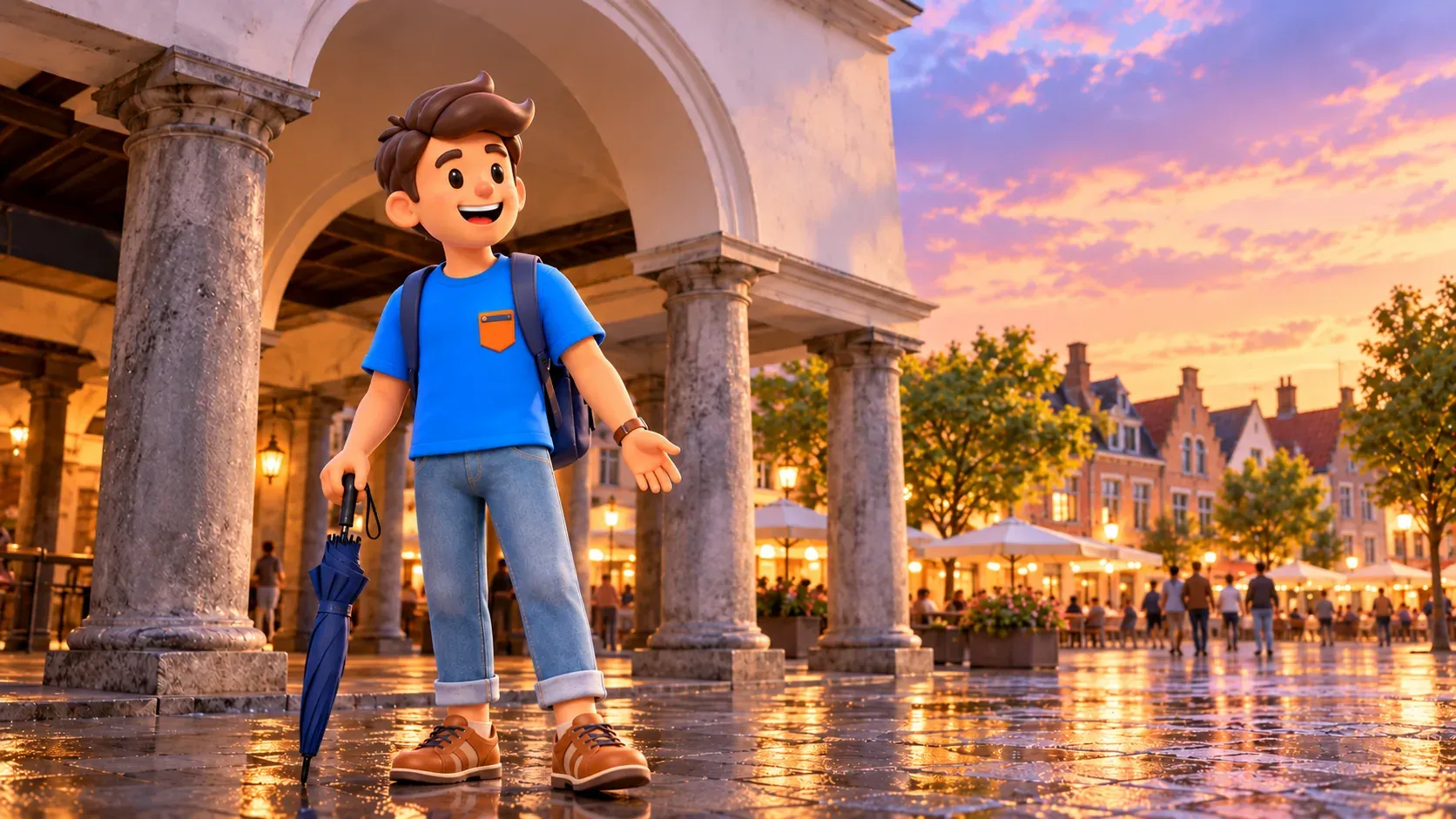
The Fish Market provides a different architectural rhythm. Its classical colonnade was designed in 1820 by Jean-Robert Calloigne. Fish selling had moved from Markt in the eighteenth century because of the smell, but this walk is about the market’s structure rather than finding an active evening fish stall.
Look at the repeated columns and the way they frame the space beyond. A small amount of history helps explain why the square feels different from Burg. It is also a useful moment to lower the intensity: you can enjoy the change of form without adding another long account of trade or architecture.
Continue towards Huidenvettersplein, Tanners Square, and then Rosary Quay. Keep the transition easy. If the public space is busy with diners or other walkers, follow the available route and leave room for people moving through. An evening setting can be lively, especially when it overlaps with mealtimes or an event.
Make Rosary Quay your main pause
Rozenhoedkaai is the natural place for the longest stop on this small loop. The name refers to rosaries once sold here. Today the bend in the water, surrounding buildings and distant tower create the familiar Bruges view. Knowing that small detail adds meaning without requiring a full history lesson beside the canal.
Choose a spot where you can stand comfortably and allow others to pass. Watch how the sky and buildings appear on the water. Wind, passing activity and available light influence the reflections, so the view may be beautifully broken rather than perfectly symmetrical. The actual movement of the canal is part of the evening.
If you want a photograph, take a few and then lower the camera. A pleasant stop can easily become a search for an empty frame that never arrives. You do not need the quay to yourself to enjoy it, and waiting for a particular lighting effect can consume the time you meant to spend walking together.
This is also a useful place to shorten the route. From the canal area, Wollestraat leads back to Markt. If you are ready for dinner or rest, use that direct connection. Continuing along the Dijver adds another kind of waterside scene, but it should remain an enjoyable choice rather than an obligation.
Add a short look along the Dijver
If you have time, continue onto the Dijver for a short waterside stretch, then return along it towards Wollestraat. This small out-and-back is deliberate. It gives you room to notice the canal beyond the famous viewpoint without depending on a museum garden, a private courtyard or an unfamiliar shortcut being open.
Keep the same bank and the return turn clear on your map. The purpose is a short change of atmosphere, not reaching another distant sight. Choose a comfortable turning point on the public quay according to the time left. Any temporary barrier or diversion takes precedence over a suggested walk.
If the evening reveals an interest you want to explore tomorrow, RoadMe can develop a personal plan for the rest of your stay around it. Organising the whole trip in the app is much more convenient than piecing together separate suggestions for art, architecture and further walks.
Return via Wollestraat to Markt when you are ready. Leave the longer museum-quarter visit for another block of time. There is value in finishing while the evening still feels relaxed, particularly if the day has already included a substantial walk.

Adjust for weather, surfaces and the season
For light rain, keep the loop short and decide in advance whether you want a warm indoor stop. A colonnade or shopfront is not a promise of an available seat, a public toilet or shelter for a long wait. With persistent rain or uncomfortable wind, a brief view from the square may be enough for the evening.
Old paving, kerbs and slopes affect the effort even on a short route. The approach from Tanners Square towards Rosary Quay includes an incline. Travellers with specific mobility requirements should check the exact official access route; the modest total distance does not establish that every connection suits every wheelchair or pushchair.
In colder weather, start earlier if you prefer some daylight for finding your way. In summer, you can enjoy a late light sky without waiting for full darkness. Seasonal decorations and special light events have their own dates and arrangements, so treat them as separate additions rather than an automatic part of this year-round walking idea.
Leave enough evening for dinner and the real return
Choose dinner by the address, opening arrangements and kind of evening you want. Check directly whether a kitchen will still be serving and whether you need a reservation. A restaurant beside the route is convenient only if its actual service fits your plan; the walk itself does not include a table or a dining-time guarantee.
For the wider day, the one-day Bruges itinerary helps you leave room for this lighter finish. If you are arriving late and still want a first overview, the two-hour introductory walk offers a broader daytime structure, with its full duration counted separately.
Finally, allow time from the actual finishing point to your accommodation or transport. For a train, check the departure you intend to use and add the station approach and platform time. A good evening in Bruges can be a small circle of squares and water, followed by an easy meal and an unhurried return.


