
Bruges’s White Courtyards: A Short Almshouse Walk
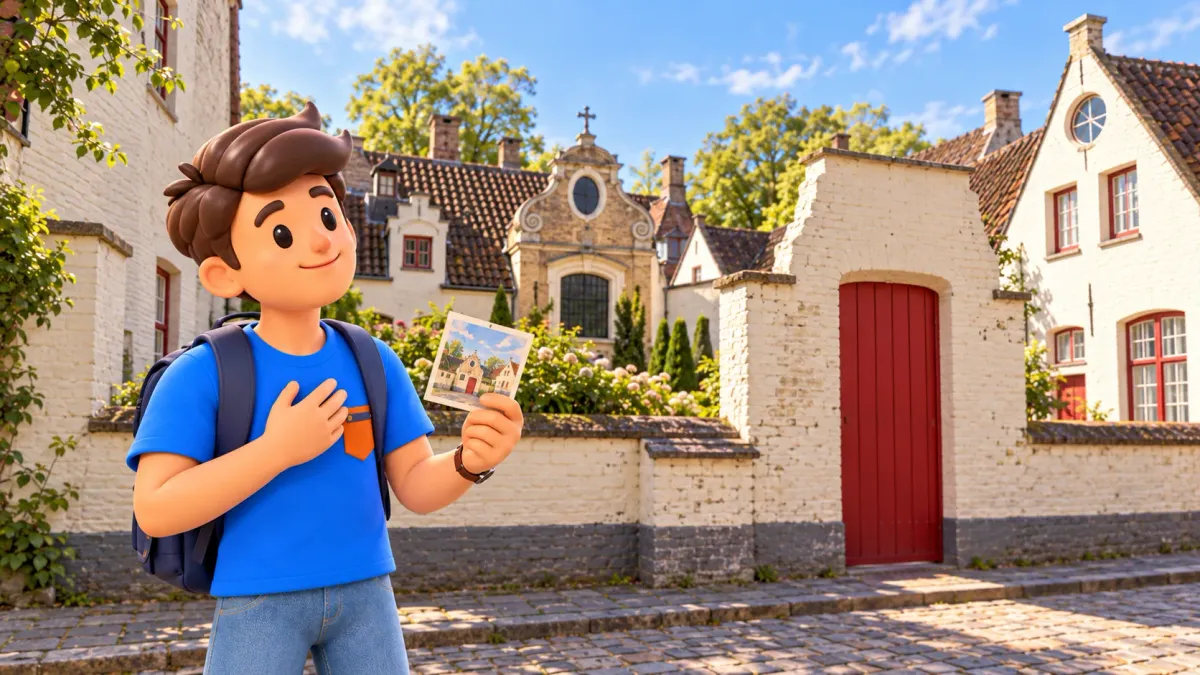
You do not need a full day to explore Bruges’s white almshouse courtyards. Start at De Vos in Noordstraat, continue to Spanoghe on Katelijnestraat and finish by the shared garden of Sint-Jozef and De Meulenaere on Nieuwe Gentweg. Allow approximately 75–90 minutes for three small stops and the connections between them. Including accessible garden paths, the distance is roughly 0.8–1.2 kilometres: a planning estimate, rather than a measured route.
The essential point is that these places remain homes. Look at how a courtyard, chapel, small dwellings and garden fit together. Enter only areas open to visitors and stay on the designated paths. A closed gate means continuing with an exterior view, rather than finding another way in. Allow additional time to reach the start, return afterwards or stop at a café.
What the white courtyards were built for
The local word godshuizen refers to charitable housing complexes. Wealthy citizens and craft guilds established modest homes for people who needed support, including older residents and widows without means. Each foundation had its own conditions. Similar façades do not imply the same history or a single monastery. This walk looks at a smaller side of a prosperous trading city: the organisation of shelter, care and everyday life.
For a more convenient way to give that interest a place in your whole trip, try RoadMe: the app develops a personal itinerary around your interests, dates and pace. It can connect small courtyard visits with museums, canals and time to rest, rather than leaving you to arrange every separate idea yourself.
Choose this outing when you would like to move beyond the larger façades and look at more modest buildings. Three nearby complexes offer enough contrast without turning the day into a citywide collection of almshouses. They provide a short, coherent subject within a visit to Bruges, rather than another long list of compulsory stops added to an already full schedule.
De Vos: a small court with a social story
Begin at Godshuis De Vos on Noordstraat. Current visitor information places the complex at numbers 6–14; look for the named ensemble, rather than an open door to a particular dwelling. It is near the Wijngaard area, convenient when approaching from the southern old town. Slow down on the street first. The interest lies in the scale of the whole little court, rather than a single grand landmark.
De Vos was founded and built around 1713–1715 on part of the founder’s house garden. Originally six dwellings surrounded a small garden; later alterations left four residential units. The central chapel helps explain the relationship between assistance and religious remembrance. In charitable foundations of this kind, residents were often expected to pray for the benefactor’s soul. Housing and the conditions attached to receiving help belonged together.
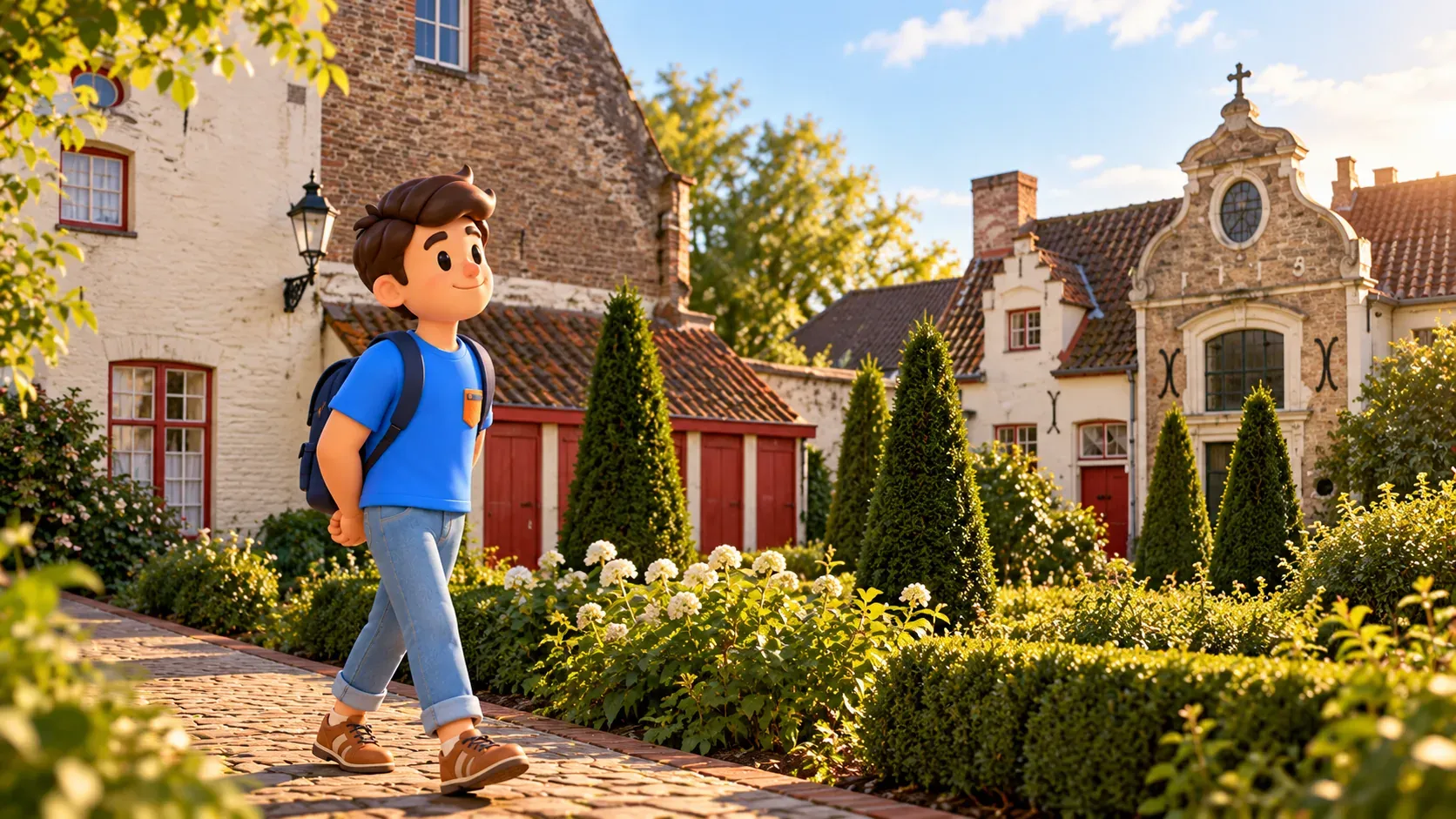
Look at the size of the houses beside the chapel, the path and the boundary between street and garden. The low wall makes the ensemble visible even from outside. It was lowered in 1963, a detail that explains today’s relatively open view into an older place. A foundation date and the way we now encounter its buildings may be separated by centuries.
If the common area is open, a short, quiet visit is enough. You do not need to enter the chapel or approach every window for the stop to be worthwhile. Standing back often makes the courtyard arrangement clearer. A few minutes understanding its layout can be more rewarding than a prolonged photo session beside someone’s front door. Domestic interiors are outside the visitor experience.
Through Wijngaardstraat and Walplein to Spanoghe
From Noordstraat, join Wijngaardstraat and head north towards Walplein. Continue via Walstraat to Katelijnestraat, then follow it north to Spanoghe’s entrance at number 8. Save the local street names before setting out if they are unfamiliar. The connections use ordinary streets: no hidden passage through residential grounds is needed to make the route work.
This section shows how closely different rhythms coexist in Bruges. After the small court, you return to shopfronts and ordinary movement. Do not expect the entire walk to be a continuous zone of silence. The contrast makes the next stop more noticeable, especially the moment when a narrow entrance suggests another space beyond. With a firm time limit, pass through Walplein without adding a substantial visit.
In a group, agree on the pace here. If one person wants coffee and another wants to see the garden, keep a shared café pause for afterwards. Otherwise three small visits can accumulate shopping and waiting time even while the distance remains short. The outing does not require every museum, shop or church encountered along the way to become part of the programme.
Spanoghe: the garden beyond the narrow entrance
At Spanoghe, the transition from street to garden is the main attraction. The narrow approach between houses is easy to miss when looking only for larger landmarks. Where access is open to visitors, follow the common path and give your eyes a moment to adjust to the light. A shut gate or a local restriction means staying outside, rather than trying neighbouring doors.
Francesca Spanooghe founded the complex in 1680 as housing for women. The buildings were subsequently rebuilt and restored, so the date on an entrance does not make every wall unchanged since the foundation. For a short outing, one distinction is enough: the history of charitable housing survives here through later alterations. Calling the whole visible court medieval would blur that story.
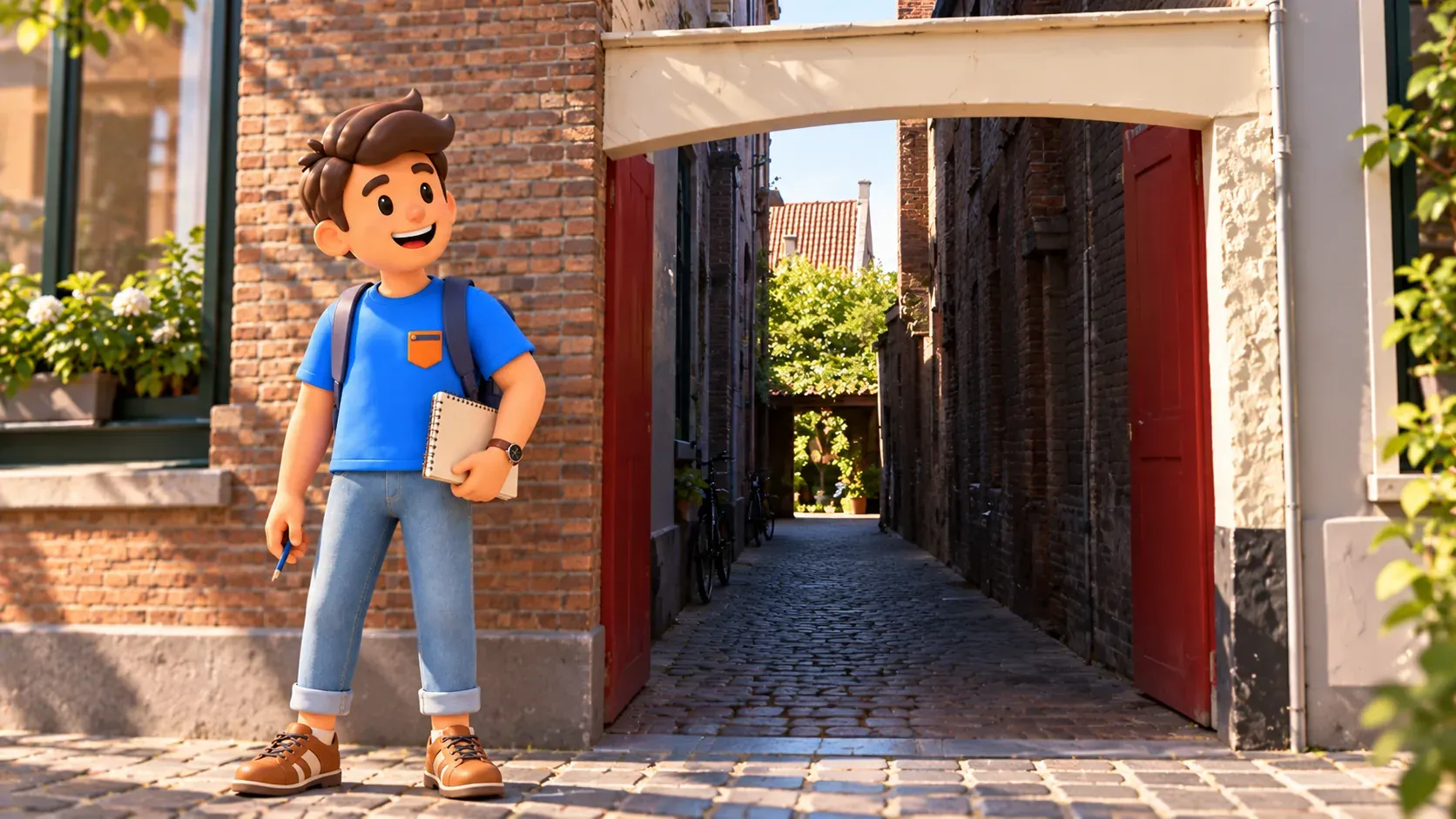
The garden reaches the water, and an accessible common area offers an unusual side view of the St John’s Hospital complex opposite. This is another angle on the architecture, rather than entry to the hospital or an extension of a museum visit. Do not expect a direct crossing between the two sites. Return to Katelijnestraat by the same public approach when you are ready to continue.
Keep the visit small in practice as well as in distance. There is no need for a loud explanation to the whole group or a search for a better viewpoint beyond a flowerbed. Notice the change from narrow passage to garden and the relationship between low houses and water. If residents are using the space, a brief look and a return to the street still preserve the point of the stop.
The shared garden at Sint-Jozef and De Meulenaere
Back on Katelijnestraat, head south to Nieuwe Gentweg and turn east along it. The final stop is Sint-Jozef, St Joseph’s almshouse, beside De Meulenaere. The city recommends their common garden around Nieuwe Gentweg 8–22; Sint-Jozef’s own heritage address is 24–32. Use the indicated access to the shared area, without assuming every attractive arched doorway is open to visitors.
The white walls, small dwellings and garden can appear to form one ensemble, although the neighbouring foundations have different histories. Sint-Jozef was first established in 1699 on another street, Oostmeers, and moved here in 1905. The buildings also underwent rebuilding. The place therefore tells a story of adapting housing over time, alongside the earlier charitable intention behind the institution.
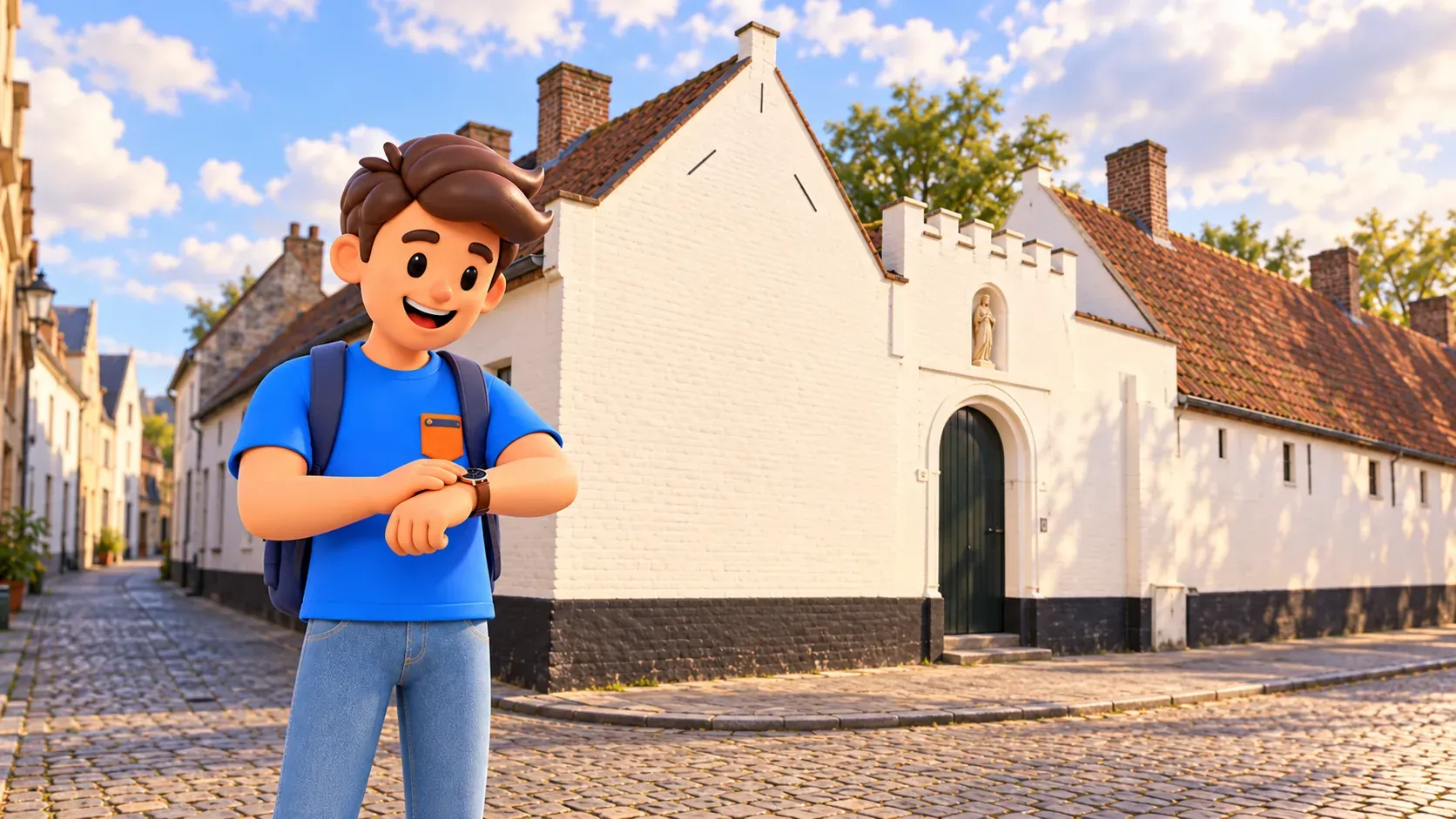
The present shared garden was landscaped in 2001 with respect for the existing structure. That provides a useful final turn in the walk’s theme: historic places continue to change so they remain useful for living. Look at paths, the position of houses and the common green centre. Those relationships explain the arrangement more clearly than trying to memorise every architect and benefactor in one visit.
Do not confuse Sint-Jozef with Sint-Joos on Ezelstraat. Similar names refer to different complexes in different parts of Bruges. Today’s route ends on Nieuwe Gentweg and does not require an extra walk north. If the subject interests you, save other almshouses for another outing. Comparing these three nearby places already offers a complete small experience without a long catalogue.
How to keep the three courtyards distinct
At De Vos, remember the compact arrangement and central chapel. At Spanoghe, notice the narrow approach and the opening towards water. At Sint-Jozef, look at the relationship between the dwellings and the common garden of neighbouring complexes. Those are three different observations, so you do not have to search for the same detail everywhere. Try describing each stop in one sentence as you leave.
White paint does not indicate one shared age. Bruges’s tradition of charitable housing reaches back to the Middle Ages, while particular complexes were founded later, relocated, restored and modernised. Dates help explain that process rather than turning the outing into a test. The social purpose and the architectural fabric can follow different histories while remaining connected.
To fit this walk into the rest of your visit, try RoadMe for a personal day-by-day trip plan based on your dates, interests and pace. It is a more convenient way to balance smaller courtyards with larger visits than arranging every separate idea in a timetable by hand.
When to go and where to finish
Choose daylight and avoid making the outing depend on permanently open gates. Access to a garden does not mean access to dwellings or chapels; local signs define the visitor area. If one court is closed, compare the remaining two and keep the route short. Missing a single stop does not require crossing the city in search of a replacement.
Photograph the general setting where permitted, keeping residents, windows and private activities outside your attention. With children, you might compare a gate, a path and a chapel, but the court should not become a playground. For food or a long conversation, choose an appropriate public place after leaving, rather than a convenient doorstep beside an occupied home.
The route includes urban paving, narrow approaches and possible thresholds. It has not been assessed as fully step-free. If width or surface matters to your group, judge each entrance separately and keep exterior viewing as an option. Heavy rain also changes the garden experience; postponing can make more sense than looking for shelter in residential buildings.
From Nieuwe Gentweg, continue to your next activity with time allowed for the return. For a first visit’s broader structure, use the one-day Bruges itinerary; for another short outing, consider the walk from Sebrechtspark to Ezelpoort. Keep the courtyards as a small chapter of their own. Their value comes from attention to a few lived-in places, rather than the number of addresses collected.


