
Western Bruges: Sebrechtspark, Old Streets and Ezelpoort
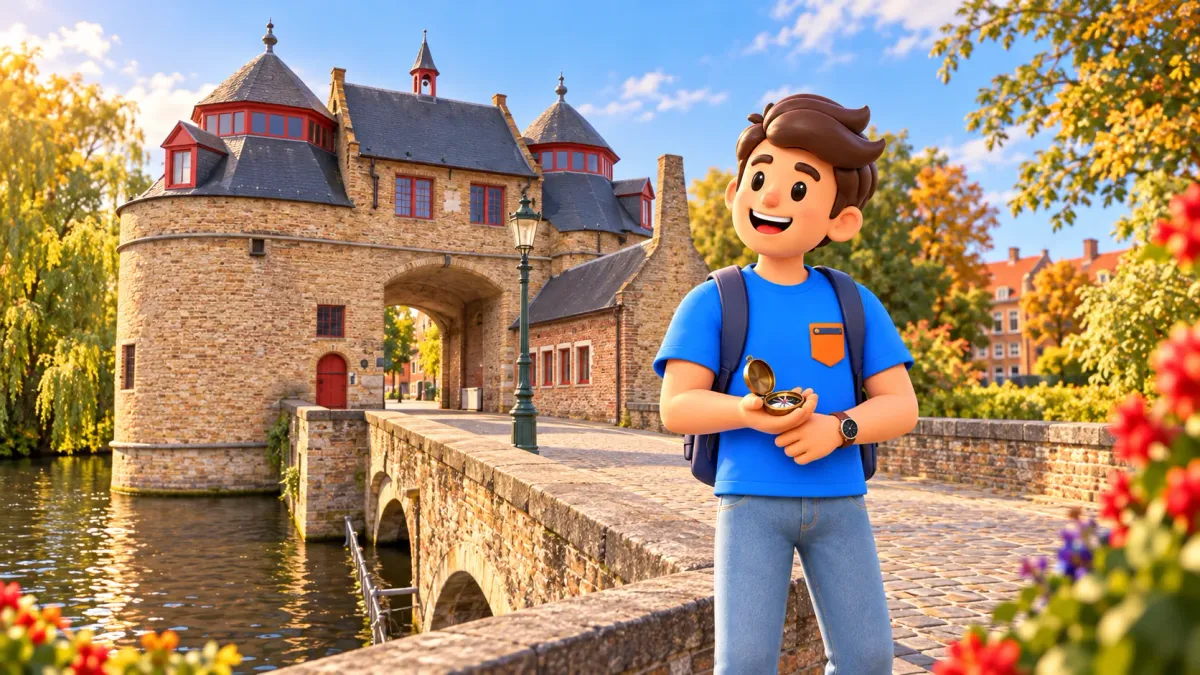
For a small change of scene in Bruges, start in Sebrechtspark, walk to St James’s Church, pause on Ezelbrug and finish at Ezelpoort, the Donkey’s Gate. Allow around two hours for this outing through the western and northwestern old town. Including a short detour into Pottenmakersstraat, the walking distance is approximately 1.5–2 kilometres. That is a planning estimate, rather than a measured track.
Begin at the park entrance at Oude Zak 36 and finish at Ezelstraat 122. The suggested time includes twenty to thirty minutes in the park, street views, photographs and brief rests. Getting to the start, returning afterwards, a full meal and an optional church visit need additional time. The route works as an outdoor walk without relying on entry to a succession of historic buildings.
A quieter change of scale after the main squares
This walk suits a second look at Bruges, or a gap between larger visits when you would rather keep moving gently. Its appeal lies in the transitions: an enclosed garden, a church among houses, a narrow view of water and finally a gate on the old city boundary. There is no need for every corner to deliver a famous skyline. The relationship between these different spaces provides the interest.
For a more convenient way to turn those preferences into a whole trip, try RoadMe: the app develops a personal itinerary around your interests, dates and pace. It helps give gardens, architecture and larger visits a place in one plan, rather than leaving you to assemble separate ideas yourself.
“Western Bruges” describes the direction of this outing, rather than a formal district boundary. You move from the western old town towards its northwestern gate. These are lived-in streets, with everyday journeys, bicycles and people using their front doors. Choose the walk for its variety of spaces, rather than expecting an empty version of the city or a guaranteed escape from other visitors.
Sebrechtspark: make the first stop a real pause
Look for the entrance on Oude Zak and allow yourself to slow down before continuing. Sebrechtspark occupies ground with several histories: once a monastery garden, it later became the private garden of surgeon and professor Joseph Sebrechts. Today it is a city park. That change of use is part of its interest, alongside the simpler pleasure of sitting among trees.
The monumental entrance deserves a moment too. Designed by Louis Delacenserie in a neoclassical style, it dates from 1907. An old garden does not make every visible feature medieval. Here, a comparatively recent entrance leads into a place with a much longer story. It is a useful introduction to looking carefully at Bruges without assigning the same age to everything that appears historic.
Give the park twenty to thirty minutes if you want the outing to feel different from a brisk sightseeing circuit. Follow a little of the path network, find an available seat and notice how lawns, trees and surrounding walls shape the space. There is a playground and picnic seating, although your visit need not depend on a particular bench being free. A snack you have brought can make this the main rest of the walk, subject to local rules.
The former private garden’s story includes fruit growing and greenhouses. That does not mean you should expect a working fruit garden today, surviving glasshouses or anything to pick. The more useful idea is the move from a private enclosure to a public green space. When you are ready, return to the same Oude Zak entrance, so the onward route does not depend on finding another open exit.
Old streets leading to St James’s Church
From the entrance, continue along Oude Zak towards Leeuwstraat, then use Moerstraat to reach Sint-Jakobsplein. The connections are short enough to leave room for looking. Notice changes in street width, rooflines and the moment when the larger volume of the church comes into view. You do not need to turn every attractive façade into an additional stop with a separate story to learn.
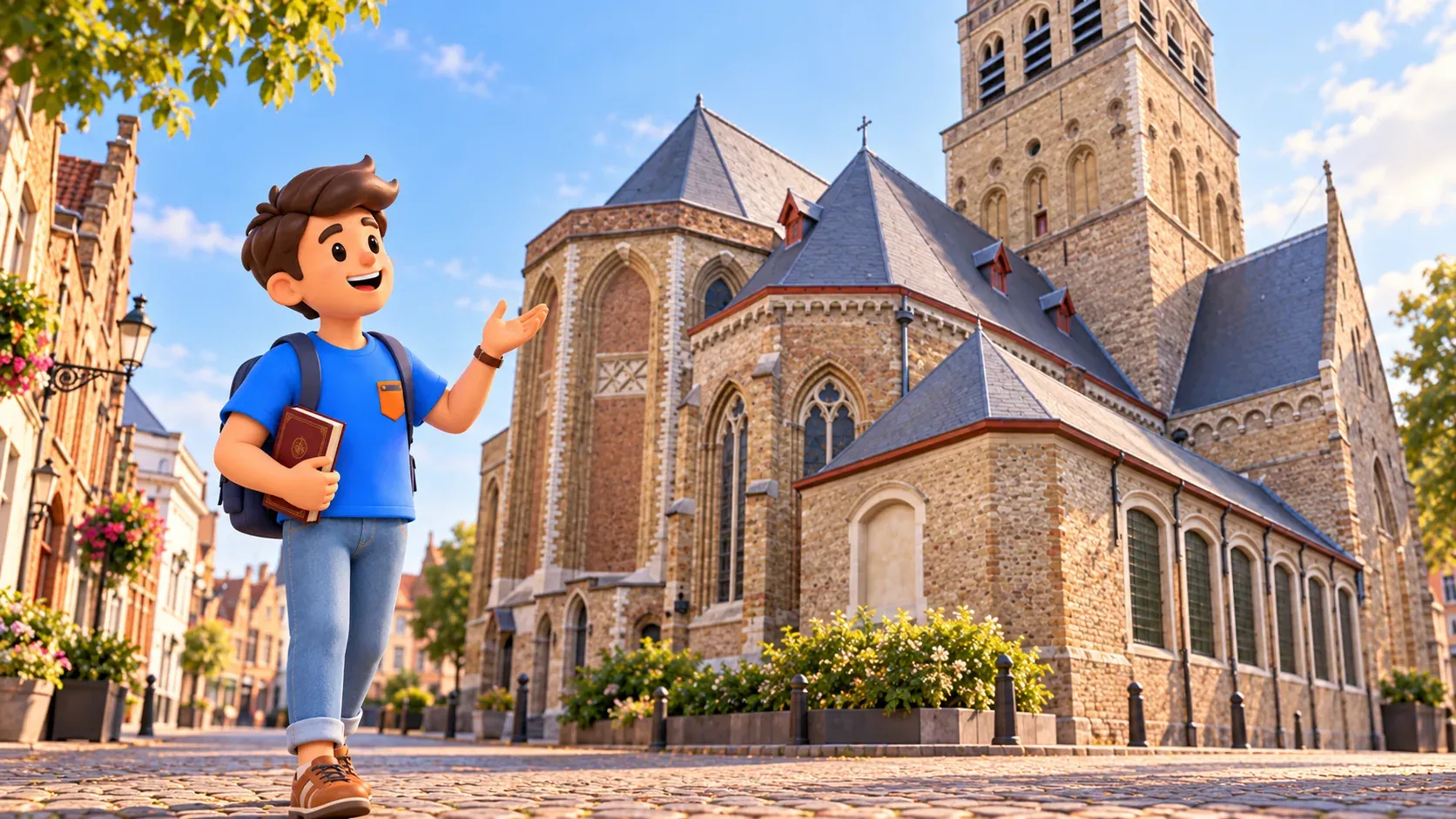
On the square, Sint-Jakobskerk makes more sense as part of a neighbourhood than it does in a close-up photograph. Look at the way its scale relates to the houses around it. Find somewhere to stand without blocking a doorway or the pavement. An exterior visit is a complete part of this outing, rather than a lesser version of an indoor visit you failed to make.
A chapel here became a parish church in the thirteenth century, and the building was substantially enlarged in the fifteenth. Wealthy neighbours contributed to its development. Those two stages are enough historical context for a short walk: the origins of the parish and the size of the present church belong to different moments. Look at the Gothic windows and layered roofline with that distinction in mind.
If the church is open to visitors and worship does not restrict access, you can choose to go inside. Add that visit to your time allowance and follow the instructions at the entrance. The outdoor itinerary does not assume admission at a particular hour. If fresh air and a gentle walk are today’s priorities, simply continue from the square without feeling that every available interior must be included.
Ezelbrug: a little bridge and private waterside gardens
Continue along Sint-Jakobsstraat to Ezelbrug. After the garden and church square, the water provides another change of scene. Look along the canal and towards the small gardens beside it. These are private spaces, seen from a public bridge. The view is the attraction; it is not an invitation to look for access through someone’s gate or down to a domestic terrace.
The bridge dates from the seventeenth century and takes its name from the former Ten Ezele inn. Do not confuse it with Blinde-Ezelbrug, the Blind Donkey Bridge near Burg. Similar names do not give the places interchangeable stories. Keeping the right bridge attached to the right name is more useful here than borrowing a colourful legend from another part of the city.
A brief stop is enough to see how this small waterway changes an ordinary street junction. Keep room for others to pass, especially when taking photographs. Choose one subject rather than trying to include the arch, reflections and every neighbouring house in a single composition. This is a small public crossing, so the most considerate viewpoint may also be the simplest one.
A short detour into Pottenmakersstraat
Near the bridge, take a short detour into Pottenmakersstraat and return the same way to Ezelstraat. Treat this as a small addition, rather than the beginning of a much longer canal circuit. Its closer scale rewards attention to cobbles, brickwork, low houses and occasional views of water. Walk as far as you enjoy looking, while keeping enough time for the final approach to the gate.
This part of the city also retains a trace of an earlier defensive boundary in a surviving round tower fragment. Bruges’s first defences are associated with 1127–1128, but that does not date every visible part of the remaining structure to those years. The useful distinction is between an early boundary and the larger city that subsequently grew beyond it. You can understand that without making the detour an architectural survey.
The street remains residential. Stay outside private courtyards, leave flowerpots where they are and keep bags away from people’s doorways. Façade decorations and plants change, and an incidental street scene is never part of the promised itinerary. Sometimes the best moment is simply the view towards water between buildings, rather than a photograph that has to reproduce an illustration.
Follow Ezelstraat towards the northwestern gate
Back on Ezelstraat, continue north towards Ezelpoort. This is the more straightforward walking section after the smaller spaces around the bridge. Look at shopfronts, doors and the ordinary movement of the street. Older buildings and everyday uses belong together here. You are passing through a functioning part of Bruges, rather than a museum corridor reserved for sightseeing.
If you would like coffee, use your own time margin for it. The route does not depend on a named café or an available table. With a firm two-hour limit, choose where the longer pause matters most: in the park, at a café or around the gate. Giving all three an extended stop will change the outing into something closer to a half-day plan.
Ezelpoort: a changing gateway on the water
The water and bridge approach give Ezelpoort much of its character. The round brick towers and central passage form a compact composition, but they belong to the larger history of the city’s defences. A gate was first built here in 1297 with the second line of ramparts, then rebuilt in 1369. Further changes followed, so no single date explains everything visible today.
One helpful detail is that the gate used to be taller. Its upper part was removed in the seventeenth century. Looking at the substantial surviving brick base, you can imagine how different the building’s proportions once were without inventing an elaborate lost castle. The present silhouette is a reminder that a historic structure can survive through substantial alterations.
Use the public approach, keeping the passage clear for people and traffic. This walk includes the exterior, without promising a tower climb, an indoor museum or an event. You can finish here even if you spend another few minutes looking at the water. Continuing around the ramparts would be a separate outing, with a different distance and time allowance.
Choose the balance that suits your day
For a greener walk, stay longer in Sebrechtspark and keep the church as an exterior stop. If architecture interests you more, make the park a shorter pause and spend longer looking at the church and Ezelpoort. Pottenmakersstraat can remain a brief side visit. There is no requirement to collect every possible detail about each place before moving on.
To make those choices work across your whole visit, try RoadMe for a personal day-by-day trip plan based on your dates, interests and pace. It is a more convenient way to connect this short outing with the rest of Bruges than arranging every separate idea by hand.
Choose daylight and adapt to the weather. If the park is closed, continue from Oude Zak and save the garden for another visit. In heavy rain or when tired, shorten the outing rather than treating two hours as an obligation. Wet cobbles, uneven surfaces and crossings need attention; this route has not been assessed as a fully step-free itinerary.
Ezelpoort is a one-way finish, so allow time to return to your hotel, the centre or onward transport. If you need the main Brugge railway station, do not confuse it with Brugge-Sint-Pieters. For another day’s change of scene, consider the bridges and canals photo walk or the walk to the windmills. Keeping those as separate outings preserves the small scale that makes this route enjoyable.


