
Bang Rak in Two Hours: a Cathedral, Trading Heritage and a Boat Temple

A short walk through Bang Rak can connect religious architecture with the river’s trading story. Start around Assumption Cathedral and the former East Asiatic building, then continue south towards Wat Yannawa. The final temple’s boat-shaped monument makes an especially useful ending: the river returns as a subject even though this is a walk on land. The theme is how different buildings recall the district’s relationships with worship, commerce and movement.
Allow around two hours from the cathedral area to the temple. This outline gives the cathedral a selected visit, treats the trading building as an optional exterior observation, includes a seated pause and finishes with a short temple encounter. It is not an interior tour of three institutions. Current entrances and public access matter more than the apparent closeness of pins. Use a current map for the actual walking line, without assuming a continuous riverside promenade.
Choose a small architectural thread
This walk suits someone who likes comparing buildings but does not want another full museum programme. Keep one question in mind: how does each place address the people arriving at it? A cathedral entrance, a former commercial façade and a temple monument have different purposes. Looking at those differences is enough for a clear afternoon. You do not need a long list of dates or a photograph from every available angle to make the connection.
RoadMe can develop this idea into a personal Bangkok itinerary based on your interests, available time and pace. Planning the whole trip in the app is much more convenient when architecture, neighbourhood walks and rest need to fit your own way of travelling.
Pick a daylight window and check the cathedral’s current visiting arrangements around services. The East Asiatic stop depends on a permitted public view; it is not essential to enter the building. At Wat Yannawa, follow the visitor access available on the day. If a doorway or frontage is unavailable, keep the theme rather than searching for a way into a restricted area. The route remains coherent with a brief first stop and more attention at the temple.
| Estimated time | Suggested use |
|---|---|
| First 25 minutes | Assumption Cathedral, according to visitor access |
| 25–40 minutes | Optional East Asiatic exterior and nearby approach |
| 40–60 minutes | A seated drink pause |
| 60–85 minutes | Public streets south towards Wat Yannawa |
| 85–110 minutes | A selected temple visit and the boat-shaped monument |
| Last 10 minutes | Finish and prepare the onward journey |
These blocks are planning estimates. They include a modest amount of orientation but do not guarantee entry, an empty courtyard or a measured walking pace. Travel from your accommodation and any later boat journey are additional. A full meal or a deep interior visit changes the size of the outing. If you want more time at the cathedral, give it that time and extend the walk or shorten the optional trading-building stop.
Assumption Cathedral: begin with a living place of worship
Assumption Cathedral is a Catholic place of worship in Bangkok. The present building belongs to the early twentieth century, while the community’s history is older. That short distinction is enough for this route: an institution can have a longer life than the structure you see. Start by looking at the exterior as a whole rather than trying to solve every stage of its chronology before you enter.
Notice the way the façade gathers your attention towards the entrance and how its scale feels against nearby streets. You can choose a doorway, an opening or the relationship between the two towers as your subject. These are ways of looking, not a demand to stand in one exact photographic position. Keep entrances free and follow the signs that apply to the area you have actually reached. Neighbouring school or private grounds are not implied parts of the walk.
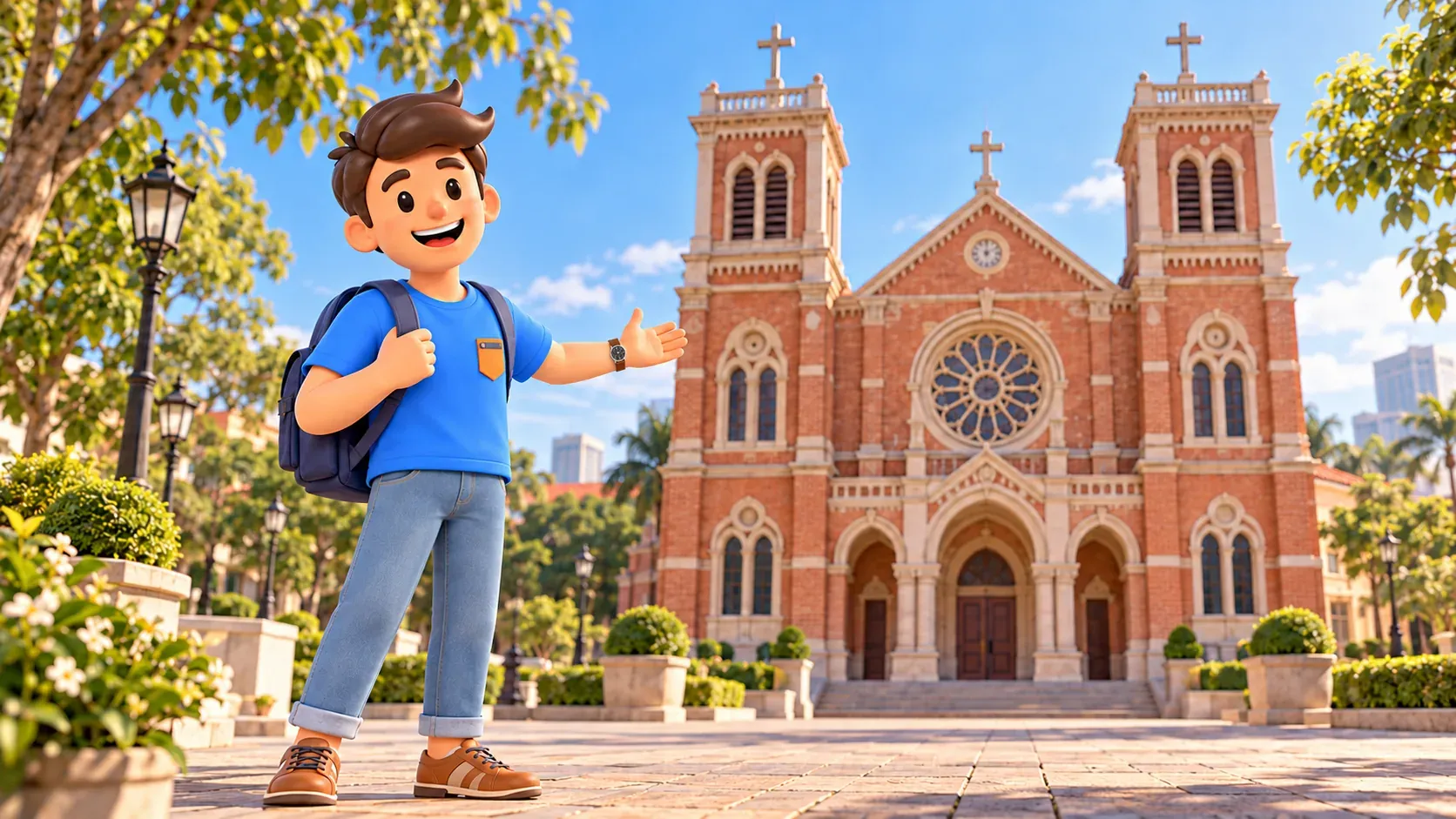
If sightseeing entry is available, go in quietly and let the interior have a few attentive minutes. During a service, do not treat worship as a performance arranged for your visit. You can wait appropriately, keep to an allowed area or return another time. Dress respectfully and ask about photography before taking pictures inside. A selected cathedral visit can be worthwhile without photographing people, moving around during prayer or attempting to complete every part of the building.
One detail to carry into the next stop
Before leaving, choose one impression you can describe without a photograph. Was it the entrance’s proportion, the change of light or the relationship between a large religious building and the close street? Keep the observation specific. Later you can compare it with the trading building and the temple. This gives the route a personal thread rather than a set of stylistic labels. Your companions may notice something else; compare those choices during the pause instead of trying to agree on one correct response.
East Asiatic: trading heritage without assuming an open museum
The former East Asiatic building gives this part of Bang Rak a commercial counterpart to the cathedral. Its association with the trading company is the useful historical point here. You are looking for the architectural presence of business near the river, not another religious space. The historic façade, where publicly visible, offers a different rhythm of openings and a different relationship with arrival. A brief exterior encounter can provide that contrast without an interior visit.
Do not plan around an old exhibition photograph or assume the building is a public museum open all day. Redevelopment announcements and previous temporary events are not current admission rules. Approach only where public access is actually permitted, and respect barriers or staff directions. If the view is limited, keep this stop short or omit it. The outline does not rely on a guaranteed grand front-on view, a river terrace or access through neighbouring private properties.
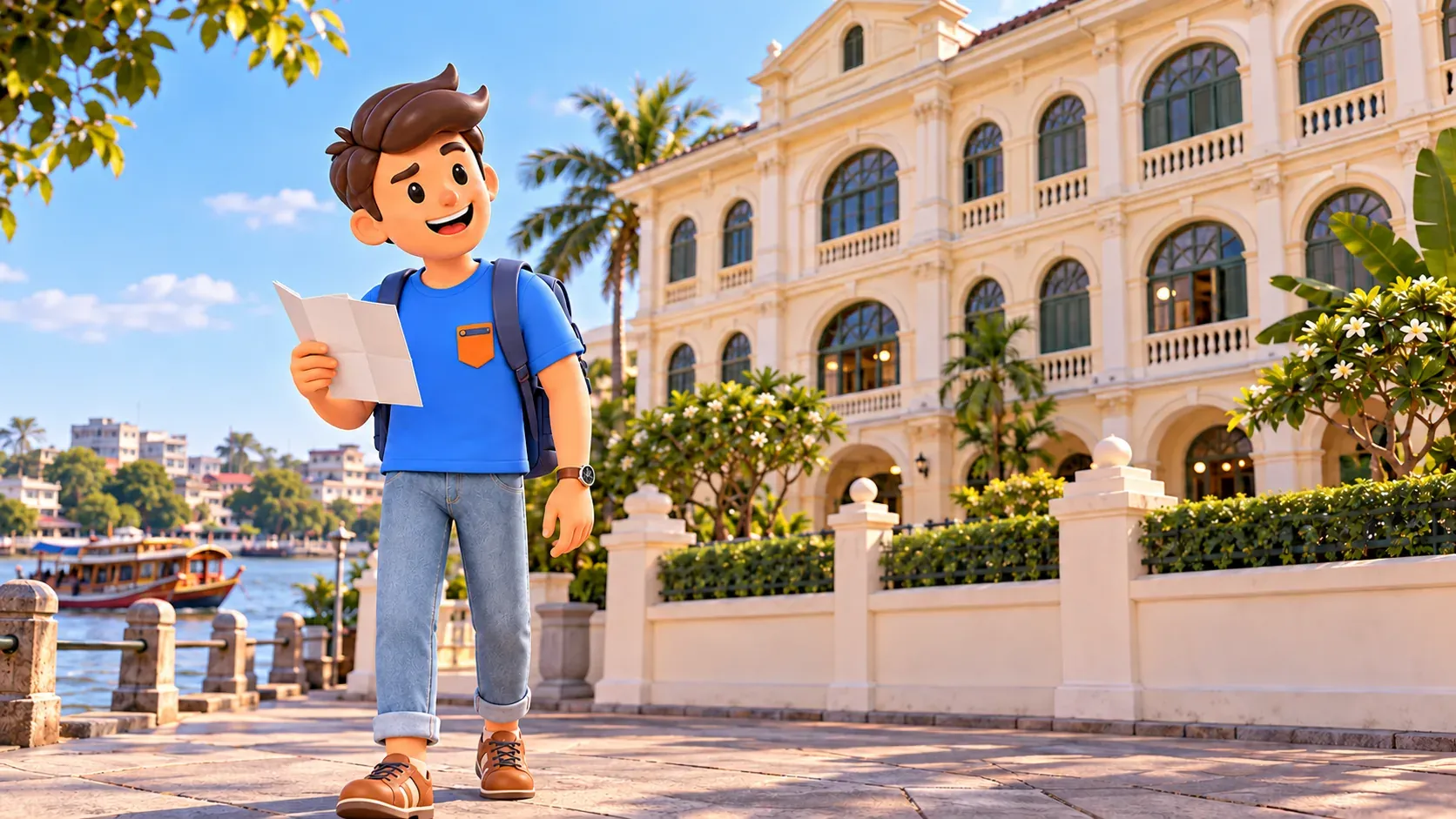
When a permitted view is available, pick one comparison with the cathedral: repeated openings rather than a single focal entrance, a commercial frontage rather than a religious threshold, or simply a change in material and proportion. You do not need to settle the exact architectural label. What matters is that the buildings have different histories and current access conditions. Not entering is a useful decision when the route is about reading an urban setting rather than collecting interiors.
A pause makes the next section a separate chapter
Take a drink somewhere convenient on your actual route. A famous café, hotel lounge or special river view is not required. Sit if you need to and decide how much attention remains for Wat Yannawa. The short break in the table is for a modest pause, not a leisurely lunch. Ordering, waiting and paying are part of its duration. If you want a meal, extend the outing honestly rather than pretending those minutes fit between the other visits.
With RoadMe, plan a personal trip that gives more space to the subjects you enjoy, from religious architecture to the city’s commercial history. The app makes organising the entire itinerary easier than piecing together separate place lists and rest stops throughout the day.
Use the pause to decide whether you are still interested in comparison or simply ready for a gentler finish. Both are reasonable. The route does not need another detour to prove that Bang Rak has many attractions. Keeping the final temple as the main remaining subject gives the walk a clear shape. If the first visit was especially absorbing, a shorter ending may preserve it better than adding more details when your attention is already full.
Walk south through the district, not along an imagined promenade
Continue towards Wat Yannawa using actual public streets and crossings. The Chao Phraya is close to parts of this area, but proximity to the river does not create a continuous public waterfront path. Some attractive-looking lines on a map lead to hotels, private grounds or separate entrances. Stay with the available street route and stop in a suitable place to check direction. The walking allowance is there for ordinary city movement, not for racing between monuments.
Let the scale change as you walk. A frontage, a doorway or the way a side street meets a larger road can be worth noticing without becoming another named attraction. Keep people’s access clear and ask before close images of their work or faces. You can observe the district without entering residential lanes that are not part of a public approach. This section gives the earlier buildings an urban setting instead of making the space between them feel like empty time.
Wat Yannawa: a boat shape that stays on land
Wat Yannawa’s distinctive monument is a masonry boat-shaped structure with chedis, not a vessel you board for a river trip. It is associated with Rama III and the wish to preserve the memory of Chinese junks. That brief context turns the unusual form into a fitting final subject after the trading building. A shape connected with movement is held in religious architecture, giving the river’s history another expression within the walk.
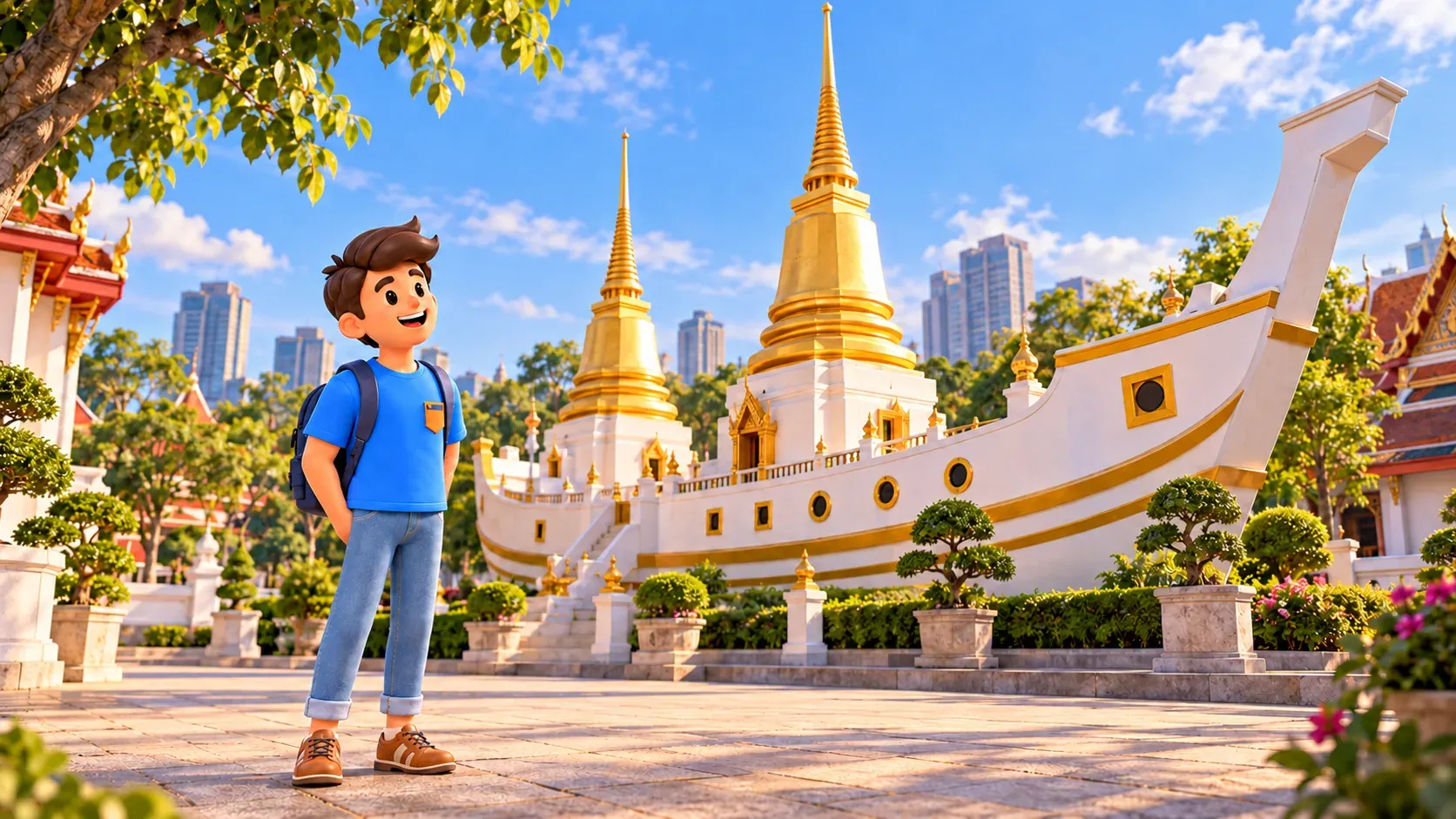
Begin by seeing the outline from an allowed courtyard position. Notice the long base and the vertical chedis before looking for smaller details. You do not need to climb or reach a particular viewpoint for the idea to become clear. Follow current temple directions, cover shoulders and knees and remove shoes where requested. Keep worshippers’ space in mind. The short visit is for selected observation and appropriate access, not a promise to explore every hall and religious object.
Make the final image different from the first
At the cathedral, you may have looked towards a doorway; here, look at the whole silhouette first. At the trading building, you may have noticed repeated windows; here, compare the long horizontal form with what rises from it. This change of attention makes the final stop distinct. It is a personal exercise rather than a claim that one building is more authentic or important. Each place contributes a different kind of architecture to the same small area of the city.
If you want a fuller temple visit, enlarge the final allowance and make the optional earlier stop briefer. If a section is closed, use the permitted areas or finish early. A short outing remains complete when its central idea is clear. You have moved between a cathedral, a trading association and a boat-shaped religious monument. That connection does not require an exhaustive catalogue of every structure or a successful photograph inside each one.
Finish near the temple and count the next journey separately
Use the last minutes to leave calmly and decide your onward route from where you actually are. Saphan Taksin and the river transport area may be relevant to your next journey, but reaching an entrance, finding a service and waiting take separate time. This two-hour walk does not include a guaranteed immediate boat departure. Choose the next movement according to your destination rather than assuming the river makes every onward connection automatic.

For another small cultural route, our Silom walk follows houses, a library and a Hindu temple. For a more creative afternoon, the Charoen Krung itinerary gives art and changing urban spaces their own time. Keep these as separate outings unless you deliberately extend the day. Bang Rak’s cathedral, commercial heritage and boat temple already give two hours a connected story, with enough room to enjoy what actually holds your attention.


