
Above the Old Town: Polybahn, Polyterrasse and Zurich’s university quarter
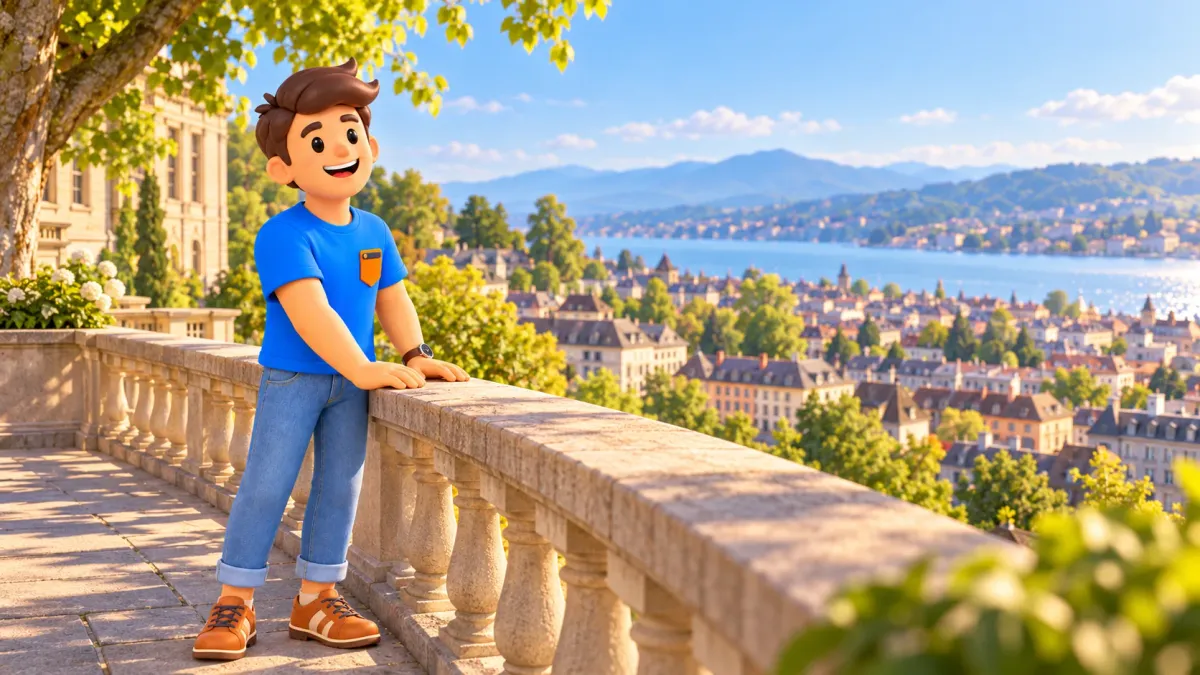
The Polybahn changes your view of Zurich in less than two minutes. One moment you are beside the trams at Central; the next, the Old Town is below you. The rewarding part comes after the ride: time on the Polyterrasse, followed by a walk through the university quarter. This route combines a city panorama, substantial architecture and an everyday working campus without requiring a whole sightseeing day.
A practical route for ninety minutes to two hours
Start at the lower Polybahn station, Limmatquai 144. Ride up to the Polyterrasse, look at the ETH Zurich main building, continue through the university quarter to the University of Zurich main building and descend towards Hirschengraben via Künstlergasse. You can then continue into the Old Town or turn back towards Central. The funicular handles the principal climb; the rest follows the hillside and descends.
Allow roughly ninety minutes to two hours for the basic walk. This is a planning estimate with pauses and photographs, without a museum visit or a long meal. You could cover the ground faster, but the point is to stop at the terrace and read the city rather than simply collect buildings. Add at least another hour if you want a meaningful museum visit.
To fit this walk into the rest of your trip, try RoadMe: it creates a personal day-by-day plan around your dates, interests and pace. Choose architecture and city views, then replace stops that do not appeal to you.
Find the lower station from Zurich HB
From Zürich Hauptbahnhof, head towards the river and Bahnhofbrücke, then cross the Limmat to Central. Allow around ten minutes from a ground-level station exit if you need to find your bearings. This does not include reaching that exit from a deep railway platform, collecting luggage or dealing with a particularly busy concourse.
The lower station is part of the streetscape on Limmatquai rather than a detached attraction on the hillside. Locate the address before looking for the entrance. Central is a busy transport junction, so a meeting point described only as “Central” can leave people standing at different tram stops. Agree to meet at the Polybahn entrance instead, especially if your group is arriving separately.
What to expect from the Polybahn
The red funicular has been operating since 1889. It links the lower city with the university hillside and remains everyday transport for people studying and working here. The ride takes about 100 seconds. Enjoy the change of level and the carriage, but save expectations of a long panoramic journey for another excursion.
Checked on 23 October 2026, the operator’s published regular service is Monday to Friday 06:30–21:00, Saturday 07:30–21:00, and Sundays and public holidays 09:00–21:00, with departures approximately every five minutes. Maintenance interrupts this pattern. The next listed planned pauses after our check are 12 November and 17 December 2026, until around 17:00; consult the current operator notice before travelling.
A valid ZVV ticket covering zone 110 includes the Polybahn journey, so no additional ticket is needed within that ticket’s validity. Check both the zone and the time window. If you do not already hold a suitable ticket, buy one under the current conditions at the station. A ticket price is deliberately not used as the foundation of this walk: the terrace and outdoor campus route can also be reached on foot.

Walking up if the railway is closed
From Central, take the uphill route towards Seilergraben and Leonhardstrasse, then follow signs towards ETH and the Polyterrasse. Allow approximately 15–25 minutes, depending on your chosen pedestrian path, pace and pauses. This is an estimate rather than a measured navigation instruction. The horizontal distance looks modest on a map, but the slope changes how the walk feels.
The walking alternative suits anyone who wants to experience the hillside as well as the view. Keep the terrace as the destination, rather than improvising shortcuts into university service areas or following every staircase that appears to lead upwards. A checked pedestrian map helps distinguish a public connection from an unhelpful detour.
The operator states that the Polybahn is not step-free. Neither this uphill option nor the descending route should be assumed suitable for wheelchairs or people with substantial mobility limitations. Arrange an accessible approach separately, considering the Rämistrasse side of campus and checking the actual stops, entrances and lifts. ETH/Universitätsspital is a useful upper-campus tram-stop reference, not a promise that every onward path is accessible.
Give the Polyterrasse time
The open terrace in front of ETH is the main reason for coming. Find a place at the edge and look at the city as a whole before reaching for your camera. The Old Town becomes a dense field of roofs, the Limmat helps explain the shape of the centre and the lake draws your eye into the distance. Mountain visibility depends on weather; an Alpine backdrop is a possibility, not part of an admission guarantee.
Twenty to thirty minutes is a useful allowance for a first stop. Take a wide photograph, then identify a few landmarks you might see again at street level. Even without naming every tower, this helps turn an unfamiliar city into a comprehensible landscape. The later descent feels different when you recognise the area you were looking over.
The Polyterrasse is publicly accessible and free to enter. Outdoor access does not imply unrestricted access to adjoining interiors, nor does it rule out temporary closures for works or events. Respect barriers and local signs. A university terrace is a shared place, so keep routes clear and give people using it for an ordinary break room to do so.
Choose daylight or evening atmosphere
Daylight is the better choice if you want to distinguish buildings and understand the geography. Later visits can bring an attractive atmosphere as city lights appear, but some of the detail that makes the panorama useful will disappear. In autumn and winter, check sunset against your actual timetable rather than assuming an afternoon visit will still be bright.
For photographs, assess the light and clouds on the day. A guidebook’s sunset recommendation cannot guarantee a clear horizon or a comfortable place to linger. Wind is especially noticeable on an open viewpoint; bring an extra layer if the forecast suggests you might need one, and shorten the stop when conditions turn unpleasant.
Read the ETH building from outside
The ETH main building is at Rämistrasse 101. Its historic core was designed by Gottfried Semper and occupied in 1864; later alterations and extensions shaped the complex you see today. It is more useful on this walk to notice the building’s scale and position than to attach its entire appearance to one date.
From the lower city, the university forms part of the skyline. From the terrace, its façade becomes the backdrop to an outdoor room facing the city. Walk along the accessible frontage, then step back and compare that impression with your view from the parapet. This simple change of position reveals the relationship between architecture and hillside without requiring a formal guided visit.

Public terrace, university interiors
ETH describes its historic main building as open to the public, with regular access Monday to Friday 06:00–22:00 and weekends 08:00–17:00. These hours were checked on 23 October 2026. They apply to the main building, not automatically to every laboratory, library, exhibition or classroom inside it.
If an entrance is shut or an event affects access, leave the interior out. You will still have the terrace, the façades and the walk through the quarter. Keeping the outdoor route as the core avoids making the whole outing depend on a room or doorway that may not be available at your chosen time.
Continue to the University of Zurich
Walk through the upper quarter towards Karl-Schmid-Strasse and the University of Zurich main building at Rämistrasse 71. ETH Zurich and the University of Zurich are separate institutions. Their proximity makes this an enjoyable architectural comparison, rather than an invitation to see every campus building in one visit.
The University of Zurich main building opened in 1914 and is associated with architect Karl Moser. Look at its tower and the arrangement of the different volumes, then compare the effect with the earlier ETH building. You do not need a full institutional history to appreciate how these large buildings give the hill a different character from the streets below.
If your interests run towards science collections or smaller Old Town streets, prepare your own version in RoadMe. Its personal plan follows your interests and pace, and you can remove or replace individual stops.
Add the Natural History Museum deliberately
The University of Zurich Natural History Museum at Karl-Schmid-Strasse 4 makes a useful extension, especially for visitors interested in nature or travelling with children. It can also change the balance of the route on a wet day, turning the terrace into a short weather-dependent stop and the museum into the main activity.
Admission is free. The regular daytime opening is Tuesday to Sunday 10:00–17:00; the museum is closed on Mondays, and holiday exceptions apply. Groups must register, and children under twelve need an accompanying adult. Thursday evening sessions have separate conditions, so families can keep to the ordinary daytime hours. These arrangements were checked on 23 October 2026.
Do not hide the visit inside the basic two-hour allowance. Add time, or choose the museum instead of an extended Old Town continuation. Deciding this before setting out makes the day more comfortable: you can give the collection your attention instead of watching the clock and trying to keep an unchanged list of stops.

Descend towards the Old Town
Head towards Künstlergasse and descend to Hirschengraben. The change from university buildings to smaller streets is part of the pleasure of the route. From there, continue towards Neumarkt and Niederdorf if you want more Old Town walking, or turn towards Central for a more direct return to the station area.
Allow roughly 15–25 minutes for the descent and orientation, depending on your chosen finish. Wet surfaces and steps call for a slower pace. If you are tired, omit an extra loop rather than making a new sequence of detours simply to complete a checklist. An understandable return route is particularly helpful when you need to catch a train.
For a longer continuation, use the two-hour Old Town walk as a separate next block. Combined with the university hillside and a break, it occupies a substantial part of the day. If you are sightseeing between trains, count back from being on the correct platform, including any luggage collection, rather than from reaching the station frontage.
Choose the version that fits your day
With one hour, concentrate on Central, the funicular, the terrace and the return. With ninety minutes to two hours, follow the outdoor university route. With three hours, choose a museum visit or a longer Old Town continuation. These are planning estimates, not timed performance targets; waiting, weather and individual pace can change them.
Before leaving, check the Polybahn’s current service notice, the forecast, museum opening if relevant and your way back. Comfortable shoes and a little spare time are more valuable than a packed sequence of appointments. The reward is a clearer sense of Zurich: first from above, then from the streets you have just looked across.


