
Zurich in Two Hours: A First Walk Through the Old Town
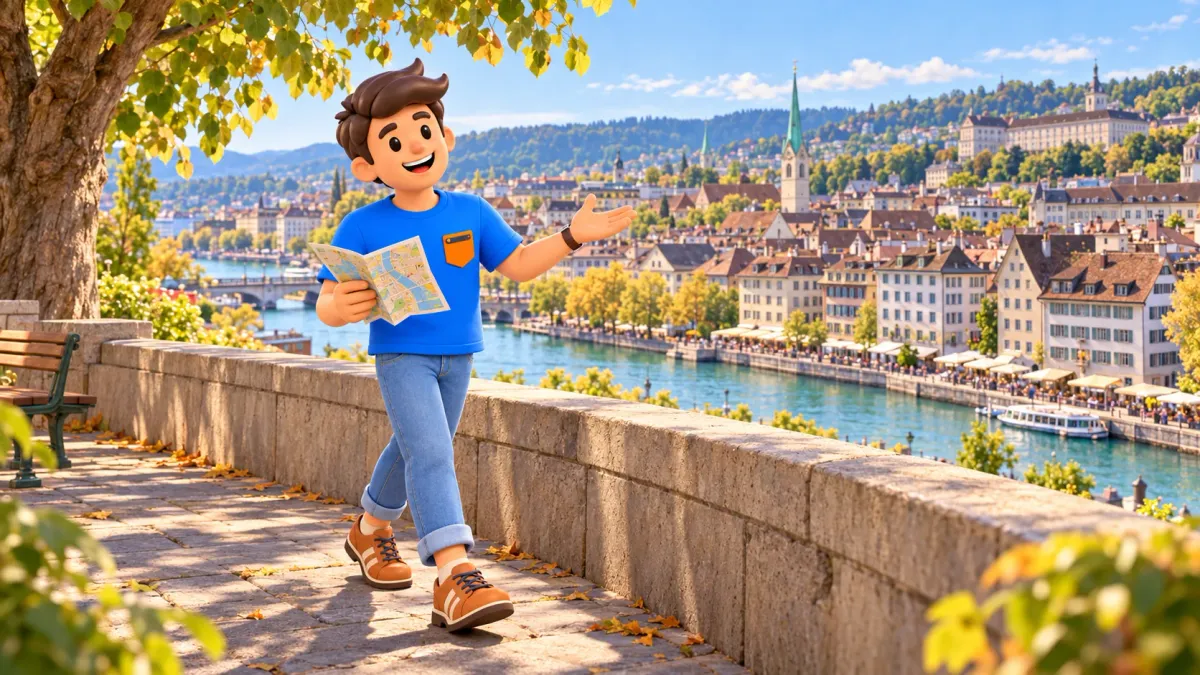
Two hours in Zurich are enough for a rewarding first walk between Lindenhof and the Limmat. Begin above the river, continue to St. Peter’s Church and Münsterhof, cross Münsterbrücke, and finish beside the historic town hall. The sequence brings together both banks, contrasting church landmarks and small public spaces without filling the afternoon with admissions and queues.
This is an outdoor sightseeing walk. Church interiors, stained glass, museum collections and tower climbs need additional time. The two-hour allowance starts at Lindenhof, so your journey there from the station, hotel or tram stop sits outside the plan. That distinction matters if you are visiting between other commitments: a short walk works best when its boundaries are clear.
A simple plan for your two hours
Follow this order: Lindenhof, St. Peterhofstatt, Münsterhof, Münsterbrücke, the Grossmünster surroundings and the historic Rathaus. You start on the west bank and finish on the east bank. There is no need to return to the hill, and you can decide what to do next once you reach the riverfront.
The walk changes scale rather than trying to maximise the number of sights. Lindenhof provides orientation; St. Peter offers a smaller setting; Münsterhof opens into a square; the bridge connects the two halves of the centre. Each stop has a distinct purpose. Expect a historic street environment with uneven surfaces, slopes and possible steps depending on your approach, rather than a uniformly level promenade.
For a walk shaped around your own interests and pace, it is more convenient to prepare it in RoadMe: the app works out a personal itinerary instead of leaving you to piece together scattered suggestions. You can give your time to the architecture, history or city views that actually interest you.
As a loose framework, allow twenty minutes at Lindenhof, twenty for the walk to St. Peter and its square, twenty around Münsterhof, fifteen at the bridge, twenty near the Grossmünster and fifteen for the riverside finish. Keep ten minutes unassigned. These are editorial estimates, not recorded walking times; weather, your chosen lanes and the length of your stops will change the result.
Lindenhof: understand the city before walking into it
Resist leaving as soon as you have taken a photograph. From the terrace, identify the river, the facing bank, the university hillside and the dense buildings of the Old Town. This first view gives the rest of the walk a useful structure: landmarks that appear close together from above will become separate encounters at street level.
The hill also introduces Zurich’s long history. A late Roman fort once occupied the site, followed later by royal buildings. You do not need to reconstruct every period to appreciate the change in use. A place that served power and defence now forms a public pause within the everyday city.
Choose one feature on the far bank to recognise later: a roofline, a building above the water or the slope behind the houses. When you reach the river, compare the two viewpoints. That small act of looking helps the city stay in your memory without requiring a list of architectural dates. If you would like a seated break, take a few minutes here before beginning the street-level part.

St. Peter: make room for a smaller square
Your next destination is St. Peterhofstatt, the square beside St. Peter’s Church. Use your map to choose a clear route through the Old Town lanes. The approach is part of the experience: turns, changing building heights and narrow openings between façades gradually replace the broad view from Lindenhof.
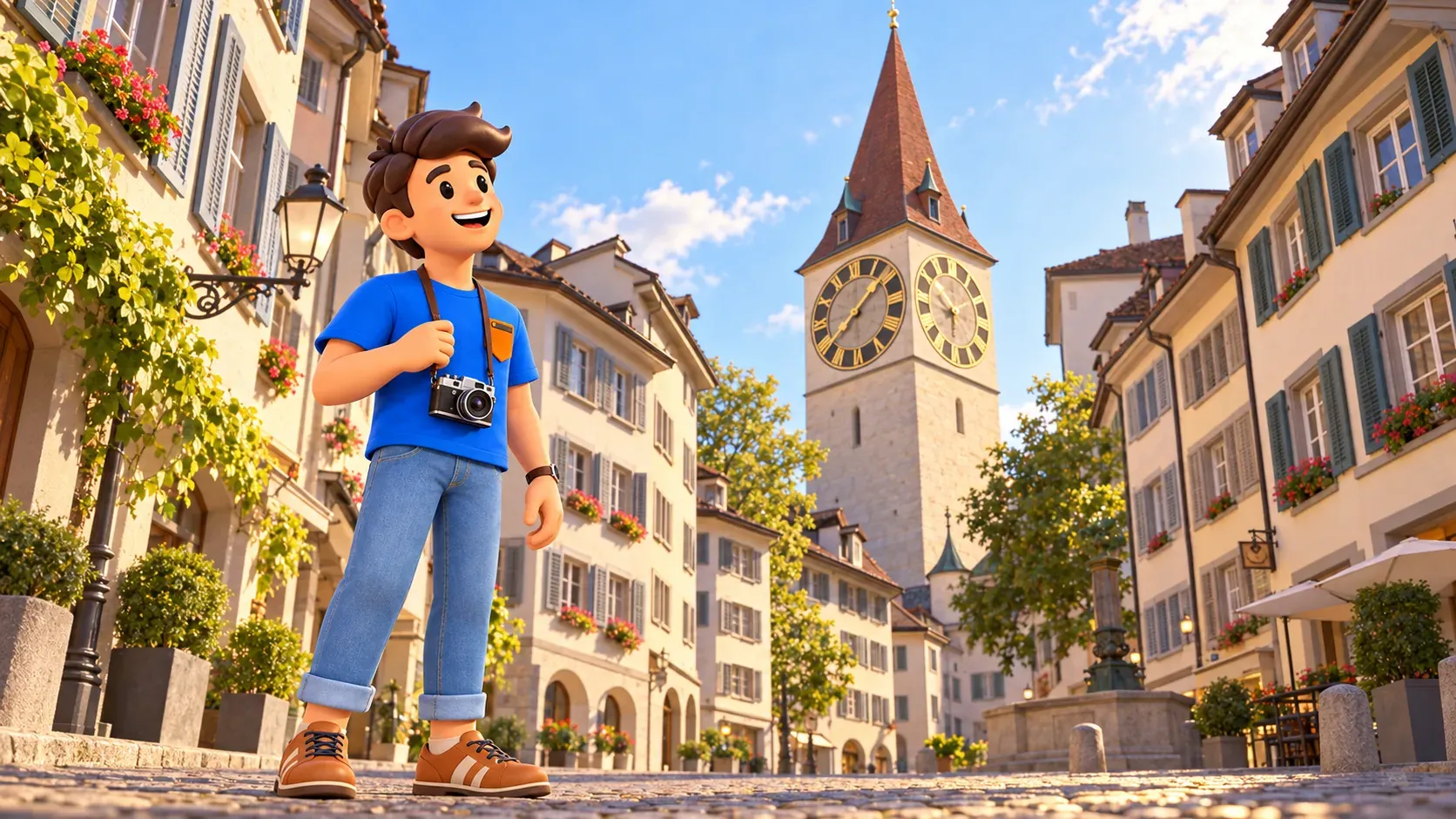
St. Peter is Zurich’s oldest parish church. Outside, the large clock face is the easiest detail to recognise. Rather than collecting a record-breaking measurement, find a position from which the clock and surrounding houses make sense together. The square turns a prominent city landmark into a more intimate encounter, with the tower appearing above a close arrangement of buildings.
This is a good place to slow down. Pick one detail instead of inspecting every doorway: the clock, the shape of the square or the way light falls between the buildings. Travelling at that scale leaves space for your own interests. A first walk does not become more rewarding simply because every minute carries another historical fact.
The church interior is outside the core schedule. If visitor access is available and you decide to enter, use part of your spare time or shorten the final stop at the town hall. Check the visiting arrangements separately. An open door during worship is not an invitation to treat the building as an unrestricted museum.
Münsterhof: a square shaped by an influential abbey
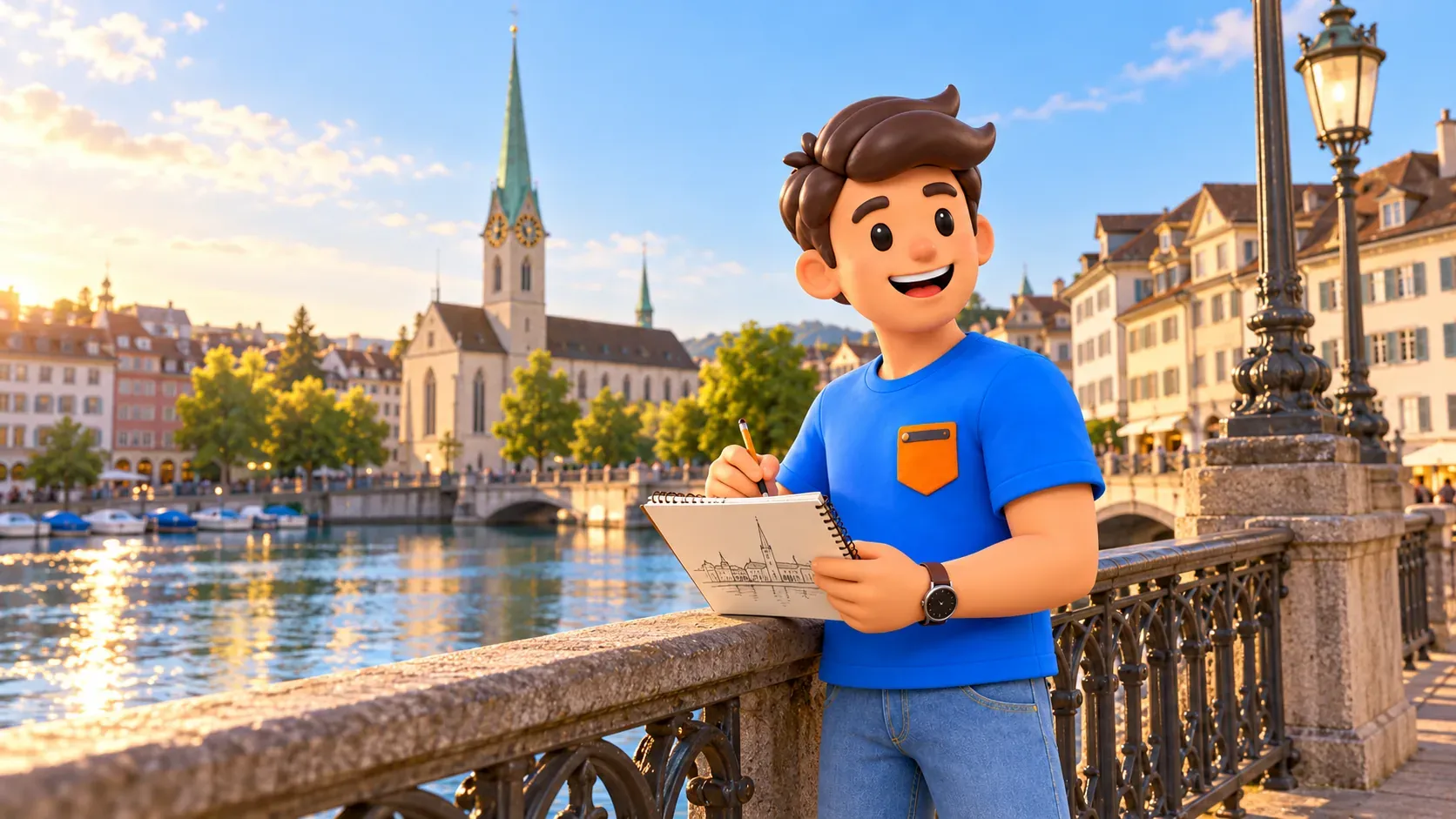
Continue towards Münsterhof. The square provides a welcome change after the smaller streets: step away from individual façades and look at the space as a whole. The Fraumünster, with its tall green spire, is your main landmark. Before approaching the church, take in the square from the opposite side.
The church is associated with a women’s abbey founded in the ninth century. Its abbesses once exercised considerable influence in Zurich. That brief context changes what you are looking at: this was an institution involved in the life of the medieval city, rather than simply an attractive church beside a convenient open space.
Many visitors come for Marc Chagall’s stained glass. The windows are inside, so an outdoor stop does not include seeing them. If they are a priority, plan a proper visit and reduce the remaining walk. Adding a substantial interior to a full two-hour schedule rarely improves either experience, even when the entrance is only a few steps away.
The surrounding guild houses, including zur Meisen and zur Waag, add another layer. For now, notice the different façades and their positions around the square. Their individual stories can wait. The useful first impression is how religious, commercial and civic life left traces within the same compact part of Zurich.
Münsterbrücke: pause between the two banks
Walk out to Münsterbrücke and stop where you will leave space for other pedestrians. Look along the river in both directions. Part of the scene should already feel familiar from Lindenhof, but you are now within it: the water separates neighbourhoods while giving the whole centre a clear visual connection.
The Fraumünster is behind you, with the Grossmünster quarter ahead. Avoid trying to fit every landmark into one photograph. Choose the river and houses for one view, then a single architectural feature for another. If you are walking with others, agree to regroup at the far end of the bridge so that a brief photo stop does not become repeated waiting.
The stone bridge dates from the nineteenth century. For this itinerary its main value is spatial: crossing it takes you into another part of the historic centre within a few minutes. Notice the Wasserkirche near the opposite bank as well. Its setting beside the water is enough for this visit; the crypt and the building’s history deserve their own time.
The Grossmünster: a landmark with a current caveat
After crossing, approach the Grossmünster surroundings. The church is closely associated with Zurich’s Reformation and Huldrych Zwingli. It completes a sequence of three different religious landmarks: St. Peter, the Fraumünster and the Grossmünster suggest distinct roles within the city rather than three interchangeable stops on a sightseeing checklist.
For a visit in 2026–2027 there is an important practical detail: the restoration schedule places the Grossmünster entirely within scaffolding. Do not expect an unobstructed view of both towers. The walk still offers the river, nearby lanes and the relationship between the two banks, but familiar photographs of the church may look very different from the building you encounter.
The Karlsturm climb is not included. Even when access is available, it changes both the physical effort and your allocation of time. If climbing the tower matters more to you than continuing along the river, make it a separate priority and check the current access arrangements beforehand. For a first two-hour introduction, an exterior stop keeps the plan manageable.
Finish beside the historic town hall
The final section follows the eastern bank of the Limmat towards the historic Rathaus. After the lanes and church squares, walking beside the water helps join the separate impressions together. There is no need to add another major admission at this point: the purpose of the finish is to leave you somewhere easy to understand.
The town hall dates from the late seventeenth century and introduces the civic side of Zurich’s history. Look at it from outside; this walk does not assume access to working rooms. Afterwards you can remain by the river, cross to the other bank or explore Niederdorf. Each is a new choice, rather than an unannounced extension of the two-hour route.
If you want to build on this first walk, RoadMe makes it more convenient to prepare a personal trip plan around your interests, dates and pace. Instead of following the same programme as everyone else, you can organise a considered sequence of experiences suited to your own visit.
Keep the walk comfortable and flexible
Wear shoes that feel comfortable on uneven historic streets. A short route is not automatically a step-free one: the approaches to Lindenhof and the lanes beyond vary in gradient and surface. If you need a particular level of accessibility, choose the actual passages in advance rather than relying on the small distance between the landmarks.
In dry weather, spread your pauses between the terrace, the bridge and the riverfront. In persistent rain, shorten the outdoor walk and choose one indoor visit instead of trying to preserve every stop under an umbrella. Put a substantial meal, shopping and a long café break after the finish; otherwise they can quietly consume most of the time available.
If you have only ninety minutes, shorten Münsterhof and finish near the Grossmünster. If another half-day opens up, choose one direction: stained glass, a museum or the lake. The value of this short walk is that it helps you make that decision for yourself. Zurich becomes easier to read, and the rest of your visit can follow the interest that stayed with you.


