
Zabeel in Half a Day: Dubai Frame and a Proper Park Walk
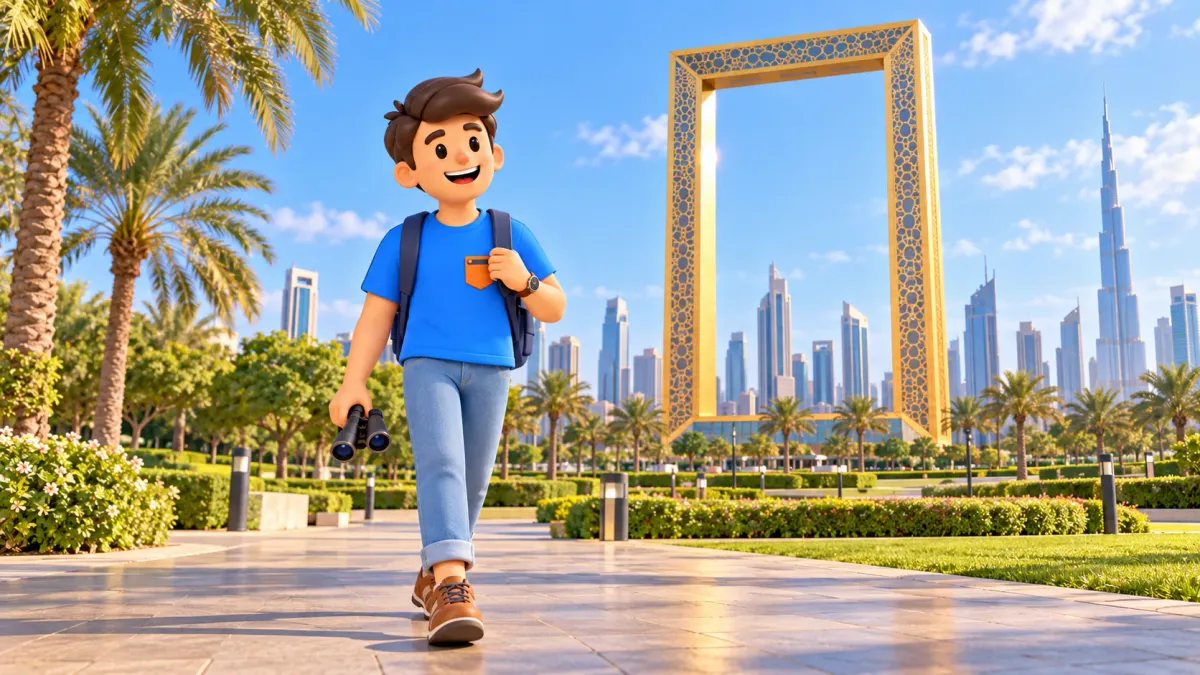
Dubai Frame makes an easy promise to understand: look at the city through a giant golden rectangle. Zabeel Park gives that promise a setting and a different pace. Put the two together and the visit can become more than a viewing platform followed by a quick photograph at the entrance.
This half-day plan gives the Frame the main appointment, then leaves room for walking, shade and a pause in the park. Allow roughly three to four hours, adjusted to actual entry arrangements, weather and your pace. The duration is an estimate for planning, not a measured route. The aim is to experience the city from above and then return to its human scale.
Build the half-day around the visit you actually want
RoadMe can create a personal route or complete Dubai trip around your interests, dates and pace. Prepare this half-day in the app: combining a viewpoint, park time and the rest of your visit is much more convenient than coordinating separate attraction lists.
Decide first whether you want to enter Dubai Frame or mainly see its exterior. Those are different visits. For the upper gallery, check the current ticket, entry conditions and availability before choosing the rest of the schedule. Treat park access and Frame admission as separate things to verify rather than assuming one automatically includes the other.
Use the confirmed visit as an anchor. A flexible block of around an hour to an hour and a half may help with early planning for arrival, entry and the Frame experience, but actual conditions take priority. Leave additional time for a gentle park section and a pause. Do not place another fixed appointment immediately after an estimated finishing time.
The park should be part of the reason to come. If you only have enough time for the building and a hurried departure, describe that honestly as a Frame visit. For the half-day version, protect some unallocated time. It can become a longer look at the skyline, a shaded seat or a slower family walk according to the day.
Choose outdoor conditions that suit the group. A pleasant walking period matters more than filling a nominal half-day. In uncomfortable heat, shorten the open-air section and make the rest meaningful rather than forcing a long circuit. The shorter plan can still pair a city view with a calm return to ground level.
Before going up, understand the frame from the ground
Dubai Frame opened in 2018. Its two vertical towers and upper enclosed gallery create a huge rectangular opening above Zabeel Park. The shape turns the existing city into the subject: instead of adding only another vertical landmark, it gives the surrounding buildings a visible boundary through which to be observed.
The original concept by Fernando Donis won an international competition in 2009. The completed structure developed through later design and engineering stages. That background helps explain the strength of the initial idea: a frame is immediately legible, while the realised building also has a detailed surface and a full visitor experience.
From an available public approach, look at the whole outline before moving closer. The park's open space makes it possible to read base, uprights and upper gallery together. Trees and people provide a scale that is missing in a tightly cropped photograph. The empty centre is as important to the composition as the golden edges.
Closer up, the metal skin becomes more textured. Its circular pattern is associated with the Expo 2020 Dubai emblem. From a distance, those details merge into a surface; nearby, individual rings and intersections become clearer. You can compare the strict rectangular outline with the more intricate pattern without needing to turn the visit into a technical lesson.
Above the park, compare how the city is built
The upper gallery offers a reason to look in more than one direction. Lower, denser urban areas and the high-rise line towards Sheikh Zayed Road show different scales of development. Try noticing the pattern of streets and building groups, not only searching for the tallest recognisable landmark.
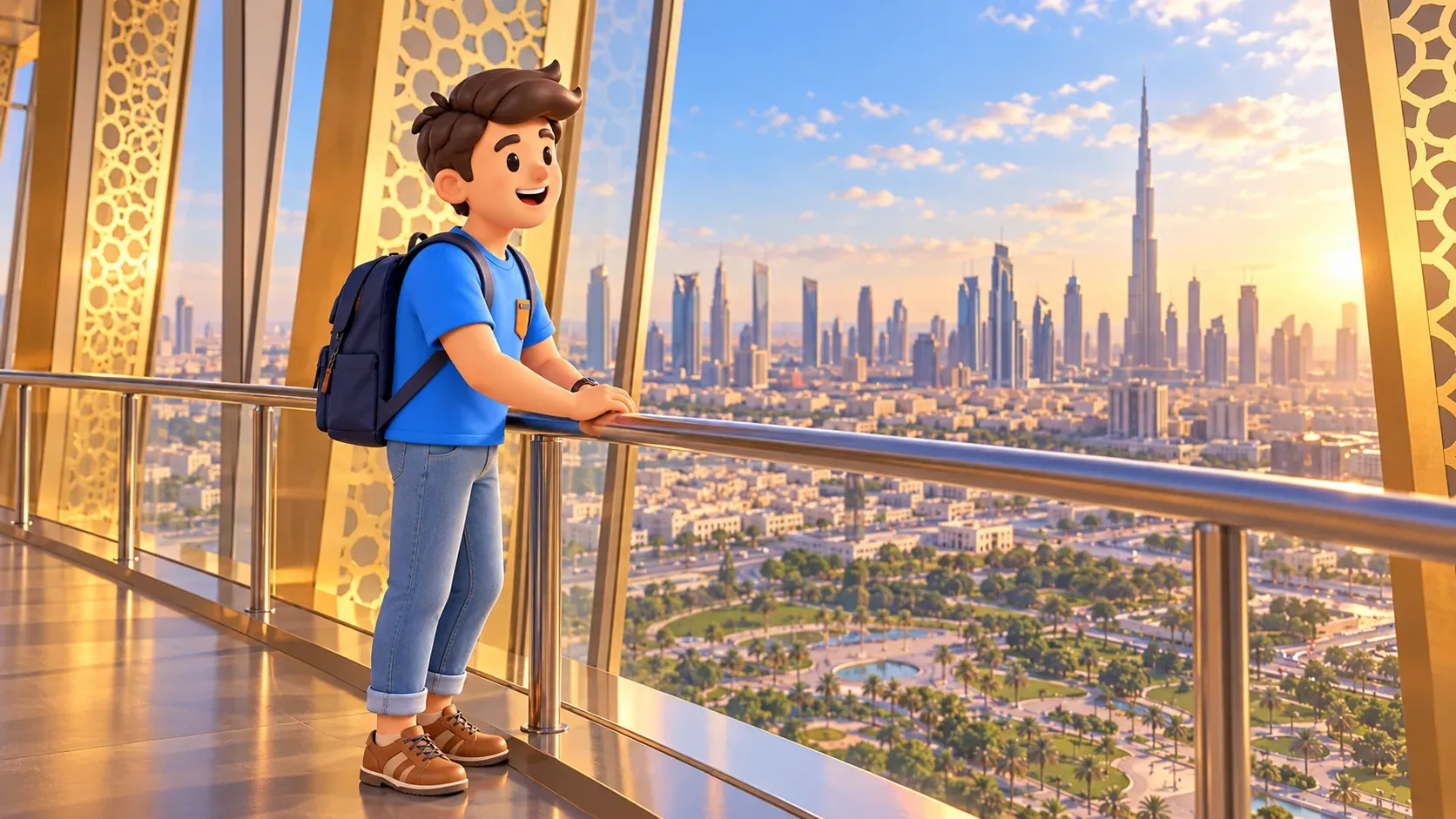
The familiar description of old and new Dubai is a useful introduction, but the view is one city developed over many years. The lower areas are not frozen in the past, and the towers are not a separate city without history. Use the contrast to ask how scale, roads and density change, rather than dividing everything into two complete eras.
Pick three things to compare: the height of buildings, the size of open spaces and the direction of major routes. These are visible relationships you can discuss without identifying every district. A broad view becomes easier to remember when it contains a few clear observations instead of a race to name everything beyond the glass.
The building includes a transparent floor section as part of its viewing experience. If that feature matters to you, check the current visitor arrangements. Looking down is a different sensation from looking out. No one in the group needs to treat a particular photo or reaction as a test of whether they have completed the visit properly.
Give yourself a short period without the camera. Ask which relationship feels most surprising: the park below the structure, the spacing of towers or the change between compact and large-scale urban patterns. That thought will connect the upper visit with the walk afterwards. You are carrying a view back into the landscape you just saw.
Zabeel Park has a story of its own
Zabeel Park opened in 2005, well before the Frame. It was created as a large contemporary public park within a growing city, combining greenery, recreation and educational leisure. Remembering that order changes the visit: the park is not simply an attractive forecourt built for one later landmark.
Its value includes space itself. Lawns, groups of trees and open perspectives give distance from the surrounding buildings and major roads. The Frame uses that openness to become visible as a whole, but the same ground also supports ordinary rest and walking. A large monument and a quiet bench can belong to the same afternoon without one making the other unimportant.

The park is divided by roads into sections connected by pedestrian links. Do not turn that arrangement into a promise to cover every part. Choose a manageable available section and follow real public access. A short loop or an out-and-back can be more pleasant than crossing the whole park solely to make a route look complete.
Watch the transition from a shaded tree group to a more open lawn. The skyline returns as a distant background, while the ground and planting set the immediate scale. After the upper gallery, that change is especially clear. The city becomes something around your walk rather than an image spread below you.
A simple way to make the park section worthwhile
Choose one purpose for the walk: a relaxed conversation, a few contrasting photographs or time for children to move at an ordinary pace. You do not need a separate attraction for every ten minutes. The park is useful precisely because it can hold a less programmed part of the trip.
Find an available shaded stopping place and take a proper break. Bring what you need for your own comfort and follow the park's current arrangements for food, facilities and activities. A drink and a quiet seat may be enough. The pause should fit the people visiting rather than copying an ideal picnic scene that needs more preparation than the outing itself.
For a family, let one question link the two parts: how did the trees look from above, and how tall does the Frame feel from here? This keeps the outing connected without asking children to learn a building history. The answer can be a gesture, a sketch or a short conversation.
For adults interested in the city, compare which details disappear from the upper view. Shade, a path edge or the sound of nearby activity may be important at ground level but almost invisible from above. That difference is a useful reminder that a panorama and a place offer complementary information.
Photograph the relationship, not just the landmark
A frontal photograph explains the Frame's rectangular idea. An oblique view shows how the opening changes with your position and how other buildings enter or leave it. Use an available path to vary the angle rather than trying to find an inaccessible perfect viewpoint. The small change is the point of the exercise.
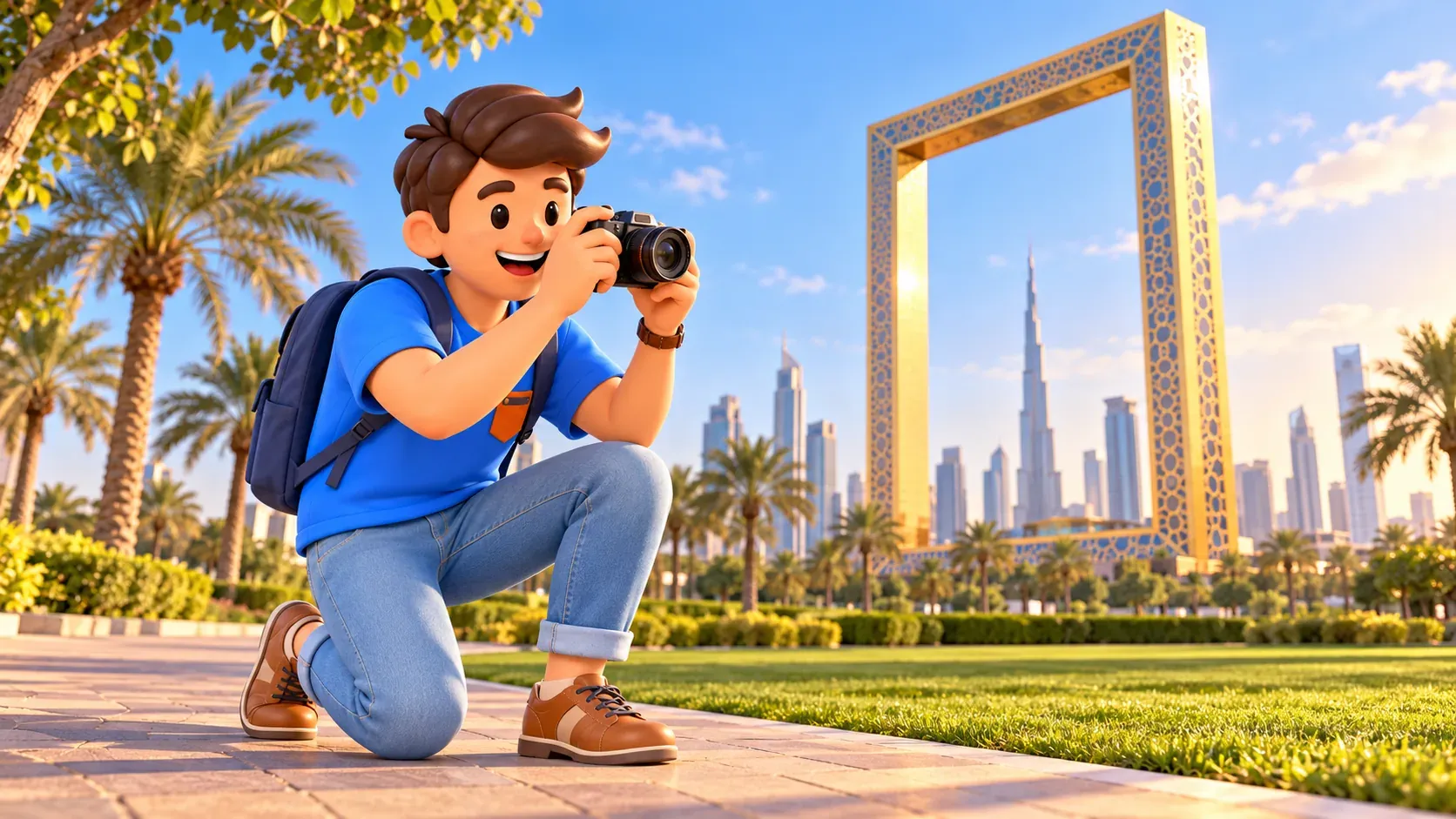
Include some context in at least one image. A tree, lawn or person can show the relationship between the structure and the park better than a crop of gold against sky. Then put the camera away. Several different views are more useful than a large collection of almost identical frames made while missing the walk itself.
Light changes the appearance of the metal, but no particular sunset, visibility or sky colour is guaranteed. Choose the period that suits the visit as a whole. If the skyline is less clear than expected, pay closer attention to the surface, scale and park setting. The building still has an architectural subject beyond a perfect distant panorama.
Finish with a complete half-day, not another long list
End at a sensible point for your onward journey, allowing time for the actual exit and transport. The plan should feel finished after the Frame, park section and pause. More available time does not automatically require another distant viewpoint. You may prefer to keep the rest of the day for a different interest or a slower meal.
RoadMe can fit Zabeel into a personal multi-day itinerary, balancing viewpoints, cultural visits and rest according to your interests. Use the app to organise the whole trip more efficiently, so each day has a clear shape without rebuilding tomorrow's plan every evening.
For another concentrated architecture outing, the Museum of the Future and Emirates Towers plan develops a different pair. For a larger first visit, the three-day Dubai itinerary connects contrasting parts of the city. Keep them as choices across the trip, leaving Zabeel enough room to be a view and a park.


