
Futuristic Dubai in Half a Day: Museum of the Future and Emirates Towers
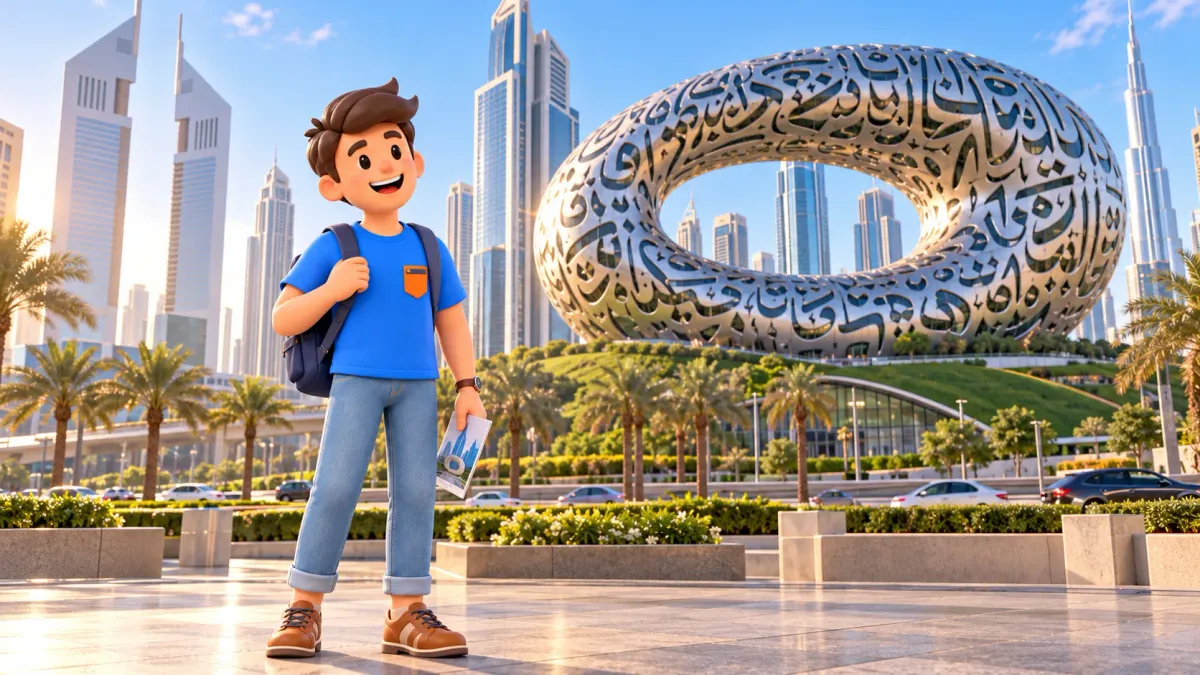
The Museum of the Future and Emirates Towers make an unusually useful pair. One presents a rounded silver ring with a large opening; the other uses slender triangular volumes and sharply angled tops. Both belong to modern Dubai, but they speak about it through very different architectural forms.
This half-day plan gives the museum the main block, then adds an exterior look at the towers and a proper pause. Allow roughly three to four hours, adjusted to your actual museum ticket and pace. The duration is an editorial estimate, not a measured schedule. If you do not have confirmed admission, use a shorter architecture-only version rather than assuming the full experience is available.
Begin with the real admission, then plan the surroundings
RoadMe can create a personal route or whole trip plan around your interests, travel dates and pace. Try preparing this half-day in the app: connecting the museum, architecture and the rest of Dubai is much more convenient than coordinating separate attraction lists.
Check the museum's current admission products, time conditions and actual availability before organising the day. A photograph of the exterior, access to any public area and a ticketed exhibition visit are different experiences. Make sure the booking corresponds to the part you want to see.
Start with your confirmed museum entry. Leave space around it for arrival and the normal process of entering, then give the interior visit your attention. A flexible envelope of about one and a half to two hours can help with early planning, but current ticket arrangements and your visit take priority.
Afterwards, allow a short exterior look and a public walk towards suitable Emirates Towers viewpoints, followed by a pause. The sites share an area, but that does not make every apparent link a public path. Save actual entrances and use the available approaches rather than drawing a straight line across the district.
Keep other major destinations out of the same small promise. A tower ascent in Downtown or a long gallery circuit changes the day. The value of this plan is a focused pairing, with enough time to notice what connects and separates the two architectural moments.
The museum building introduces the subject before you enter
The Museum of the Future opened in 2022. Killa Design created the architecture, with Buro Happold responsible for engineering. The building's ring-like form and open centre give it an identity different from the tall vertical landmarks around it.
Look at three elements together: landscaped ground, the silver body and the void. The opening is not a missing piece that needs filling. In the architectural idea, the absence is meaningful, giving the building an image of a future not yet fully known.
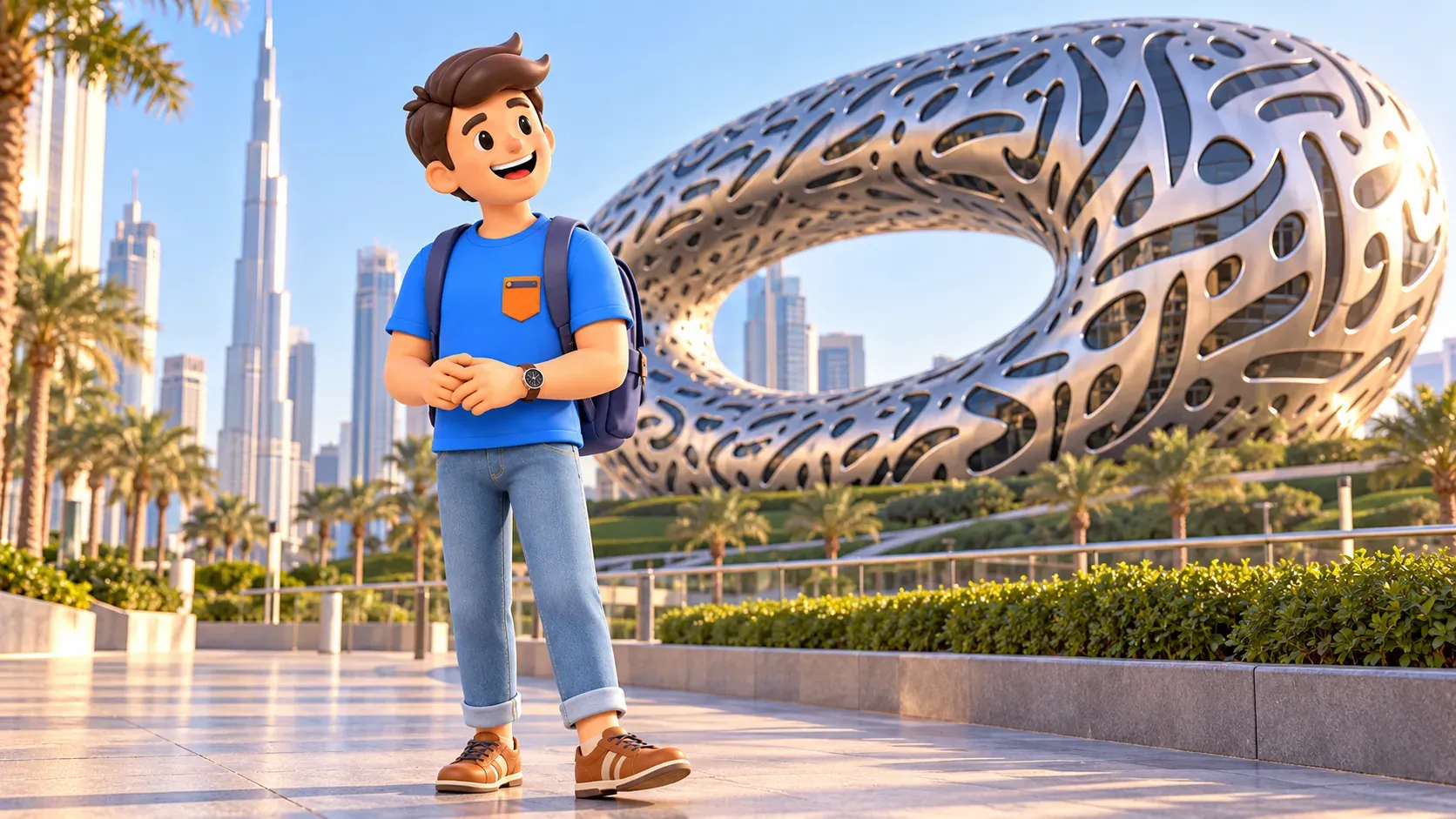
The calligraphic composition by Mattar bin Lahej is also part of the architecture. Its shapes form windows through the metal surface. That changes the role of writing: it is not simply a decorative image attached to a wall but something that helps determine light and the building's skin.
From an accessible public viewpoint, compare the silhouette with the closer surface. The distant ring reads as one volume; nearer, panels and curved openings break it into different relationships. A wider photograph and a detail can explain more than many similar straight-on images.
Do not assume exterior access grants a route through every landscaped or internal area. Follow the actual public arrangements. You can appreciate the mound, body and opening without searching for a private doorway or treating an operating entrance as a photo platform.
Inside, follow one question rather than trying to record everything
The museum is built around possible futures and the role of people in shaping change. It is useful to approach the visit as a set of ideas and scenarios rather than a promise that everything presented will happen. An imaginative proposal and an established scientific fact are not the same category.
Choose a question that matters to you: how technology changes everyday life, what a future environment might require or which choices people can make. Then notice how the presentation communicates an idea. Space, objects, images and narrative can each influence the experience.
The current programme may differ from accounts you have seen online. Avoid building the day around a guaranteed room, activity or photo scene taken from an old description. Check the actual offer if one specific element is the reason for your visit.
Give yourself permission to spend more time with one theme and less with another, following the venue's visitor flow and rules. The visit need not become an attempt to film every stage. A single idea you can discuss later can be more valuable than a phone full of material you barely noticed.
If anyone in your group is uncomfortable with intense sound, light or a particular immersive format, read the current experience description before choosing. A museum label does not guarantee one uniform sensory environment. Select according to the real interests and needs of the people travelling.
Emirates Towers: a different language of modern Dubai
The Emirates Towers ensemble was designed by Hazel Wong at NORR and completed in 2000. The office tower is the taller part of the pair, with the hotel tower as its companion. Their relationship helped define the high-rise image of Sheikh Zayed Road around the turn of the millennium.
Begin by comparing the pair rather than treating them as duplicates. Triangular geometry, distinct heights and angled tops give the buildings a recognisable composition. Their outline changes as the facets turn towards or away from the viewer.
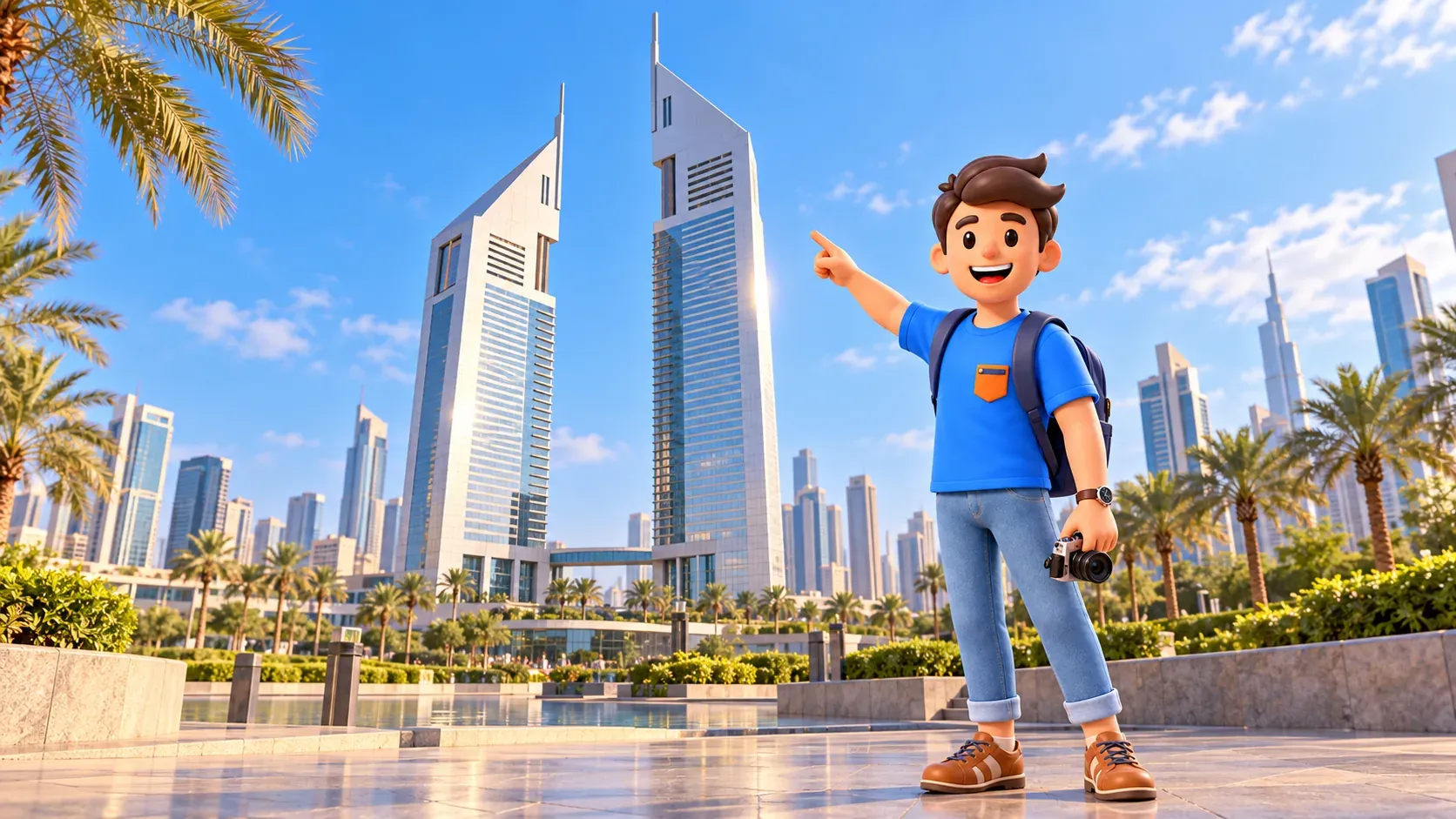
Aluminium and reflective glazing also make light important. A face can appear more solid or more transparent according to angle and illumination. The clean edges provide a useful contrast with the museum's continuous curves nearby.
The lower podium and landscaping help connect tall volumes to ground scale. Look for the relationship between a distant tower silhouette and the nearer spaces people actually use. A skyline is an image seen from afar, but the building's daily life also depends on entrances, paths and places to pause.
Keep the visit to accessible public exterior areas unless you have deliberately arranged another experience. Office and hotel functions bring different conditions. Being interested in the pair does not mean entering both buildings or assuming every part of the podium is available for sightseeing.
Compare two modern moments, not old versus new
The towers and museum are both modern. Their dates do not turn one into an ancient monument and the other into the only future-facing work. The interesting comparison is how distinct projects made a city image at different moments.
The towers use height, facets and a paired silhouette. The museum concentrates on a rounded mass and the space inside its contour. One can be understood through edges and the relationship between two volumes; the other invites attention to continuity and a deliberate void.
Try looking at the pair after visiting the museum. Does the sharp top now appear more striking? Do you notice the opening in the ring differently after seeing triangular faces? The sequence can make familiar photographs into something more specific.
A useful sketch needs only two outlines: a ring with an opening and two different-height angled towers. It is not an architectural survey. Choosing the essential lines helps you identify what made each project recognisable to you.
Keep technical claims separate from visible observation. You can see a curved surface or a triangular outline; precise structural performance needs proper information. It is fine to leave with a question rather than inventing an explanation for every unusual form.
Leave time to think and rest
After the main visit and exterior comparison, choose a genuine pause. Use an available place with a clear offer instead of assuming a particular café will fit the route. A simple drink and some time out of the busiest flow may be enough.
Ask your group for one idea and one image to keep. The idea might come from a museum scenario; the image might be a curved window or the towers' different heights. Keeping both gives the half-day an intellectual and a visual thread.

With children, use a short shape comparison or ask what question they would like a future museum to answer. They do not need to absorb every adult theme. A smaller remembered moment can be a complete result for a family visit.
Adults with different interests can also divide attention. One may enjoy architecture, another speculative ideas, another the visual presentation. A conversation during the pause connects those perspectives without demanding the same favourite from everyone.
Keep enough time after the pause to reach your onward transport. A half-day plan does not end at the last photogenic building. The ordinary route back is part of making the experience feel unhurried.
If you only want the architecture
Without confirmed exhibition admission, choose a shorter exterior visit: the museum's form, an available public view of Emirates Towers and a modest pause. Describe it honestly as architecture rather than a substitute for the full museum. You can decide later whether the interior subject deserves another date.
The shorter version should still respect current access. Do not assume a public-looking landscaped edge or a covered connection is open at every hour. Save the real approach and finish, choose comfortable outdoor conditions and reduce the route when that suits the day.
If you have more time, deepen the chosen theme rather than adding another distant landmark automatically. Read more carefully, change a viewing angle or discuss the museum question you selected. A focused half-day leaves room for the rest of a holiday.
RoadMe can place this visit in a personal multi-day itinerary shaped by your interests and pace. Use the app to organise the whole trip more efficiently, so museums, architecture and rest fit together without rebuilding tomorrow's plan every evening.
For another kind of contemporary form, our Business Bay walk compares The Opus and O-14. For a wider return trip, the three-day art-and-architecture itinerary connects different districts as separate days. Choose those as planned additions, not an obligation to keep extending this half-day.
The pairing works because the forms remain distinct. A ring with a meaningful centre, two faceted towers and a question carried out of the museum can give you a clearer memory of modern Dubai than another hurried collection of landmark photographs.


