
Yim Tin Tsai in a day: salt pans, a chapel and an island story
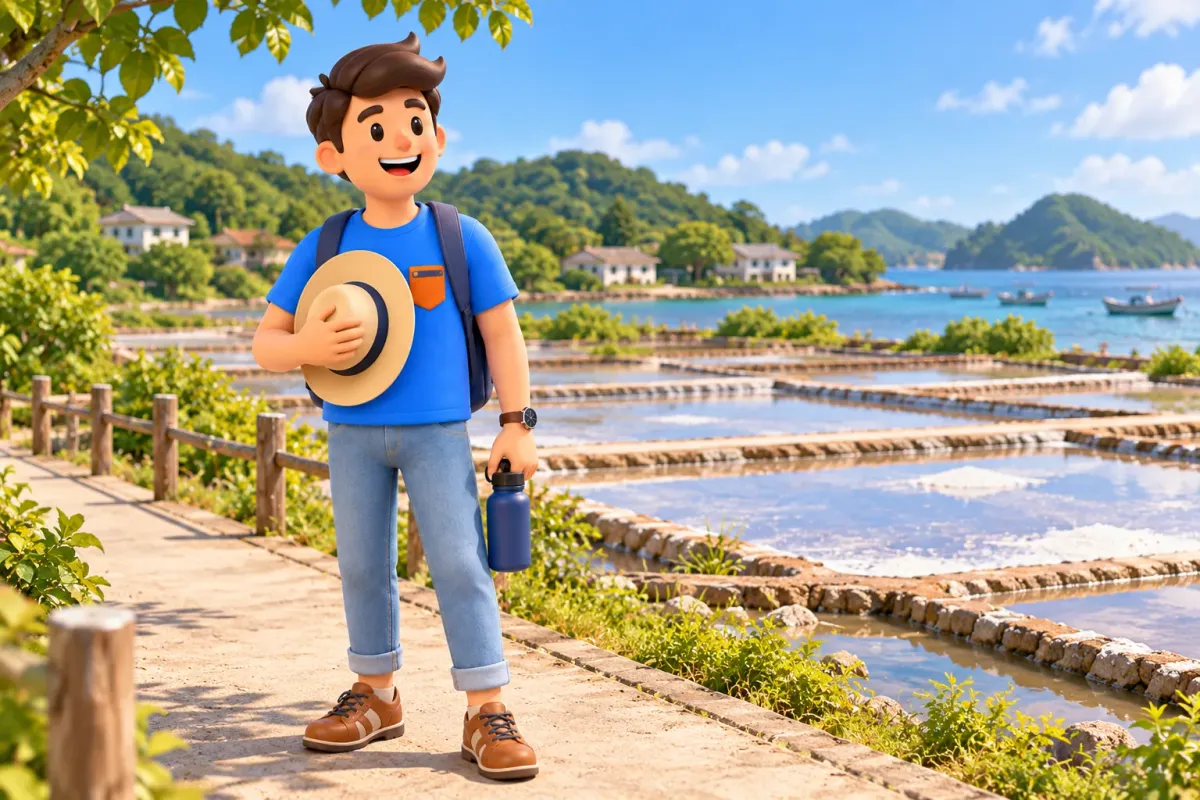
Yim Tin Tsai offers an unusual combination for a Hong Kong island day: salt pans, a Catholic chapel and the memory of a Hakka community. Rather than choosing between landscape and history, you can see how they shaped each other. The salt pans introduce work, a former classroom suggests everyday life, and the chapel adds the spiritual story of a small settlement.
Set aside a day including the journey through Sai Kung. Roughly three to four hours on the island can suit this route if the visiting sessions and boats align; that is a planning estimate, not a measured circuit. Jade-Girdle Bridge is an optional extension. The essential preparation is matching access with your return crossing, rather than collecting the greatest possible number of stops.
Choose a day when the whole visit works
Facility opening days and boat availability are different things here. The operator lists regular services on Saturdays, Sundays and public holidays, with Tuesday-to-Friday visits accepted for group reservations. A statement that island facilities open on weekdays therefore does not guarantee a convenient ordinary boat for an independent visitor. Confirm the arrangement for your actual date before travelling to Sai Kung.
RoadMe makes it much more convenient to work out a complete personal trip around your interests, available time and comfortable pace. Use the app to make this island story a considered part of your holiday rather than another list of places you have to assemble yourself.
Conservation facilities have a Monday closure. Before setting out, establish whether your visit is a regular departure or a group arrangement, which salt-pan session is available and how you return. If those pieces do not fit, move the island day. Buying an unrelated boat outing does not automatically provide access to the heritage sites or a suitable return crossing.
Ask what your chosen ticket or arrangement includes. Clarify the boat, entry to the heritage centre and salt pans, and any separate activity you particularly want. A reference to salt making is not a promise that a hands-on workshop is included. Understanding the actual package helps keep expectations aligned with what you have booked or paid for.
Food and the onward journey to your accommodation also need space in the plan. Do not build the island visit around a complicated restaurant itinerary. Bring water, and consider leaving a substantial late meal for Sai Kung after returning. That way, limited island food choices do not determine the success of the whole outing.
Build the route around the available visiting session
The useful core is the pier, St Joseph's Chapel, the heritage centre in the former school and the salt pans. The chapel and centre are close enough to form one historical episode with two perspectives. The pans then add the working landscape. The bridge on the southern side is a continuation only if there is a comfortable margin before your return boat.
A fixed order for every arrival would be unhelpful. If an appropriate salt-pan session starts soon after you land, begin there. If there is time beforehand, visit the chapel and centre while allowing for their midday break. After lunch, do not assume every place can be entered at any moment. A small island still has organised visiting windows.
On arrival, establish where your session begins and when you need to be there. Keep the return time available and decide when you will stop adding detours. This is more useful than a minute-by-minute programme that fails at the first delay. The three main places can change order without losing the meaning of the day.
With companions, agree where to meet before the salt-pan visit and the return boat. If someone wants longer in the exhibition, remove the bridge.
St Joseph's Chapel: faith within a small community
The chapel was blessed in 1890 and is associated with the Catholic history of the island's Hakka community. Its significance belongs to the scale of the settlement rather than that of a grand urban cathedral. Modest proportions make it easier to imagine how a small religious building could act as a focus for shared life.
Notice the relationship between a recognisable church form and its island setting. This is not a decorative European building placed among greenery; it records a particular community's history. The stop is a useful reminder that Hong Kong cannot be described only through skyscrapers or one religious tradition. A small building can introduce a more complicated cultural picture than its size suggests.
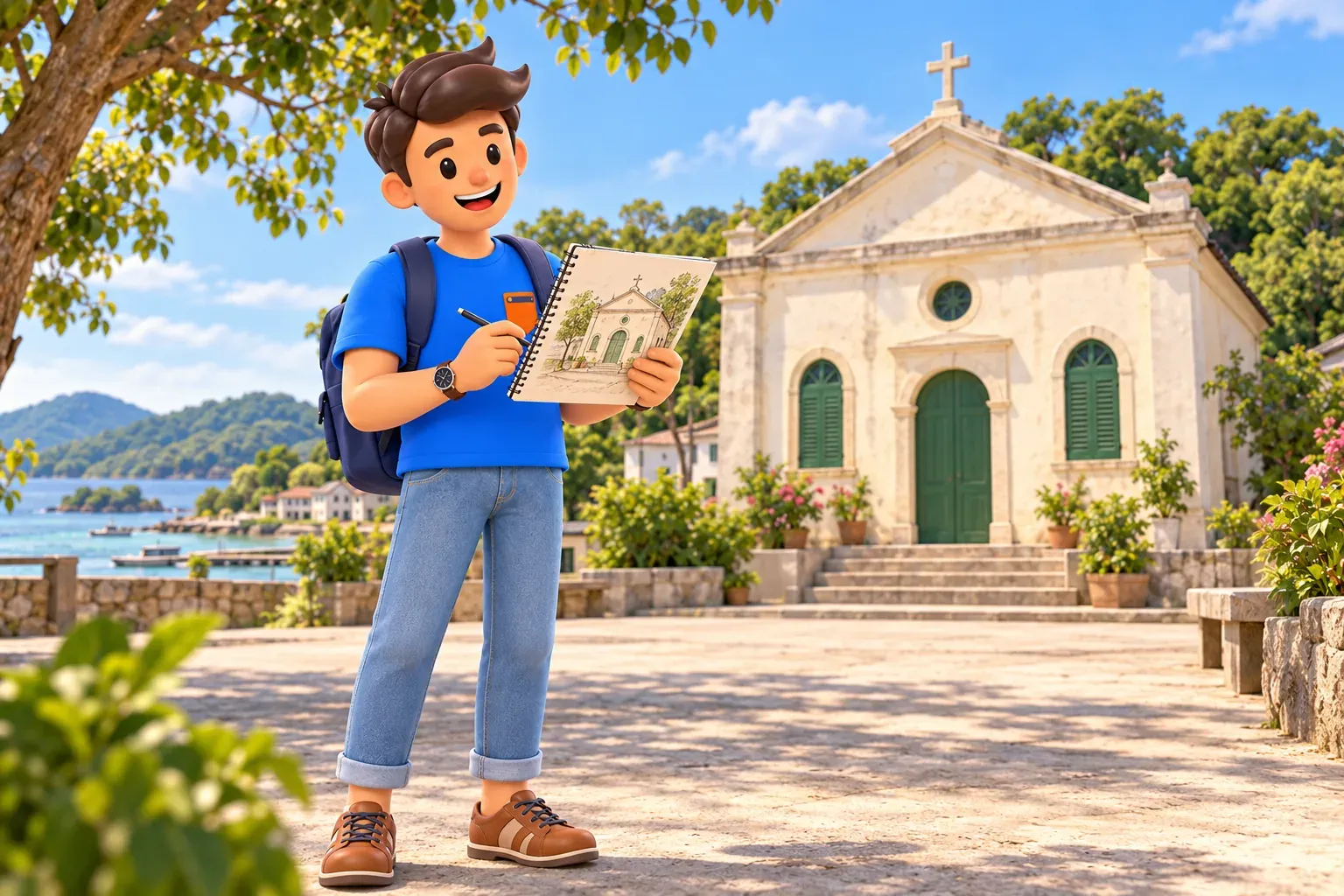
The chapel's restoration received a UNESCO Asia-Pacific heritage conservation award in 2005; the salt-pan project received a separate award in 2015. These recognise conservation work. They do not mean that the two places are separate entries on the World Heritage List. For this visit, understanding what was preserved matters more than memorising a sequence of official designations.
Inside, follow the current photography rules and maintain a quiet atmosphere. If worship or an access restriction affects the visit, do not treat an interior photograph as an entitlement. Seeing the exterior within the village already provides context. The chapel's importance does not depend on obtaining a particular picture at a particular moment.
For a family conversation, ask what places help a small community stay connected. Answers might include a school, a place of worship and shared work. That question links the chapel to the later stops rather than leaving it as an isolated architectural image.
The former school: ordinary life in a small exhibition
The heritage centre occupies a room in the former Ching Po School. Its modest scale is useful: it brings a broad term such as Hakka heritage closer to the practical details of island life. Household objects, clothing and tools suggest what people did between festivals and major historical events. The point is not a collection of famous masterpieces but traces of a community.
Choose one object and consider its task: work, storage, clothing or home life? This can be more memorable than reading every explanation. If its purpose is unclear, consult the information on site.
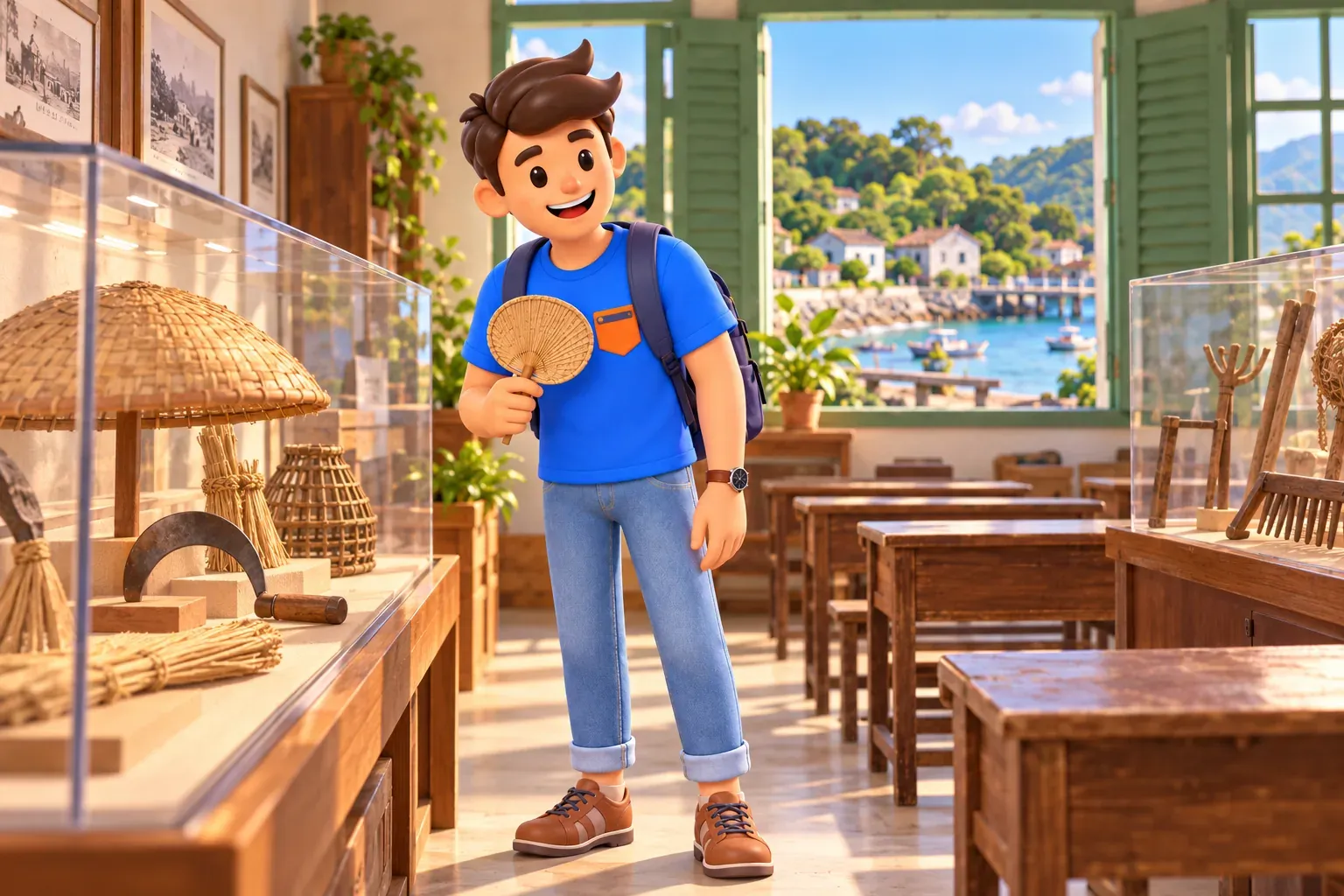
The former classroom adds another layer. The island was more than a production landscape or religious community: children learned here and knowledge passed between generations. Remembering the earlier use changes the way a small display feels. A museum's value does not depend entirely on its number of rooms, the fame of its objects or the amount of time needed to see them.
Do not expect a large interactive attraction with a continuous entertainment programme. A short, attentive visit is enough to prepare your eyes for the salt pans. The question of how people lived and worked will then gain an outdoor, spatial answer. There is no need to prolong the exhibition merely to satisfy a timetable invented before arrival.
The salt pans: see water as a working system
The restored pans make a familiar product easier to connect with a place and a process. They are not simply decorative rectangles or an attractive reflection of the sky. Their significance comes from an organised sequence of work, the management of water and attention to conditions. Salt production depended on people understanding how those parts fitted together.
Look for relationships between the compartments: their boundaries, surfaces and the movement of water. You need not master every technical detail to recognise that the work required experience rather than sunshine alone. A familiar pinch of salt begins to seem less like something that simply appears in a packet, disconnected from labour or a particular landscape.
Visits operate in sessions, so do not expect to spend an unlimited amount of time wherever you choose among the pans. Confirm the current explanation format and permitted areas. Seeing a working landscape does not grant permission to walk along operational edges, touch the water or gather salt. Stay within the visitor area when taking photographs and follow the actual instructions given on site.
The appearance can change with weather and the state of the work. Do not promise companions white mountains of crystals, pink water or a particular production stage. A quieter landscape can explain the industry just as well when you look at the system. If rain or programme changes affect the visit, follow the real conditions rather than an image that inspired the trip.
With children, connect the scene to an ordinary kitchen: a tiny pinch and a whole production landscape concern the same ingredient. There is no need to experiment with water from the pans. Noticing the scale of work is enough. You can also discuss why conserving a working site differs from keeping an old tool behind glass.
Jade-Girdle Bridge: an extension when time allows
Jade-Girdle Bridge connects Yim Tin Tsai with neighbouring Kau Sai Chau and adds a coastal setting with mangroves to the day. It is a simple crossing, not an ornate palace bridge; do not expect literal jade decoration. Its interest lies in the practical connection between shores and the shallow coastal environment around it.
To combine cultural stops and nature without overloading the day, use RoadMe to develop a personal plan around your interests and available time. The app is a much more convenient place to work out the whole trip while keeping room for both discovery and rest.
Walk towards the bridge after the main visits, or only when the gap before a session genuinely leaves enough time. It should not create a hurried return. Do not automatically continue onto the neighbouring island: a short connection on a map does not make the onward route part of your programme or compatible with your return boat.
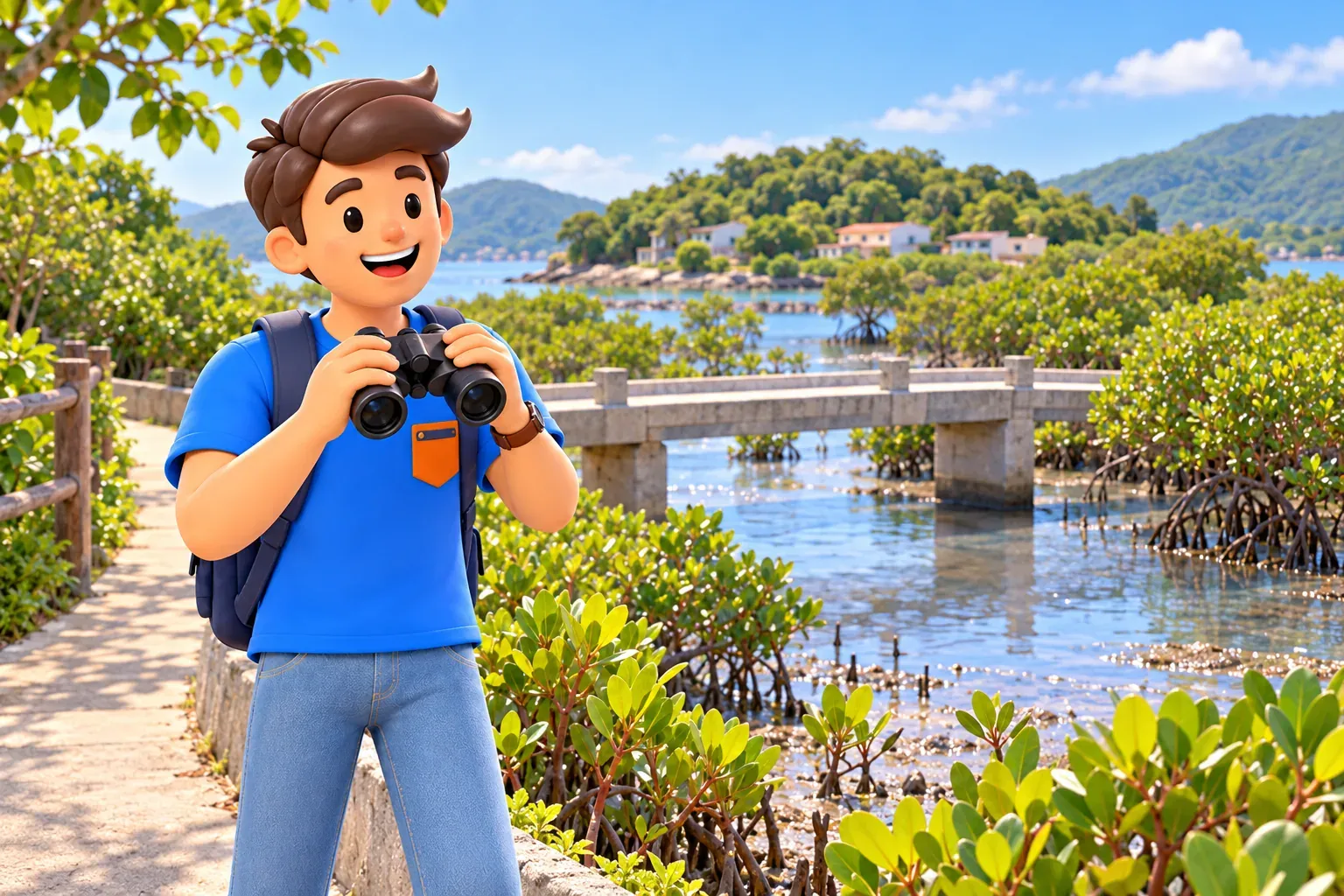
Remain on the permitted path and look towards both shores and the coastal vegetation. Do not enter the mangroves for a photograph or try to shorten the route across shallow water. The accessible public part is enough for observation. Water levels and the appearance of the shore can vary, so the same image is not guaranteed on every visit.
If time is short, leave out the extension without regret. Chapel, former school and salt pans already connect belief, education and work into a complete story. The bridge expands its environmental setting but is not a missing qualification for a proper visit. A successful day depends on the quality of attention rather than filling every line of a checklist.
Return to Sai Kung and give the day a gentle ending
Reach the return boat with the margin required by your ticket and the current boarding arrangements. Do not treat the last published departure as an easy backup without checking. On this island, the end of the walk has to fit the real crossing. The onward journey from Sai Kung to your accommodation still takes another part of the day.
After returning, allow for food and a short Sai Kung waterfront walk if you feel like it. You will not have to choose between a missed meal and one more island stop. For a village visit with a looser structure, compare our Peng Chau half-day itinerary. At Yim Tin Tsai, the experience is more closely tied to organised visiting windows.
Before setting out, have three clear answers: how you reach the island on your date, when the main sites are accessible and which boat takes you back. Then you can focus on looking. Chapel, classroom and salt-pan water tell the story of one community in different ways, without requiring an endless route to make the day meaningful.


