
Peng Chau in half a day: a temple, an old factory and island time

Peng Chau is a good Hong Kong escape when you want a smaller day: a ferry, village streets, a sea temple, an old factory with a creative second life and time beside the water. You do not need a summit photograph or a long list of attractions to make the crossing worthwhile. The pleasure comes from noticing how several different island stories fit into a compact settlement.
Allow roughly three to four hours on the island for this relaxed version, including food and pauses. That is a planning estimate, not a measured walking track. Add your journey to Central, ferry waiting and both crossings separately. A hill climb or an extended coastal circuit changes the outing; neither is required for the half-day described here.
Choose a small route with two distinct stories
The outline is straightforward: arrive by ferry, visit Tin Hau Temple, explore the streets around Wing On Street, see the former leather factory if accessible, then pause by the sea before returning. The temple and factory introduce maritime community life and industrial change. They provide enough contrast for a rewarding walk without sending you to every corner of the island.
RoadMe makes it much easier to turn this idea into a complete personal itinerary shaped around your interests, available time and pace. Choose the balance of heritage, creativity and downtime that suits you, and let the app help work out the wider trip.
After days of harbour panoramas and museums, attention shifts to doorways, ordinary facades and courtyard arrangements. Peng Chau rewards a change of scale; a place need not be internationally famous to justify stopping.
Before travelling, agree on what everyone wants from the visit. A photographer may value the factory courtyard, a history enthusiast the temple, and a tired companion a leisurely meal. A compact route can accommodate all three without keeping the group moving continuously. Give each interest its own moment instead of expecting every stop to entertain everybody equally.
If you normally prefer active outings, resist adding a climb before considering the time available. Village observation and a longer walk can coexist, but a half-day label does not make an expanded programme effortless. Start with the two main places and the waterfront. Add something only when the extra walking and return journey still leave the day feeling comfortable.
Get the ferry plan right before you relax
The Central service to Peng Chau uses Pier 6 and is operated by Hong Kong & Kowloon Ferry, usually abbreviated HKKF. Check the current Central–Peng Chau timetable for your travel date and identify a suitable return sailing. A timetable screenshot from an older trip is not a reliable basis for deciding when to leave a cafe or get back to the pier.
Different sailings can use different vessel types and journey times. The shortest advertised crossing is only part of your journey: reaching the terminal, waiting and boarding also take time. If your aim is an unhurried island visit, avoid placing an inflexible city appointment immediately after your intended return. Ferry tickets and meals are separate costs, not included services in a packaged tour.
After landing, identify the terminal you will use to return to Central. Peng Chau has other pier names and services, so a map label saying public pier does not necessarily mean the same departure point or destination. For this outing, the Central ferry connection is your arrival and return anchor. Establish that first, then turn your attention to the village.
Let the first few minutes be ordinary. Look at shopfronts, deliveries and residential entrances rather than immediately searching for the most photographed wall. People live here and use these streets for everyday tasks. Keep passageways clear, ask before taking close portraits and do not follow an attractive courtyard entrance into private space. The settlement is part of the experience, not a backdrop reserved for visitors.
Bring water and comfortable walking shoes. This route does not require a full hiking setup, but wet paving and an exposed waterfront can still affect the outing. If rain becomes persistent, shorten the visit rather than treating every planned pause as compulsory. A relaxed half-day should be adaptable to what feels pleasant on the ground.
Tin Hau Temple: read the village through the sea
Tin Hau Temple dates to 1792 and expresses the island community's maritime roots. Published visiting hours are daily from 7am to 5pm. It remains a place of worship, so let the activity around you determine the visit: a quiet look may be more appropriate than a prolonged photography session.
The useful starting point is the link between a community and the sea on which it depended. Boats and fishing tell part of that story; shared hopes, gratitude and ritual tell another. Tin Hau appears across Hong Kong, but encountering her temple within a small island settlement makes the tradition easier to connect with daily life. You do not need a complete catalogue of deities to appreciate that relationship.
Choose one thing to notice carefully. It could be the threshold between street and temple, the framing of an entrance or how visitors move through the space. Looking closely at a single feature often offers more than scanning every decorative detail. This is a short, meaningful encounter rather than an attempt to turn the building into an encyclopaedia entry.
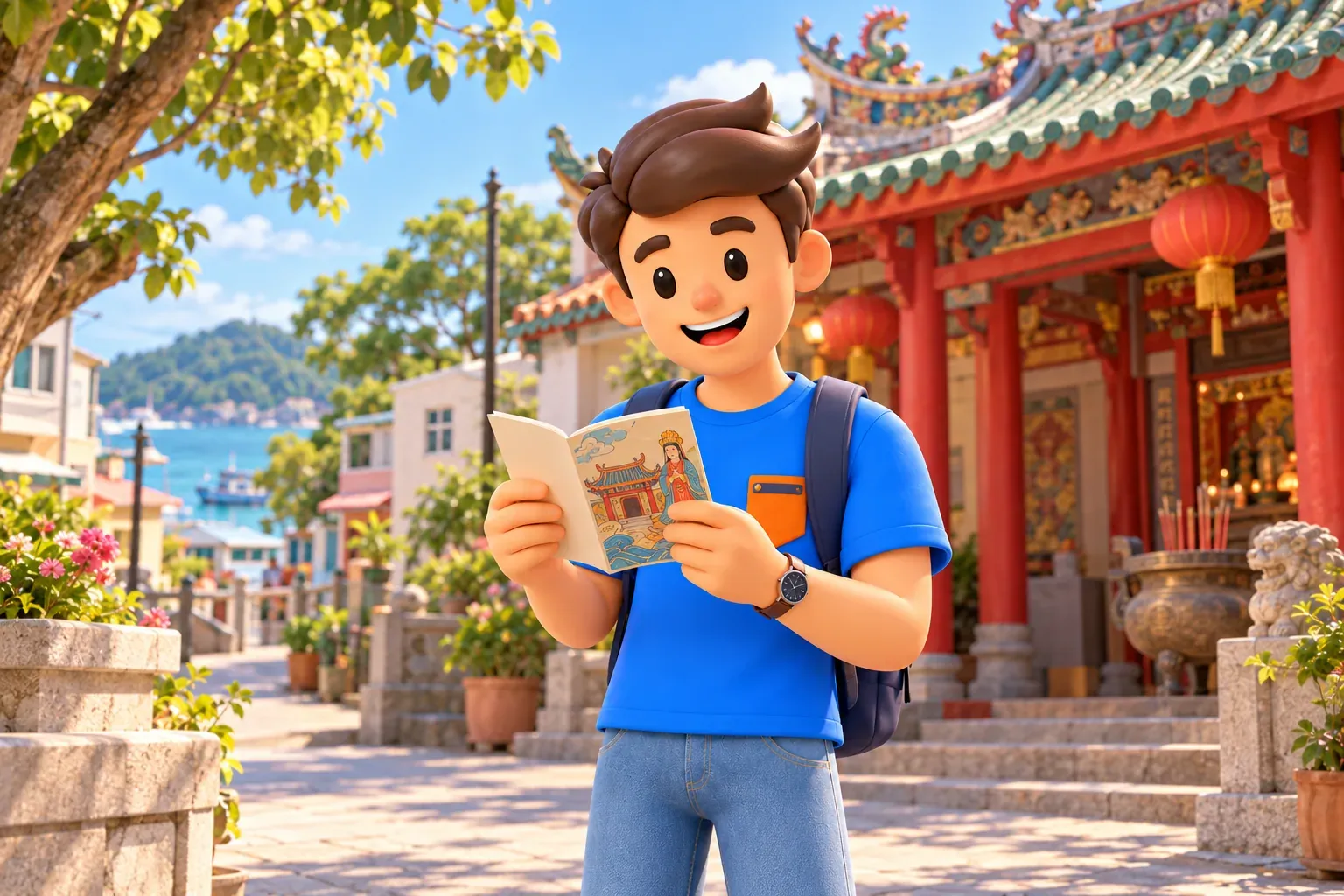
Give worshippers room to pass and avoid photographing faces without permission. Do not assume that every interior detail can be photographed simply because the door is open. If a ritual is taking place or the space feels crowded, an exterior visit can still explain the temple's place in the village. Respectful observation is part of understanding an active religious site.
With children, a simple question works well: why might people who travelled or worked at sea have wanted a shared protector? It connects the building with your own ferry journey without asking anyone to imitate a ritual. There is no need to promise a special activity inside. The value is seeing the temple as part of a living community.
The leather factory: industrial history meets playful reuse
The former Fook Yuen Leather Factory complicates the image of Peng Chau as only a fishing island. Its story belongs to twentieth-century manufacturing: the factory was established around the early 1930s and closed in 1975. Today, the interest lies in how an older working space has acquired a creative life instead of simply disappearing from the visitor's view.
Expect an informal artistic environment rather than a conventional industrial museum with a fixed sequence of galleries. The courtyard, plants, colour and arrangements of everyday objects contribute to the experience. A familiar item can become part of an unexpected composition, while an old wall supplies texture and context. Individual works and accessible areas may change, so photographs from previous visits are inspiration rather than a guaranteed checklist.
Try looking at three scales: the overall space, one small arrangement and a detail of a weathered surface. This gives even a handful of photographs a varied story. One records how the courtyard works, another picks out a creative idea, and another shows the passage of time. You do not need dozens of nearly identical portraits in front of a single bright wall.
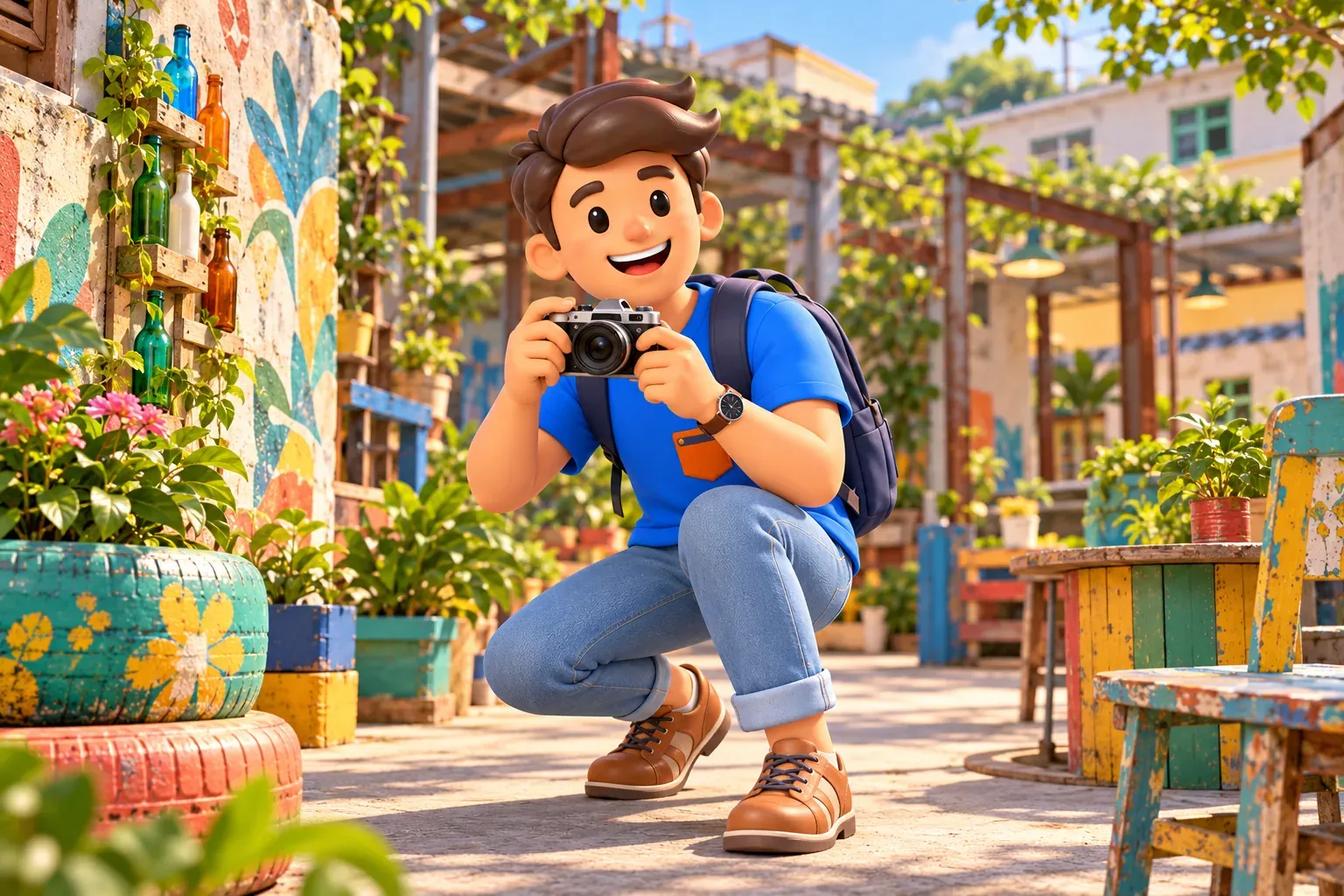
Check current access before travelling specifically for the factory. Do not assume standard museum hours, a particular exhibition or a workshop included with a visit. If it is closed, do not search for a way in through residential passages. Keep the industrial history as context for an exterior stop, then spend the remaining time on the village and waterfront.
Also avoid moving objects for photographs or sitting on something that happens to resemble a usable chair. An everyday item may be part of a work. For families, this is an accessible way to discuss reuse: what changes when a thing is placed in a different setting? The question can be answered visually, without turning the stop into a formal art lesson.
The contrast with the temple is the real reward. One place continues an established community role; the other has changed its purpose. Neither represents the whole island, but together they reveal continuity and reinvention. On the walk between them, ordinary streets start to feel like the connection between those stories rather than empty distance between attractions.
Give the meal and waterfront their own space
After the factory, choose a meal or a drink and then a comfortable public stretch of waterfront. Finding somewhere to sit matters more than chasing the venue with the longest online recommendation list. Read the menu, check ingredients if you have dietary restrictions and treat food as its own part of the budget. A planned pause helps prevent a leisurely outing from becoming a hungry search for the next stop.
For an island visit that fits naturally into your Hong Kong holiday, use RoadMe to work out a complete personal plan around what you enjoy. Bringing interests, available time and a comfortable pace together is much more convenient in the app than assembling the whole trip from scattered suggestions.
Leave at least one pause without an assignment. You can compare favourite details, choose a few photographs or simply watch boats moving across the water. This interval is often what makes an island outing feel different from a busy urban sightseeing day. If every minute is allocated to another visit, the change of scene has little opportunity to change your pace.

A waterfront break does not automatically mean swimming, and a sea view does not guarantee an empty bench when you arrive. Choose according to the conditions, keep paths clear and take packaging away. You do not need a souvenir purchase or another elaborate photograph to justify staying for a while. Let your eyes rest on a more open view after the close details of courtyards and lanes.
If you still want a longer walk, decide deliberately. A coastal extension or a hill changes both the physical effort and your return calculation. Small islands can still produce tiring days when every possible detour is added. Finishing with energy left is a successful outcome, especially if the visit is intended as a gentler chapter of a longer holiday.
Fit Peng Chau into the rest of Hong Kong
Use Peng Chau as a self-contained island episode after more intensive city days. A flexible dinner or a short walk near your accommodation is a sensible evening follow-up. That leaves room for a longer lunch or an extra waterfront pause without disturbing a chain of bookings. The format works particularly well when you remain curious about Hong Kong but want fewer major attractions competing for attention.
Before returning, check your chosen sailing and allow time to reach the correct terminal. Do not stay in a cafe until the last minute on the assumption that a small island makes boarding instantaneous. If the ferry is important to your later plans, finish the waterfront break earlier. A little transport margin is what allows the rest of the day to remain relaxed.
For a fuller island outing, compare this with our Cheung Chau day trip with a temple and an old cinema. Choose according to the kind of day you want rather than trying to collect both islands during one short excursion. On Peng Chau, a temple, a former factory and some time beside the water are already enough to make a complete visit.


