Which museum should you choose in Bruges if you only have time for one?
If you have time for only one museum in Bruges, choose by subject. Groeningemuseum is the strongest starting point for painting; St John's Hospital museum connects art with a historic place of care; Gruuthuse tells the city's story through objects and a palace. There is no universal winner. Your single visit should fit your interests, date and practical requirements rather than somebody else's compulsory ranking.
For travel in 2027, note a major change immediately: Groeningemuseum closes for renovation from 11 January 2027. A display of its collection at BRUSK is scheduled from 12 March 2027 to 30 June 2031. There is no promised continuous replacement between those dates, and reopening the renovated Groeninge is planned for 2031. Check the actual venue and date, rather than relying only on the collection's familiar name.
Choose a question you want to explore
For Groeninge, the question might be why paintings made in Bruges and the historic Netherlands reward such close attention. For St John's, ask how art connects with care, faith and people receiving help. For Gruuthuse, consider how a room, material or object can tell a city's story. Those three approaches make a more useful choice than a general list of museums everyone must visit.
RoadMe makes it much easier to develop a personalised plan for your whole trip around your interests, dates and pace. Try planning Bruges in the app so your chosen museum fits naturally among walks and rest, rather than becoming another task on a long list.
You do not need prior expertise in art or history. Identify what you enjoy looking at: an image, a large space or an object with a recognisable purpose. Compare preferences if travelling together. Sometimes one museum suits everyone, while each person selects a different focus inside. Sharing admission does not require spending the same amount of time on every object.
Clarify what time for one really means. With a full hour and a half for the displays and a buffer for entry, you have meaningful options. With only a brief window before returning to transport, a calm exterior walk may be better than a ticket for a few hurried rooms. The distance between doors cannot replace the time the visit itself needs.
Groeninge: when painting is the priority
Groeningemuseum presents a broad story of Belgian painting, particularly known for early Netherlandish masters. Jan van Eyck and Hans Memling are important names, but one period does not exhaust the museum. Later sections reveal changing images and artistic concerns. Choose it if a painting makes you want to pause, compare details and read an explanation, rather than simply recognise a famous title.
Van Eyck's Madonna with Canon Joris van der Paele is a useful example of a work worth slowing down for. Notice differences between skin, cloth and metal surfaces, then return to the overall composition. You do not need an art-historical vocabulary to begin. Your own observation creates a question that makes the museum's interpretation more interesting. Looking can come before knowing all the background.
Allow roughly 75–90 minutes for a selected introduction, without promising equal attention to every work. This is an editorial planning allowance, not an official required duration. A few paintings with pauses can be more rewarding than passing every room at the same speed. If you want a detailed encounter with one period, extend the visit and reduce the outdoor programme afterwards.
Do not choose Groeninge solely because it is called the city's principal museum. If a sequence of paintings quickly tires you, Gruuthuse's objects may be closer to your interests. Reputation does not determine personal engagement. Conversely, a painting enthusiast need not choose a palace for its attractive facade when specific artists are the real reason for the trip.
How the Groeninge closure changes the choice
Before renovation, the visit concerns Groeningemuseum itself. The later display at BRUSK concerns a different building and exhibition calendar. These are not interchangeable names for one entrance. For a date from 11 January to 11 March 2027, do not assume that the collection is immediately available nearby. You can preserve an interest in painting by considering St John's Hospital instead.
From 12 March 2027, check the conditions of the scheduled BRUSK display: opening, admission and the exhibition available. An announcement about the collection does not guarantee every individual work on your particular day. The planned 2031 reopening of Groeninge should not become a promise of an exact date either. For a short visit, these distinctions matter more than fixing one attractive option far in advance.
Even when travelling before those changes, check the working day and holiday exceptions. Groeninge's regular closing day is Monday. Do not extend that rule to every Bruges museum: Gruuthuse has a different closing day. A single available day needs a closer fit between interest and calendar than a stay in which visits can easily be rearranged. A famous name cannot resolve a closed door.
St John's Hospital: art, care and the building
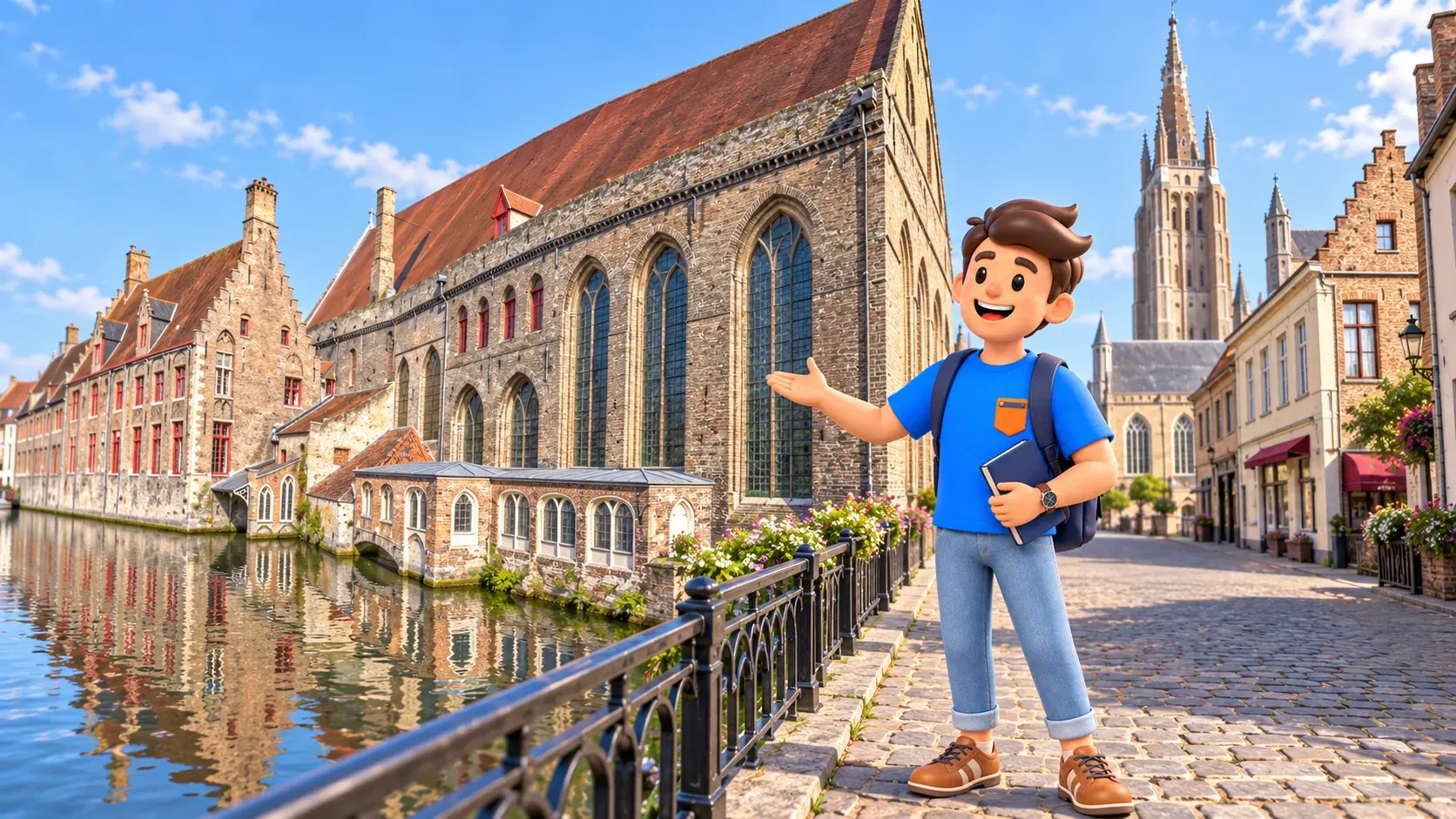
Museum Sint-Janshospitaal occupies a historic hospital complex with roots in the twelfth century. It is neither simply a collection of medical instruments nor only a Memling gallery. Its story brings together care, hospitality and art, with the old spaces helping those themes make sense together. Choose it when artworks with a specific human and architectural context are especially appealing.
Hans Memling's works are central here, and some were made for the hospital itself. That changes the question in front of a painting. You can ask not only how it was painted, but who it served, where it belonged and what it did. The Shrine of St Ursula recalls that painting could inhabit a three-dimensional object with a particular function, rather than only a familiar frame on a wall.
One visit does not require reconstructing all of medical history. Choose a few connections between building, object and work. Historic hospital spaces, the story of care and art offer different rhythms of observation. For someone who struggles to spend a long time looking exclusively at paintings, that variety may suit better than a decision based on one celebrated name.
Allow approximately 75–90 minutes for selected priorities, plus a separate margin for entry, belongings and finishing. A detailed visit takes longer. Do not confuse this museum with a functioning hospital providing medical services to visitors: its present purpose is cultural. The museum normally closes on Monday; check specific holiday conditions for the date of your trip before choosing it as your only interior.
Between Groeninge and the hospital, the choice is not simply more or less art. The first makes it easier to concentrate on the history of painting and comparisons between works. The second gives particular force to art's connection with place and people. With one museum available, the useful distinction is how you want to encounter it. Both do not have to fit the same short window.
Gruuthuse: understanding the city through things
Gruuthusemuseum occupies a city palace whose grandeur owes much to the fifteenth century and Lodewijk van Gruuthuse's connection with the Burgundian court. Here, Bruges' history takes shape through objects and rooms. A textile, stained glass, wooden sculpture, lace, manuscript or porcelain offers different ways to discuss taste, work and wealth. Choose it if a tangible object sparks curiosity faster than a long sequence of pictures.
The museum spans several centuries, so distinguish the age of the palace from the date of each object. Not everything belongs to the same fifteenth century, and the present displays have not all remained unchanged since the family occupied the house. This is a story assembled by a museum. It helps reveal a changing city instead of a single timeless historical setting.
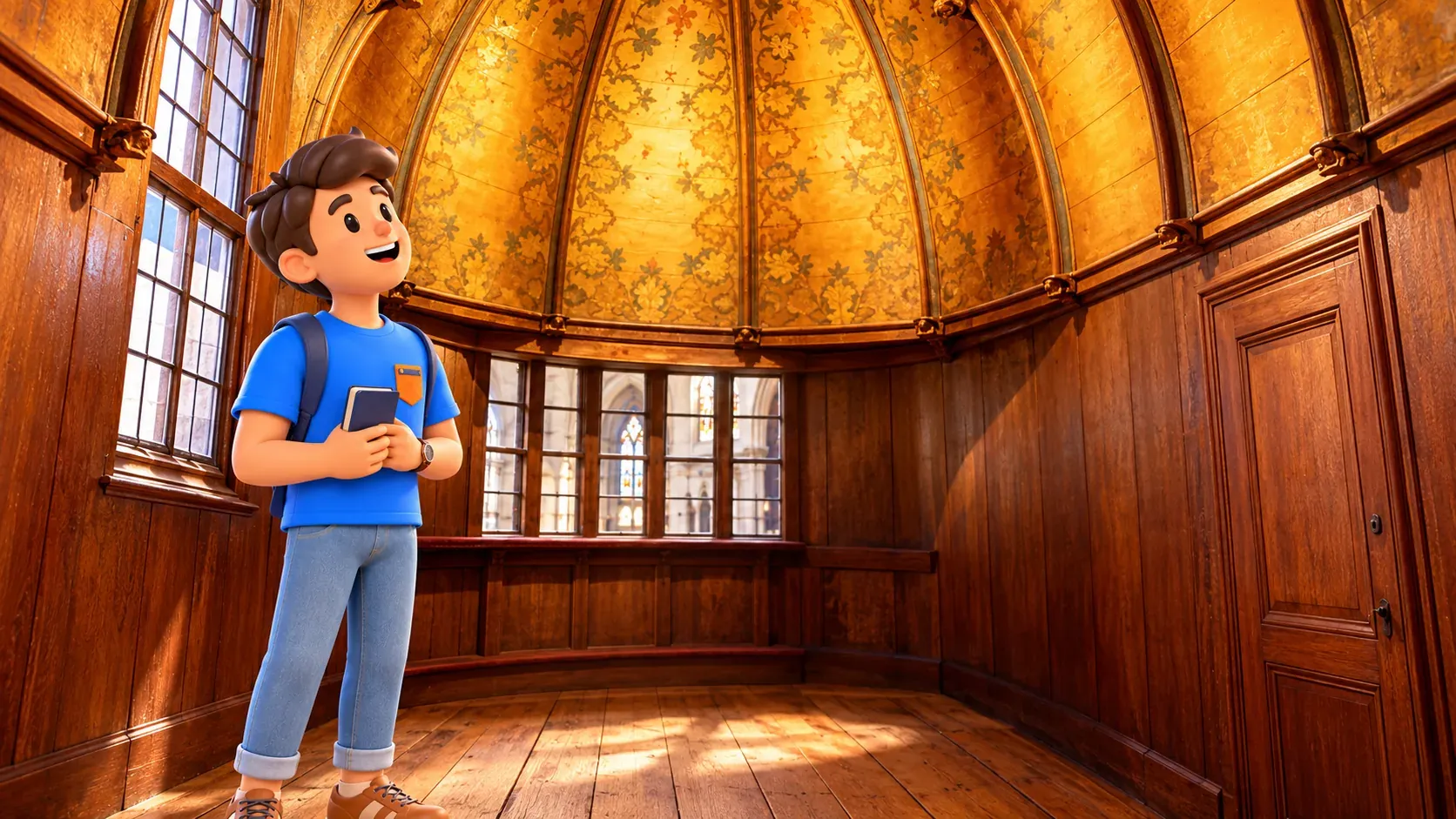
The late fifteenth-century oratory overlooking the chancel of the Church of Our Lady reveals an unusual relationship between domestic and public space. If that room is accessible, notice the direction of the view and the room's intimate scale. It is not a modern public passage straight into the church museum. Individual areas may have restrictions, so avoid making one room the condition for enjoying the whole visit.
The same approximate 75–90 minutes works as an allowance for a selective introduction. However, the palace requires consideration of stairs: an accessible approach to the courtyard does not make the museum route wheelchair accessible. The museum is not fully accessible in that way. Ask about your actual route before buying if you have individual mobility requirements. Gruuthuse normally closes on Wednesday, rather than Monday.
When another interest is the better guide
These three are a useful cultural starting point, not a restriction on other choices. If chocolate is your family's main interest, Choco-Story may be more meaningful than an obligatory classical gallery. If you want to understand a particular craft, consider the Lace Centre. A clear personal interest does not need defending because another institution is considered more prestigious.
A short walk to an entrance does not mean a short exhibition. Choco-Story itself recommends around an hour and a half, and watching a demonstration is different from an included practical workshop. For a craft visit, timing matters too: museum interpretation and a live demonstration are distinct experiences. Establish which experience you actually want when choosing your one museum.
Before buying: time, access and the rest of the day
Check the working date first, then the practical route through the museum, and only then purchase. The word museum does not promise identical entrances, cloakrooms or stair arrangements. A family with a pushchair, a wheelchair user and someone without those access requirements may prefer different formats. The actual institution's conditions matter more than an overall ranking.
With RoadMe, it is easier to develop a personalised itinerary for the whole trip and arrange a museum, walks and rest around your interests and comfortable pace. Try the app so one chosen visit becomes part of a considered Bruges plan, rather than a reason to rebuild the day manually.
Leave a straightforward, calm section afterwards: a waterfront, square or pause. Do not add another interior only because it is a few minutes away. If one museum was the right limit for time and attention, that decision remains sensible on leaving. A satisfying visit can end with discussing one memorable thing, rather than immediately searching for another ticket desk.
For comparing artistic experiences, use the half-day plan with painting museums; for another kind of weather, consider the two neighbouring museums on a rainy day. Those are separate programmes for a larger allowance. Today, one clear subject is enough: painting, art and care, or a city through its objects. Choose the conversation you want to continue inside.