
Via Margutta to Villa Borghese: A Street-to-Park Half-Day
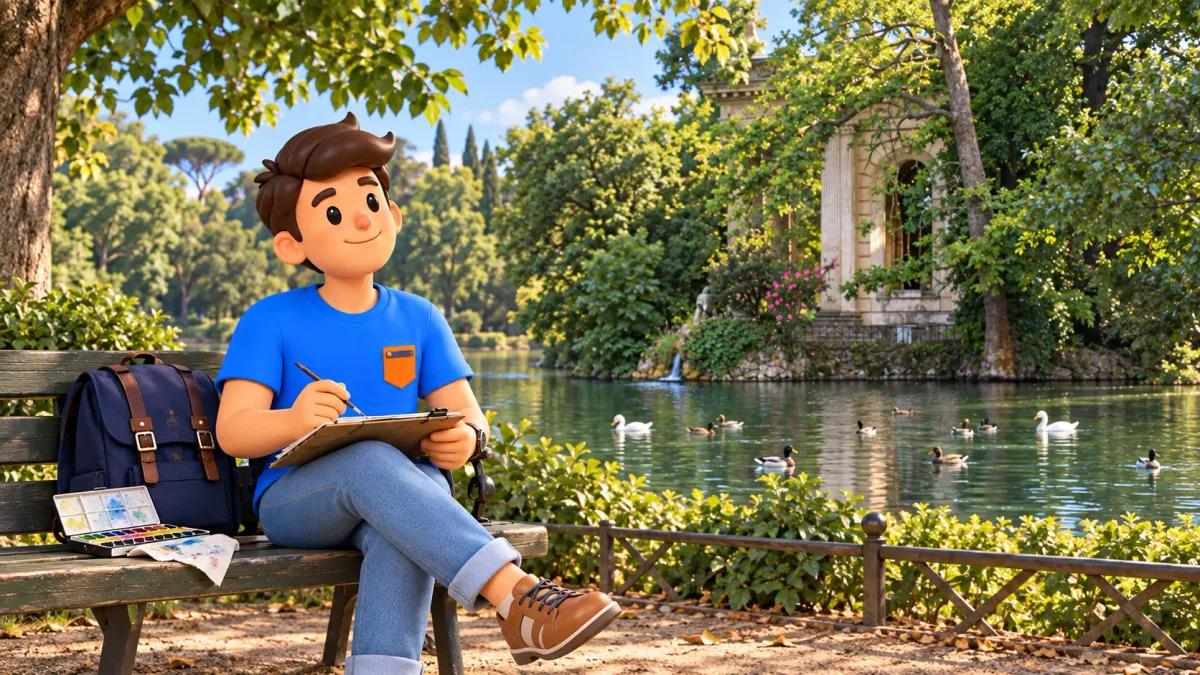
Via Margutta and Villa Borghese offer a change of urban scale within one outing. A narrow street of workshops and modest façades leads uphill towards Villa Medici, a city view from the Pincio and finally a park lake. The interest lies in stone, trees, water and the ways different periods have arranged leisure within Rome.
Set aside half a day. The core route takes roughly three hours from Via Margutta’s northern end to the Giardino del Lago; reaching the start and leaving the park afterwards are extra. Villa Medici remains an exterior stop, the Borghese Gallery is a separate visit, and a boat ride is excluded. All minutes are estimates rather than measurements.
Choose a park outing or a museum-led day
The first decision is your purpose. If you want to move from stone streets into greenery, keep the main plan free of a substantial interior visit. If the Borghese Gallery’s collection matters most, secure an available slot first and shape the day around it. Both choices work, with different rhythms and different energy demands.
Try RoadMe to create a personal trip plan around your dates, interests, pace and budget. The app makes it more convenient to distribute museum days, walks and rest beforehand, then use a considered whole-trip itinerary without rebuilding each day while travelling.
Half a day does not mean covering the entire park, both villas and every gallery room within three hours. This is one coherent outing with a twenty-minute pause and a defined finish beside water. It provides a complete experience. Choose interiors on another day, or replace part of the walk with the visit you prefer.
Plan for daylight and check current park access, especially after adverse weather. The ascent matters too: the basic line uses the Spanish Steps. It is not presented as a step-free route. A different approach uphill needs its own planning, rather than an invisible adjustment of a few minutes to the same outline.
Three hours from a street to a lake
| Minutes from the start | Plan |
|---|---|
| 0–25 | Via Margutta from the northern Via della Fontanella junction south to Via Alibert |
| 25–60 | Via Alibert, Via del Babuino, Piazza di Spagna, Spanish Steps ascent and approach to Villa Medici |
| 60–75 | Villa Medici’s street-facing exterior |
| 75–100 | Viale della Trinità dei Monti towards the Pincio, with a brief city view |
| 100–120 | Twenty-minute rest in a suitable available place |
| 120–150 | Viale delle Magnolie connection into the park, then public paths to the Giardino del Lago |
| 150–180 | Lake and Temple of Asclepius from the public shore; finish here |
The sum is one hundred and eighty minutes. Movement blocks include orientation and short pauses; the ascent is already part of the second block. Thirty minutes at the lake cover one setting, not separate lake and temple admissions. Reaching transport or accommodation afterwards requires an additional allowance.
For example, start at 9:30 and finish the core walk around 12:30 if daylight access and weather suit. This illustrates the distribution of time, not gate or tour opening hours. Lunch afterwards is separate; a full meal is not hidden within the twenty-minute rest. Extend the outing or shorten observation stops if you move more slowly.
Via Margutta: the small scale of an artists’ street
Begin at Via Margutta’s northern junction with Via della Fontanella and continue south towards Via Alibert. This gradually brings you towards Piazza di Spagna and the subsequent climb. A general street marker does not identify this particular start. Check the junction itself, especially if this is your first visit.
Margutta is associated with art, galleries and craft workshops. Earlier, behind the more formal houses of Via del Babuino, there were stores, stables and accommodation for people serving the neighbouring properties. That contrast makes the street more than an attractive backdrop: small entrances and courtyards recall the working side of the centre.
A list of every celebrity who lived nearby is unnecessary. Find one sign of a craft environment, perhaps a window display, entrance treatment or façade material, and compare it with the street around the corner. The twenty-five minutes cover this exterior encounter. An open door does not automatically invite you into a private courtyard or workshop.
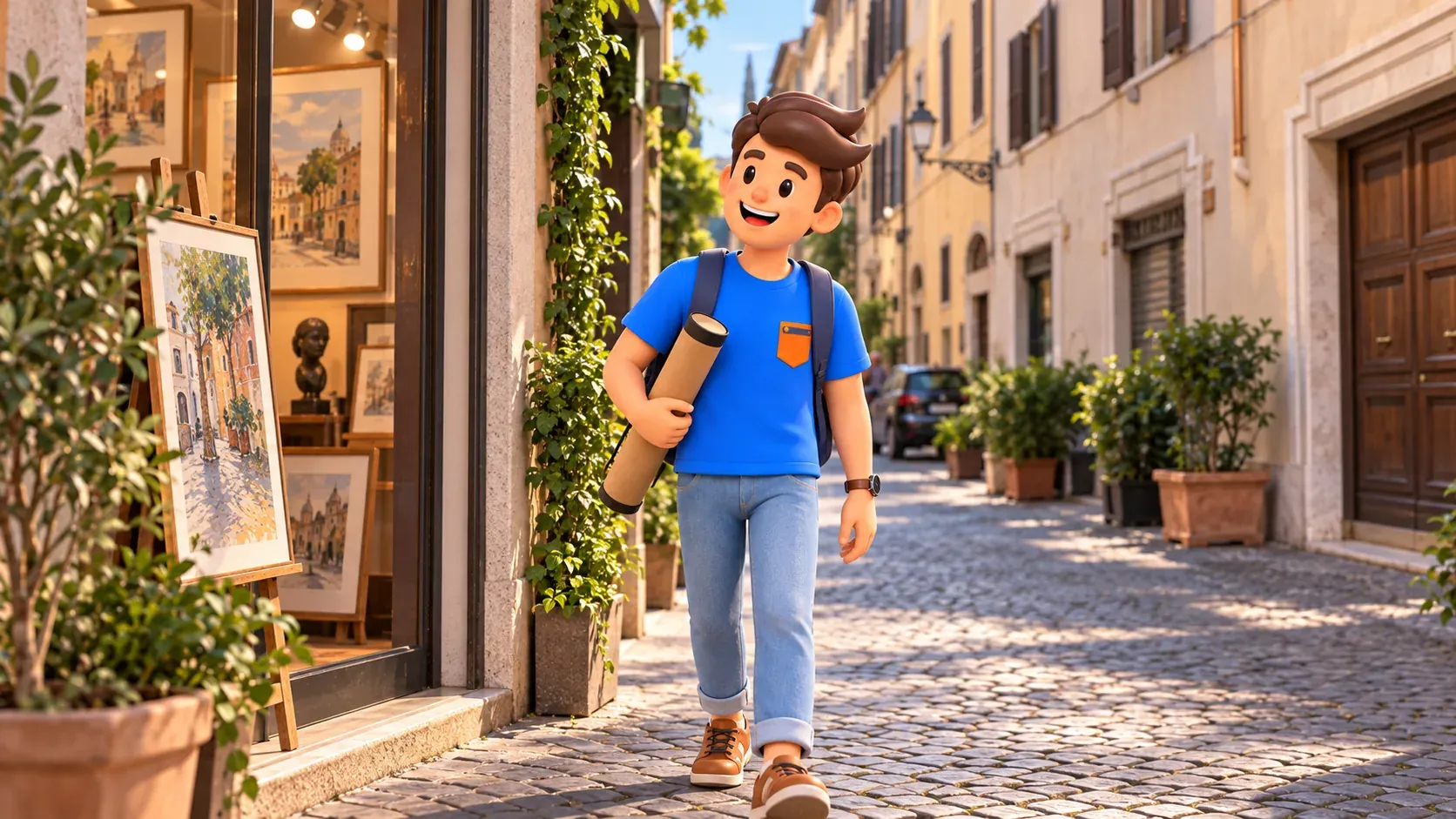
If you want to enter a gallery, check its actual hours and current exhibition and extend the outing. Do not assume that all spaces operate alike or that silence is guaranteed. Margutta’s role here is a smaller scale before the climb, rather than a promise of finding a city hidden from everyone else.
Climb using public routes
Follow Via Alibert towards Via del Babuino and Piazza di Spagna. The basic version then climbs the Spanish Steps to Trinità dei Monti before continuing towards Villa Medici. Avoid mistaking the street’s proximity to the hill for an unrestricted passage through residential buildings or private land.
The thirty-five minutes include the approach, steps and orientation at the top. Climb at a comfortable pace, pausing where permitted without obstructing passage. This section connects you to another part of the city. It is not a separate detailed tour of the square and church squeezed into the same allowance.
After the ascent, you do not immediately need another staircase. Continue on the available public route along Viale della Trinità dei Monti. If steps are unsuitable, choose a separately checked approach to the upper area beforehand and recalculate the outing. A nearby map symbol does not establish an access route that suits your needs.
Villa Medici: separate street and garden views
Here you look from the street side. The restrained exterior with its two upper towers is different from the richly decorated garden-facing façade. The garden view frequently appears in photographs, so clarify your expectations. Fifteen minutes outside are not a promise of unrestricted access to that particular inner view.
The villa belongs to Rome’s Renaissance history and was Cardinal Ferdinando de’ Medici’s residence. Since 1803 it has housed the French Academy in Rome.
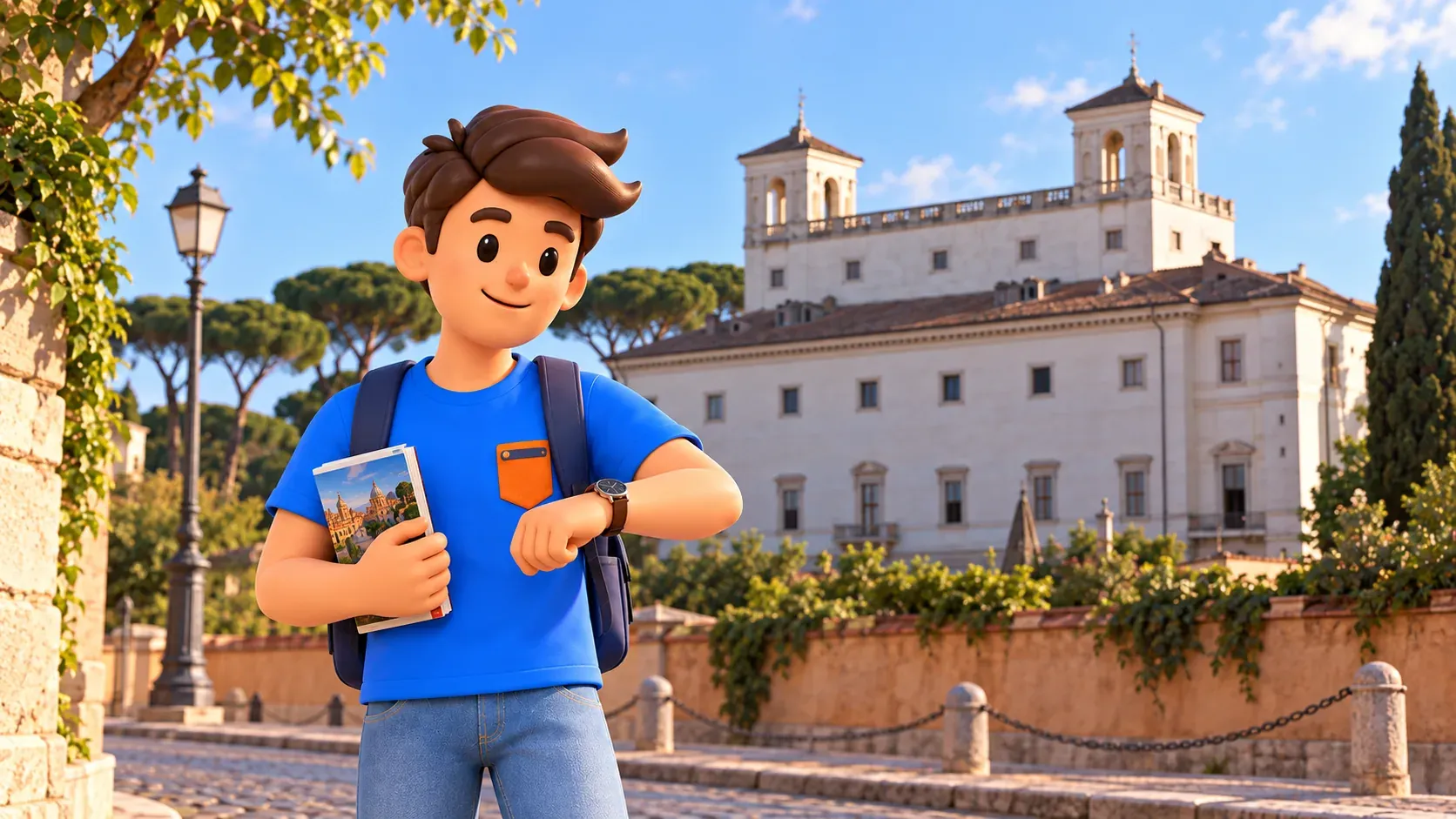
Historic gardens and rooms are covered by a separate visiting programme. The villa’s standard guided tour is listed as ninety minutes; exhibitions and events have their own arrangements too. None should be treated as a quick unrestricted detour on the way to the public park. If the villa is your interest, reshape the day around your chosen format.
Outside, compare the street front’s relative enclosure with the space that opened after your ascent. Which parts are immediately visible, and which remain hidden? This simple observation helps distinguish public and internal space. Understanding the difference does not require adding every available guided visit to the same outing.
The Pincio: a view as a transition
Continue along Viale della Trinità dei Monti towards the Pincio, using current public passages. A brief look over the city belongs within the twenty-five-minute block. You do not need to identify every dome. The view helps move attention from nearby façades towards a broader landscape before the park section.
Choose one landmark and compare it with the roofline, then turn your attention to greenery and paths. That shift matters to the route’s purpose: the urban section gradually gives way to the park rather than ending abruptly. Avoid turning the viewpoint into a competition against a complete list of Roman sights.
The Pincio and Villa Borghese are adjacent connected spaces with distinct histories. The onward connection uses Viale delle Magnolie; it does not pass through Villa Medici’s private grounds. Follow current mapping and signs. A continuous green area on a screen may conceal a road, enclosure or change of level that affects your actual path.
Protect twenty minutes of rest
The pause follows the ascent and precedes the lake connection. Find a suitable available place rather than assume a particular empty bench or open café. Finding somewhere belongs within the time. At a table, allow for service and extend the outing if necessary while retaining the break itself.
Recall two textures: narrow stone street and open upper landscape. Which do you want to continue, architecture or greenery? If it is the latter, no additional museum task is necessary. If you are tired already, choose a separate finish and leave the lake for another occasion. The final marker should not overrule your own pace.
Villa Borghese: the landscape was designed too
Take the Viale delle Magnolie connection towards Villa Borghese, then follow public park paths to the Giardino del Lago. Thirty minutes include orientation. You do not need to inspect every museum, pavilion and fountain. Keep the lake as the main objective and notice smaller details while moving towards it.
The estate’s history is associated with Cardinal Scipione Borghese and early seventeenth-century works. Later generations reshaped the grounds, including new landscape compositions in the eighteenth century. The park opened to the public in 1903. Its greenery is therefore more than an untouched fragment of nature: it reflects a long history of arranging leisure within a changing city.
Notice how a path reveals the next view while a tree conceals part of a building. Identifying every plant is unnecessary. Light, shade and an opening in the distance already show how the landscape works. In sun, choose an appropriate pace; in rain, consider the actual surface rather than assume that every park path is equally comfortable.
Lake and temple form one final stop
The Giardino del Lago provides a different scale from a broad city panorama. Attention settles on water, reflection and a small temple on an artificial island. The Temple of Asclepius belongs to the late eighteenth-century park design, rather than an ancient building surviving here in place. A classical form does not itself make a structure ancient Roman.
Observe it from an accessible public shore. Temple entry is neither included nor promised. Lake and temple do not require two separate journeys: they form one landscape. In half an hour you can choose a view, walk a short available section of shore and pause again to notice a changed reflection.
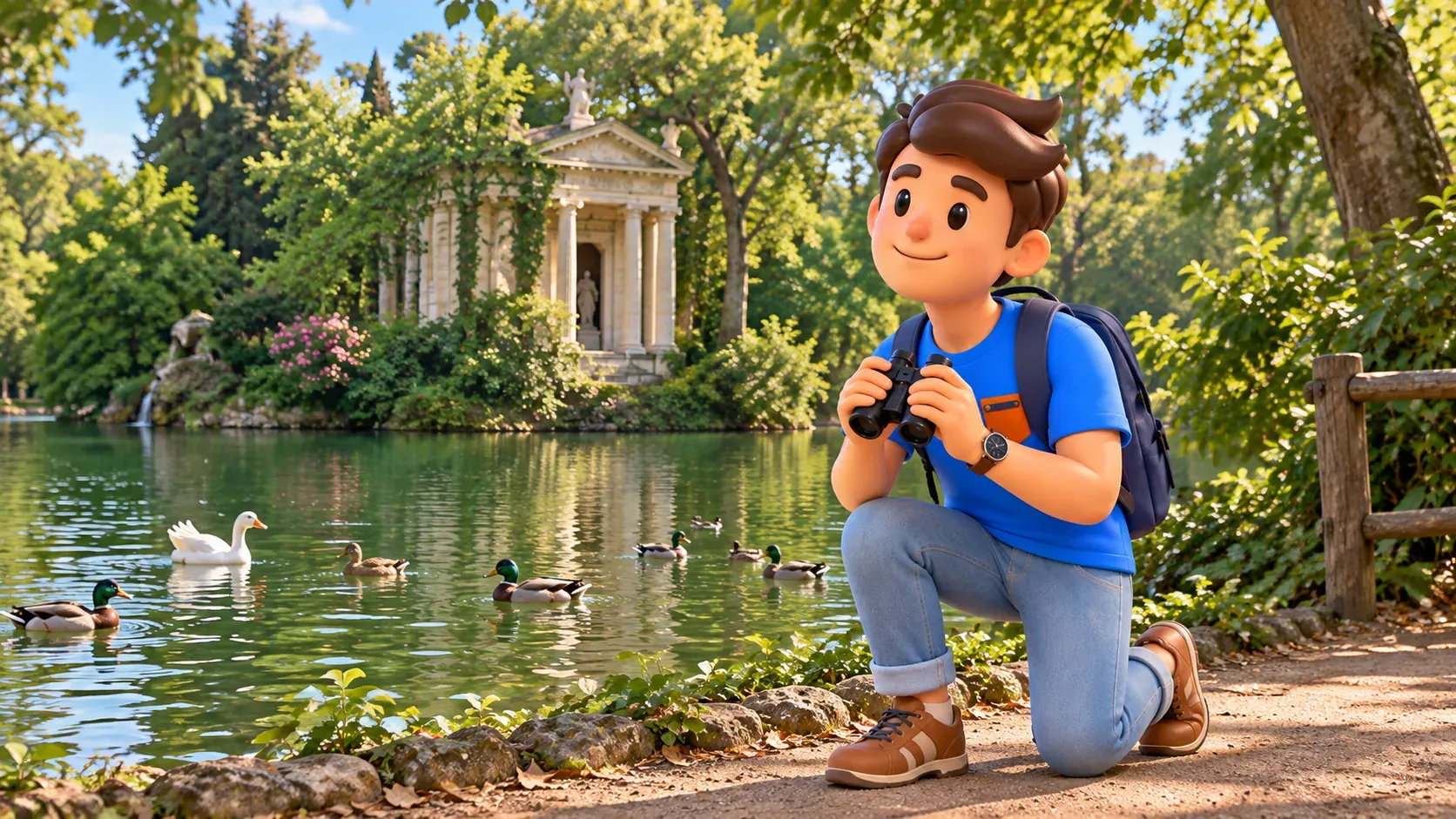
Compare columns and trees, straight lines and irregular greenery. For sketching, allow extra time and leave the path usable. The stop completes the transition to a composed natural-looking scene.
When a boat or gallery changes the day
Boat rental is possible at the lake, but operation, waiting and conditions require separate checking. It is excluded from the three-hour core. Establish actual availability first, then decide which time you would replace or how much to extend the outing. Half an hour beside the shore is not a guaranteed half-hour boat ride.
The Borghese Gallery is also a destination of its own, rather than a room beside the lake. Advance ticket purchase is required. A usual visit lasts two hours, with different conditions for the final shorter session. Add the approach to the museum building and entry procedures. For Bernini, Caravaggio or Canova, a dedicated plan works better than a few accidental spare minutes.
To connect outdoor walks with your artistic interests, try RoadMe for a personal plan of the whole trip. The app helps distribute major visits and free time across days according to your pace, making the resulting itinerary more convenient to use while travelling.
The core route ends at the lake. Choose your available exit and onward journey separately; the nearest interesting building is not necessarily beside the transport you need. Our five-day Rome plan can help distribute park and museum days. Today already offers three changes of scale: street, hill and water among trees.


