
Five Days in Rome: Landmarks, Parks and a Different Side
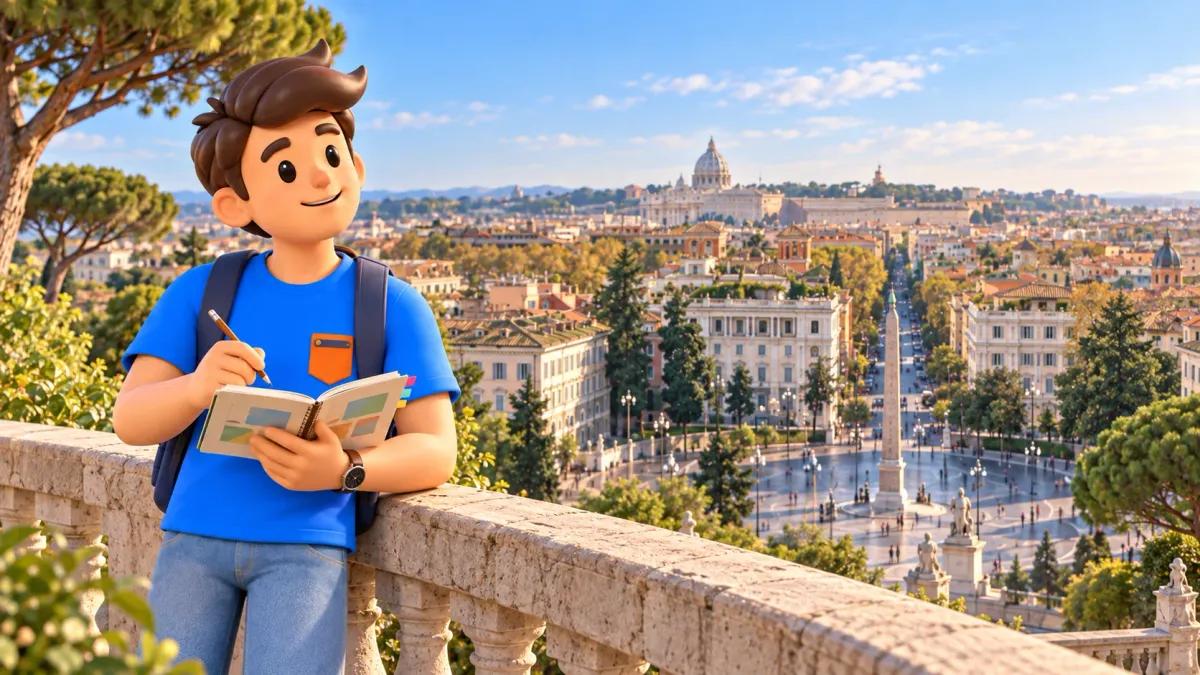
Five full days in Rome give you room for the familiar landmarks and a different setting beyond the busiest central streets. The Colosseum and Vatican can be balanced with a park, a stretch of ancient road or a museum inside a former power station. Use the extra days to change the kind of experience and recover attention, rather than simply increasing the number of compulsory admissions.
This first-visit plan suits travellers comfortable with extended walks. It covers five complete days, excluding arrival and departure. Times are examples in local Rome time, including transitions and breaks, rather than measured visit durations. Choose morning admissions only when those appointments are actually available; move the blocks when your ticket has a different time.
Give the five days different purposes
Keep two days for major visits, one for central squares and neighbourhood streets, and another for Villa Borghese. On the fifth, choose the Appian Way or Centrale Montemartini. These are separate alternatives. Moving between them takes time, so treating both as a single easy outing merely because they lie south of the centre can create a day dominated by transfers.
Prepare the complete stay more conveniently in RoadMe: the app builds a personal trip plan around your interests, dates, pace and budget. You get a programme suited to you, with the itinerary and map together, instead of connecting every day from separate notes.
The order stays flexible until you book. First check the Vatican Museums' calendar, Colosseum appointments and any additional museum you want. The Vatican Museums normally operate Monday to Saturday, with a separate arrangement on the last Sunday of the month and other closure dates. Centrale Montemartini is normally closed on Mondays and on specified holidays. Check the date you actually intend to use.
Then arrange outdoor walks around the forecast. The park and Appian Way work best in suitable weather. A museum day can move into a rainy period if admission is available. Preserve one free half-day within the programme: it offers a chance to return to a favourite area or simply recover after the first few days of new experiences.
The five-day outline
| Day | Main plan | Example allocation |
|---|---|---|
| 1 | Colosseum, Forum and Palatine; optional short Capitoline exterior walk | 09:00–13:00 main visit; 13:00–14:30 lunch; 14:30–16:00 walk or rest |
| 2 | Vatican Museums or St Peter's Basilica; square and river | 09:00–13:00 chosen visit; 13:00–14:30 lunch; 14:30–16:30 exterior walk |
| 3 | Navona, Pantheon and Trevi; optional Trastevere | 09:30–12:30 squares; 12:30–14:00 lunch; 14:00–17:00 river approach and neighbourhood or free time |
| 4 | Villa Borghese and Pincio; gallery only as a deliberate additional choice | 10:00–13:00 park or gallery; 13:00–14:30 lunch; 14:30–16:00 short walk and finish |
| 5 | Appian Way or Centrale Montemartini | 09:00–10:00 transfer allowance; 10:00–12:30 chosen outing; 12:30–14:00 lunch; 14:00–15:00 return allowance |
Morning blocks include the approach, checks, visit and exit. Four hours is not an official duration for the Colosseum or Vatican. Shorten the afternoon if your tour takes longer. Travel from accommodation and the evening return on the first four days are additional. Day five includes an indicative transfer buffer, which you must compare with your own starting address and transport options.
Day one: antiquity without a second museum marathon
At the Colosseum, start with the whole exterior. Repeating arches and the surviving volume help explain the organisation of public spectacles in ancient Rome. The building belongs to the first-century Flavian period. A few minutes of observation provide an introduction; choose further historical detail according to your own interests.
Entry requires a timed appointment. Confirm your ticket's scope, available areas and identification requirements. The Forum and Palatine demand attention and energy: uneven surfaces, exposed spaces and ascents make the experience dependent on weather and pace. A combined ticket does not oblige you to examine every part equally closely.
After the archaeological visit, eat and assess your energy. The Capitoline square offers a short exterior continuation if you want a different architectural layer; its composition is associated with Michelangelo's design. The Capitoline Museums are optional rather than part of this day. Five days allow a collection its own time, instead of encouraging entry simply because a door happens to be nearby.
Day two: let the Vatican be one substantial experience
Choose the museums when art and the Sistine Chapel are your priorities. The chapel belongs to the museum visit rather than being a separate quick stop from the square. The museum entrance is on Viale Vaticano, so check the approach and arrival instructions in advance. A morning appointment does not promise empty galleries or remove organisational procedures.
If architecture and a religious setting matter more, make St Peter's Basilica the main visit. It has its own rules, security checks and potential restrictions for services or events. The dome needs separate time and a check of its arrangements. Do not treat the basilica, ascent and museums as one brief activity: they are distinct experiences with movement between them.
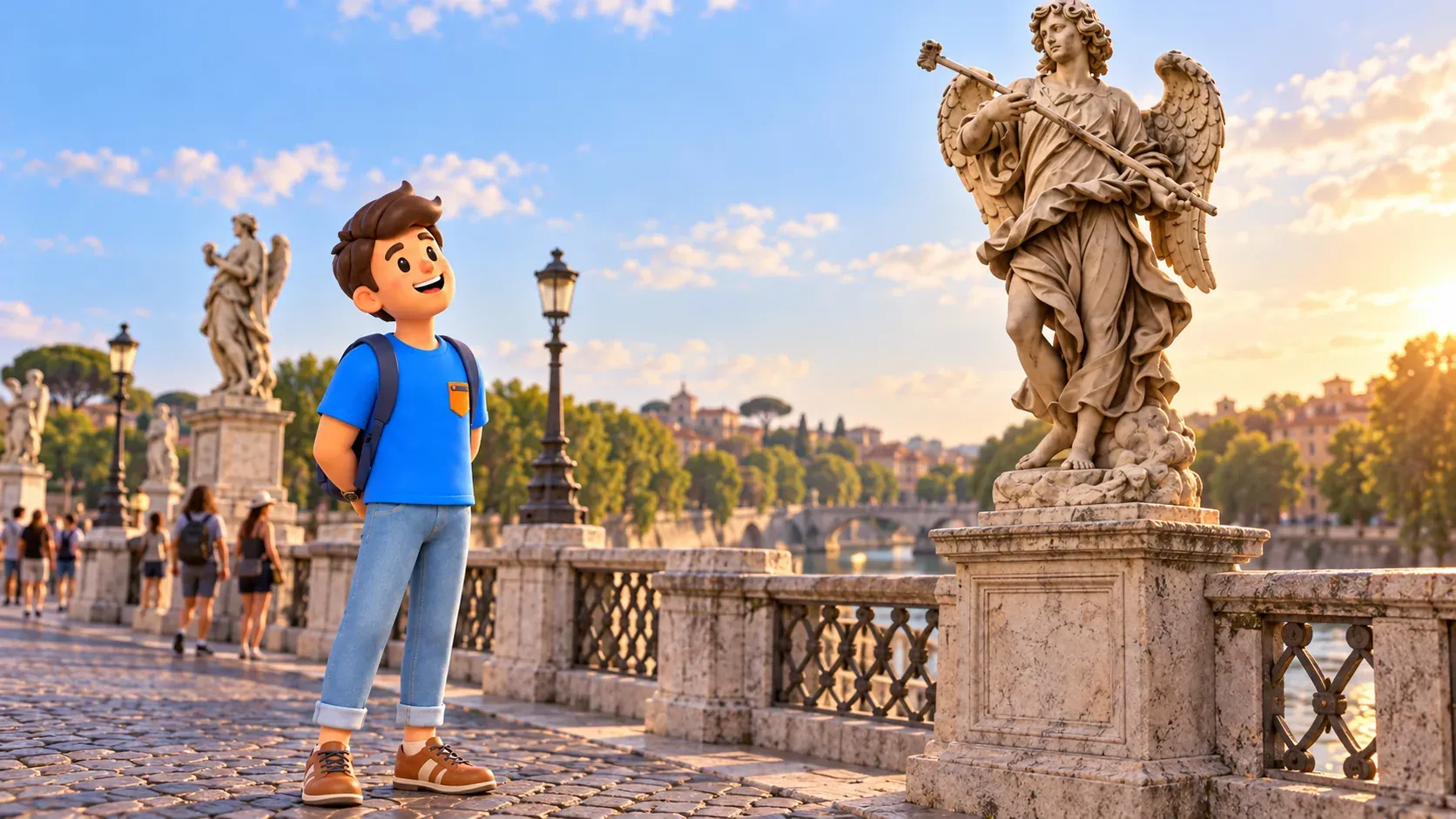
After lunch, leave room for St Peter's Square if accessible, followed by a walk towards Sant'Angelo Bridge. View the castle from outside: its history begins with Hadrian's mausoleum and continues through later uses. Add the interior only by replacing part of the walk. Do not rely on a universal direct passage from the Sistine Chapel to the basilica; access depends on rules and visit format.
Day three: familiar squares and time without an appointment
Walk from Navona to the Pantheon, then towards Trevi. Navona's elongated outline retains the shape of Domitian's stadium, with fountains adding the Baroque period. At the Pantheon, observe the columned portico joined to the circular body. These observations give the exterior walk substance without requiring a complete account of each monument.
The basic morning does not require admission to the Pantheon. If its interior is important, check tickets and visiting arrangements at this active religious monument, then reduce the rest of the programme. At Trevi, the public square differs from the controlled near zone: in 2026, tourists and non-residents pay to use that close area, with stated exemptions. Our general-view plan does not require entering it.
After lunch, you can head through the Jewish Quarter area and Tiber Island into Trastevere. Three hours are allowed for the approach and neighbourhood walk; this is not a five-minute addition. Finish near Santa Maria in Trastevere's square or earlier if you have had enough. An open evening is more useful here than an obligation to reach several further distant sights.
Day four: a different pace in Villa Borghese
Begin at the park entrance near Porta Pinciana and follow available avenues, choosing a limited part of the grounds. Villa Borghese is a historic landscape with paths, gardens, a lake and separate cultural institutions. It shows another way to experience Rome: time among greenery can be an outing in its own right, rather than a connection between façades.
For a simple version, choose the avenues, a lakeside pause and the direction towards Pincio. Use a park map and current paths on the ground; artistic illustrations are not navigation. Avoid trying to cover the entire area. Even without a collection visit, the three-hour morning allowance with breaks can provide a satisfying change of setting.
The Borghese Gallery is a separate museum, not a compulsory part of entering the park. If you want it, check current admission arrangements and booking availability first, make it the morning's main purpose and shorten the park circuit. Do not automatically apply an old session duration to your trip. A gallery day must follow the actual ticket, rather than this article's illustrative table.
After lunch, continue towards Pincio Terrace and finish near Piazza del Popolo if the descent and remaining walk suit you. The change of scale is the attraction: shaded paths give way to a view across the city. Sunset is optional. Building the whole day around it only makes sense if you want that experience and the seasonal timing works.

Day five, option one: a limited stretch of the Appian Way
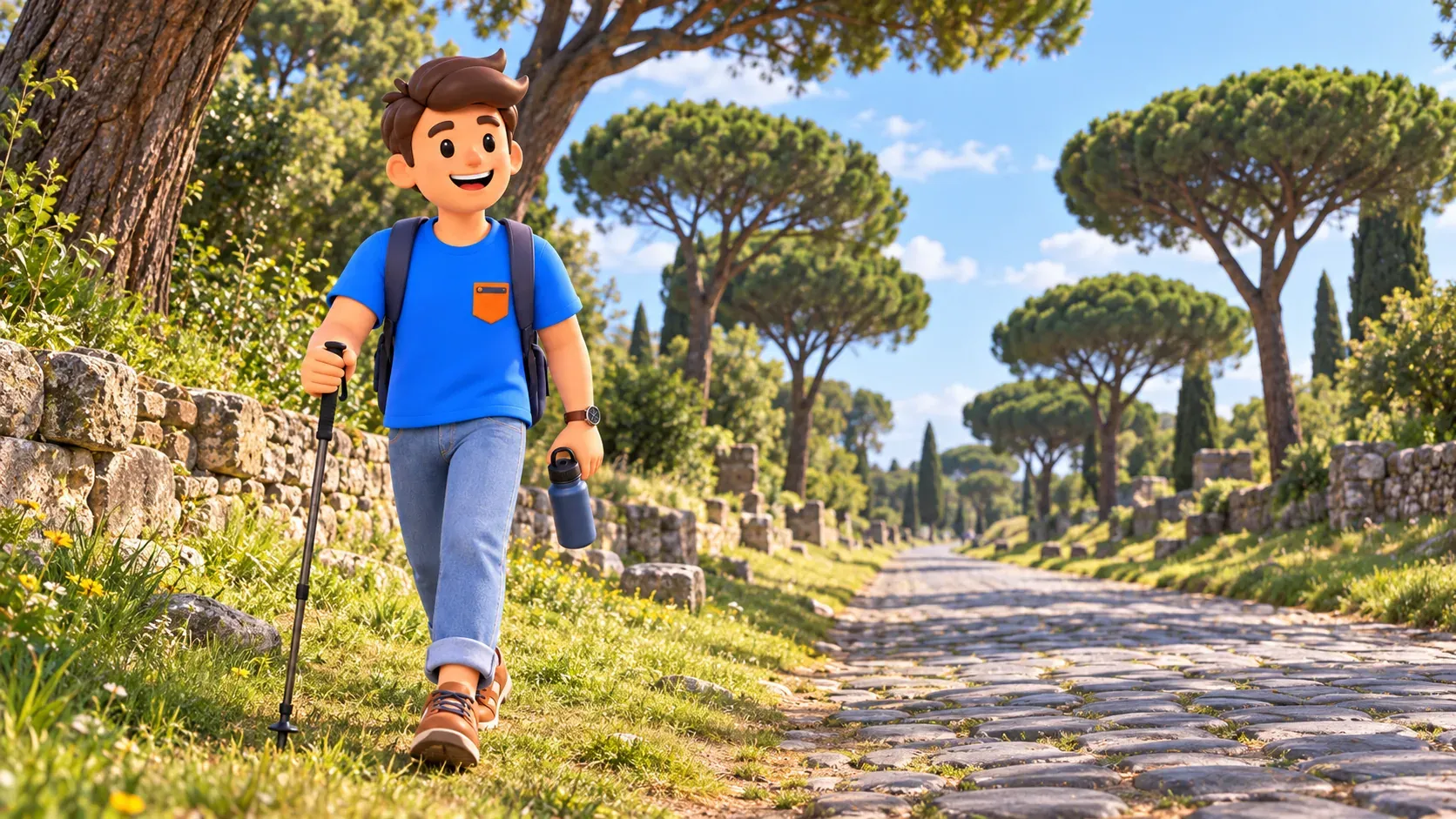
Choose the Appian Way for a change of urban setting. It linked Rome with southern territories, and monuments beside it reveal antiquity beyond the compact centre. The road extends over a substantial distance, so decide on a limited section and return point beforehand. Do not begin walking from the Colosseum simply because both places relate to ancient Rome.
One possible focus is the area around the Basilica of San Sebastiano, walking along the public road towards the Villa of Maxentius. The basic version observes the road and surroundings without compulsory entry to the basilica, catacombs or archaeological complex. Reach a suitable turning point in that direction and return to the start, allowing up to two and a half hours for the entire block.
The actual extent depends on accessible paths, surface conditions and your energy; this is not a measured route to every monument. Check the outward and return journey before leaving. Private grounds and closed areas do not become public passages because a line on a map continues through them. If the weather is unsuitable or you prefer time indoors, take the second option.
Day five, option two: ancient sculpture among machines
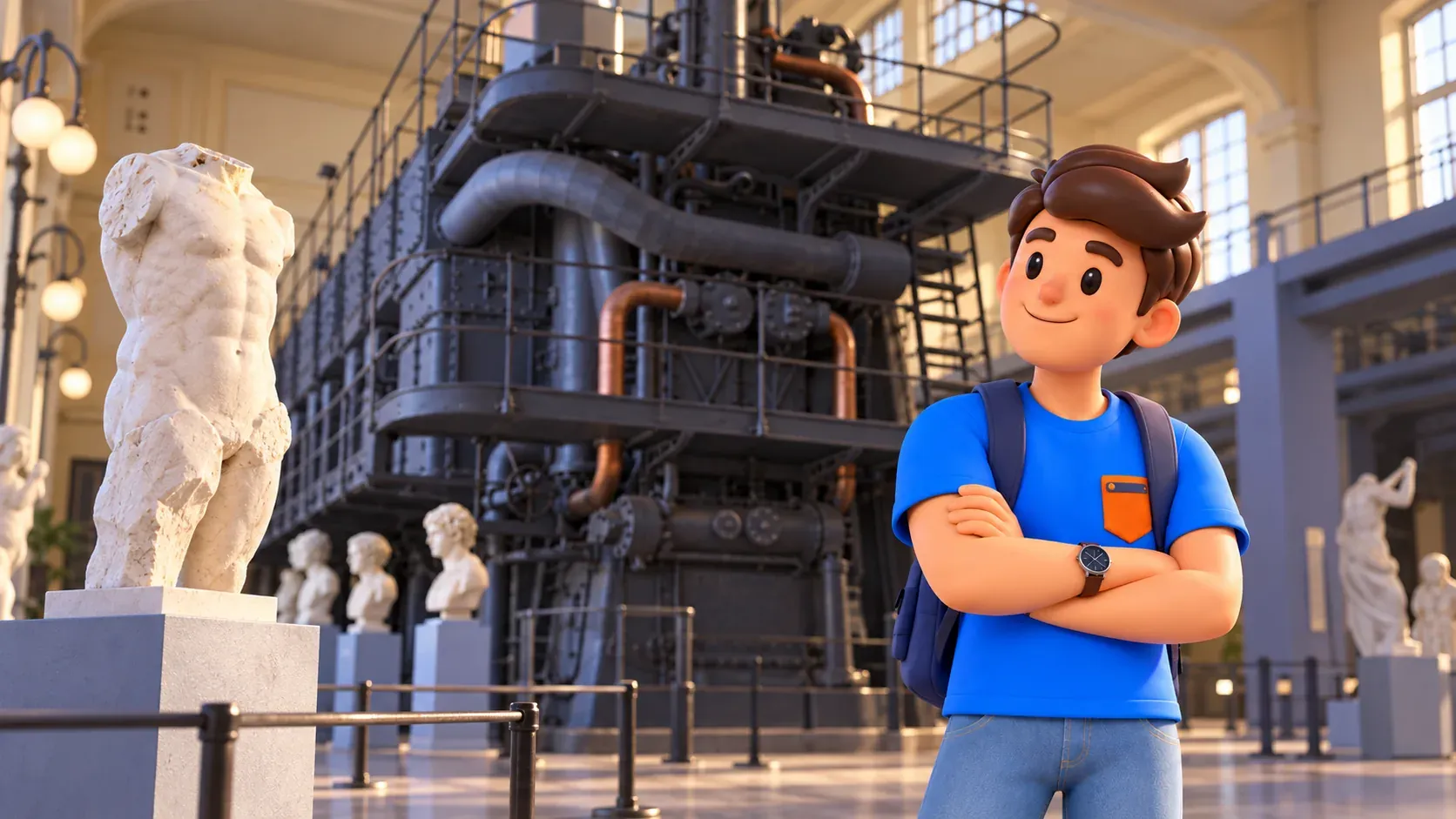
Centrale Montemartini on Via Ostiense gives ancient art an unusual setting. Sculptures stand alongside equipment from a former power station. The museum's history began in 1997 when objects from the Capitoline Museums were moved here during works. The relationship between machinery and ancient figures became a reason to visit in its own right.
Give the morning to the museum rather than a large circuit of all Ostiense. Compare the expressive human body in sculpture with the functional forms of the machines, without trying to study every object. The normal schedule is Tuesday to Sunday, with final admission before closing. Consult the museum's notices and date-specific conditions before travelling.
Two and a half hours is a planning block including entry and exit, not an official visit duration. Afterwards, have lunch and return without another mandatory museum. This is an alternative fifth day; the Appian Way stays for another occasion. Choosing one direction provides a memorable experience while leaving energy to enjoy the end of your stay.
What to prepare before day one
Save booking confirmations, check names and documents, and review entrance approaches and current calendars. Establish which payment method the selected provider accepts and which you can use, without assuming a familiar method will work abroad. Comfortable shoes, water, suitable weather protection and opportunities to sit down affect the trip more than one further optional stop.
RoadMe makes it easier to reconcile different interests and paces with a personal programme for the whole trip, based on your dates, preferences and budget. Using route ideas on the ground becomes more convenient and effective, leaving evenings for rest and the city itself.
For only three full days, use our three-day Rome plan. With five, keep the freedom to leave a half-day open or return to a favourite square. Extra time is valuable because it lets you choose the depth of the experience and your own rhythm, rather than filling every available minute.


