
One Day in Venice: A First-Visit Walking Itinerary
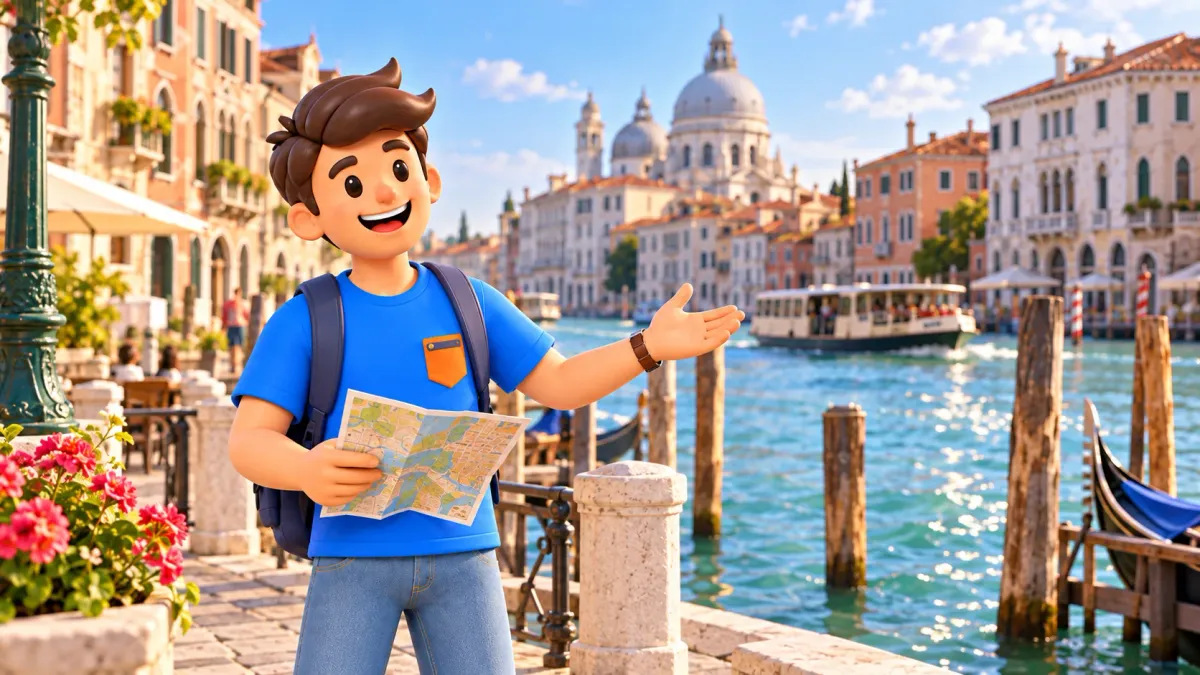
With one day in Venice, build your visit around Rialto, St Mark’s Square, one major interior and a walk into Dorsoduro. This gives you the Grand Canal, the city’s ceremonial centre and a different neighbourhood without turning every hour into another admission. Leave Murano and Burano for a separate trip rather than trying to fit islands into an already full day.
This itinerary starts at Venezia Santa Lucia railway station and finishes in Dorsoduro. Allow roughly nine hours for walking, lunch, pauses and one ticketed visit. The timings are planning estimates, not measured journey times: crowds, your chosen lanes and your own pace will change them. The return to the station is an additional part of the day, not included in the final waterfront block.
Choose one major visit before arranging the day
The route has four anchors: Rialto in the morning, the San Marco area around midday, one substantial visit and Dorsoduro afterwards. Small bridges and squares connect those anchors. Keeping some time between them makes the day more enjoyable and gives you room to notice Venice rather than concentrating entirely on your next booking.
Choose the Doge’s Palace if you are interested in the Venetian Republic and its civic power, or St Mark’s Basilica if religious art and the church interior matter more. As planning allowances, reserve about two hours for the palace or around one to one and a half hours for your chosen basilica visit. Extra sections and collections need additional time.
For a day planned around your own interests, try RoadMe: the app creates a personal itinerary using your dates, interests and preferred pace. It makes arranging a coherent trip more convenient, with a programme that reflects what you actually want to experience.
Your booked entry time takes priority over the example below. If the best available slot is early, begin at San Marco and rearrange the walking sections. If you arrive late, keep Rialto, the square and a shorter neighbourhood walk. The useful question is which experiences deserve your time, rather than how many names can fit on a checklist.
| Approximate time | Area | What the block includes |
|---|---|---|
| 09:00–10:30 | Station to Rialto | Walking and first stops |
| 10:30–11:30 | Rialto to San Marco | The bridge, views and approach to the square |
| 11:30–14:30 | San Marco | The square, one interior and lunch |
| 14:30–16:00 | Towards Accademia | A walk through San Marco with pauses |
| 16:00–18:00 | Dorsoduro | Salute, Punta della Dogana and the waterfront |
This is a distribution of time, not a promise of admission. On Sundays, a basilica visit needs an available afternoon slot, so shorten Dorsoduro accordingly. A longer palace visit may also push lunch later. Keep a small food break available rather than letting an ambitious schedule turn the whole afternoon into a tired walk.
Start at Santa Lucia and walk towards Rialto
Venezia Santa Lucia is the station in historic Venice. Venezia Mestre is on the mainland and is not an interchangeable starting point. Check the station printed on your ticket before calculating how much sightseeing time you have. Outside Santa Lucia, pause by the Grand Canal: the boats and palace fronts provide an immediate introduction to the city’s different patterns of movement.
For this version, cross Ponte degli Scalzi and make your way through Santa Croce towards Rialto, using Campo San Giacomo dall’Orio as a possible intermediate landmark. Do not expect an uninterrupted promenade along the Grand Canal. The pedestrian route regularly leaves the water and follows lanes through the neighbourhood; those turns are part of the journey.
Allow approximately an hour to an hour and a half for this first section with stops. Adding the Frari as a proper interior visit changes the balance of the day. If you would rather spend longer in Santa Croce and San Polo, reduce the museum commitment at San Marco. Choosing a different emphasis is more useful than trying to preserve every original stop.
At Rialto, give yourself two perspectives: a view from the bank and another from the crossing. Shops on the bridge, the stone arch and boats below create different scenes. The present bridge belongs to the late-sixteenth-century rebuilding associated with Antonio da Ponte, but its appeal also comes from its continuing place in the working commercial district.
The fish market is on the San Polo side. Check its trading calendar if seeing the market in operation matters to you; it should not be presented as an everyday certainty. A closed or finished market does not make the neighbourhood a wasted stop. You can still enjoy the canal views before crossing towards San Marco.
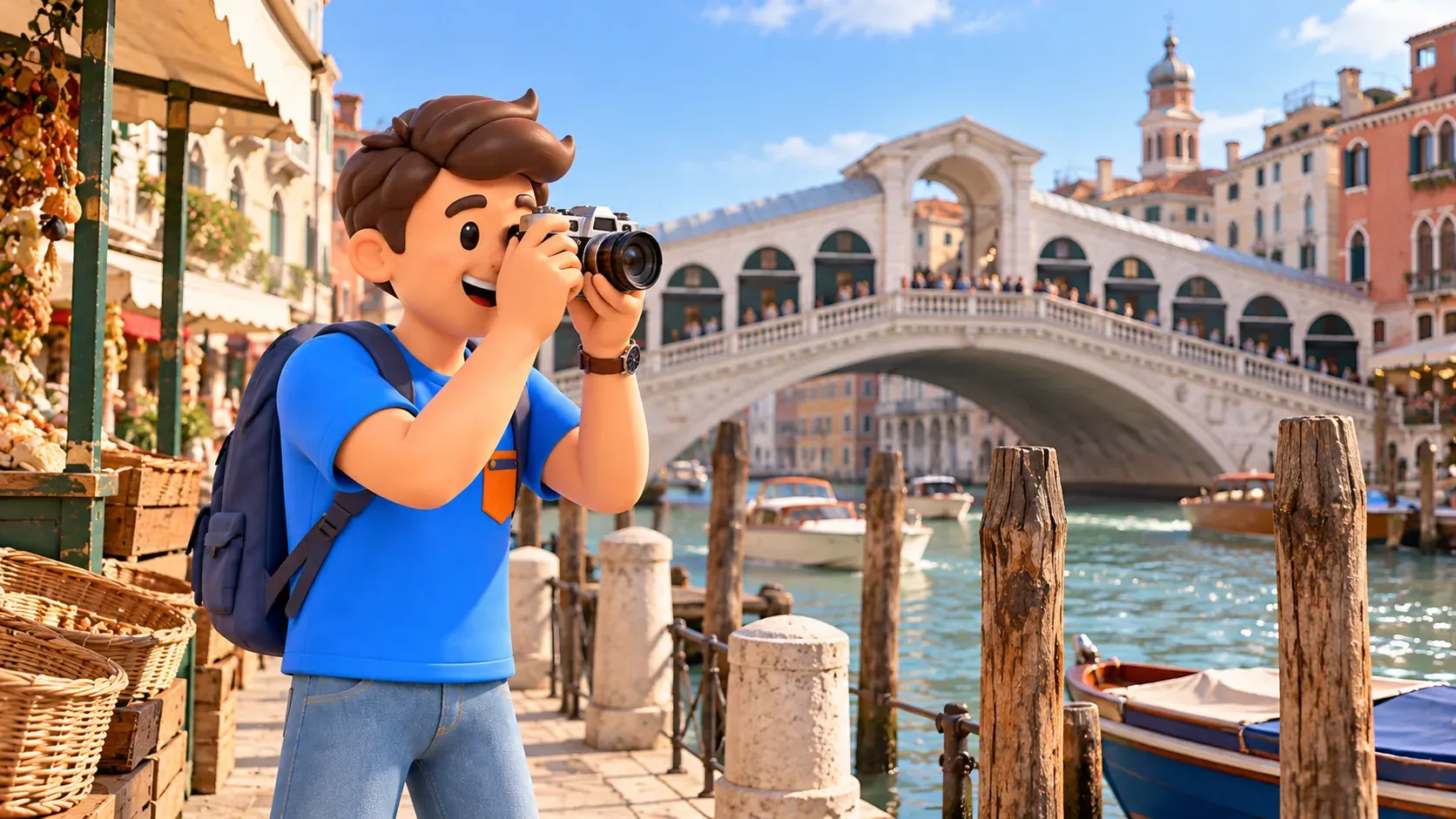
San Marco: understand the setting, then choose an entrance
From Rialto, cross to the San Marco side and continue towards the square. Allow roughly half an hour to an hour with pauses. Avoid scheduling a booked entrance immediately after your theoretical walking time: narrow approaches can be busy, and the visitor entrance may be around a different side of the building from the facade you first notice.
Begin with the whole setting: the basilica, the campanile and the long fronts of the Procuratie. Then look more closely at the basilica’s combination of marble, mosaics, sculpture and domes. Choosing a few visible details is a good introduction; you do not need an exhaustive architectural history to appreciate how different the church looks from its neighbours.
The Doge’s Palace introduces the civic side of Venice. Its role as the Republic’s seat of government gives the visit a clear purpose beyond admiring a grand residence. From outside, notice the arcades and the relationship between the open lower levels and the substantial upper part. The square becomes easier to understand when you distinguish its religious and governmental landmarks.
If you choose the Doge’s Palace
The official schedule checked on 17 October 2026 lists opening from 09:00 to 19:00 between April and October, with last admission at 18:00. From November through March, closing is 18:00 and last admission 17:00. Closing procedures start before the advertised end. For a first visit, choose a daytime slot instead of building your plan around the last possible entry.
One condition matters for planning: holders of the St Mark’s Square Museums ticket without a specific entry time are admitted to the palace from noon. That museum combination does not include St Mark’s Basilica. Special palace itineraries also have their own arrangements, so check what your selected product covers rather than assuming that every similarly named ticket grants the same access.
If you choose St Mark’s Basilica
The official ticket FAQ lists tourist access to the basilica from 09:30 Monday to Saturday and from 14:00 on Sundays and religious holidays. Last admission is 16:45, with closing at 17:15; worship and special occasions can change arrangements. The museum and Horses Loggia have a separate schedule, so a Sunday morning museum opening does not mean the basilica itself is available.
Choose by the parts you want to see. The basilica, Pala d’Oro, museum with the loggia and bell tower are distinct visits or components of combinations. If the church interior is your priority, confirm that your ticket includes it. Keep the booking confirmation handy, with the correct date and time, and leave time to find the appropriate entrance.
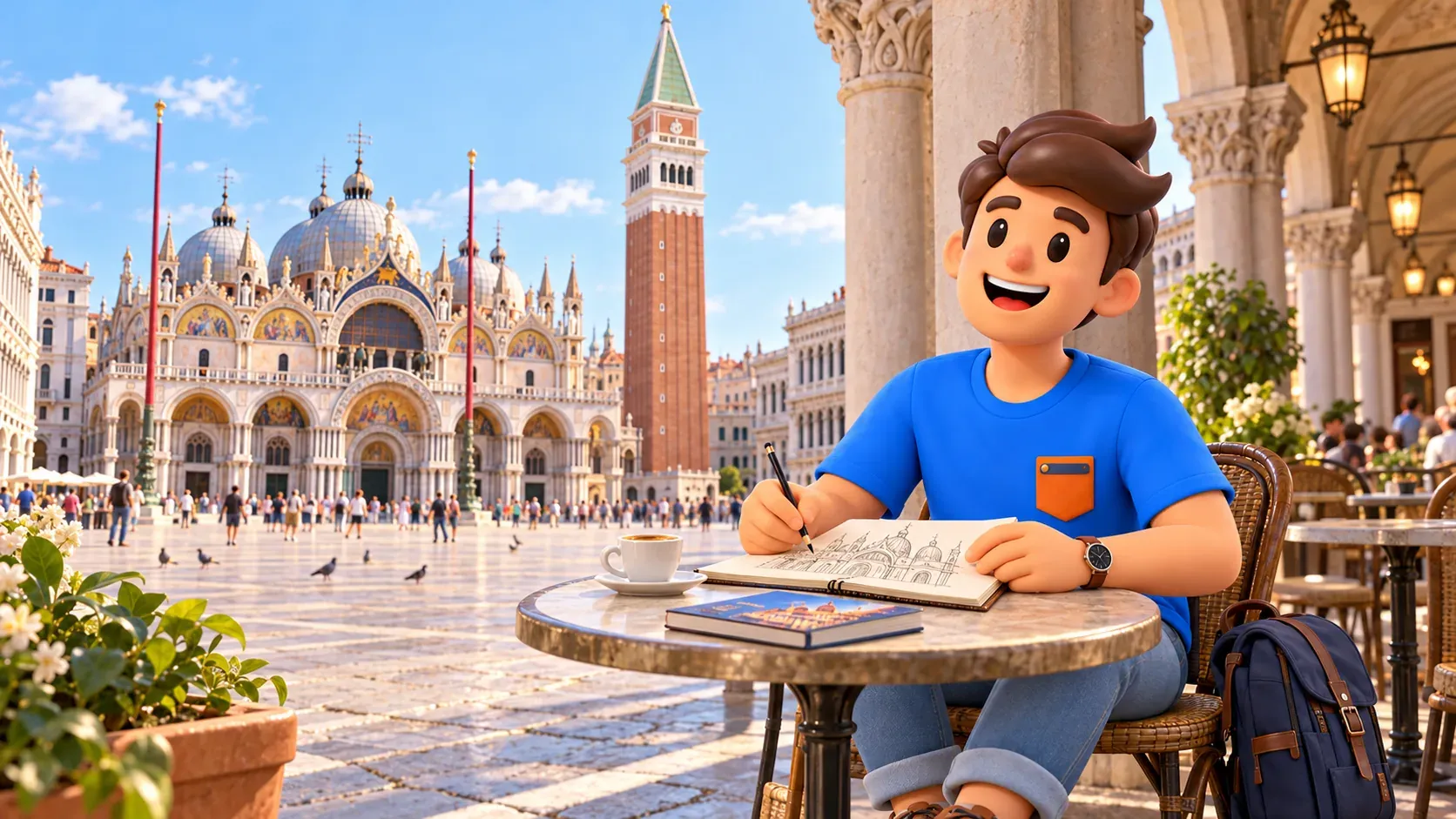
Lunch and the walk towards Ponte dell’Accademia
Set aside about 45–60 minutes for lunch and a proper break. Read the menu and service conditions before sitting down. There is no need to promise that any side street will be cheap: choose a place that suits your budget and the direction of your walk.
Continue through San Marco towards Campo Santo Stefano and Ponte dell’Accademia. La Fenice or the area around Scala Contarini del Bovolo can provide a short exterior detour if you still have energy. Entering the theatre or climbing the staircase adds another timed activity. Treat either as a deliberate substitution, rather than letting a supposedly brief detour silently absorb the afternoon.
At the Accademia bridge, pause for the view along the Grand Canal towards Salute. This is a natural point to decide whether to continue or begin your return. Keep the crossing clear when taking photographs: the bridge is a practical connection used by residents as well as a place where visitors stop for the panorama.
If art, architecture or waterside walks matter most to you, let RoadMe build a personal plan around that preference. The app works out a sequence suited to your interests and pace, making it easier to turn a general Venice itinerary into a day that feels like your own.
Finish in Dorsoduro: Salute and the waterfront
After crossing Accademia, walk towards Santa Maria della Salute. The Gallerie dell’Accademia and Peggy Guggenheim Collection are nearby choices for a different version of the day, rather than automatic extra admissions. If modern art is the main reason for your trip, make the collection your major visit and reduce the interior programme at San Marco.
Salute was built as a votive church in connection with the seventeenth-century plague. Knowing that background adds meaning to its commanding position at the entrance to the Grand Canal. On a first walk, concentrate on its silhouette, steps and facade; a fuller exploration of the interior can become the focus of a future visit.
This itinerary uses an exterior stop at Salute, so the walk does not depend on arriving before an interior closing time. Continue to Punta della Dogana, then towards the Zattere waterfront if you wish. The exhibition inside the former customs building is a separate visit that needs its own ticket, available time and attention.
Keep the final stretch flexible. You might stop at a café, look across towards Giudecca, walk further or finish early. Sunset changes with the season, so the example timetable does not guarantee evening light at the same hour throughout the year. In autumn or winter, reaching the water earlier may suit you better than extending the museum block.
Practical checks and ways to shorten the day
Separate your budget into admissions, meals and transport. The main exterior stops can be connected on foot. A waterbus journey is an optional transport choice, rather than a required payment for following the walking plan. The total depends on the tickets and services you select, so a single fixed cost would be misleading.
Check the city’s Contributo di Accesso calendar for your travel date. As of 17 October 2026, the official portal says the 2026 experiment has ended and the charge has not applied since 27 July. Arrangements for later periods need separate confirmation; do not reuse an old year’s dates for a future trip.
Before continuing beyond Accademia, check your departure time and allow separately for getting back to Santa Lucia. If you choose a vaporetto, include waiting and boarding time. Straight-line distance is not enough for planning a Venice connection. Finish at Accademia or after San Marco if that gives you a more comfortable return.
For rain, extend your chosen indoor visit and shorten the final waterfront walk. For tired legs, remove detours. Travellers with a pushchair or limited mobility need a separately checked route: this one includes bridges and steps and is not presented as step-free. A successful first day can end with fewer stops and still give you a clear, memorable sense of Venice.


