
One week in Venice: alternate museums, neighbourhoods and islands
A week in Venice works well as a changing rhythm: museum, neighbourhood, island, then another museum. The experiences vary without each day becoming another instalment of a long checklist. This plan uses three main museum visits, two neighbourhood walks and two separate lagoon outings. Evenings remain available for eating, resting and discoveries you actually want to make.
The framework assumes seven full sightseeing days. Account for arrival and departure separately: seven calendar days including travel do not necessarily give you seven days in the city. There are ways to shorten the plan below. Day numbers do not mean Monday or Tuesday either. Choose a sequence, then fit it to actual dates and confirmed admissions.
Give each day one main purpose
Decide what you want to remember from each day. The Doge’s Palace introduces government, Cannaregio connects history with a living quarter, and Murano explores craft. These are different subjects worth separating. After a substantial museum, you do not need two more. Unfilled time helps you absorb what you have seen and pay attention to the city around it.
Try RoadMe to develop a personal plan for your whole trip around your dates, interests and pace. It makes distributing art, neighbourhoods and islands across a week much easier than coordinating separate attraction lists yourself.
Mark confirmed visits first, then give each a nearby walking continuation. Travel from your accommodation to the start and back is additional every day. For Murano and Torcello, also add both boat journeys, every wait and the approach to the departure landing in Venice. Time ashore is not the whole duration of a lagoon outing.
The allowances below describe core blocks, not compulsory occupation from breakfast to bedtime. A full lunch is included only on day five; the other days have smaller breaks, with meals added separately. If a visit takes longer, enlarge its block or shorten what follows. Trying to restore an exact schedule by removing rest defeats the purpose of a longer stay.
The week at a glance
| Day | Main subject | Core allowance |
|---|---|---|
| 1 | Doge’s Palace and San Marco | About 4 hours |
| 2 | Cannaregio outdoors | About 3 hours |
| 3 | Murano: craft and canals | About 3 hours ashore |
| 4 | Guggenheim and a short Zattere walk | About 4 hours |
| 5 | Rialto and San Polo | About 2.5 hours including lunch |
| 6 | Torcello and lagoon history | About 2.5 hours ashore |
| 7 | Accademia and free time | About 3 hours |
Day one: the palace as a system of government
Start at the Doge’s Palace entrance through Porta del Frumento, on the Piazzetta San Marco side. Look beyond a ruler’s residence towards the rooms of councils, administration and justice. Large chambers and ceremonial painting help explain how the republic presented its authority. That provides a manageable subject for a first visit without requiring a complete political chronology.
Allow about two hours for selected parts of the ordinary route. This does not cover every room and special tour. The four-hour block comprises 120 minutes inside, 30 for entry, 30 for all short local walking, 30 around the square outside and 30 for coffee. A full lunch and travel from accommodation are additional.
Holders of St Mark’s Square Museums tickets without a specific entry time are currently admitted to the palace from noon. Do not automatically give that ticket an early morning slot. The basilica, its bell tower and special palace routes have separate arrangements. Finish on the square rather than treating every neighbouring doorway as part of the same two-hour visit.
Day two: Cannaregio, with history among homes
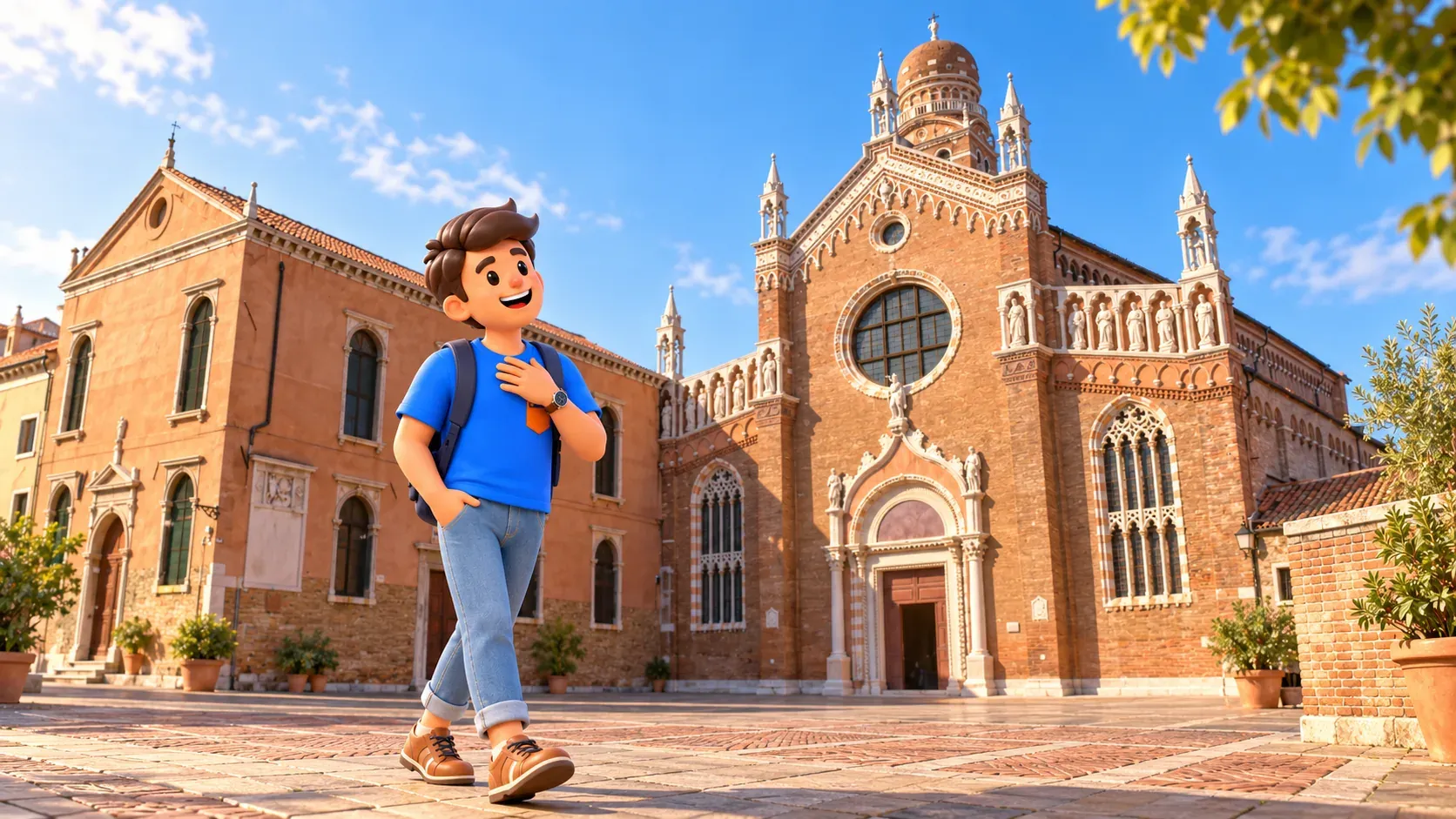
Begin at Campo del Ghetto Nuovo, then walk towards Ormesini, a short Misericordia section, the Sensa area and Campo dei Mori. Finish outside Madonna dell’Orto. Allow about three hours for walking, looking, a coffee break and flexibility. Reaching the start, returning afterwards and a full lunch sit outside that block. There is no need to cross the whole city again.
In 1516, the authorities required Venice’s Jews to live in a designated quarter. Approach the Ghetto as a place of that history and of the present community. Pause at memorials, read inscriptions and respect private entrances. An outdoor walk does not include synagogue interiors or the museum collection; those require a separately confirmed format and calendar.
The scale changes as you continue: tall houses around a square give way to longer canal views, then small stone figures and a brick church front. You do not need an attraction at every interval. Madonna dell’Orto has a connection with Tintoretto, but today an exterior look is enough. Substantial study of its paintings needs additional time.
Day three: give Murano its own outing
Arrive at Murano Colonna, follow Fondamenta dei Vetrai towards San Pietro Martire, cross Ponte Longo and continue along Riva Longa and Fondamenta Giustinian towards the Glass Museum and Santi Maria e Donato. The basic version views churches and museum outside. Finish at the Museo landing, checking your ACTV return direction. Colonna and Museo are different stops.
In 1291, the authorities ordered furnaces to move to Murano for fire prevention. That was a turning point in the craft’s history, not the invention of glass. Compare a few objects in shop windows: outline, transparency and colour against light. Buying is optional. The relationship between material, skilled work and island surroundings is interesting without acquiring a fragile souvenir.
The basic 180 minutes ashore include all local walking, orientation, exterior stops and a small break. Add both water journeys and waiting. For the Glass Museum, allow another estimated 60–90 minutes, making four to four and a half hours on the island. A working furnace and a craft demonstration are different visits, not automatic parts of museum admission.
Our Murano walk gives the detailed sequence and shorter alternatives. Burano is not required today. Keep the time after returning for food and rest instead of attaching a late museum entry in central Venice, which would make every minute on the water feel like part of a deadline.

Day four: twentieth-century art and a short walk
Start at the land entrance to the Peggy Guggenheim Collection in Dorsoduro. In her former home, Palazzo Venier dei Leoni, the museum presents European and North American twentieth-century art. After the Doge’s Palace, this changes the artistic language. Choose a few works that raise a question rather than trying to memorise every name or cover every exhibition.
Afterwards, use public streets through San Vio, the Campo della Carità area and Rio Terà Antonio Foscarini to the Gesuati on the Zattere. Finish outside by the water. This is a short continuation, without an obligatory circuit of Salute, San Trovaso and the whole district. The museum garden is not a public shortcut through the neighbourhood.
The 240-minute block contains 120 inside, 30 for entry, 30 for all local walking, 30 looking at the Zattere and 30 for coffee. Lunch is additional. The Guggenheim closes on Tuesdays and 25 December; ordinary last entry is 5pm, with closing at 6pm. If your fourth day is Tuesday, exchange it with day five’s outdoor walk.
Day five: Rialto, San Polo and lunch
Start at Rialto’s eastern end, cross to the west and continue past San Giacomo di Rialto through the Sant’Aponal area to Campo San Polo and the Frari. Finish outside the Frari. This walk does cross the Grand Canal on Rialto. It differs from an outing that simply looks at the bridge from a bank.
Rialto connects late sixteenth-century stone architecture with the history of commerce, while Campo San Polo offers a more open residential city space. Those two subjects are enough for today. Using the Frari as an exterior landmark does not include church admission. The fish market is not an obligatory stop assumed to be trading on any day of the week.
Budget about 150 minutes: 35 for all walking and reaching a table, 55 for observation, 40 for lunch and 20 spare. If the restaurant needs longer, extend the block. You can finish after eating. This day is deliberately lighter than museum days; it does not need another large collection simply to make all seven days equal in length.
Day six: Torcello as a separate lagoon journey
Start and finish at Torcello’s ACTV landing. The main public path along Fondamenta Borgognoni follows the canal towards the churches. Look at the Devil’s Bridge from the bank; crossing its unrailed span is unnecessary. Continue by the normal public approach to the square, then return along the same main route to the landing. Private gardens are not part of the connection.
Santa Maria Assunta, Santa Fosca and the small stone throne reveal another historical layer of the lagoon. The name “Attila’s Throne” does not prove the seat belonged to the conqueror. An exterior visit is enough for this plan, without sitting on the historic stone. The basilica’s mosaics are inside: add their time and admission arrangements separately if they are your priority.
Allow 150 minutes ashore: 35 for all walking out and back, 45 for observation, 30 for coffee, 20 for arrival and orientation, and 20 spare. Lunch is additional. Add both boats, every wait and the approach to your Venice stop. Check your date, any change of boat and the return instead of relying on an old travel report.
Day seven: Accademia, then an open remainder
The Gallerie dell’Accademia at Campo della Carità return to Venetian painting of earlier centuries. After twentieth-century art, the interest shifts to colour, large religious compositions and changing approaches to painting. Choose one subject or a few rooms. Two hours inside is an estimate for a selective introduction, not a promise to cover the entire collection and temporary programme.
The three-hour block has 120 minutes inside, 25 for entry, 15 for all short local walking and 20 for rest. Start and finish at Campo della Carità; lunch and accommodation travel are extra. The published ordinary schedule is Tuesday–Sunday. Do not use old reduced Monday hours: confirm any Monday opening through the current calendar and move the day if necessary.
RoadMe makes turning these choices into a personal plan for the whole trip much easier, with more time for the subjects you enjoy. Try arranging museums, walks and rest around your own pace while keeping parts of the week open.
Adjust the week to travel days and the calendar
If seven calendar days leave only five full days, do not compress all seven blocks. You could keep the first five and postpone Torcello and Accademia, or exchange a museum for one you prefer. A late arrival needs only food and a nearby stroll. Departure day starts with luggage and transport, then whatever time genuinely remains.
Compare museum tickets by actual inclusions: the civic Museum Pass does not automatically unite Accademia, Guggenheim and everything else. Likewise, a week-long transport pass is not necessarily economical for two island days. Count intended journeys and validity periods first, then choose a product. Buying a pass does not oblige you to add visits merely to use it.
Assess bridges, landings and building access for your own needs. In rain or difficult navigation conditions, exchange an island day and a city day after checking the operator. For a shorter stay, see our four- or five-day Venice plan. A week is valuable because it lets you choose, return to a favourite place and leave time for ordinary city life.


