
Four or five days in Venice: a slower itinerary

Four or five days in Venice give you room for the famous centre, an art collection chosen for your interests and a separate lagoon day. Use the extra time for Cannaregio, Castello and returning to a neighbourhood you enjoyed. The reward is a more personal trip, with substantial visits, unhurried walks and evenings that do not need another booking.
This itinerary provides a framework for four full days, followed by useful ways to spend a fifth. Walking and visit durations are planning estimates, rather than measured journeys or guarantees. Shorten any section when your energy or the weather calls for it.
Start with full days, rather than hotel nights
Four nights can mean three full sightseeing days and one short evening. Before selecting attractions, mark your arrival, luggage arrangements, check-in and departure on a calendar. A partial day works well for a nearby neighbourhood. A lagoon outing belongs in the middle of the stay, where a delayed return does not put a train or airport transfer under pressure.
Give each full day one main purpose. Start with the historic centre, follow with art and Dorsoduro, keep a day for the lagoon, and choose a neighbourhood for the fourth. A fifth full day lets you explore the other neighbourhood or return to an interest you deliberately left aside.
To turn these choices into a complete trip shaped around your dates, interests and pace, try RoadMe: the app works out a personalized itinerary. It is a much more convenient way to connect the whole stay than repeatedly fitting separate recommendations together yourself.
| Day | Main focus | Keep flexible |
|---|---|---|
| One | Rialto and San Marco | The evening after your main visit |
| Two | One art collection and Dorsoduro | Lunch and waterfront walking |
| Three | One island or Murano with Burano | Your return to Venice |
| Four | Cannaregio or Castello | The second half of the day |
| Five, if available | The other district or a particular interest | An easy finish to the trip |
The numbers describe a sequence, not fixed weekdays. Move the art day if your chosen museum is closed, or exchange an island outing with a city walk when navigation conditions are poor. This flexibility is easiest to preserve when you book a few important visits first and leave the spaces between them open.
Day one: the centre and one substantial interior
Connect Rialto, Piazza San Marco and the Piazzetta, beginning on the side nearest your accommodation. A confirmed admission time should anchor the walk. If you arrive at Santa Lucia station, allow extra time to reach Rialto; if you are already staying near San Marco, there is no benefit in returning to the station to reproduce somebody else's starting point.
At Rialto, look at the bridge from the bank as well as from its central crossing. Its late sixteenth-century stone arch suits a place associated with commerce. Boats, waterside entrances and everyday traffic reveal the Grand Canal as part of a working city.
At San Marco, pause to understand the ensemble before entering a building. The basilica's marble, mosaics and domes express a different aspect of Venice from the Doge's Palace, the former seat of the republic's government. Choose your first major interior according to that interest. Allow roughly one and a half to two hours, adjusted to the actual ticket and visit you select.
If both buildings matter, a longer stay lets you visit them on different dates. Their proximity does not require consecutive bookings. On Sundays and religious holidays, tourist entry to the basilica normally starts at 2 p.m.; the museum and loggia have separate arrangements. This distinction matters more than a general instruction to arrive at every monument early.
After lunch, leave around an hour or two for the waterfront towards San Zaccaria and nearby lanes. You can shorten it or return to the square without jeopardizing another reservation. For a shorter stay, the three-day Venice itinerary with an island day offers a more compressed framework. Here, the extra time is intended to widen your choices.
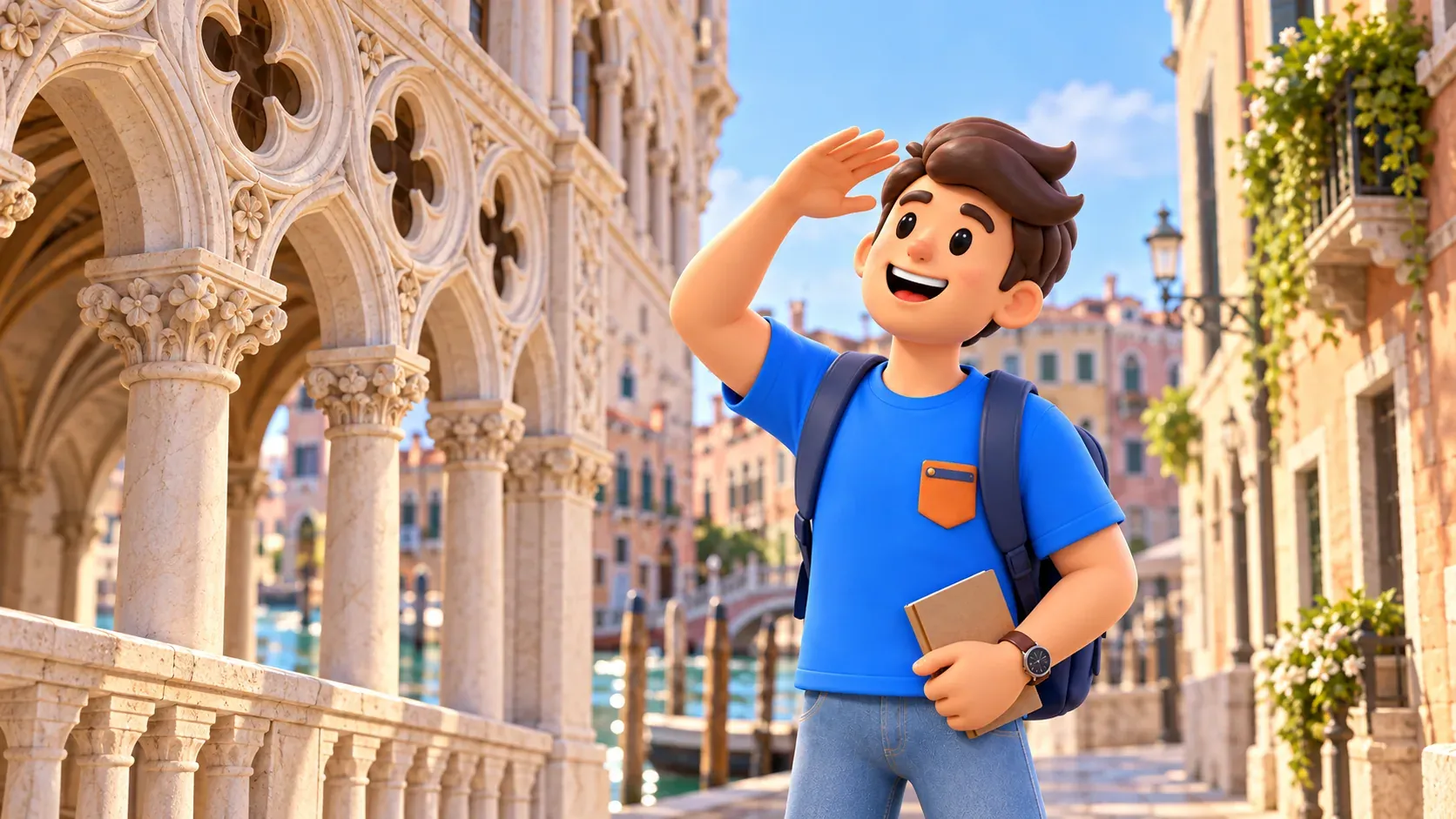
Day two: choose your art, then enjoy Dorsoduro
Begin with the kind of art you want to see. The Gallerie dell'Accademia suit an interest in Venetian painting; the Peggy Guggenheim Collection offers a twentieth-century focus. For painting experienced within a historic setting, consider the Frari or Scuola Grande di San Rocco instead. These last two are in San Polo, so they change the beginning of the day.
Choose one principal visit and give it approximately one and a half to two hours, followed by a proper lunch break. From an art collection in Dorsoduro, connect the Accademia area, the Salute and the waterfront at the Zattere. From the Frari or San Rocco, approach through Campo Santa Margherita and San Barnaba, selecting a manageable section rather than following every possible branch.
The Salute needs only a little historical context to become more than a skyline feature: it is a votive church associated with the seventeenth-century plague. Its position at the entrance to the Grand Canal explains its commanding presence. An exterior pause is enough for this route; you do not have to add an interior visit at every church you pass.
As checked on 17 October 2026, the Peggy Guggenheim Collection is closed on Tuesdays and 25 December, with last admission on ordinary opening days at 5 p.m. Check the date and available entry slots before arranging your day. If you choose San Rocco, note that the Scuola itself does not sell admission tickets online; a third-party tour is a separate product.
Near San Trovaso, view the boatyard from the opposite public bank. Its working yard is not an unrestricted extension of your walk, and repairs are not a promised performance. The stop still adds a useful craft perspective. Continue towards the Zattere or finish nearer your accommodation, depending on the art visit you chose and how much walking feels comfortable.
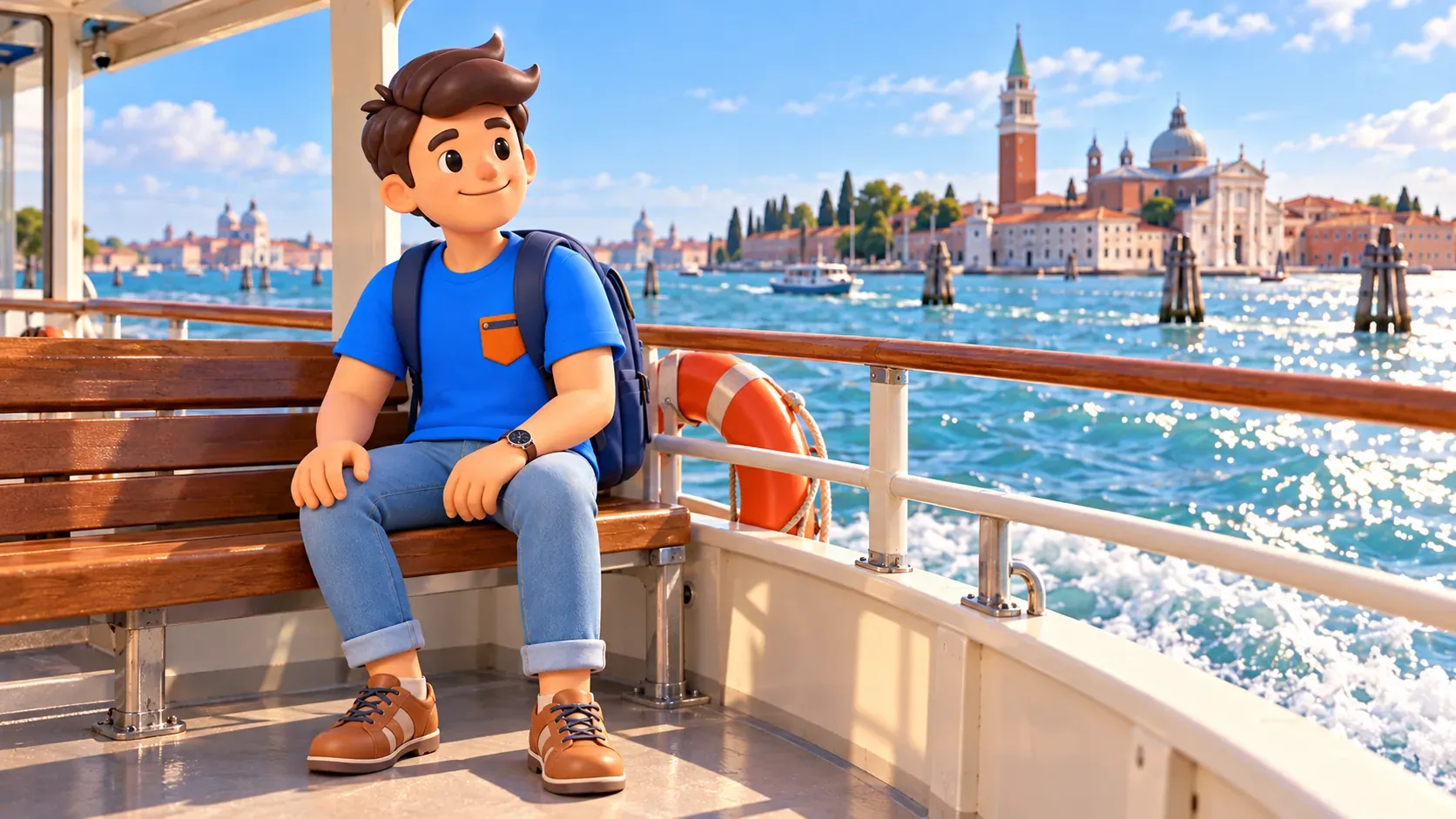
Day three: give the lagoon a clear priority
Choose one island in depth or two more briefly. Murano offers glassmaking history and a museum; Burano adds colorful houses, small canals and the lace tradition. If both subjects appeal, give them a separate full day. If a detailed museum visit and long lunch sound better, one island offers a calmer experience without needing a second departure.
Fondamente Nove is a useful reference point for the northern island corridor. Check the actual stop, service and return options with the operator for your travel date. Walking to a pier, waiting and boarding all add to the time on the vessel. Avoid attaching an important late museum entry in central Venice to a return from two islands.
If Burano's Lace Museum is important, its Monday closure should influence the date. On the ordinary opening days checked for this article, it operates from 10 a.m. to 4 p.m., with last entry at 3:30 p.m. You can still walk around the island when the museum is closed, but that is a different plan from a craft-focused visit.
Torcello is an alternative if that particular island interests you; it need not become an automatic third stop. Keep the evening after your lagoon outing for returning, eating and resting. Review the operator's service notices before leaving, since weather can affect navigation. A clear return plan is more valuable than a timetable copied from an older travel article.
Day four: choose Cannaregio or Castello
Cannaregio: the Ghetto and northern canal banks
For a manageable morning, connect Campo del Ghetto Nuovo, the Ormesini and Misericordia area, and, if it suits your pace, Madonna dell'Orto. Allow roughly three hours with pauses; an interior visit needs additional time and a separate conditions check. Choose the start and finish around your accommodation instead of extending the walk across Venice for the sake of a longer list.
The republic established the Ghetto in 1516 as an area where Jews were compelled to live. It remains connected with a living community, so approach it as a place of history and religious life. Walking through the square does not include access to synagogues. Check tour availability and the religious calendar separately before making any interior booking.
Beyond the square, notice the changing scale: tall houses, long canal edges, small bridges and more open waterside stretches. Cannaregio is a living, popular district, rather than a promise of empty streets. After lunch, you can return to your accommodation or remain nearby, with no need to cross the city again before the evening.
Castello: the Arsenale and the way to San Pietro
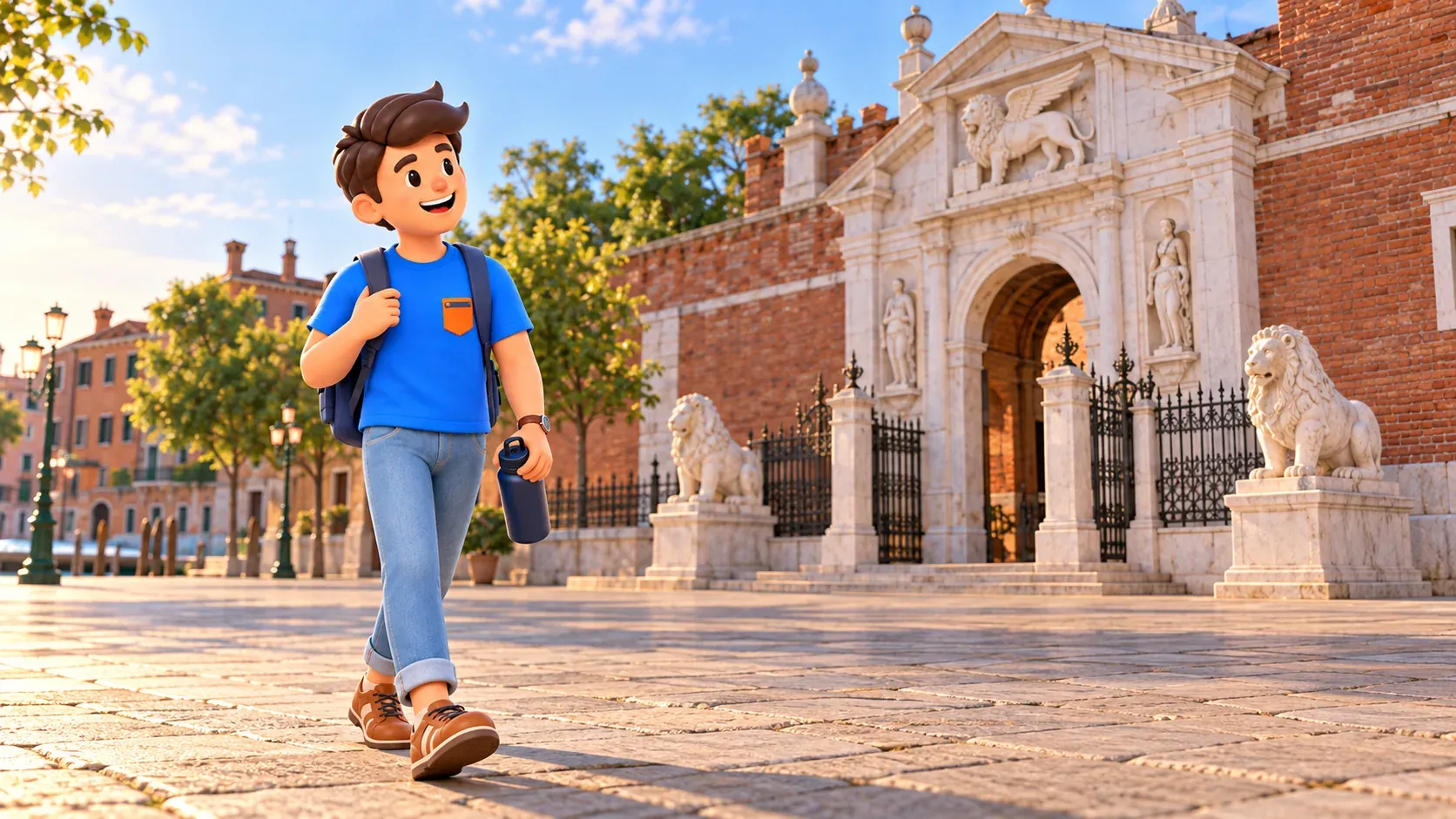
An alternative is to start around San Zaccaria, walk towards the main Arsenale gates, then continue to Via Garibaldi and San Pietro di Castello. This is a separate eastward walk, rather than a small addition after Cannaregio. Give it about half a day with pauses and lunch, shortening the final section when you need a rest.
The Arsenale was associated with shipbuilding and supplying the Venetian republic's fleet. That context reveals an industrial complex behind the imposing entrance. This plan includes an exterior look, not automatic admission to exhibitions, events or internal spaces. Visiting an event there is a distinct activity whose dates, ticket and duration need their own place in your trip.
Day five: explore another district or deepen one interest
With a fifth full day, the easiest choice is the district you left out on day four. Cannaregio and Castello can then each have a morning and lunch, instead of competing for one evening. Alternatively, return to the palace, basilica or art collection you consciously postponed. The extra visit is worthwhile when it follows curiosity rather than a sense of obligation.
If you want the whole stay to reflect a love of art, history, crafts or leisurely walking, try RoadMe: the app prepares a personalized trip plan around your preferences. It makes the extra day easier to connect with the rest of your itinerary and more useful for what you actually enjoy.
A short fifth day is better suited to a familiar neighbourhood and an easy breakfast. Collecting luggage and reaching your departure already occupy part of the time. A useful test is to describe the day's purpose in one sentence: if the answer contains several unrelated outings, decide which matters most. Keep the others for another visit.
Practical checks that protect the slower pace
After choosing visits, make a calendar of confirmed entries, closures and departure buffers. A longer stay does not automatically make a transport pass worthwhile: compare its actual conditions with the journeys you intend to take, especially the lagoon day. Select transport around the itinerary. A small walking district may require no boat journey at all.
This leisurely framework is not a step-free route guarantee. Check bridges, pier approaches and individual building access if you have mobility requirements or a stroller. Mark comfortable places to pause and avoid carrying large luggage through a sightseeing day. Share personal priorities with your companions so everyone has something meaningful without creating several competing daily schedules.
Leave room for lunch, shorten exposed stretches during heat or rain, and keep accommodation details, stop names and entry confirmations easy to find. Four or five days are valuable because they let you return to a reflection on a canal, notice a facade and stay longer in a place you like. The unfilled space is part of the trip.


