
Venice Bridges with Stories: What Their Familiar Names Mean
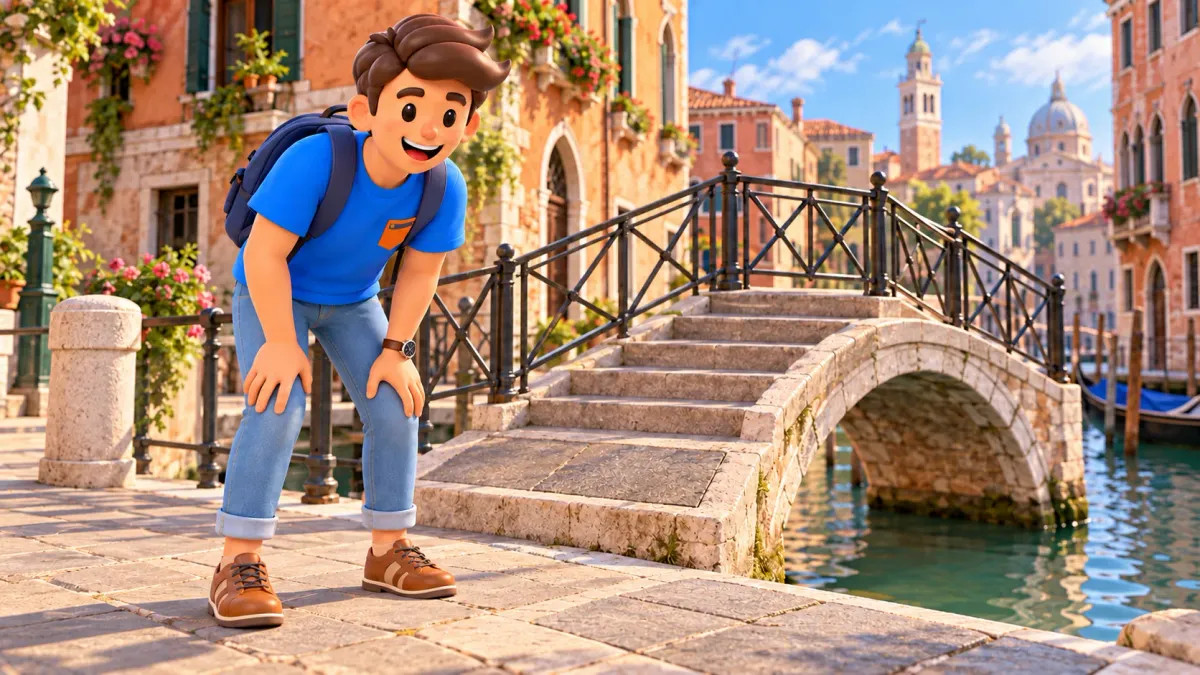
Venice’s bridge names reveal work, neighbourhood habits and history behind the familiar views. The Straw Bridge recalls trade, the Bridge of Fists remembers old contests, and Accademia connects a crossing with its artistic surroundings. A name does not necessarily identify the age of the present structure or the material from which it is made.
Begin with a walk of around three hours, from Ponte della Paglia beside the Doge’s Palace across Accademia to Ponte dei Pugni and Campo Santa Margherita. See the Bridge of Sighs from outside at the start. Its internal passage, museum rooms and a gondola ride are separate activities. Four names do not mean four public street crossings.
Start with the name, place and purpose
Ask three questions at each bridge: what does its name mean, what does the crossing do, and what can you see today? The answers may belong to different periods. An old name can survive repairs, changes of material and the disappearance of the activity that first inspired it. Connect a short story with something visible rather than memorising many dates.
Try RoadMe to have the app develop a personal plan for your whole trip around your interests, dates and pace. It makes connecting a bridge walk with suitable museums, other neighbourhoods and rest much easier than assembling each day from separate ideas.
This theme works well if you recognise the main panoramas from photographs but want to look more closely. Instead of collecting as many bridges as possible, you move between different aspects of city life. Keep the main stops and choose your own details. One traveller may remember a name’s origin, another the structure or the relationship between two banks.
| Name | Main story | Your encounter |
|---|---|---|
| Paglia, or Straw Bridge | Memory of the straw trade | Cross a public bridge |
| Bridge of Sighs | Prison passage and later Romantic name | Look from outside |
| Accademia | Artistic surroundings and a temporary solution of 1933 | Cross the Grand Canal |
| Bridge of Fists | City rivalries and stone footprints | Observe and cross |
The Straw Bridge: a name that remembers cargo
Start at the eastern foot of Ponte della Paglia on the Riva degli Schiavoni side. This open pedestrian bridge crosses the Rio di Palazzo beside the Doge’s Palace. Crossing west brings you to the palace and Molo side. It differs from the enclosed Bridge of Sighs farther along the canal: the two crossings served different purposes.
Paglia means straw in Italian. Historian Giuseppe Tassini, writing about the origins of Venetian place names, explained it through straw-laden boats that stopped here. His account also refers to old trading regulations. For your walk, the important connection is with delivering goods, rather than imagining a bridge once woven from straw.
That story changes a familiar postcard scene. The area around the palace hosted everyday transport as well as ceremonies. Water was part of the city’s working infrastructure. The present view is not an exact reconstruction of an old landing place; a name can preserve an occupation even when you can no longer watch it happening in its former setting.
Look in two directions. Towards open water lies the St Mark’s Basin; inland along the Rio di Palazzo is the Bridge of Sighs between buildings. The relationship helps explain the popularity of this photography spot. If the parapet is crowded, keep the passage moving. Wait away from the steps for a clear space or shorten the stop.

The Bridge of Sighs: purpose before romance
The pale enclosed passage links the Doge’s Palace with the New Prisons. Built in the early seventeenth century, it contains two parallel corridors. It is not another ordinary bridge you can turn onto from the waterfront. Its architecture served movement between judicial rooms and imprisonment, rather than free passage through the city.
The famous name belongs to the Romantic period. It evokes prisoners sighing as they glimpsed freedom through small windows. Keep that as an image and tradition, rather than claiming to know what every person felt or insisting that all were seeing sunlight for the last time. The poetic name and the documented function are different parts of the story.
Its romantic reputation today does not change that earlier purpose. Stories of a necessary gondola kiss to secure eternal love are legends, rather than conditions for enjoying Venice. An outside view and a few questions are enough for a thoughtful introduction: why is the passage enclosed, what does it connect, and how does it differ from the bridge beneath your feet?
Crossing inside belongs to a separate Doge’s Palace visit along the regular museum itinerary with the New Prisons. A special Secret Itineraries tour is not automatically required: that is a different product with its own arrangements. Allow separate time and admission for the palace. Adding the museum to this walk without extending its duration would make the programme unrealistic.
From St Mark’s to Accademia: follow the streets
After Paglia, continue west through the Molo, Piazzetta and public square at St Mark’s. Follow the sequence of San Moisè, Calle Larga XXII Marzo, Santa Maria del Giglio, San Maurizio, Campo Santo Stefano and San Vidal. This brings you to Accademia’s northern end. You are following streets with small canal crossings, rather than a continuous Grand Canal waterfront.
Check the next section on a current map while standing aside. Do not try to stay beside the water at all costs: a lane may finish at a landing or private entrance. Churches and palaces remain outside landmarks here. The allowance does not include entering each building, shopping or visiting a theatre just because it seems temptingly close.
Choose a convenient café for a proper break. If the pause grows longer, reduce the next observations. The programme has flexibility, but it does not make a full lunch and several extra visits fit into a few short stops.
Accademia: when temporary becomes familiar
Cross the Grand Canal from San Vidal towards Dorsoduro and Campo della Carità. The bridge’s name connects it with the artistic complex at its southern end. The public crossing and the Gallerie dell’Accademia are different experiences: you can cross without entering the museum. Gallery admission is neither compulsory for the walk nor a free continuation after leaving the bridge.
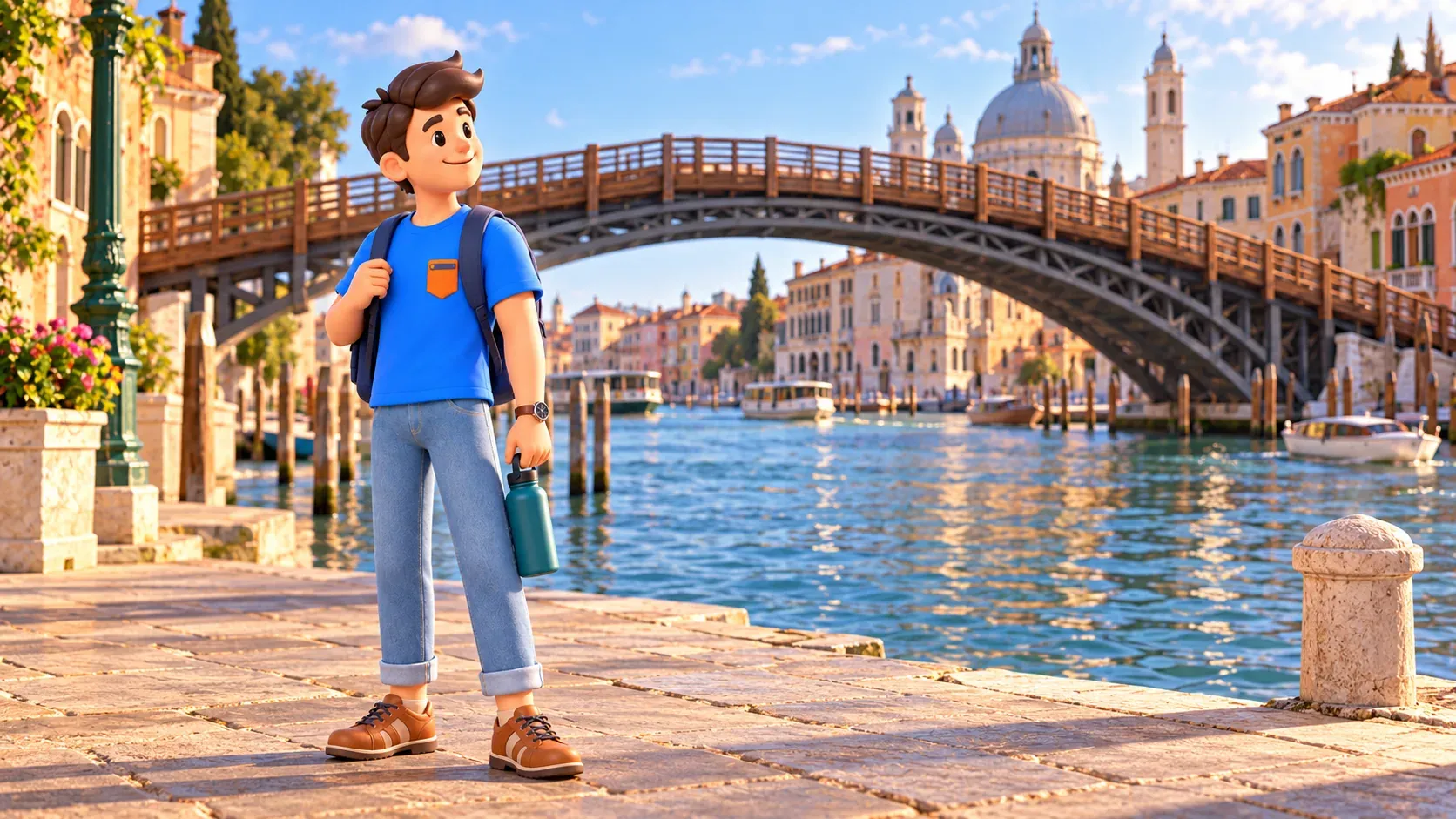
Eugenio Miozzi’s familiar solution opened in 1933, replacing a nineteenth-century iron crossing, and was initially intended to be temporary. A permanent stone alternative never displaced it. This shows how a practical decision becomes part of a city’s recognisable appearance. The timber look alone does not make the bridge medieval.
Nor has it remained untouched since its first day. Steel arches later strengthened the structure, while repairs replaced decking and other elements. Notice the relationship between form, materials and care instead of imagining a wholly original timber survivor. A city crossing can retain historical value while continuing to receive maintenance and carry everyday traffic.
The bridge opens a broad view along the Grand Canal. Take in the space and movement first, then choose a photograph if conditions allow. Avoid stopping the entire group for a long time at the summit. Discuss the story after descending into Dorsoduro, leaving room for people who need the bridge simply to get across.
The Bridge of Fists: traces of an old rivalry
From Campo della Carità, use public lanes towards Toletta, via the Ponte delle Maravegie area, then Sotoportego del Casin dei Nobili and Campo San Barnaba. Your Ponte dei Pugni is between San Barnaba and Santa Margherita. Check the district: there is another bridge with the same name near Santa Fosca in Cannaregio. That is not this stop.
The name recalls the “wars of fists”, contests and clashes between the Castellani and Nicolotti. Bridges became settings for rivalry; one aim was to take possession of a crossing by throwing opponents into the water. Historical descriptions refer to bridges without side parapets. That does not mean today’s Bridge of Fists still lacks railings.
Stone footprints at the four corners of the paving recall participants’ positions. Look if the flow of people permits, then continue. There is no need to hold up the crossing, arrange every companion on a mark or stage a fight. The small feature already connects an old name with the ground beneath your feet.
The contests were banned in the early eighteenth century after a particularly violent clash. There was a competitive side to their history, but treating them as harmless games without injuries would be misleading. For this visit, the essential point is that a bridge could be more than a route: it could become a focus of rivalry between city communities.
Cross towards Rio Terà Canal and finish at the southern part of Campo Santa Margherita. Here you can move away from the narrow passage and compare impressions. Crossing the small canal takes little time; the stop’s value is in connecting a name, a former activity and a particular urban form rather than ticking off one more bridge.

Allow three hours, or choose a shorter version
The 180-minute framework includes 50 for all walking from Paglia’s eastern foot to the finish, including the café approach; 60 for observing the four named bridges; 30 for coffee; 20 for comparing stories; and 20 for flexibility. These are estimates. A meal, accommodation journeys, your return and museum visits are additional. No boat is needed between the main stops.
RoadMe makes it much easier to develop this idea into a personal plan for your whole trip, worked out around your interests and available days. Try a relaxed pace so that bridge history fits comfortably alongside rest and other experiences you would enjoy.
With only 90 minutes, begin already on Accademia’s southern side at Campo della Carità and keep Dorsoduro with the Bridge of Fists. Allow 20 minutes for all walking to Santa Margherita, 30 for observation, 20 for coffee and 20 as flexibility. This omits Paglia, the Bridge of Sighs and crossing the Grand Canal. Count your approach to the start separately.
Weather, work and heavy pedestrian flow may require a shorter outing. This is not a verified step-free route; assess individual approaches for your needs. If an essential crossing is unavailable, choose a separate short section and allow time to reach it. Do not assume the full programme can be preserved within the original three-hour allowance regardless of the change.
What to remember after the walk
Explain each name in one sentence without reciting all its dates. Which recalls cargo, which a literary image, which artistic surroundings and which rivalry? At the next bridge, this habit helps you ask questions instead of inventing an explanation from a similar-sounding word. A name starts an investigation; it does not prove every story associated with it.
With a child, choose the most surprising name and ask why it stands out. Adults can compare two photographs: an overall view and one detail. You do not need to document the whole outing or read notes continuously while walking. Save discussion for a table break, so everyone can keep a personal observation without listening to a lecture from beginning to end.
You need not add distant crossings or return for a missed photograph immediately. For another day, try our Dorsoduro squares and craftsmanship walk. Four different stories are enough today. The familiar bridges have already become more than useful points above the water, and the rest of Venice remains open to your curiosity.


