
Half a day at VDNKh: fountains and the main architectural walk
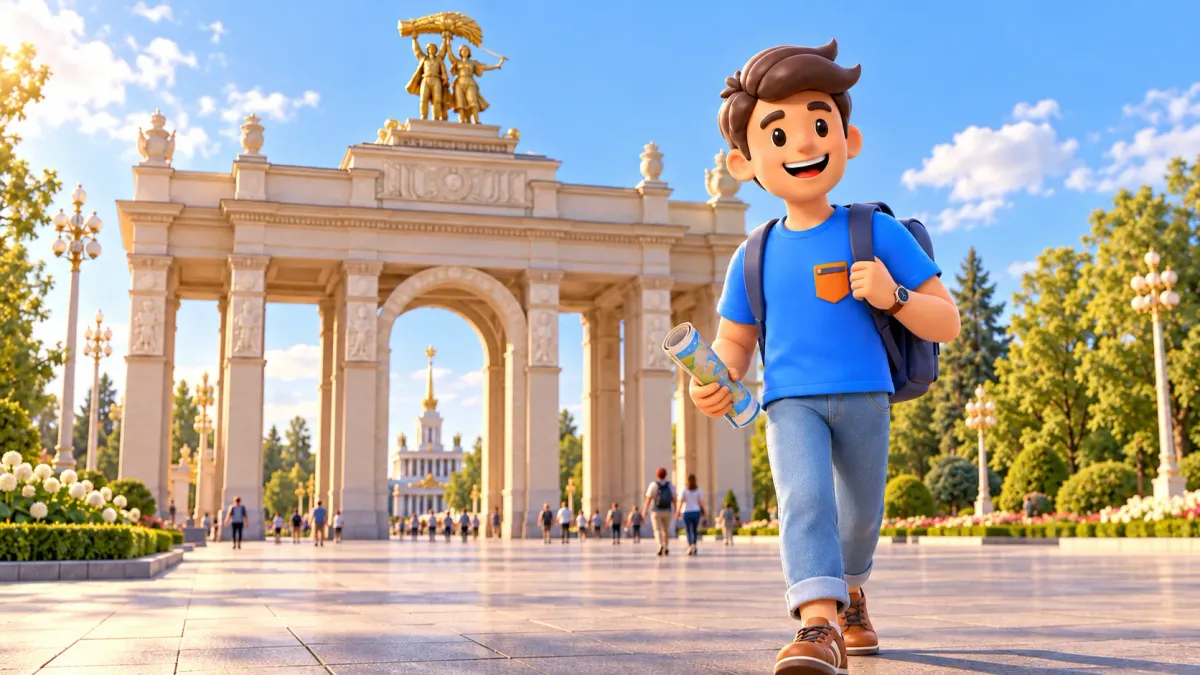
VDNKh rewards a clear plan more than an ambitious list. Its avenues, pavilions and fountains can fill a day, yet you can enjoy a coherent introduction in half a day. The useful question is not how many buildings you can collect. It is which sequence gives you a sense of the exhibition ensemble without making every attractive doorway another obligation.
Start at the Main Entrance, continue towards the Central Pavilion and the Friendship of Peoples and Stone Flower fountains, then head for the Space Pavilion. The Golden Ear fountain is a further option by the ponds. This is primarily an outdoor architecture walk. A museum visit can become the main indoor element by taking the place of part of the longer outdoor version.
Choose the outdoor core before adding a museum
Allow roughly three to four hours for a selective introduction, with pauses and an allowance to return towards an exit. This is an editorial planning range, not a measured promise. A long exhibition, meal or deeper pond walk can take it beyond half a day. Decide which matters most before committing to a timed ticket or extending the route.
For a day built around architecture, space exploration or a slower outdoor pace, use RoadMe: the app develops a personal route or trip plan around your interests, dates and available time. Keeping that plan with you makes the visit more convenient and efficient than trying to connect separate pavilion addresses while already walking.
- Main Entrance: understand the opening view.
- Central Pavilion: a short exterior architecture stop.
- Friendship of Peoples and Stone Flower: two different fountain compositions.
- Space Pavilion: an exterior destination or a separately planned museum visit.
- Golden Ear: an optional extension, with the return accounted for.
Do not treat the extension as a compulsory finish. The main avenue and two central fountains already provide a complete theme. Someone who enjoys museums may prefer to stop the outdoor sequence at Space, while someone interested in landscape may continue towards the pond. Both choices are more useful than following every branch simply because it exists.
The Main Entrance: begin by looking through the arch
The monumental Main Entrance sets the scale of the visit. Its present arch belongs to the exhibition's 1954 transformation. It was designed to introduce a ceremonial composition rather than function only as a point where visitors pass through. Pause where you can see the structure without blocking the flow, then use the view ahead to understand the direction of the walk.
The exhibition itself began in 1939, but its familiar appearance combines different stages. Keeping those two historical anchors separate helps: the place is older than the main entrance you are looking at. You do not need a full institutional timeline to appreciate how strongly the later rebuilding shaped the sequence of gateways, open spaces and monumental pavilions.
If arriving from the metro, allow for the actual walk to the entrance. Station arrival and entering the exhibition are not the same moment. Agree on a specific meeting point outside the busiest passage rather than asking companions to find you somewhere at VDNKh. The name refers to a large territory, not one small square with an obvious centre.
Before moving on, check weather, your available time and any current local restrictions. A festive event or seasonal installation can affect how you use the avenue. Follow the passage available on the day rather than insisting on an exact line through the middle. The architectural sequence remains understandable even when your walking position shifts to one side.
The Central Pavilion: a landmark rather than an automatic queue
Pavilion No. 1, Central, provides the next strong architectural focus. Its stepped composition and spire turn the approach into a lesson in scale. Start with the whole building before looking at ornament. A wide view explains how it occupies the ensemble; a closer look can reveal one feature that makes the monumental facade more than a background for a portrait.
The pavilion was built in 1954. That date connects it to the Main Entrance and the postwar transformation rather than suggesting that every building at VDNKh appeared at once. Restoration has helped recover important architectural features. For this route, the useful question is what you notice in the exterior today, not whether you can recite a complete restoration chronology.
An exhibition inside is a separate decision. Confirm the current programme, entry conditions and time needed instead of assuming that an old announcement describes today's display. You can enjoy the facade and continue without missing the point of this outdoor walk. If an exhibition is your priority, give it space by reducing a later section rather than adding it invisibly to the schedule.
Friendship of Peoples: read the fountain as a composition
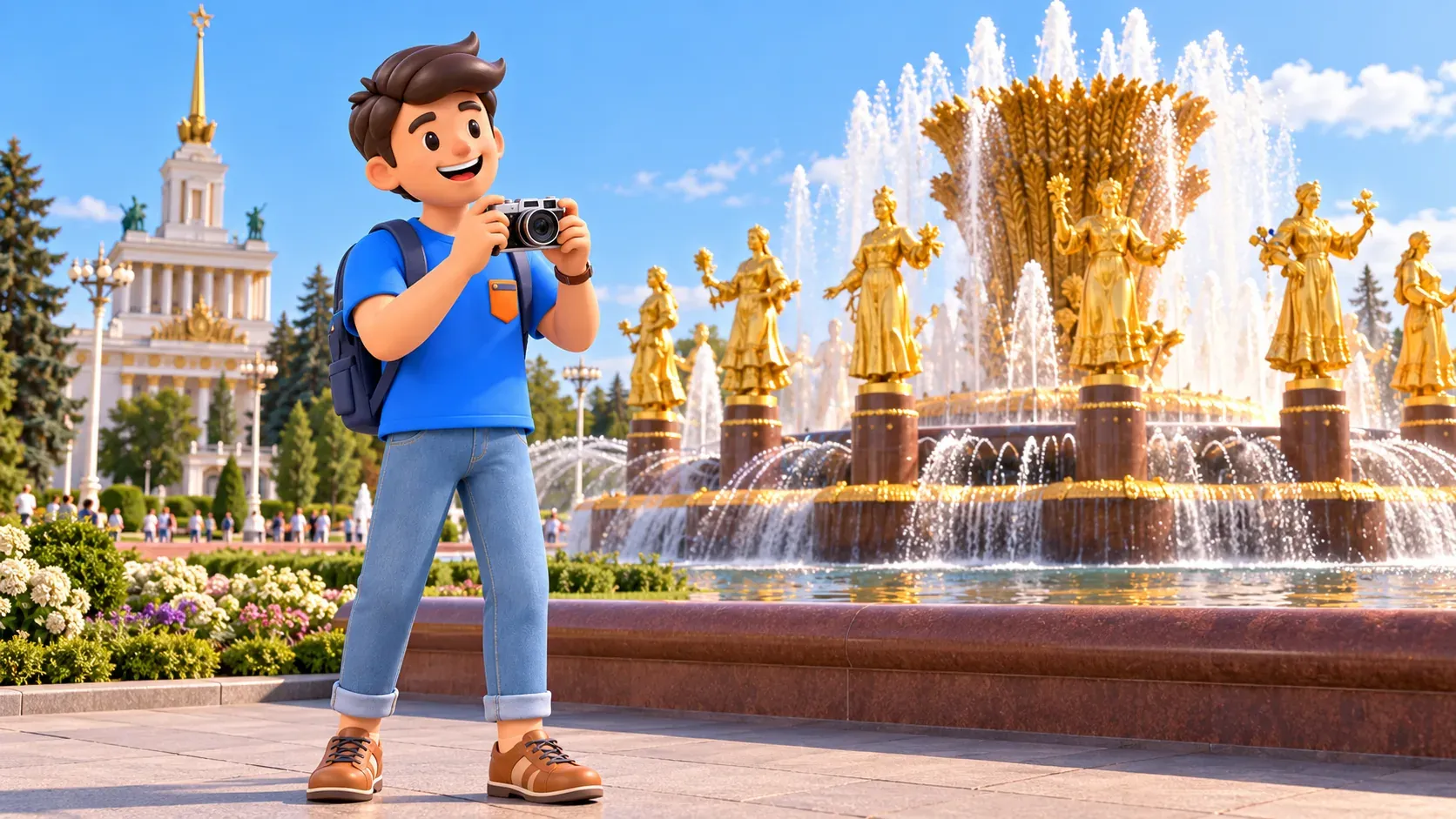
The Friendship of Peoples fountain introduces a different kind of monumentality. The central agricultural form and surrounding gilded female figures create a composition that can be understood from more than one angle. Begin with the relationship between centre and ring, then select a visible costume or sculptural gesture. One considered detail is more memorable than trying to inspect every figure.
The fountain's imagery belongs to the Soviet exhibition context. Its agricultural symbolism links it to the pavilions and the broader idea of a public showcase. This short explanation gives the stop some meaning without turning the article into a catalogue of statues. If the subject becomes a particular interest, a dedicated interpretation can be a reason to return or join an appropriate tour.
Water is seasonal. Do not plan your only reason for visiting around guaranteed operating jets: check the current fountain arrangements for your dates. When the water is off, the sculpture and surrounding architectural setting can still form a worthwhile stop. The correct expectation changes from a moving water display to a closer look at composition, colour and the exhibition landscape.
For photographs, stand clear of the main pedestrian line and keep companions in an agreed place. A fountain is an attractive meeting point but can also create a wide search area. Choose one side or a nearby identifiable feature. Finish the photograph before walking again, particularly when you are concentrating on a screen rather than on other visitors crossing the square.
Stone Flower: change from gold to colour and story
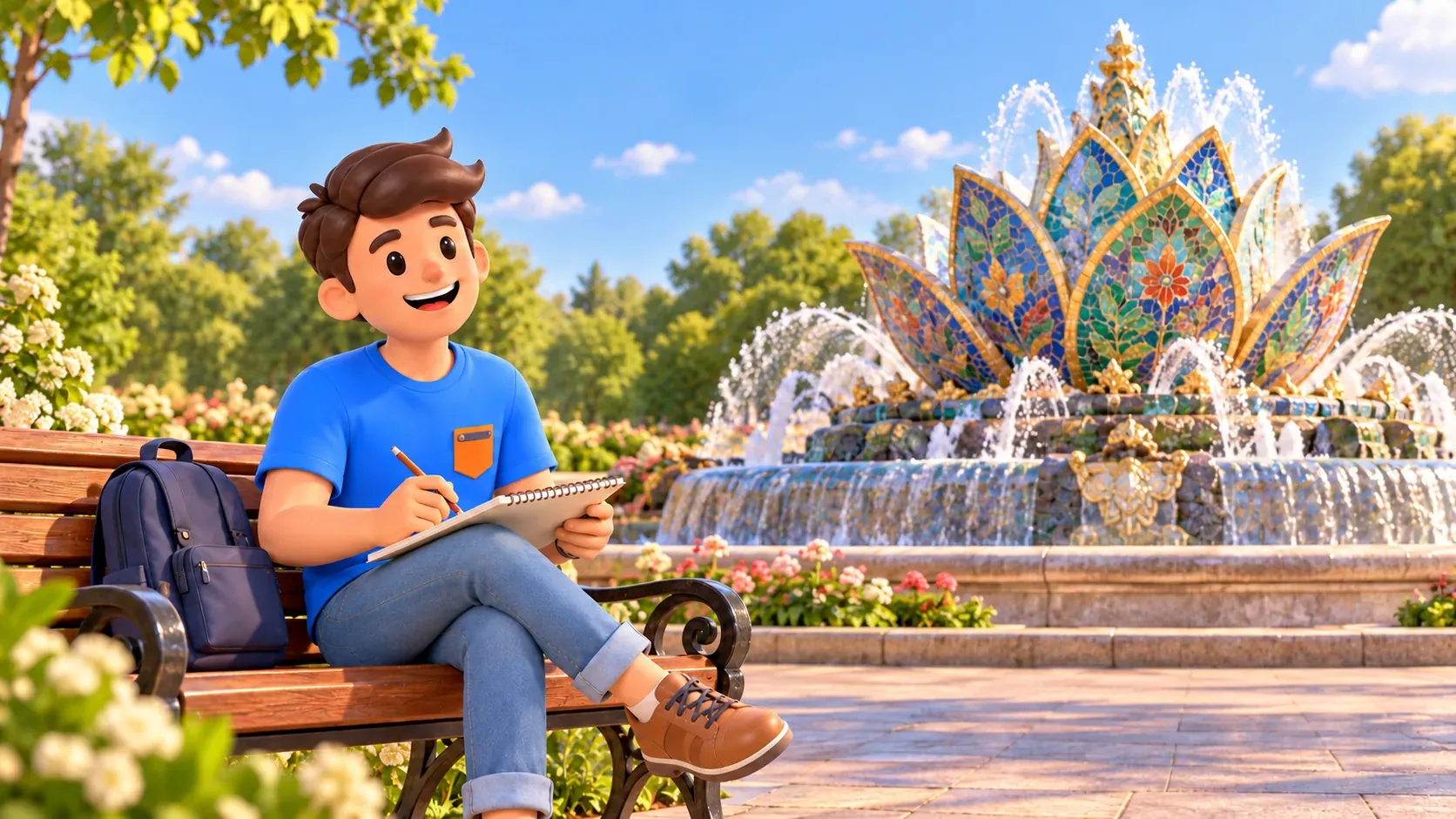
Continue towards the Stone Flower fountain for a different visual subject. Its flower form and colourful decoration change the emphasis from a ring of figures to a central ornamental image. The design draws on Pavel Bazhov's tales, a useful cultural connection that makes the name more meaningful. You need not know the entire story to notice how a literary idea becomes a public fountain.
Compare it with the previous stop: where does your eye go first, and what holds it longer? This simple question gives the pair a reason to appear in the same walk. It also prevents the second fountain becoming merely another photograph before the next building. Spend a little more time here if colour and decorative art interest you more than monumental facades.
As with Friendship of Peoples, treat flowing water as a seasonal condition. Barriers, maintenance and temporary arrangements should guide where you stand. Do not climb decorative edges to improve the view. A comfortable public position is enough for observing the main form, and there is no need to reproduce an image made under different conditions or at another time of year.
Space Pavilion: choose the facade or a proper indoor visit
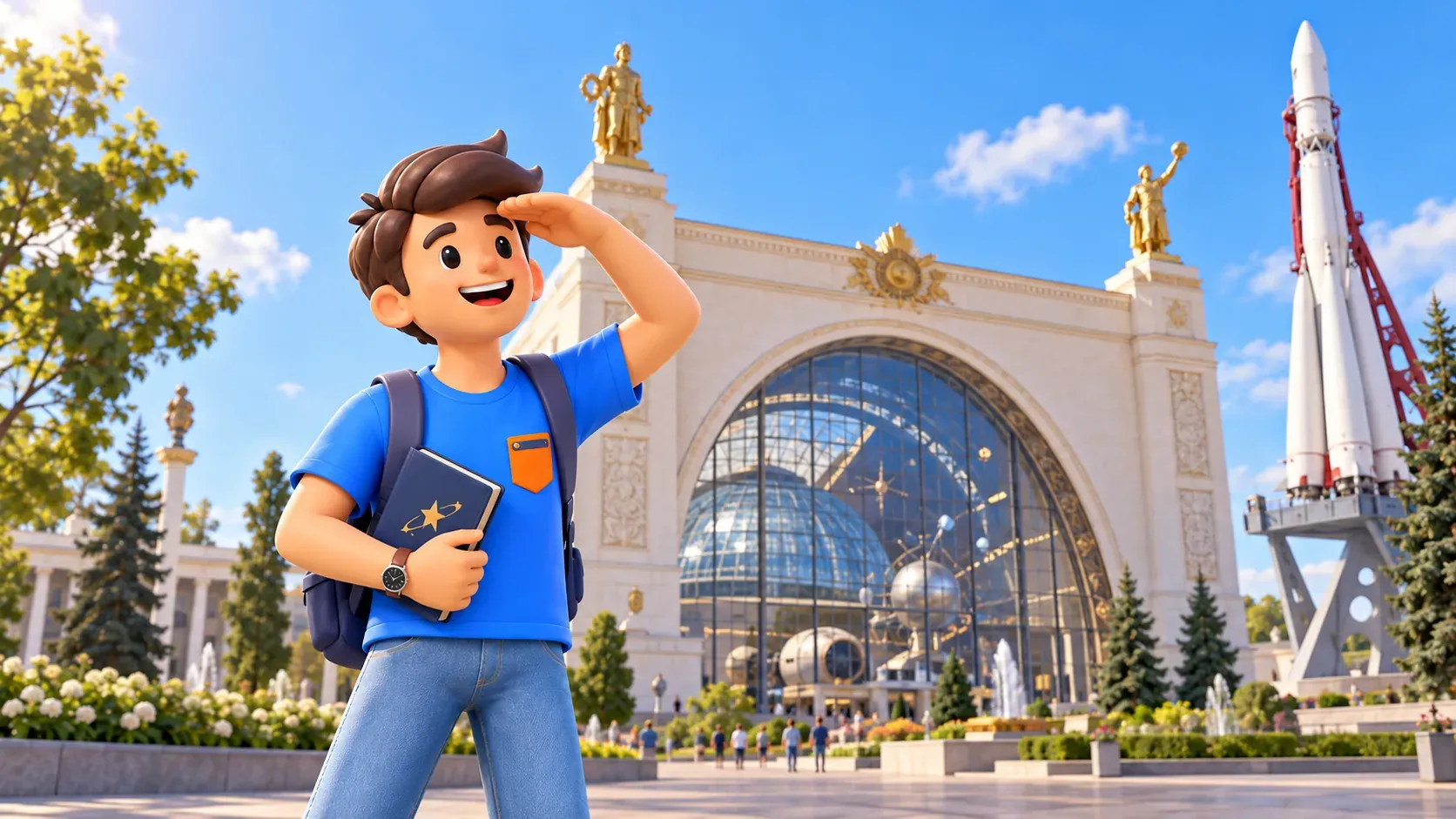
Pavilion No. 34, Space, extends the walk towards another architectural language, with a large glazed opening and dome. The Space and Aviation Centre opened in the restored pavilion in 2018. That fact helps connect the building's historical appearance with a modern museum function. The exterior alone makes a clear destination after the two fountains and provides a satisfying turn in the outing.
If you want the museum, check its current ticket and entry arrangements before arrival. A ticket, available session and programme are different from simply finding the building. Do not apply the opening conditions of the wider grounds to an indoor attraction. This article does not promise an untimed visit or access to a particular exhibit without checking the day's actual offer.
RoadMe helps turn your priorities into a personal trip plan, whether you want a museum-led day or more time among fountains and park scenery. Using the app during the visit makes it easier to keep the whole afternoon organised around your interests and pace, with a realistic place for the return journey and breaks.
Choose the indoor visit in place of the Golden Ear extension if your time is limited. Otherwise you risk enjoying the museum with one eye on a deadline and then walking to the pond because a list says to. Space enthusiasts can give the exhibition their attention; architecture-focused visitors can remain outside and continue only if the weather and energy still suit.
Golden Ear: an optional pond-side extension
The Golden Ear fountain stands in the third Kamensky Pond, beyond the central sequence. Its setting changes the atmosphere from the ceremonial avenue to a broader landscape view. The familiar fountain dates from 1954. Its agricultural form links it to the exhibition's imagery, while the pond gives you a different way to frame architecture and water within the same outing.
Continue only after considering the extra outward walk and the route back. Arriving at the pond does not place you beside the Main Entrance. Pick your exit and onward connection deliberately, using current wayfinding and available paths. If you need to return the way you came, include that distance in the decision before extending, not when everyone has already become tired.
Pause in a permitted public place and look at the fountain within its pond setting. The point is the change of scale, not reaching every neighbouring attraction. Do not add a full botanical garden or an unrelated museum simply because the map now shows it nearby. Those can form another visit with their own entrance arrangements, distances and time requirements.
Keep the return as comfortable as the approach
VDNKh is spacious, and small choices accumulate. Comfortable footwear, weather protection and a proper seated break can matter more than squeezing another pavilion into the plan. For reduced mobility, check the specific entrance, surface and attraction access you intend to use. A broad avenue alone does not certify every threshold or every part of a longer route as suitable.
With children, give each main stop a different task: notice the arch, find a sculptural gesture, compare fountain colours, then decide whether space is the day's main interest. That is easier to sustain than repeating a long explanation at every building. Make room for food and rest without assuming that a short purchase will take no time or that everyone wants to keep moving.
For a wider first visit, our one-day Moscow introduction gives a different central framework. VDNKh can remain its own half-day. Finish with one architectural image and one fountain detail you remember, and leave the remaining pavilions as reasons to return. A clear, enjoyable selection is enough to understand why this place deserves time.


