
One Day in Moscow: A First Visit at a Comfortable Pace

With one day in Moscow, concentrate on the historic centre rather than trying to cross the entire city. A walk through Alexander Garden, Red Square, GUM, Zaryadye and Varvarka gives you several different experiences within one area: fortress walls, a monumental square, covered shopping galleries, a park and the river. There is time to stop, eat and decide what deserves a longer visit.
Allow roughly six to eight hours for this suggested day, including lunch and generous pauses. That is a planning estimate, not a measured walking time. The main itinerary focuses on outdoor sightseeing, with a short indoor stop at GUM. A substantial museum visit or admission to the Kremlin replaces part of the walk; it is not an extra appointment squeezed into an already full afternoon.
Start with a simple route through the centre
Begin on the Alexander Garden side of the Kremlin, continue towards the northern end of Red Square, then walk towards St Basil’s Cathedral. Visit GUM if you want an architectural pause before lunch. Afterwards, head into Zaryadye for the river panorama and finish along Varvarka towards Kitay-gorod metro. Choose your actual metro exit using current signs and navigation: available approaches in the centre can change.
For a day designed around your own interests, try RoadMe: the app prepares a personal itinerary around your travel dates, preferred pace and the places that matter to you. It makes planning and using your trip more convenient than assembling a large collection of unrelated sightseeing suggestions yourself.
A start at around ten in the morning is one possible arrangement, rather than a requirement. If you arrive later, remove the final section instead of reducing every stop to a hurried photograph. Travel from an airport or railway station, luggage storage and the return journey belong outside the sightseeing allowance. A train departure or booked performance needs its own margin; the last landmark should not be scheduled for the moment you must already be somewhere else.
Check official access notices before setting out. Red Square and neighbouring spaces are used for events, so an apparently straightforward approach may be restricted. If only the square is affected, retain Alexander Garden and reach Varvarka and Zaryadye through permitted streets. If restrictions cover much of the area, choose another neighbourhood for that day. An adaptable plan is more useful than spending the morning searching for a way through closed entrances.
Alexander Garden: understand the scale of the Kremlin
Give this first stop around thirty to forty-five minutes for an exterior walk and a few pauses. Standing beside the wall helps you understand a place that can look deceptively small on a phone screen. Notice the length of the fortifications, the height of the towers and the contrast between the garden paths and the solid boundary behind them. You do not need to walk around the whole Kremlin perimeter to establish that sense of scale.
The Kremlin and Red Square form a single UNESCO World Heritage property. For a first visit, the useful idea is that the ensemble contains different historical layers, rather than one building from one moment. Keep the detailed stories of individual palaces, churches and towers for a dedicated visit. Here, the relationship between the fortress and its surrounding public spaces is already enough to make the opening of the day worthwhile.
If you stop at the Tomb of the Unknown Soldier, treat it as a memorial setting and follow the directions in place. Do not make a ceremony an inflexible appointment in your itinerary: access and events depend on the current arrangements. Continue towards Manezhnaya Square and the northern approach to Red Square when the permitted routes allow it. These are neighbouring parts of the same central walk, so there is no reason to arrange a car journey between them.
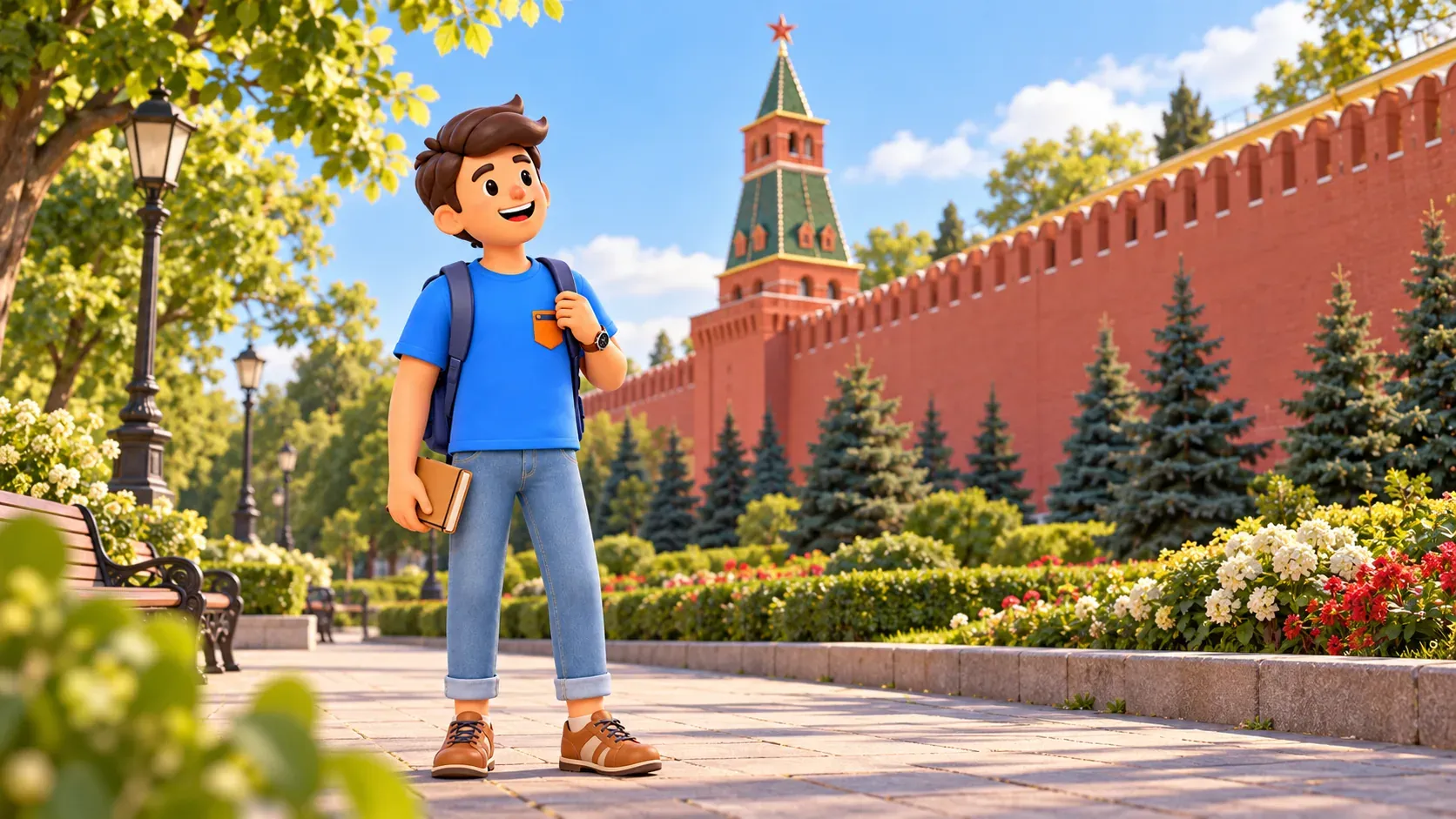
Red Square: look at the whole ensemble
Allow about an hour on the square, or longer if you enjoy photography and architectural details. Start with the overall composition before moving towards its southern end. The State Historical Museum marks the northern side; the Kremlin wall runs along one edge, GUM along the other, and St Basil’s provides the unmistakable southern focus. Those relationships make the space understandable without requiring a long lecture on every building you can see.
Change your viewpoint a few times. First notice the distances between the major landmarks, then compare their colours, rhythms and silhouettes. The cathedral looks different as you approach because its clustered forms gradually separate. Step aside from the main pedestrian flow when taking photographs and avoid blocking entrances. The square is a functioning public space, so your movement should follow current access arrangements rather than a fixed line drawn before your trip.
St Basil’s, formally the Cathedral of the Intercession, was built in 1555–1561. Its layered silhouette is a good reason to pause even if you do not go inside. Exterior sightseeing and museum admission are separate experiences. If you want to explore the interior, check the current arrangements and give it a proper place in the day. It should replace another activity rather than becoming a ten-minute detour added between photographs and lunch.
Do not assume that the Historical Museum, cathedral, Mausoleum, Armoury Chamber and Kremlin churches share a convenient combined visit merely because their names appear close together on a map. They involve different admissions, access arrangements and amounts of attention. Choose the experience you care about most. The value of this first day is learning how the centre fits together and discovering what you would like to return to.
GUM and lunch: make the pause part of the visit
GUM is worth considering as architecture even if shopping is not on your agenda. The Upper Trading Rows opened in 1893, with a design associated with architect Alexander Pomerantsev. Behind the long exterior are covered shopping galleries, where the scale and quality of light feel different from the open square. Set aside around twenty to thirty minutes for a short look when access is available, rather than treating every shop as a compulsory stop.
Look down a gallery, notice the overhead connections and decide whether this is where you want a break. A famous address is not automatically the best lunch choice for your party. Compare menus, seating and the time you would spend waiting. If you prefer another setting or a simpler meal, look within the next part of your walking area. Travelling across the city for lunch and then returning here would undo the convenience of keeping the day compact.
Allow roughly an hour to eat and rest. This is a useful moment to reassess the plan: you may want more time outdoors, an indoor visit or an earlier finish. Saving an attraction before travelling does not create an obligation to see it today. Keep enough flexibility to notice what you are actually enjoying. A shorter afternoon with attention left for the surroundings usually works better than a crowded schedule followed mechanically.

Zaryadye: change the mood with a river panorama
After lunch, continue towards Zaryadye and allow approximately an hour to an hour and a half for the park and river views. This section changes the rhythm of the day. Paths, planting and open perspectives replace the continuous architectural edges of the square. Choose a pleasant route towards the water, stop to look and leave time to return to the surrounding streets. You do not need to cover every corner of the park.
The Floating Bridge is a viewing structure that returns you to the park, not a crossing to the opposite bank of the Moskva River. That distinction matters more for your itinerary than a list of engineering measurements. Do not use it as the connecting link for an activity on the other side. Follow the circulation and access instructions in place, and retain the park walk as a worthwhile stop if the viewing structure is temporarily unavailable.
At the river, compare the wider panorama with the enclosed feeling of the square. This is an opportunity to observe how the city changes when viewed along the water rather than from a street. If a Zaryadye pavilion interests you, choose one and check its programme, session and entry conditions. A timed indoor activity needs a different allowance from an outdoor walk. Remove some park time rather than assuming you can do every pavilion as well.
To make the wider trip work around your interests, use RoadMe to prepare a personal day-by-day sightseeing plan at a pace that suits you. Download the city while you have an internet connection and its maps and navigation will also be available offline, making the plan easier to use while exploring.
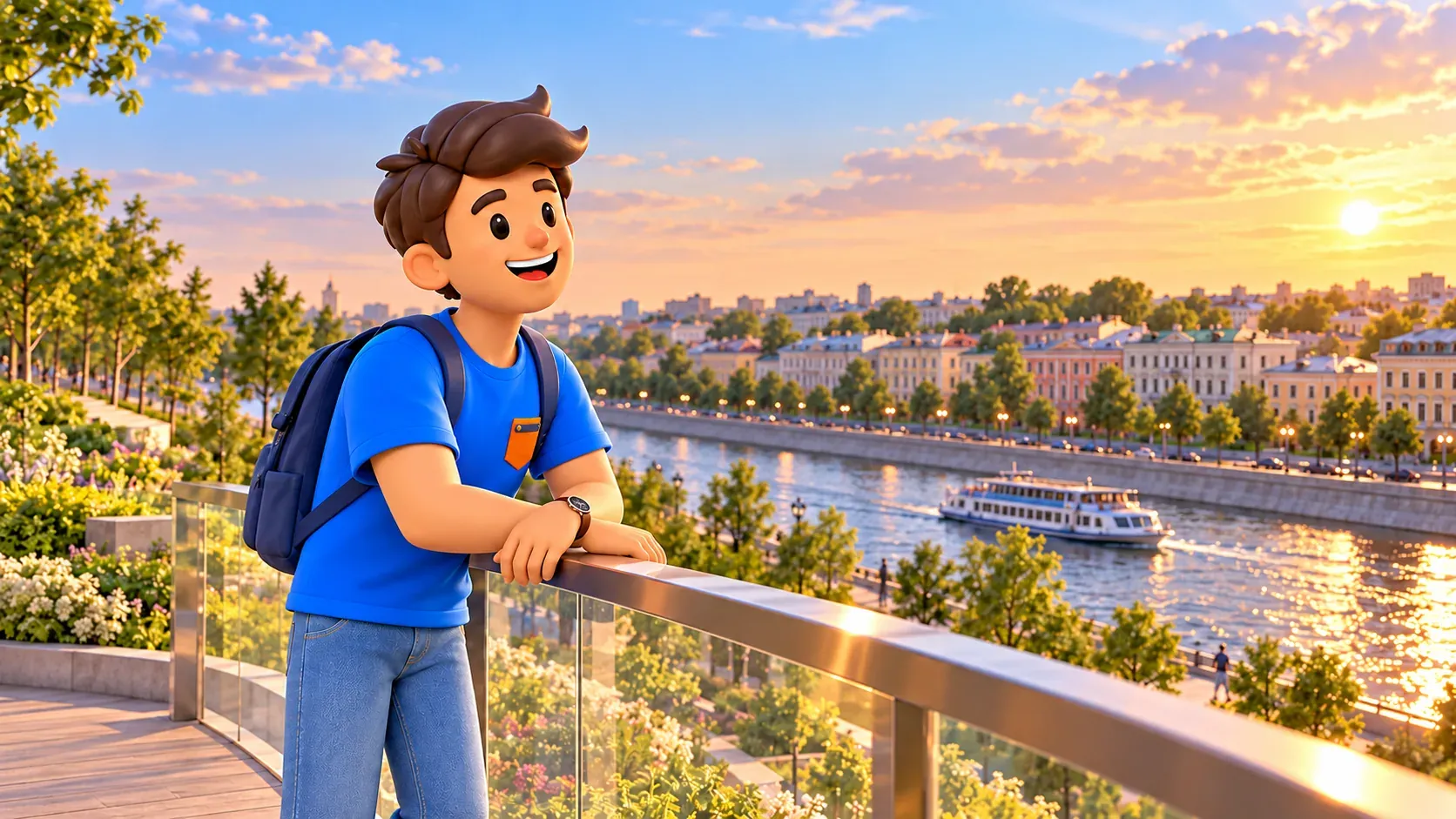
Varvarka: finish with a smaller scale of Moscow
Return towards Varvarka and continue gradually towards Kitay-gorod. After the square and river panorama, the interest here lies in individual buildings and their relationship to the street. Use the Old English Court, the Romanov Boyar Chambers and the Znamensky Cathedral as reference points. For this walk, understanding their presence beside the modern park is enough; a full account of each building would turn a relaxed finish into a separate historical tour.
Keep around forty-five minutes to an hour for this final section if you still feel comfortable walking. Do not add a museum simply because you pass its entrance. First consider the time remaining, the admission conditions and how much attention you have left. An exterior visit can be a complete experience. Before taking the metro, decide which part of the centre interested you most: that answer will be useful when planning another day.
Adapt the day for a museum, bad weather or less time
If the Kremlin is your main interest, give the particular visit you have booked the morning and retain a shorter Red Square and Zaryadye walk afterwards. The Kremlin grounds, Armoury Chamber and Diamond Fund should not be treated as interchangeable admissions. The museum complex normally closes on Thursdays, and temporary changes can affect individual areas or entrances. Check the current official information for your actual date before organising the rest of the day around a ticket.
In persistent rain, choose one central museum and a short walk nearby. GUM can provide an indoor pause, but it does not turn the whole itinerary into a covered route. In cold weather, shorten the exposed sections and reassess how everyone feels. For children, older companions or anyone who finds long walks tiring, usable breaks and realistic distances matter more than the number of famous names included.
With only two or three hours, choose Red Square and Zaryadye, or Alexander Garden and the square. A substantial museum and a long lunch would require further cuts. Even with a full day available, keep a margin for transport and changes to permitted approaches. You should finish with a recognisable picture of central Moscow and a clear idea of what interests you next, while still having energy for the rest of your trip.


