
From Union Station to the River: A 90-Minute Chicago Walk
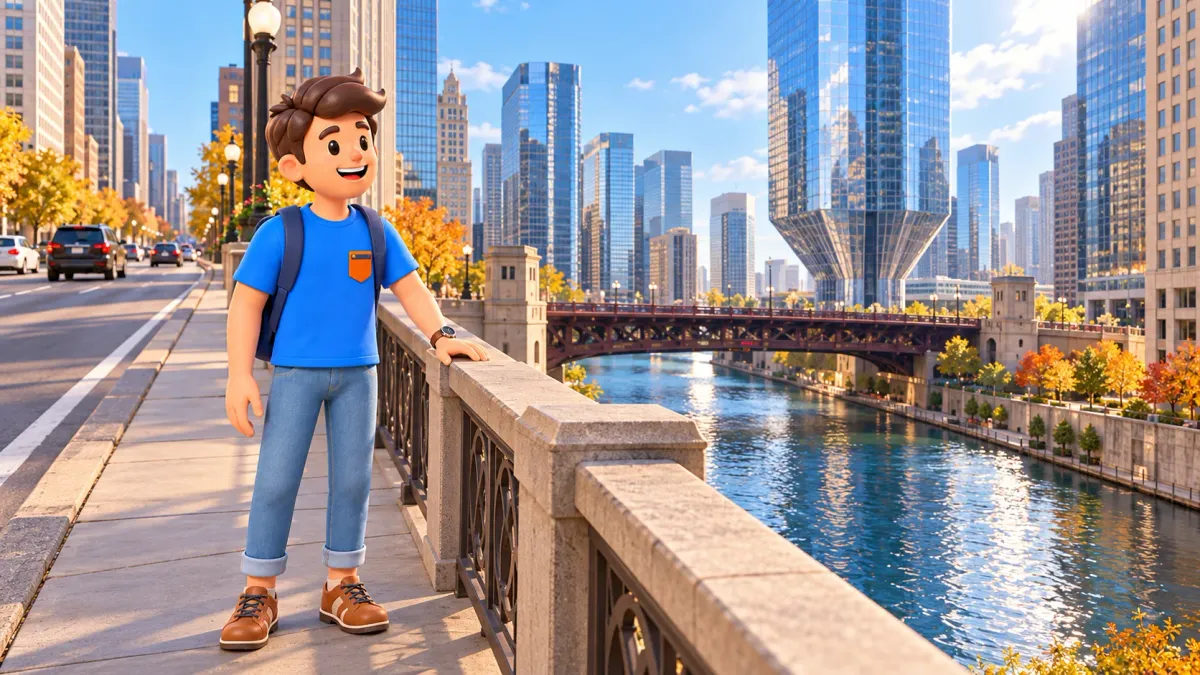
Chicago's western downtown edge offers a compact change of scene: the monumental waiting room of Union Station, an opera house facing the river and two office towers that respond to the water in different ways. A ninety-minute walk can connect them without a performance ticket, an office visit or a boat trip. The route is about looking at the city from ordinary pedestrian space.
Begin at Union Station's Great Hall when access permits, cross towards the east bank of the river and continue north past the Civic Opera House. From Upper Wacker Drive, study 150 North Riverside across the water before finishing near the curve of 333 West Wacker. This is a walk for free time in Chicago. Its ninety minutes do not include a return to the station or establish that it fits a particular train connection.
Keep the route at street level and give each stop one purpose
The main route uses the station's permitted public spaces, street pavements and a road bridge. After the Great Hall, follow the current signs to an available street exit and make your way to Adams Street. Cross the river eastwards using the Adams Street bridge's permitted pedestrian path, then turn north on the street-level pavement of Upper Wacker Drive. Continue to the Civic Opera House at 20 North Wacker, near Madison.
To fit this walk into your whole Chicago visit, try RoadMe: the app builds a personal itinerary around your interests, travel dates and preferred pace. That helps balance a short riverside outing with longer visits across your available days.
Continue north along Upper Wacker towards Lake Street. The tower at 150 North Riverside stands on the opposite, western bank; this route studies it across the river, without requiring entry to its grounds. Finish near 333 West Wacker, on the eastern side of the river at the bend. You do not need to cross back and forth merely to stand at every building's postal address.
- Union Station Great Hall: around fifteen minutes, subject to current access.
- Civic Opera House exterior: around ten minutes.
- 150 North Riverside, viewed across the river: around fifteen minutes.
- 333 West Wacker and the river bend: around ten minutes.
- Allow around thirty minutes for station navigation, walking and crossings, with ten more for a pause or minor delays.
This ninety-minute total is an estimate for planning, not a measured journey or a promise about pavement conditions. Keep your movements on the currently permitted paths. The itinerary does not depend on a continuous waterside promenade, a private building shortcut or access to Lower Wacker. Street level remains the connecting thread even when the water is visible below.
The Great Hall: start with the difference between passing through and looking
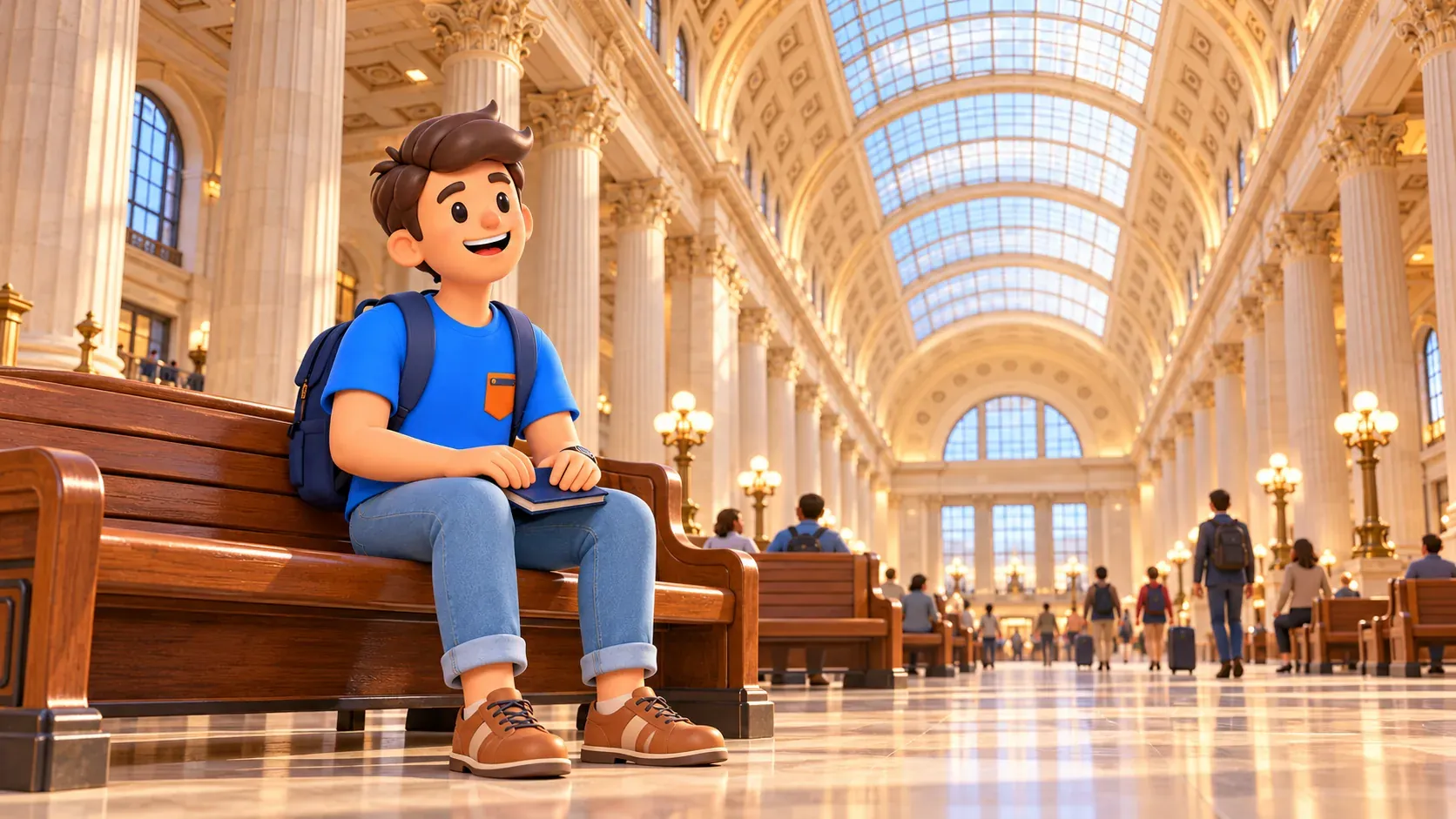
Union Station is a working railway terminal, and the Great Hall is its celebrated monumental waiting room. The station opened in 1925. Its Beaux-Arts interior brings together a high vaulted skylight, substantial columns and broad spatial proportions. You can appreciate that composition in a short visit without tracing the entire station or heading towards the trains.
Follow the station's current signs or ask staff for the permitted way to the Great Hall. Its concourses, street entrances and boarding areas are different spaces; entering Union Station does not mean you are already in the room you came to see. If you need a route without stairs, establish the appropriate entrance and internal route before committing to a staircase. Use the station's current map for that decision.
Once in the hall, stop where you will not obstruct circulation and look upwards. Notice how the skylight changes the sense of enclosure compared with the streets outside. Then bring your attention back to the columns and the way their repeated forms organise the room. The most useful comparison is between the scale of an individual person and the scale of the space built around them.
Give yourself a moment to look along the hall rather than immediately moving to its opposite end. A broad view can explain more than a series of close photographs. People waiting and passing through are part of the room's present purpose. Keep luggage under control and leave circulation routes clear; a sightseeing pause should sit comfortably within the terminal's daily activity.
If access is restricted, an event affects the space or finding the hall takes too long, shorten the stop and begin the outdoor route. Do not treat platform access as a substitute attraction. This walk requires no boarding area, railway lounge or operational passage. The station exterior can still provide a starting impression of the monumental architecture before the river changes the setting.
Cross at Adams and continue to the opera house
From an available station exit, make your way to Adams Street using the signed public route. Cross towards the eastern bank on the Adams Street bridge and continue north on Upper Wacker. Watch for the difference between a street pavement and a descent towards the river: the basic route stays at street level. If a temporary diversion is signed, follow it rather than searching for an unofficial way through a building.
Use the bridge crossing as a short change of perspective, not a separate photography session that consumes the schedule. The river creates a gap between buildings and makes their overall forms easier to compare. Pause only where there is room for other pedestrians to pass, and keep moving if conditions make a comfortable stop impractical. You will have further views from Wacker.
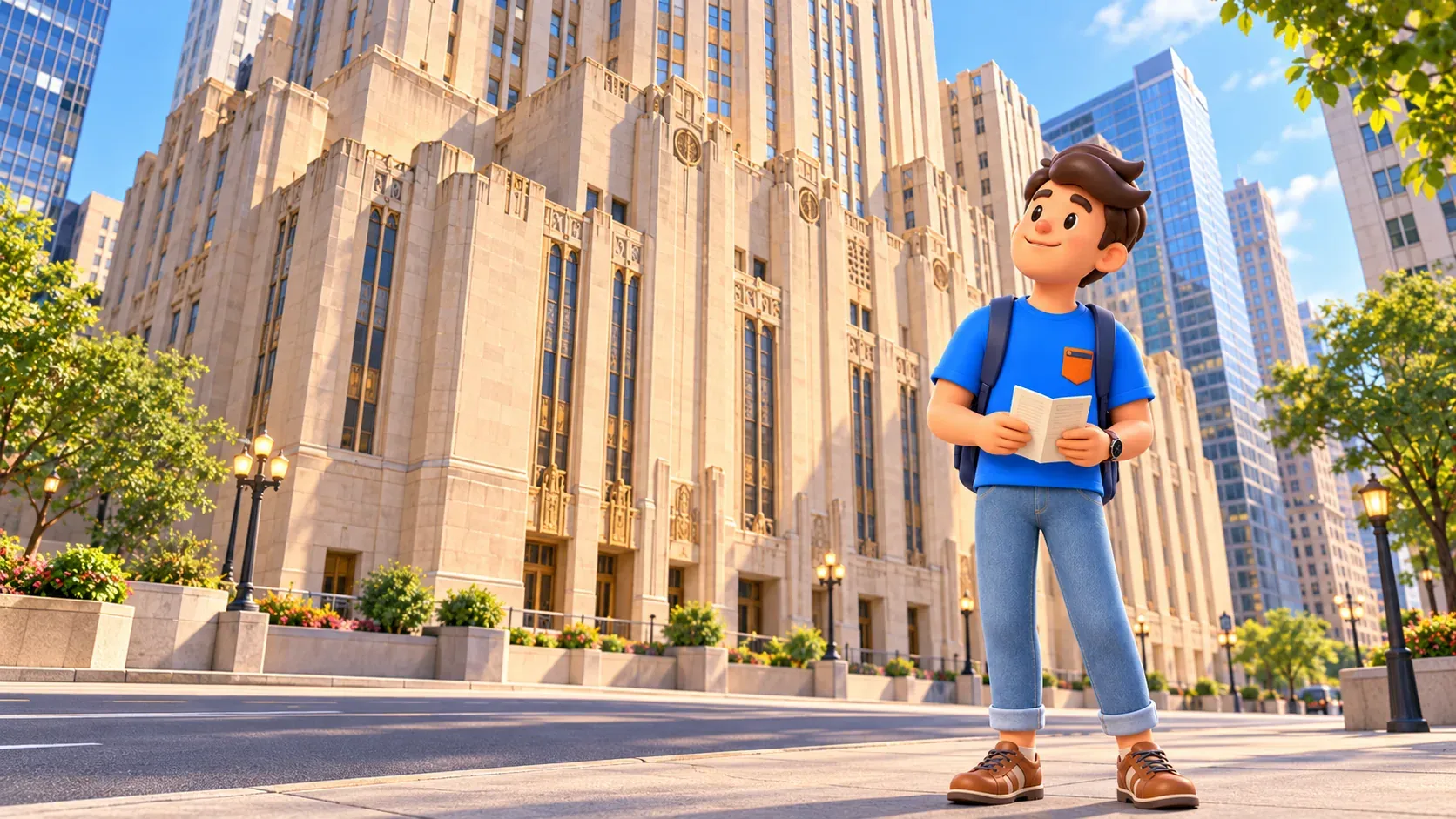
The Civic Opera House is at 20 North Wacker Drive, with its theatre entrance at Madison and Wacker. The name Lyric Opera House also appears in current visitor information. For this itinerary, approach it as an exterior architectural stop. You are not trying to combine a performance, an auditorium tour and a river walk within the same ninety minutes.
Civic Opera House: notice how a cultural building occupies a working riverfront
Choose a permitted public position from which to take in the building and its entrance area. Start with the relationship between its substantial mass and the river corridor rather than looking for a way inside. The exterior offers a different impression from the high, light-filled room you have just left, even though both belong to large institutions serving many people.
Bring your attention down towards the theatre entrance. How does it announce its purpose within the larger building? Compare that entrance with the scale above it, then look towards the water and the neighbouring office buildings. The interest of this stop lies partly in that mixture: a cultural destination occupies the same urban corridor as transport and everyday business.
Keep the visit short and focused. A box office opening time is not an auditorium opening time, and an open door does not establish general sightseeing access. If you want to attend an opera or book an interior experience, check the actual programme and conditions and give it separate time. No ticket is needed simply to include the exterior in this walk.
Before leaving, select one feature you can carry into the next comparison: the weight of the building, the position of its entrance or the way its form meets the river. You do not need a complete architectural lecture at each stop. A small number of observations will help the newer towers feel different without turning the route into four unrelated addresses.
150 North Riverside: read the narrow base from across the water
Continue north on Upper Wacker towards Lake Street, staying on the permitted public pavement. Look across the river for 150 North Riverside on the western bank. Its name gives its address rather than its position on your side of the water. This route deliberately keeps the viewing stop on the eastern bank, so you can study the overall form without relying on an approach through its landscaped grounds.
Completed in 2017 and designed by Goettsch Partners, the tower narrows dramatically towards its base. Start by following its outline downwards from the broad upper volume. Notice the point where the sides slope in and how that changes the apparent relationship between the tower and the ground. The river supplies useful distance for reading the contrast.
The narrow site includes railway infrastructure as well as the river edge. That setting helps explain why the tower's base became such an important design question. From your viewpoint, keep the visible shape separate from the engineering hidden beneath and within it. You can recognise the effect without claiming to inspect its foundations or understand every structural connection.
Compare it with the opera house's more substantial appearance. Which part first catches your eye? Does the tower seem to carry its weight differently? These are observations about how the buildings look, not measurements of their actual weight. The glass may also pick up neighbouring structures and sky, giving the surface a different emphasis as light changes.
Keep this stop on the eastern bank and save the remaining time for the river bend. Neither the tower’s landscaped grounds nor its lobby and media display form part of this route. The across-water view already gives you the distance needed to compare its narrow base with the broader volume above.
333 West Wacker: finish with a curve and a changing reflection
Continue towards the Lake Street and Wacker area, using the available crossings to reach a suitable public viewpoint near 333 West Wacker. The building is on the eastern side of the river, close to the meeting of its branches. Its curved glass facade responds to the bend, offering a clear final contrast with 150 North Riverside's narrowing base.
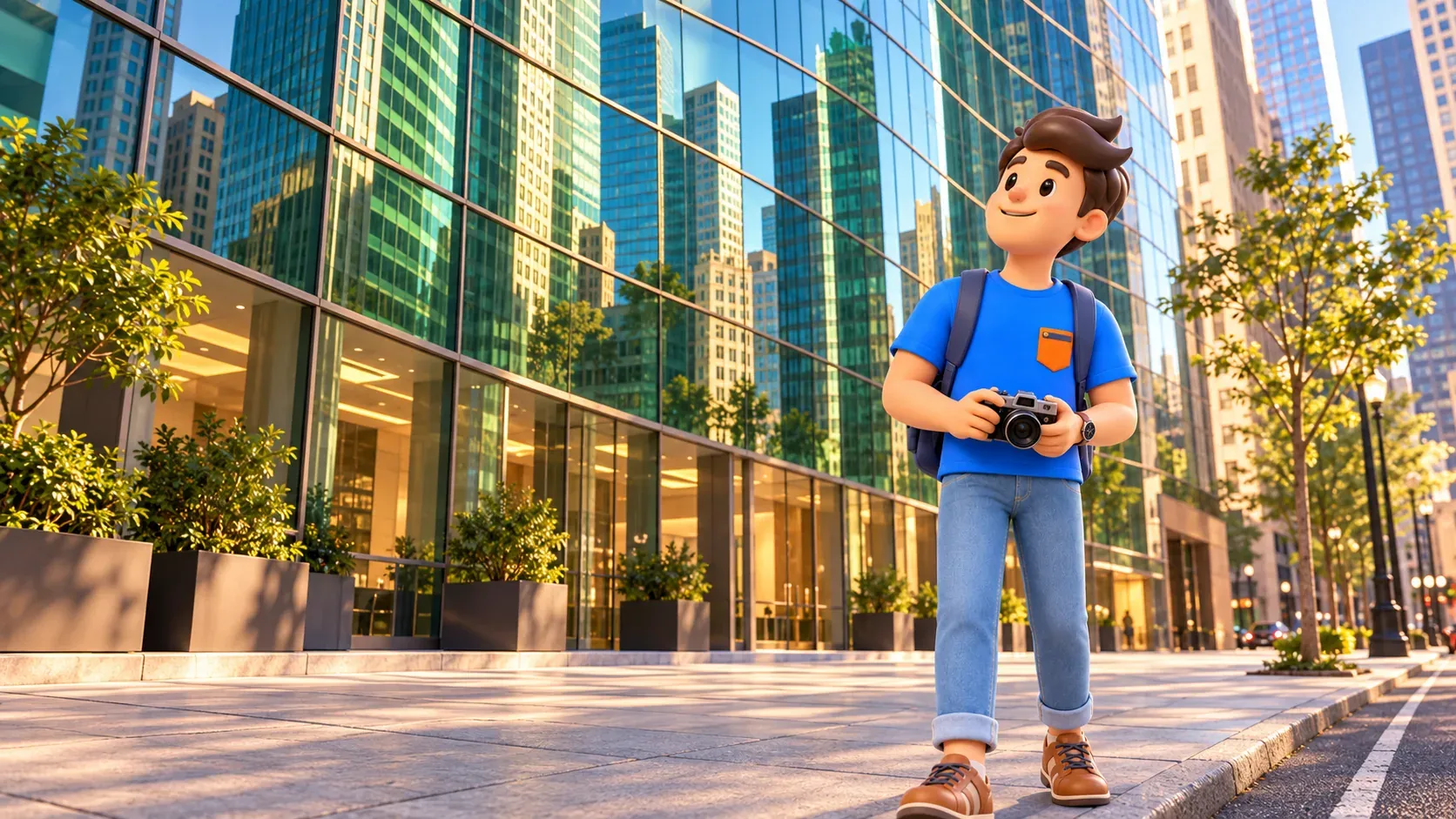
Designed by Kohn Pedersen Fox and completed in 1983, 333 West Wacker uses blue-green reflective glass to make its relationship with the river visible. Look first at the full curve, then at one reflected fragment of the surrounding city. A straight edge in the real scene may appear stretched or shifted on the curved surface. You do not need a particular weather condition or a perfect reflection to follow the idea.
Take one last comparison: the Great Hall shaped an interior around travellers; the opera house placed a cultural entrance in a large riverfront building; 150 North Riverside drew your eye to its base; and 333 West Wacker directs it along a curve. These four observations give the walk a complete shape without adding another destination.
RoadMe can help turn those interests into a complete personal trip plan, with architecture, cultural visits and breaks arranged around your pace. Try it to decide what deserves more time on the rest of your Chicago days.
If you want another architectural comparison later, the two-hour walk among early Chicago skyscrapers focuses on facades in the southern Loop. Give it its own time. If you are returning to Union Station, plan that journey separately and allow for your own train's boarding requirements; this route finishes by the river and makes no connection-time or luggage-storage promise.


