
Unexpected Berlin landscapes: hills, a waterfall and windmills

You do not have to leave Berlin to find an unexpected landscape. A park waterfall, a hill formed from postwar rubble and windmills among modern districts offer different views of the capital. Viktoriapark, Teufelsberg, Marzahn and Britz reveal relationships between a city, its terrain and human work. Choose a subject: a short park walk, half a day including a wooded ascent, or a windmill beside an old village centre. The outing changes a familiar picture of Berlin without pretending that you have reached the Alps or crossed into a separate rural country.
These places do not make one compact route. A common subject connects impressions rather than neighbouring addresses. The frameworks below allow about two hours for Viktoriapark, four for Teufelsberg including the return to a station, or 90 minutes already in old Marzahn for an exterior introduction. Britz is an independent alternative for windmill enthusiasts. Travel from accommodation is additional. Understanding one landscape can be more satisfying than spending most of a day between opposite sides of Berlin. Decide whether you want a modest climb, the story of a technical structure or a change of urban setting.
A landscape can tell the city’s story
RoadMe makes working out a personalised plan for your whole trip much more convenient, matching parks, neighbourhoods and cultural visits to your interests, dates and pace. Start planning in the app so unusual walks fit the other days and you use your time more efficiently.
A beautiful view does not necessarily mean untouched nature. A waterfall can belong to a designed garden, a wooded hill to urban history and a windmill to a new structure continuing an older tradition. Each has a different value. Rather than dividing experiences into real and unreal, understand how a place came about and what happens there now. A reconstructed mill can be interesting for its workings and preservation of skills; an artificial cascade for how gardeners shape a feeling of relief. Knowing the origin makes the walk clearer without removing pleasure in water, greenery or an unexpected silhouette beside housing.
Compare ways of looking rather than numbers of attractions. In a park, notice turns in paths and the views they reveal; on a hill, changes in the horizon during ascent; at a mill, relationships between form and mechanism. You need no complete catalogue of trees or machinery. Give one visible detail time. Distinguish observation from assumption: still sails do not prove a fault, and flowing water does not turn an ornamental cascade into a natural river. This modest habit of attention is useful in other Berlin neighbourhoods, where appearances often combine different stages of history.
Viktoriapark: a small mountain scene within Kreuzberg
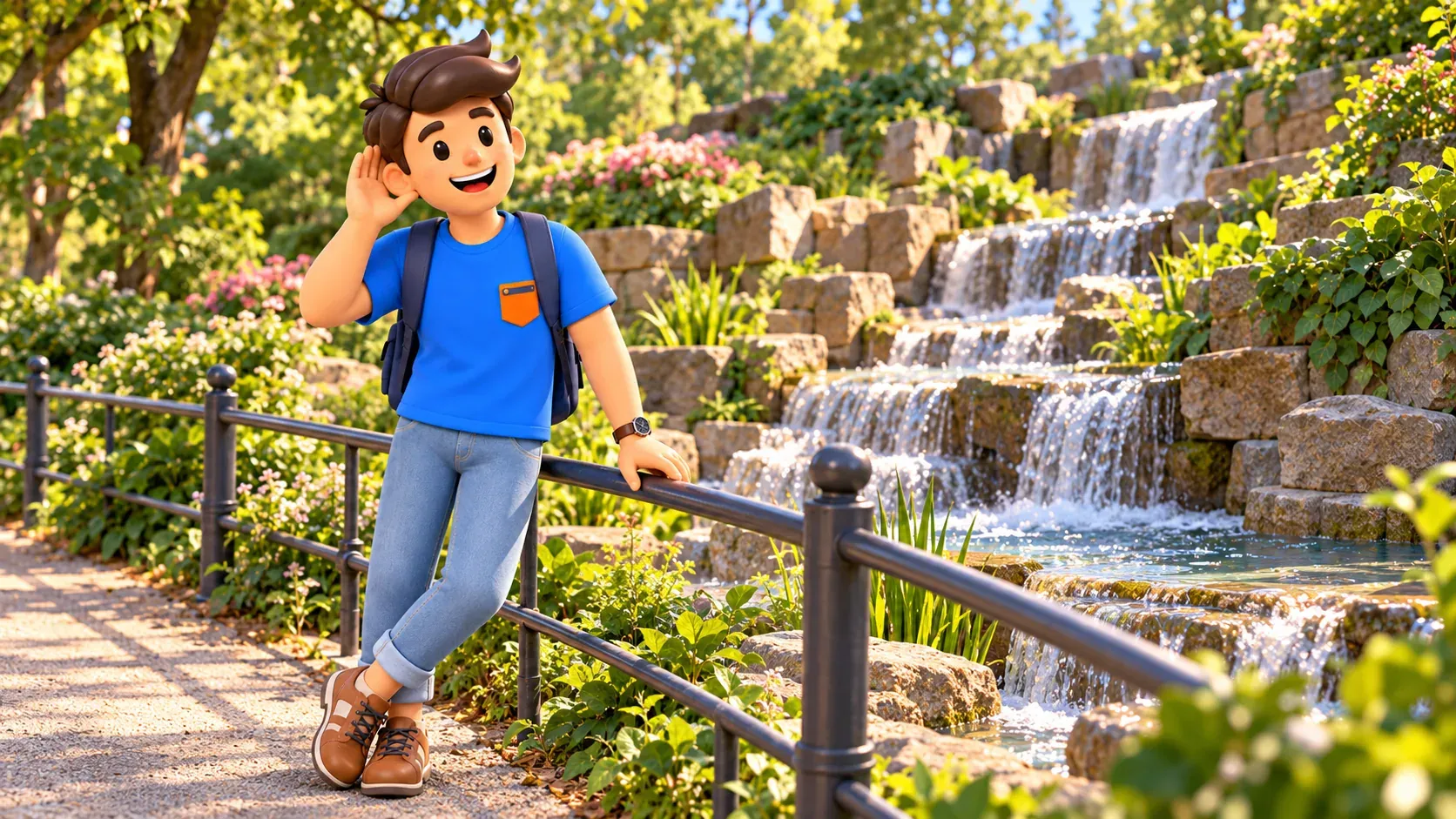
Viktoriapark developed in the late nineteenth century around an existing hilltop monument. Its artificial waterfall became a central part of the composition: rock, slope and water offer an urban interpretation of a romantic mountain landscape. You remain within a park among Berlin streets. Look beyond the water to how paths gradually reveal the scene. From below, attention gathers around the cascade; farther up, distance, planting and direction of view change. Reaching the highest part is not compulsory to understand the design. A short lower section can form a complete outing rather than an incomplete attempt to conquer a summit.
The waterfall operates seasonally. Municipal information gives the period from Maundy Thursday until mid or late October, depending on weather, normally 9am–9pm. That promises neither running water on every October date nor a winter flow. When it is off, the stone composition, park and hill remain. A visit is not automatically unsuccessful: without water, the constructed scene can be easier to understand. However, if the sound of flowing water is your main reason, establish current operation before travelling and keep another gentle option for a seasonal shutdown. Do not confuse the published seasonal framework with a live status report.
Allow 120 minutes from the public park entrance on Kreuzbergstraße: 15 orienting, 15 around the lower cascade, 25 on permitted ascending paths, 20 in the upper park, 15 resting, 15 descending and 15 in reserve. An example is 11am–1pm, returning to the same entrance. This is an estimate, not a measured track; travel from the underground is additional. If ascent is unsuitable, remain on comfortable lower paths and shorten the programme. Ordinary park walking is free. Our Kreuzberg route can extend the outing, provided its extra programme receives extra time rather than occupying the same two hours.
Teufelsberg: a hill made by urban history
Teufelsberg in Grunewald is connected with Berlin’s postwar rubble. It is an artificially formed hill, not a volcano or evidence of a hidden mountain range. A listening station was established later; the site is now also known for contemporary art and views. Separate the origin of the mound from the history of structures above it. They answer different questions: the first explains the terrain, the second its use in subsequent decades. The walk gains meaning before you enter, while the view becomes part of a more complex story than simply finding a high place for a photograph.
The former station is now a managed site charging admission. Do not describe it as free abandoned ground with access to every building and dome. Available sections depend on visitor conditions. Choose a little for an introduction: one historical theme, some accessible art and an authorised viewpoint. Every structure need not become compulsory. The wooded approach and ascent require time and energy, especially after several urban sightseeing days. Green areas close on a map do not guarantee a flat effortless stroll. Returning to public transport remains part of the outing rather than an invisible addition after the final photograph.
A practical framework is four hours from S Heerstraße and back: 60 minutes approaching on public streets and marked woodland routes, 90 in selected accessible parts of the paid site, 30 for a permitted pause and 60 returning. Start at 11am and finish around 3pm. In winter, that is more useful than promising a late sunset: ordinary November and December closing is 4:30pm, with last admission an hour earlier and separate calendar exceptions. Do not carry a long summer evening into that plan. Our Teufelsberg guide covers choosing sections; its whole list need not be added on top of these four hours.

Marzahn: a windmill beside the modern city
Old Marzahn changes the image of a district often associated mainly with large housing estates. Beside the village core stands the Bockwindmühle, a post mill supported around a central post. The current structure opened in 1994 and continues a local milling tradition; it should not be presented as an untouched medieval survivor. A new historical structure can have value through its workings, knowledge and the labour that maintains it. Looking outside reveals relationships between the body, support and sails. An interior explanation of the machinery is another format, requiring suitable opening arrangements and more time.
As of October 2026, the operator lists ordinary opening on the first Sunday of the month from April through October, 11am–4pm; tours are arranged separately. Current information also says flour and bread sales are unavailable. Do not plan a guaranteed purchase or constantly turning sails from an older promotional photograph. For an exterior introduction, begin in the public old village square at Alt-Marzahn: 10 minutes orienting, 20 approaching the mill on public routes, 25 on exterior views, 15 resting, 10 back and 10 in reserve. Total: 90 minutes, for example 11am–12:30pm. Station or hotel travel and an interior tour are excluded.
Britz: another shape for working with wind
Britzer Mühle offers a useful comparison with Marzahn’s timber post mill. It is a Dutch-type mill built in 1865. Compare form and organisation of work rather than age as a competition. There is no need to visit both in one day. For the chosen mill, decide whether an exterior impression is enough or whether you want an explanation of its workings. One focused question during a tour, perhaps about transmitting wind power to grinding, can teach more than trying to remember every technical name and photograph every mechanism before understanding how they relate.
The Britzer Mühle season in 2026 runs from 28 March to 31 October. Ordinary guided visits without advance registration are offered on Sundays and public holidays, 11am–4pm, during that season. Bread sales on Fridays and Saturdays follow a different schedule and do not confirm tours at the same times. The address is Buckower Damm 130; neighbouring Britzer Garten has its own paid admission. Treat neither the mill nor a bread purchase as free entry to the entire garden. Our Britz guide helps choose a longer programme if you want several experiences and can give them a separate part of the day.

Choose a landscape that suits the day
RoadMe helps prepare a personalised plan for the complete journey more conveniently and efficiently, distributing parks, climbs and cultural places around your interests and pace. Plan in the app so the chosen outing receives enough time and naturally complements the other days.
Choose Viktoriapark for a short urban outing, Teufelsberg for a separate half-day, Marzahn for a village core and windmill, or Britz for another introduction to milling. Consider attention as well as travel. After a long exhibition, you may want movement; after a day of walking, fewer climbs. Preserve rest and the return. Wind, rain and early darkness change the comfort of open places. A good walk need not continue until the last minute of an estimate. Pick a day and pace that leave the landscape as the main impression rather than an obstacle between photographs.
Afterwards, ask what surprised you: water among streets, the origin of a wooded hill or a historical working form beside housing. The answer can suggest another neighbourhood. There is no need to gather every subject immediately or judge a city only by heights and numbers of waterfalls. These places reveal differences between natural materials, human design and present life. A quiet pause beside a path may be enough to discover that relationship. A landscape becomes more meaningful when you understand not only where it is, but why it looks as it does today.


