
Underground Paris: Choose the Catacombs or Sewer Museum
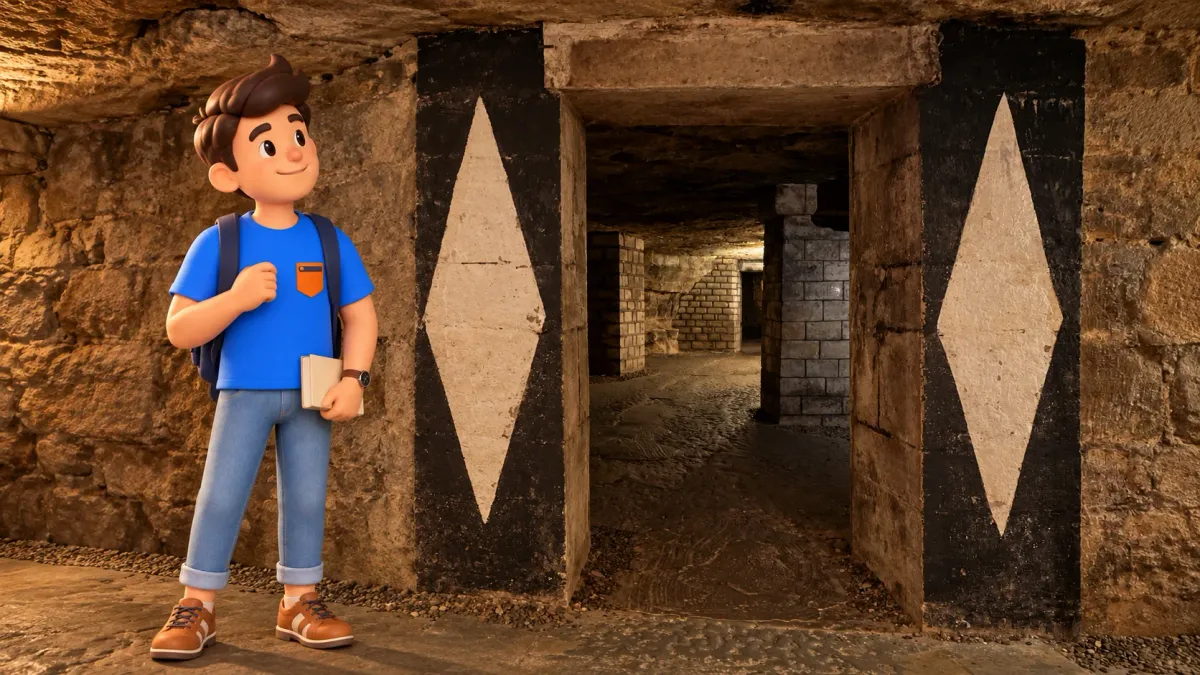
Choose the Paris Catacombs for the history of former quarries and a municipal ossuary. Choose the Paris Sewer Museum to understand the infrastructure and work that keep a city functioning. Both take you underground, but they offer different subjects, entrances and physical conditions. Build a three-hour outing around one visit and a nearby walk above ground.
The Catacombs are near Denfert-Rochereau in southern Paris. The Sewer Museum is beside Pont de l’Alma on the Seine. A short trip does not need both: one clear question, enough time inside and a pause afterwards give each place room to make sense.
Choose the subject before the underground visit
The Catacombs connect stone extraction, the growth of Paris and the transfer of human remains from overcrowded cemeteries. Their atmosphere calls for a thoughtful visit. The Sewer Museum follows water, engineering and the daily work of sewer workers within an operating network. Its interest lies in processes that usually remain out of sight.
Begin with what you want to understand. At the Catacombs, ask how a quarry became an ossuary and how the city preserved that place. At the Sewer Museum, ask what happens to water after use and how the network is maintained. These questions help you look beyond a striking underground setting.
Try RoadMe for a complete personal trip plan built around your interests, dates, pace and budget. Organising your days in the app is more convenient and efficient, giving an underground visit its place alongside meals, time to rest and other Paris discoveries.
| One outing | Time allocation | Total |
|---|---|---|
| Catacombs and the Denfert neighbourhood | 15 minutes approach, 20 admission and pavilion margin, 60 underground, 15 emerging and orientation, 30 street walk, 25 rest, 15 finishing | 180 minutes |
| Sewer Museum and the upper riverside | 15 minutes orientation, 15 admission, 75 museum, 15 emerging and fresh air, 30 upper-quay walk, 20 rest, 10 finishing | 180 minutes |
These are local planning estimates, not measured visits or queue guarantees. Travel from your accommodation and a substantial restaurant meal are extra. A longer wait or an absorbing display can reduce the optional surface walk. For the Catacombs, use the reserved entry time as the anchor and allow for the approach before it.
The Catacombs: a quarry transformed into an ossuary
Visitor entry is at 1 avenue du Colonel Henri Rol-Tanguy, on Place Denfert-Rochereau. The underground circuit runs in one direction for 1.5 kilometres, with about an hour recommended by the operator. You emerge at 21 bis avenue René-Coty. Keep that separate exit in your plan, particularly when arranging a meeting after the visit.
The story begins with cemetery conditions in eighteenth-century Paris. The authorities transferred remains to the former Tombe-Issoire quarries, with early evacuations from the Saints-Innocents cemetery between 1785 and 1787. The municipal ossuary was consecrated on 7 April 1786. Public visits began by appointment in 1809, adding another chapter to a place already shaped by extraction and preservation.
Move through the permitted circuit with attention to the explanations and inscriptions. Relate the former quarry spaces to their later use, then consider how the ossuary presents the memory of the people whose remains are here. Read the historical explanations and leave room for quiet observation.
The remains are fragile and must not be touched, and the same rule applies to the surrounding decoration. Private photographs are allowed without flash, a tripod or bulky equipment that obstructs others. Food and drink are prohibited within the circuit. Keep the refreshment break for the street afterwards.
The physical commitment matters before booking: there are 131 steps down and 112 up, with access only by stairs. The operator describes uneven, slippery ground, narrow spaces and low lighting. The site is inaccessible to wheelchair users and people using a walker. Contact the Catacombs about any specific access needs and read their current visitor advice before choosing this outing.
Pack a small bag within 40 × 30 × 20 centimetres and carry it in front or by hand. Suitcases, large bags, motorcycle helmets and pushchairs are not admitted. There is no cloakroom. Plan the visit at a point in your trip when you can arrive without those items; do not expect to leave them at reception.
Booking and the Nadar display
As checked on 14 October 2026, ordinary paid visits require a timed online ticket, released seven days in advance. Check your chosen date and time before arranging the rest of the day. The release window does not guarantee a remaining place. Visitors eligible for free admission collect their ticket on site on the day with the required valid proof; this is a separate exception to online booking.
Ordinary opening is Tuesday–Sunday, 09:45–20:30, with last admission at 19:30. The site closes on Monday, 1 January, 1 May and 25 December. Choose the actual visit date and keep children accompanied, confirming the applicable admission and supervision conditions when planning a family visit.
From 29 September 2026 to 31 January 2027, Nadar: Inventing Paris, from the Depths to the Sky adds a photographic introduction. It is in the ground-floor entrance pavilion and forms part of the Catacombs ticket and visitor route. It is not a separate exhibition to enter without the Catacombs admission arrangements.
The display uses reproductions because the original prints and documents are fragile. Images made in the ossuary in 1862, the sewers in 1865 and above Paris from a balloon in 1868 connect different ways of seeing the city. Allow a brief look within the pavilion margin; if you want longer, shorten the later street loop.
After the Catacombs, walk back through the neighbourhood
At the René-Coty exit, allow fifteen minutes to return to daylight and get your bearings. Then follow avenue René-Coty north towards Denfert-Rochereau. Continue by avenue du Général-Leclerc to rue Daguerre, take rue Boulard north and return via rue Froidevaux towards Denfert. Use public pavements and crossings throughout.
This surface loop is approximately 1.2 kilometres in the map model, with thirty minutes set aside for walking and looking around. It is additional to the 1.5-kilometre underground circuit. The ordinary streets make a useful change of focus: compare their daylight, building fronts and everyday movement with the spaces you have just left.
If you prefer to finish sooner, return towards Denfert without the Daguerre–Boulard loop. The modelled street return from the exit to the original entrance is about 735 metres, so the two doors are not interchangeable meeting points. Keep the rest allowance even when shortening the walk, then orient yourself for the next journey.
The Sewer Museum: how the city works beneath the streets
The Musée des Égouts de Paris is at Pont de l’Alma, on Esplanade Habib Bourguiba. The operator describes a roughly 500-metre visitor circuit taking 45–75 minutes. Allow the upper end of that range for this programme, so there is time to read explanations as well as look at the underground galleries.
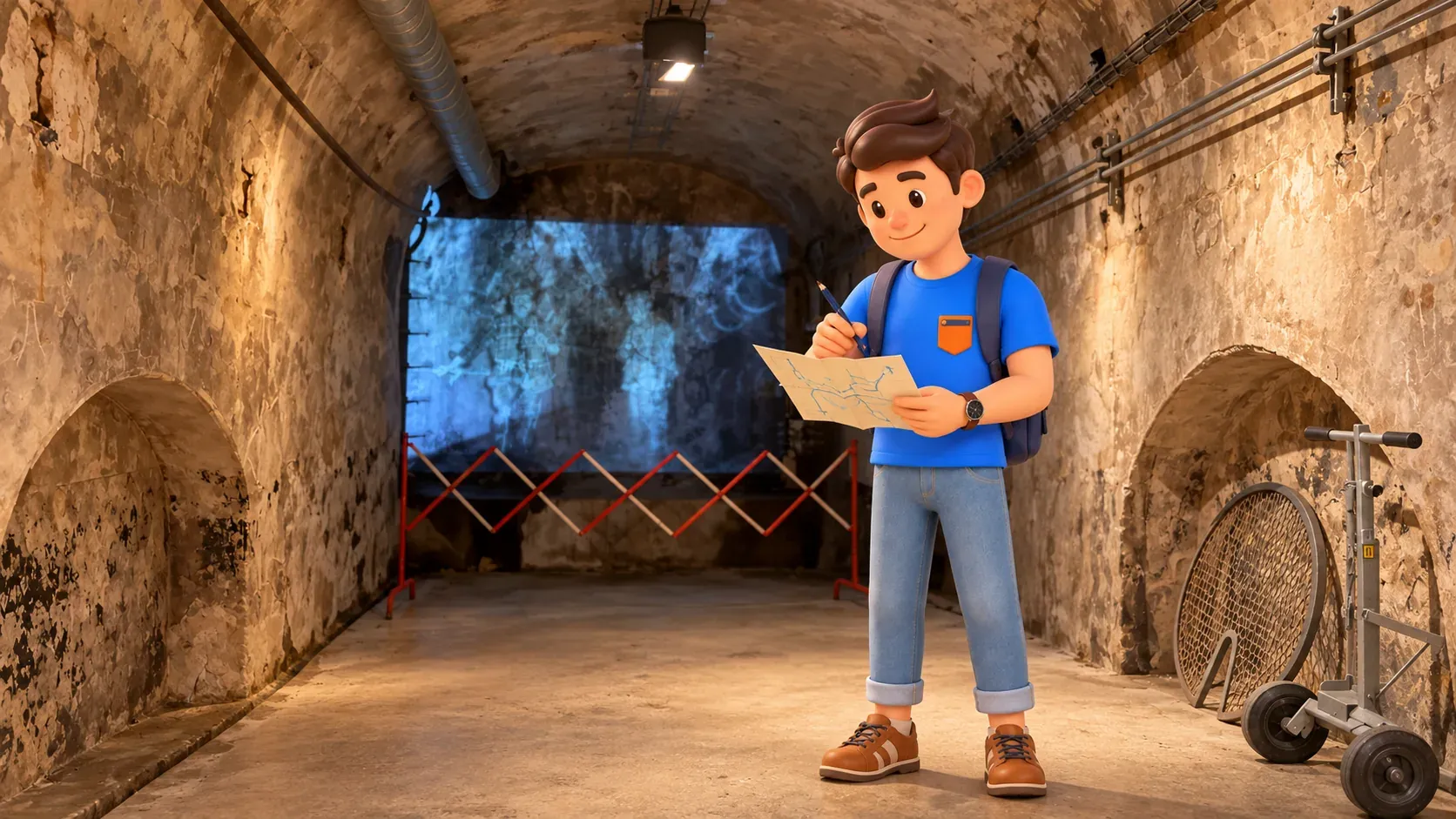
The permanent exhibition explains cleaning and maintenance, water regulation, sanitation history and the work of the people who keep the network operating. Models and industrial objects help connect an unfamiliar passage to a practical task. Choose one process to follow closely, then use the other displays to place it within the city’s wider water system.
Eugène Belgrand, brought into Paris’s water service by Haussmann in 1854, is central to the nineteenth-century story. He became director of Water and Sewers in 1867. Public sewer visits also developed in that period; the museum established in 1975 presented the history and equipment within the operating Alma site. The current visit is on the permitted museum circuit.
This is a working environment, so humidity and odours can be part of the experience. The museum recommends comfortable closed shoes and a layer. Stay within the marked route, keep behind barriers and do not touch anything in the wet gallery. Eating and drinking are prohibited inside, and the operator recommends washing your hands when you leave.
The owner describes a lift and accessible facilities. Ask the museum about the assistance and access you need before visiting. That arrangement is separate from the conditions of the public pavements and transport you use afterwards. Children must be accompanied; check the museum’s visitor advice for your group before setting out.
Ordinary opening, checked on 14 October 2026, is Tuesday–Sunday, 10:00–17:00, with last access at 16:00. The museum closes on 1 May, 25 December and the first fifteen days of January. It can also close because water rises in the network or operational problems affect the site. Check its current notice before leaving for Alma.
You can visit independently. On-site guiding depends on the arrangements available that day, and audio devices in English, French and Spanish are limited in number. If a particular guided visit matters to you, check that programme separately. The three-hour plan works with an independent museum visit.
From Alma to Pont Alexandre III at street level
After emerging, pause on the public esplanade, then take the upper, street-level public pavements along quai d’Orsay east. Use the marked crossings near Pont des Invalides and continue towards the left-bank approach to Pont Alexandre III. Stay on this upper route rather than descending to the lower Promenade Gisèle Halimi.
The selected map route is about 850 metres, with thirty minutes allowed for crossings and unhurried observation. Look at the relationship between river, quay and bridges after learning about the network beneath them. Stop where you can keep the pavement clear, then use the twenty-minute rest allowance before finishing.
Use RoadMe to prepare a complete personal day-by-day itinerary for your Paris trip around your interests, dates, pace and budget. Keeping it in the app makes organising the whole stay more convenient and efficient, including room to rest after an underground visit.
For a separate day in southern Paris, our Montsouris and Cité universitaire half-day walk changes the subject to landscape and residential architecture. Give that four-hour programme its own place in the trip. Here, finish with one underground visit understood and a surface walk that lets you return to the city at an easy pace.


