
Ukrainian Village in Half a Day: One Museum and an Architecture Walk

A half-day in Ukrainian Village can connect one museum with a compact architectural walk among active churches and neighbourhood streets. Choose either the Ukrainian National Museum of Chicago for a cultural and historical focus or the Ukrainian Institute of Modern Art for modern and contemporary work. The other institution becomes a brief exterior stop rather than a second full indoor visit.
Allow roughly four hours in the neighbourhood, apart from travel across Chicago. Saints Volodymyr and Olha, St. Nicholas and Holy Trinity provide three different architectural encounters. Their interiors depend on the communities’ actual access arrangements and worship; the route works from public sidewalks without assuming a succession of open doors.
Choose one main museum and check its real calendar
A useful four-hour outline gives the selected museum ninety minutes, the three church exteriors a combined hour, the other museum’s frontage ten minutes, movement forty-five and a break or flexible margin thirty-five. These are planning allocations rather than measured durations. If you want two substantial museum visits, give them a longer day instead of squeezing both into the same allowance.
RoadMe helps build a complete personal trip around your dates, interests and preferred pace. Try choosing heritage or modern art as this half-day’s focus, then balance your other Chicago days with the architecture, museums and outdoor time that suit you.
Check the chosen institution’s current visitor information before travelling. The National Museum and UIMA do not have an identical calendar, and a general listing may not reflect a holiday or special closure. If a particular exhibition matters, confirm that it is actually on view rather than relying on a collection description.
The route can begin near Superior Street and Oakley, move towards Chicago Avenue, then continue north to Rice and finally Leavitt. Adjust the order around the chosen museum’s opening window. A clear main visit is more useful than preserving an elegant map sequence when the gallery you wanted would otherwise be closed.
Begin around Superior and Oakley
The Ukrainian National Museum is at 2249 West Superior Street. Saints Volodymyr and Olha Ukrainian Catholic Church stands nearby at 739 North Oakley Boulevard. These close neighbours offer an easy starting area, but they are different institutions with separate entrances and purposes. Use the actual visitor address for the place you intend to enter.
Take a few minutes to notice how a museum, a church and residential streets share the same small area. Entrances and building scale provide a concrete way to look before you begin collecting names or dates. The neighbourhood remains a place where people live and work, rather than a set of cultural buildings isolated for visitors.
Stay on public sidewalks, keep doorways clear and cross at permitted places. A nearby courtyard or church property is not automatically a shortcut. The route does not require entering private spaces or photographing residents to convey a sense of the neighbourhood.
Choose the National Museum for heritage and community history
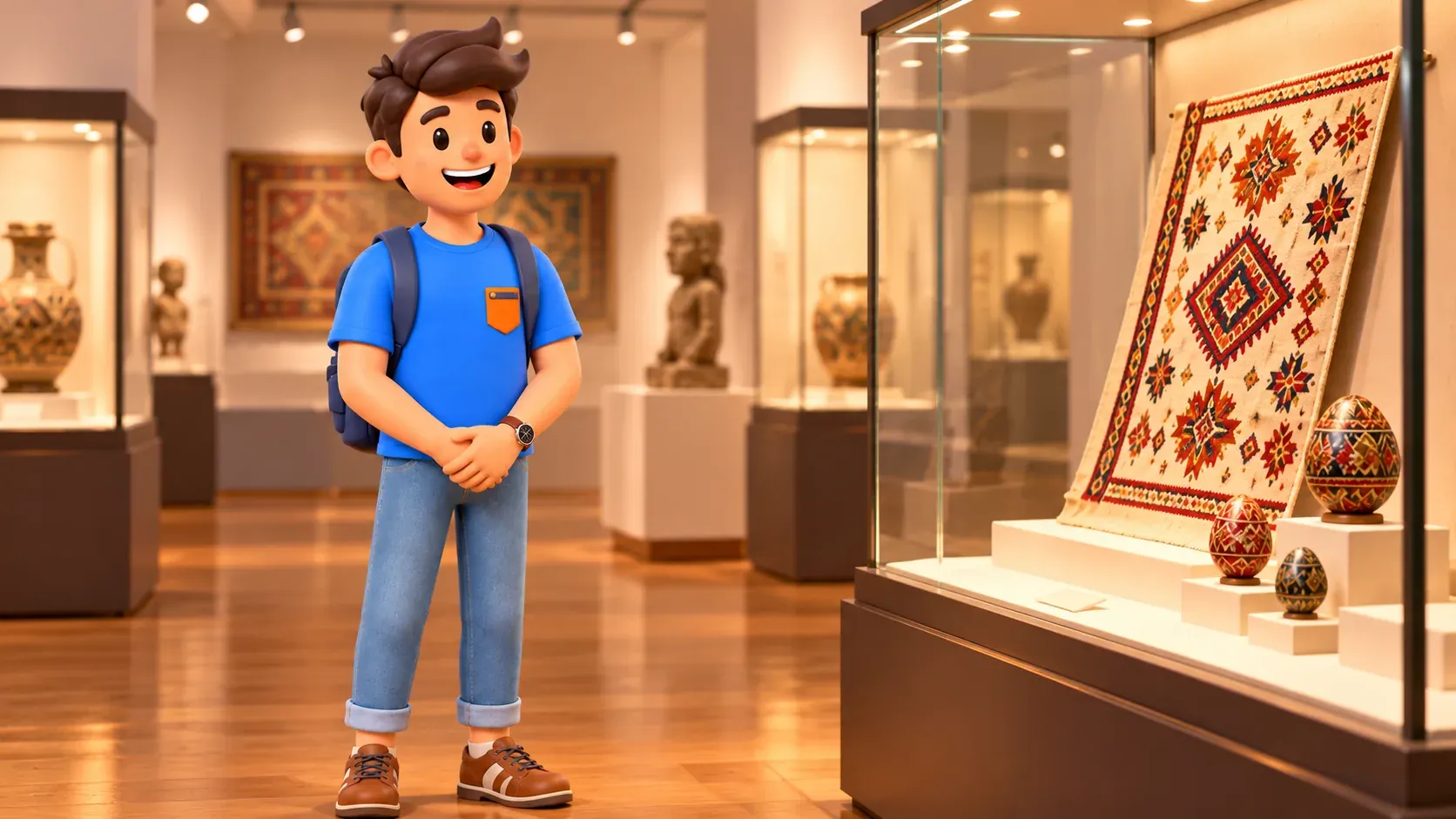
If the Ukrainian National Museum is your main stop, give it the first substantial indoor block. Its cultural material and archival context offer a way to think about Ukrainian-American life in Chicago. Let the galleries actually open on your date shape the visit; a museum’s full holdings are not necessarily the same as its current display.
Start with one question rather than an attempt to understand everything. A textile, an everyday object or an interpreted document can lead to questions about making, use and memory. Read the accompanying explanation before deciding what an object represents. Similar patterns or materials do not automatically imply identical origins or meanings.
Choose a small group of things to examine closely. Look first, read, then return to the details that now seem significant. This makes a ninety-minute visit useful without trying to memorise every date. If the available exhibition takes you in another direction, follow it rather than searching for a promised object that may not be displayed.
Keep access to archives, guided sessions and events distinct from an ordinary gallery visit. Research collections may require separate arrangements, and a workshop is not automatically running when you arrive. Check current admission conditions rather than borrowing prices or rules from a similarly named museum in another city.
Look at Saints Volodymyr and Olha from the street
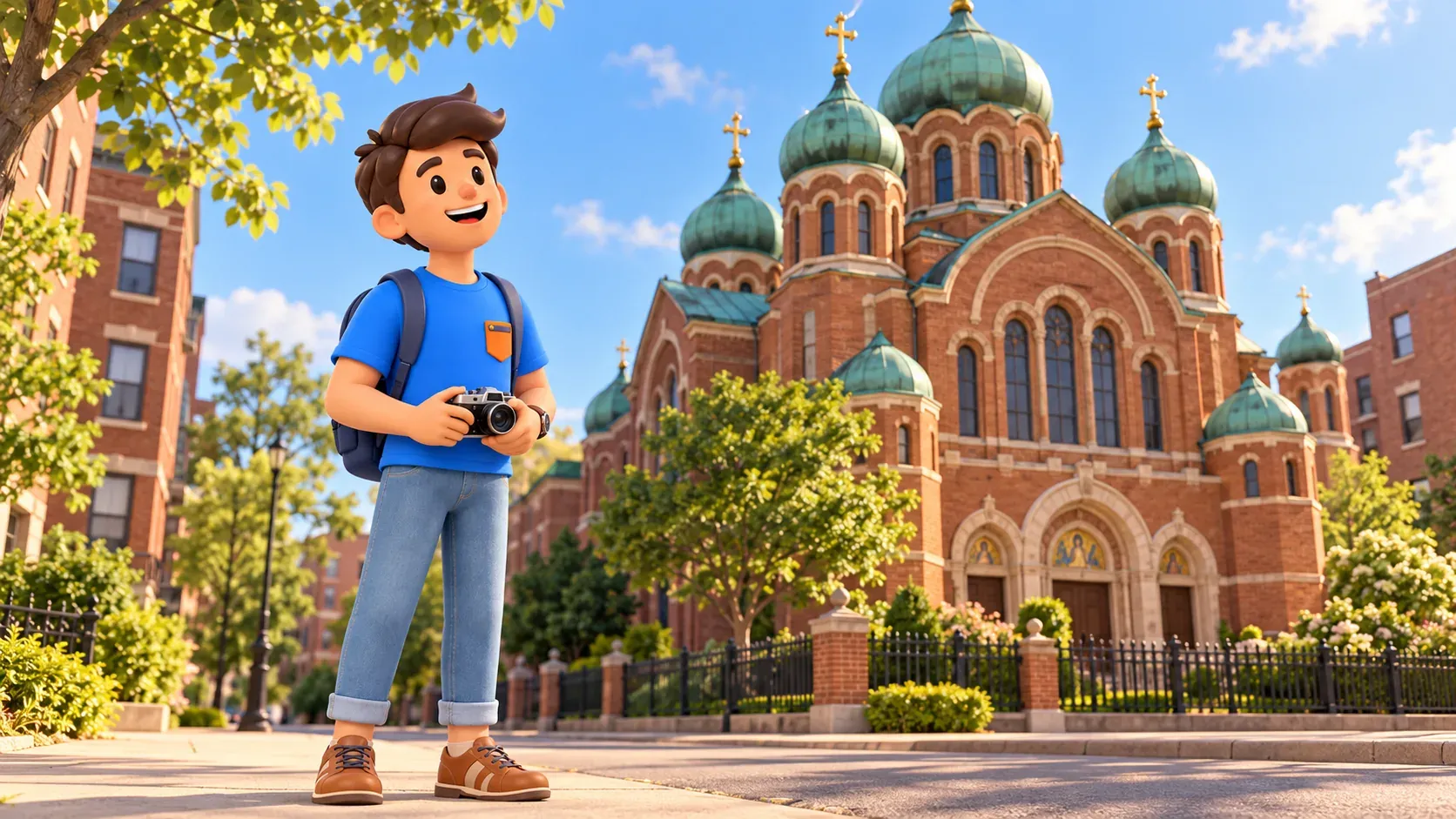
Saints Volodymyr and Olha is a Ukrainian Catholic church. From the public sidewalk, observe the domes, rounded openings and overall mass as parts of one composition. You can compare the main entrance with the building’s upper silhouette without treating every religious image as an ornament detached from its setting.
It is an active place of worship. A special open-house programme has its own date and does not establish ordinary sightseeing hours. Enter only when access permits and follow the community’s directions. Parish office hours describe administrative work, not a guarantee of an open church tour.
If a service is taking place, decide whether quiet attendance fits your purpose and the arrangements. Do not turn worship into a quick photographic stop or move around restricted areas. An exterior view already fulfils this part of the architectural walk, so there is no need to force an interior into the schedule.
Use UIMA as the alternative main visit
The Ukrainian Institute of Modern Art is at 2320 West Chicago Avenue. Founded in 1971, it approaches modern and contemporary art through Ukrainian and American experience. Choose it if you would rather spend the main block with artworks and current exhibitions than a heritage-oriented museum visit.
Its current visitor schedule is Wednesday to Sunday in the afternoon; verify the actual opening arrangements for your date. Admission is donation-based, and a suggested contribution should not be presented as a compulsory fixed ticket. Organised group visits require advance arrangements rather than an assumption of a guide on arrival.
Inside, choose one exhibition or a small group of works and give them time. Material, scale, placement and the relationship between pieces offer useful questions. You do not need to recognise every artist or agree with your companion’s response. Looking carefully and then reading the interpretation is a reasonable starting method.
If UIMA is the main museum, keep the National Museum to a short exterior stop today. If the National Museum is your main visit, UIMA can remain a frontage on the way. A building seen from outside should be described that way; it is not evidence that you have experienced the collection.
After UIMA, use Chicago Avenue and the public streets back towards Oakley, then continue north towards Rice. Keep the route simple rather than seeking shortcuts through institutional property. The walk between interiors and churches is part of the outing, with time for ordinary street observations and a pause.
Compare St. Nicholas without confusing church and office
St. Nicholas Ukrainian Catholic Cathedral stands at Oakley and Rice, with the church identified at 835 North Oakley Boulevard. Visitor information also uses a Rice Street location, while the parish office has its own address. For the walk, orient yourself to the actual cathedral frontage rather than assuming the office door is a sightseeing entrance.
From outside, look at how the group of domes and the lower building work together. Compare that silhouette with Saints Volodymyr and Olha rather than trying to assign one simple meaning to every architectural feature. A respectful view from the public sidewalk can be substantial even when there is no interior access.
If you hope to enter, check the community’s current visitor guidance and services. A worship timetable is not the same as a schedule of architectural tours. Keep dress and behaviour appropriate, follow photography instructions, and allow the church’s normal use to take priority over a visitor checklist.
Accessibility also depends on actual arrangements. If a particular entrance or assistance matters to your group, contact the community in advance rather than inferring an easy route from the street view. A short distance between buildings does not describe steps, standing time or access inside them.
Finish the architectural sequence at Holy Trinity
Continue by public streets northwards, then towards Leavitt near Thomas and Haddon, to Holy Trinity Orthodox Cathedral at 1121 North Leavitt Street. This is a different religious community from the two Ukrainian Catholic churches. Preserve those identities rather than grouping every domed building under one interchangeable label.
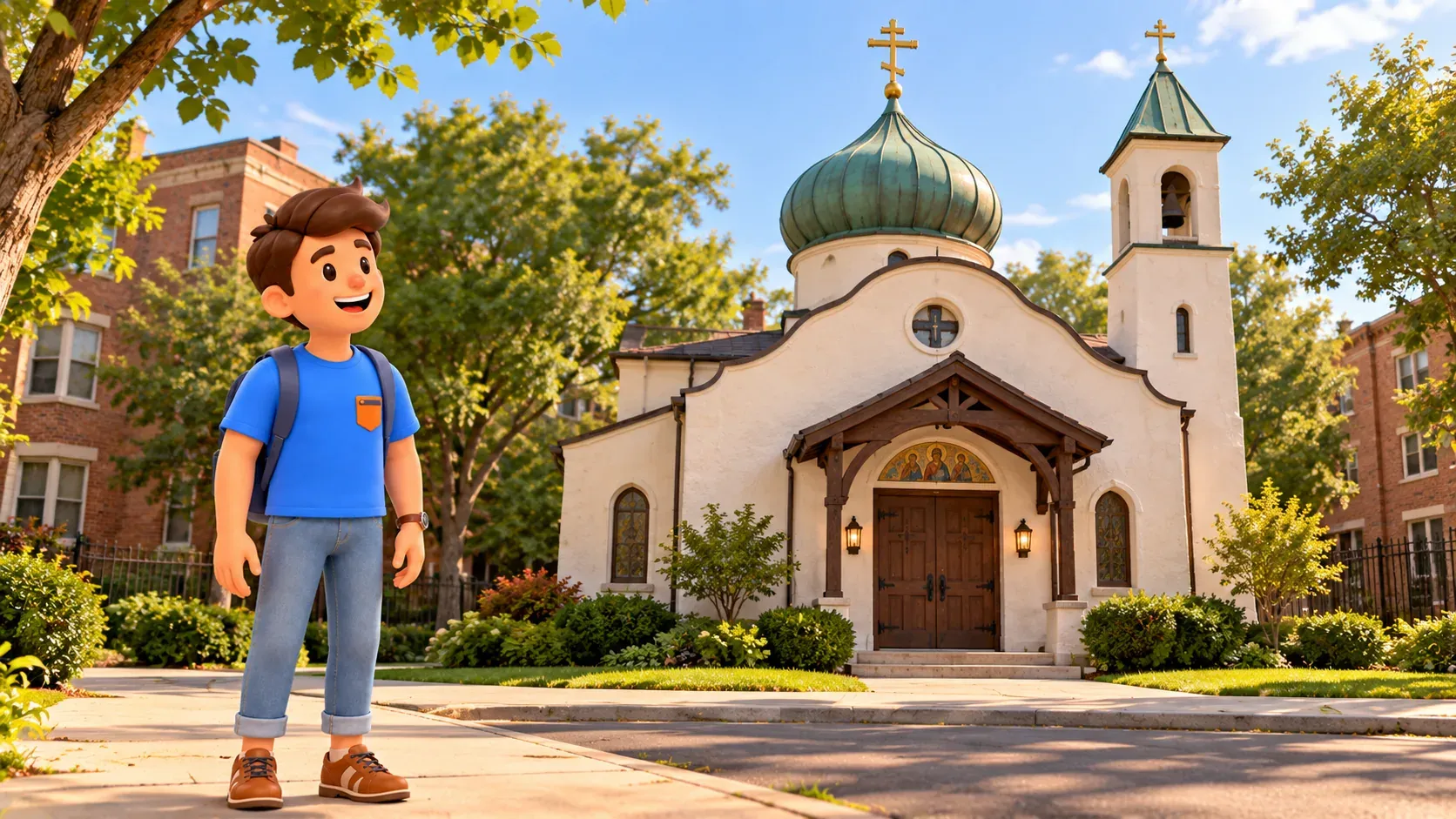
Holy Trinity was designed by Louis Sullivan and completed in 1903. Its compact form and stucco-covered walls offer a different comparison from the larger cathedral buildings seen earlier. Look at rooflines, entrance and the relationship between the church and its neighbourhood setting, not only the dome.
Keep the core visit outside unless a genuine public access opportunity is available. If you need assistance or a ramp, the cathedral asks for advance contact. Do not assume every entrance will be prepared simply because access information mentions a possible arrangement.
A short final comparison can bring the walk together: how do three buildings use mass, height and entrances differently? There is no requirement to rank them or turn the walk into a theological explanation. Several specific observations are enough to connect architecture with the real use of the places.
Keep the break and return journey realistic
Use the flexible margin for a rest or a longer main exhibition, and give a substantial meal its own time if necessary. Choose a place according to current opening and your needs. The route does not rely on a specific restaurant or on the idea that one dish explains a whole neighbourhood.
In rain or cold, protect the main museum and shorten the exterior comparisons. In good weather, let the streets take more of the margin. You can finish earlier without claiming a missed interior; the value of the outing lies in one real visit and a coherent architectural sequence, not completing every possible door.
RoadMe can organise the wider trip around the interests and pace that worked for you here. Try giving a second museum or a longer architectural visit another day, with realistic room for travel, meals and rest between experiences.
Plan the onward journey from the actual final stop, not automatically from Superior Street. For a different cultural corridor and park combination, save the Humboldt Park and Paseo Boricua half-day. Ukrainian Village has its own focus: a chosen museum, distinct religious architecture and enough time to look respectfully.


