
Humboldt Park and Paseo Boricua: A Half-Day Walk
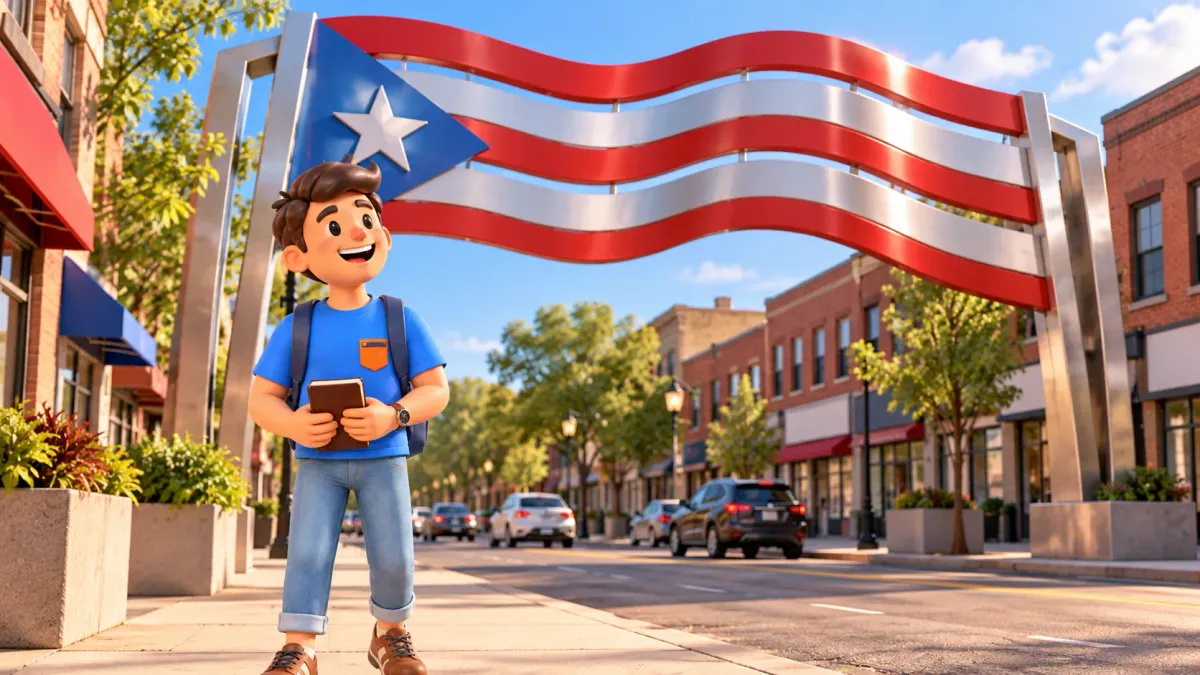
A half-day around Humboldt Park can connect Paseo Boricua’s steel flag gateways, a museum of Puerto Rican arts and culture, and a quieter lagoon walk. Begin on Division Street, make the museum a real indoor visit on an opening day, then finish near the park’s boathouse. The route works through relationships between places rather than a long catalogue of murals, businesses and monuments.
Allow roughly four hours in the area, separately from travel across Chicago. The important choice is calendar and order: the museum has a shorter Saturday window, while the street and park are different kinds of visits. If the galleries matter most, protect their time first instead of assuming they will still be available at the end of an unhurried afternoon.
Choose the museum day before arranging the walk
A balanced outline gives the gateways and Division Street around fifty minutes, the museum seventy-five, the park forty, movement thirty-five and a meal or rest forty. These are editorial planning blocks, not measured durations. They leave one substantial indoor encounter and a manageable outdoor ending without trying to cover all of Humboldt Park.
RoadMe helps build a complete personal trip around your dates, interests and preferred pace. Try giving Puerto Rican art and neighbourhood culture a focused half-day here, then balance the rest of Chicago with the museums, architecture and open-air time that suit you.
Check the National Museum of Puerto Rican Arts & Culture’s actual calendar. Its regular visiting days are Tuesday to Saturday, with a notably shorter Saturday and an admission cutoff before closing. Confirm the current arrangements rather than arriving at the last moment. The general visit is free; an organised guided group programme has separate advance arrangements.
On a suitable day, walk west from the eastern gateway towards the museum. If the available museum window is too short, begin indoors and change the street sequence accordingly. On a closed day, a street-and-park alternative is still possible, but it should be described as that rather than as a completed museum outing.
Start at the eastern flag on Division Street
The eastern Paseo Boricua gateway stands around Division Street and Artesian Avenue; the western one is at Mozart Street. Begin from a public sidewalk where you can see how the steel sculpture spans the street. These large works mark a cultural corridor rather than acting as the entrance and exit of a closed visitor attraction.
The gateway flags date to 1995 and received Chicago Landmark recognition in 2022. Their role as visible markers of Puerto Rican presence is more useful to understand here than a competition over their dimensions. Notice the material and the way a flag form has become a substantial urban structure.
Photograph from a permitted place without stepping into traffic to centre the image. The surrounding street belongs in the experience: shops, housing and everyday movement explain how a gateway works in a living neighbourhood. There is no need to wait for an empty road or imagine the whole corridor as a festival happening on demand.
Walk the corridor towards the western gateway
Follow Division Street west using ordinary public sidewalks and crossings. Let the interval between the flags provide time to see the relationship between cultural expression and daily uses. An individual shopfront, community space or mural may catch your attention, but the walk does not require entering every business or identifying every painted surface.
Pay attention to the same street at different scales. From farther away you see the rhythm of buildings and the gateway’s position; close up you can notice materials and entrances. These observations give the route substance without relying on an exhaustive list that would become outdated when a business or mural changes.
Keep entrances clear and ask before photographing a person as your main subject. Residents and customers are continuing their day, not providing a scene for a travel album. A cultural corridor can be welcoming and interesting while still requiring the ordinary consideration you would give any working neighbourhood.
At the western gateway near Mozart, look back along the street before continuing towards Sacramento. The two flags frame one section of a much larger city. Treat this as a useful point of orientation rather than a finish line after which the neighbourhood’s culture suddenly stops.
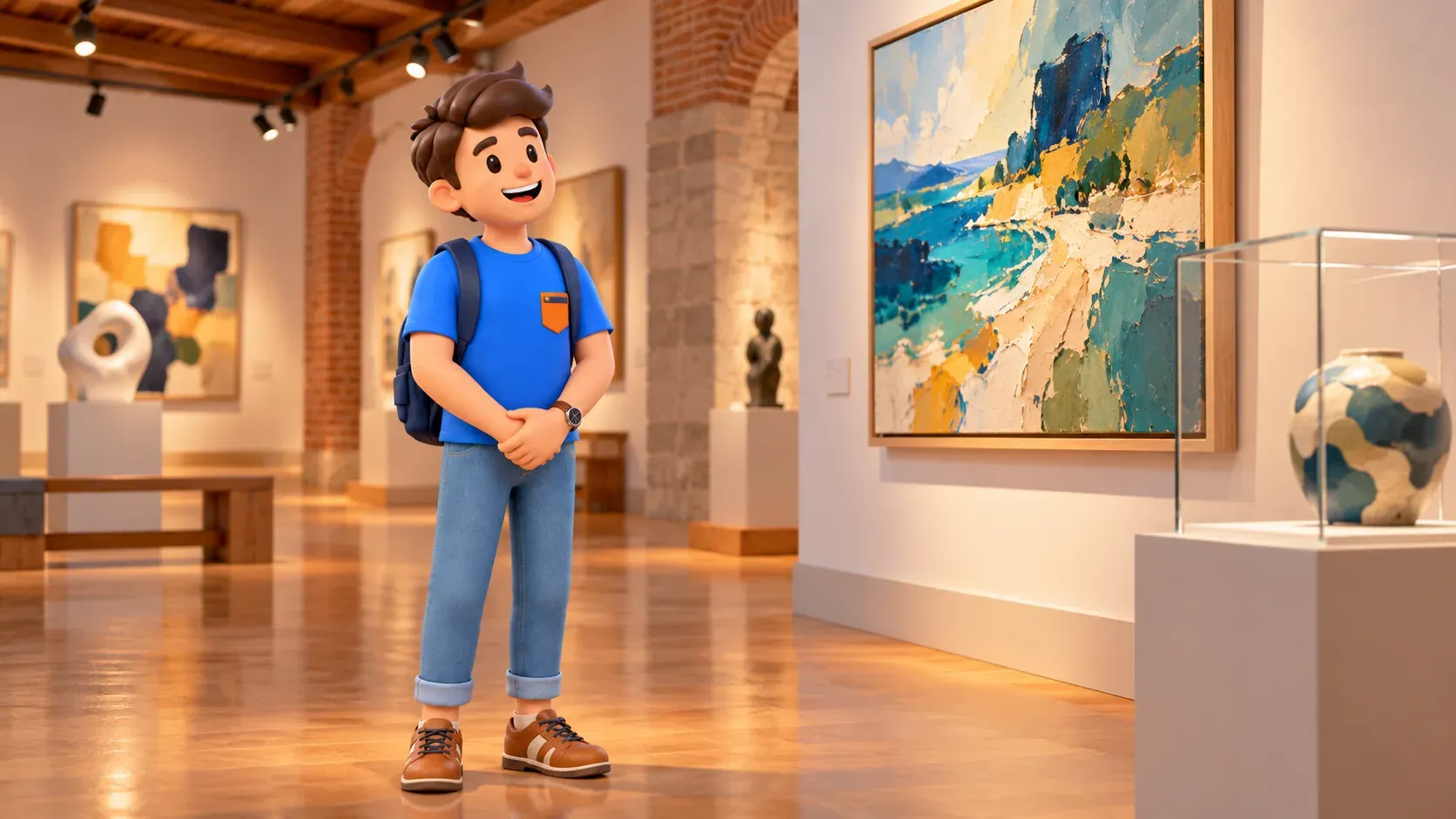
Give the museum an actual place in the half-day
The National Museum of Puerto Rican Arts & Culture is at 3015 West Division Street, near Sacramento, in the historic Humboldt Park Receptory and Stables. Use the museum’s visitor entrance and current directions rather than the general address for the entire park. The site’s former use is part of its setting, but the visit should follow the galleries actually open to the public.
Start with orientation, then choose one exhibition or a small group of works for closer attention. The museum presents experiences and art connected with Puerto Rico and its diaspora. Let the artists and interpretation make those connections specific instead of treating one object as a complete explanation of every Puerto Rican experience.
Look first, read afterwards, then revisit what changed in your impression. Material, colour, scale and the way a work is placed can provide manageable questions. You do not need specialist knowledge or a complete list of artists before entering; a few grounded observations can make a short museum visit meaningful.
If visiting together, choose one work to discuss after leaving. Ask what each person noticed and how the explanation affected that view. There is no requirement to agree on a favourite. The museum and street may suggest related questions, but they remain different settings rather than interchangeable versions of the same cultural display.
Separate free admission from events and guided programmes
General admission does not promise a workshop, performance or guided tour whenever you arrive. Check the actual exhibition and event calendar if a particular programme matters. A temporary presentation can change, and a photograph from a festival is not evidence that the same activity takes place throughout the year.
Groups needing an organised visit should follow the museum’s advance booking instructions. Give confirmation and any programme conditions their own place in the plan rather than assuming a large group can appear and receive a personal tour. A free gallery visit and a prepared guided session involve different arrangements.
The shorter Saturday makes order especially important. Leave time for arrival and the admission cutoff, not just the desired minutes inside. If the museum is your priority, start there early and reduce or rearrange the street segment. A relaxed walk works better when it protects the visit you actually came for.

Make the transition into the park deliberately
After the museum, use actual public crossings and an open park entrance towards the lagoon and boathouse. Check current park signs rather than assuming the nearest gate leads directly to every feature. The museum address, the park’s general listing and the boathouse are useful for different purposes and should not be treated as one arrival point.
Choose a short route through the paths that are open and comfortable on the day. You do not need to make a full circuit of the park or add every garden, monument and facility. Give the transition enough time to notice how the street edge changes into lawns, trees and water.
Weather can alter the balance. In rain or cold, preserve the museum and shorten the outdoor section. In pleasant conditions, use more of the flexible margin in the park. A route that adjusts to attention and conditions is more useful than insisting on the same distance in every season.
Read the boathouse through its landscape
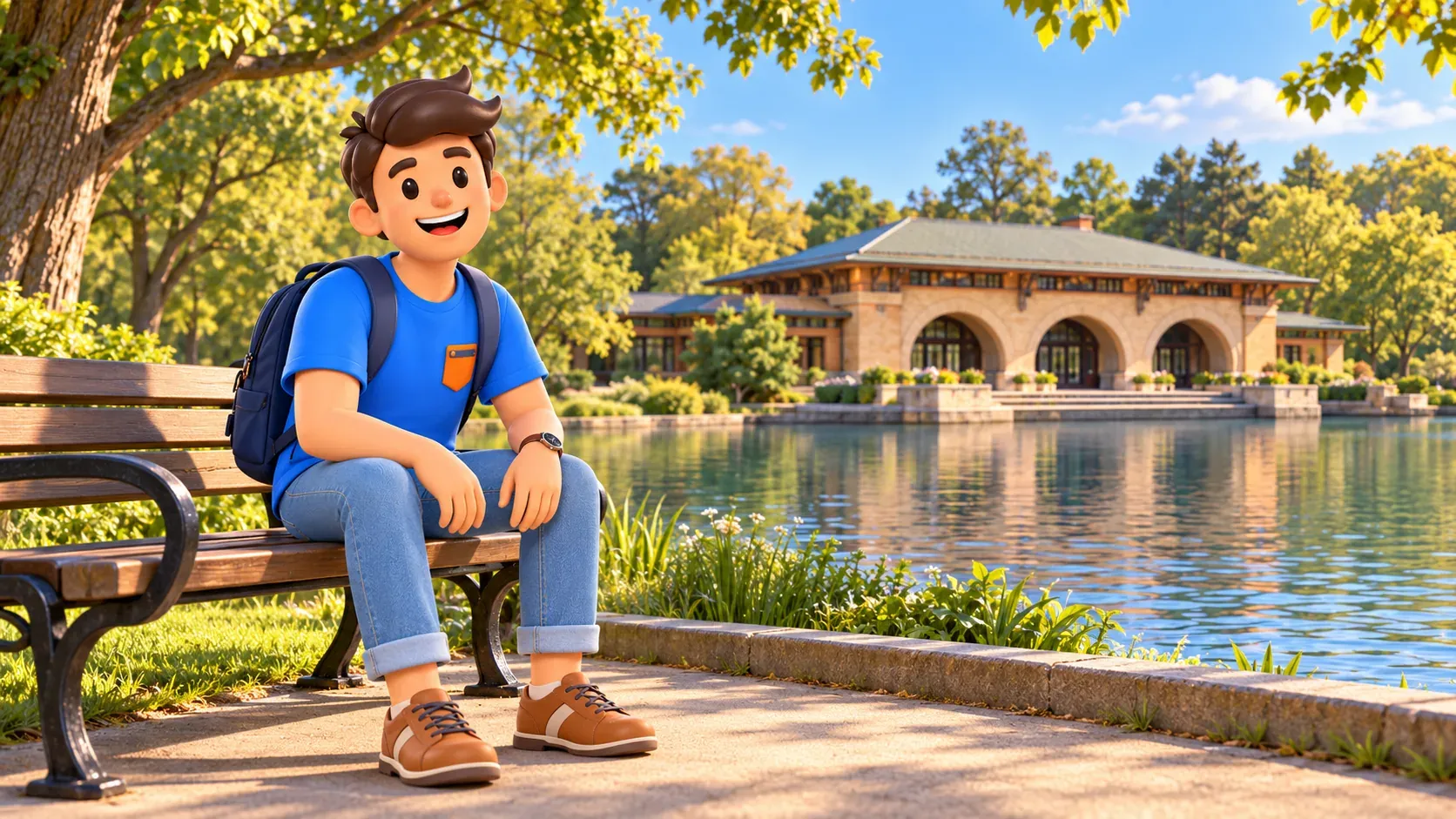
The Humboldt Park Boathouse Pavilion combines broad rooflines and large arches with the lagoon setting. Rather than treating it as a structure detached from its surroundings, look at how openings frame water and greenery. The relationship to the park is a large part of the architectural interest.
From permitted paths, compare the view towards the building with the views it opens towards the lagoon when those exterior areas are accessible. Keep the visit outside unless there is a real public access arrangement. An open-looking arch does not automatically grant entry to every room or space beyond it.
The name boathouse does not mean a boat rental or ride is included in your walk. Any water activity would require its own operating conditions, time and arrangements. This plan needs only the architecture, permitted outdoor viewpoints and a comfortable place to pause.
Stay on suitable paths away from wet edges and respect temporary closures or event areas. You can understand the building and water from a modest stretch without searching for an unrestricted complete loop. If one approach is unavailable, use a signed public alternative or shorten the stop.
Let the park pause finish the route
Find an appropriate available bench or other permitted resting place and stop without immediately adding a new destination. After the gateway street and the galleries, the lagoon offers another kind of attention. Look at reflections, movement and the relationship between broad lawns and more enclosed planting.
A meal can come before the museum or after the street, according to real opening times and your group’s needs. Choose a place using its current menu and availability. This route does not depend on a named restaurant, and no single dish needs to represent the entire neighbourhood or its culture.
If you prefer a longer meal, extend the outing or reduce optional park time. Do not compress the museum into a rushed passage to preserve every other part unchanged. The most satisfying version contains one properly experienced interior and an outdoor walk you still have the energy to enjoy.
Leave from the actual park exit
Plan the next journey from wherever you really finish, not automatically from the eastern gateway. Check current transport and the walk to the chosen exit. Facilities inside the park have separate hours, so do not rely on a particular indoor amenity simply because it appears in a general listing.
RoadMe can organise the wider trip around the interests and pace that worked here, leaving room for culture, park time and rest. Try giving another neighbourhood or a longer exhibition visit its own day rather than attaching it to an already complete half-day.
For a different museum-and-street comparison, save the Pilsen walk around the National Museum of Mexican Art. Humboldt Park and Paseo Boricua have their own sequence: a marked cultural corridor, a real museum visit and a quiet landscape ending that keeps the outing coherent.


