
Two Days in London: Royal Landmarks and the Thames

For two days in London, give each day its own geography. Spend the first around Westminster, the royal park and the West End; devote the second to the Tower, the river and Bankside. You will see familiar London landmarks while allowing the spaces between them to become part of the trip.
This plan suits two full sightseeing days. Arrival, luggage and airport journeys need separate time. Most stops are exterior visits, with a choice of one substantial admission each day. If you have only one full day, our one-day Westminster and Thames walk provides a more useful starting point than compressing both days below.
Two days, two different experiences
The first day moves from Parliament Square through St James's Park to Buckingham Palace, then along The Mall to Trafalgar Square and Covent Garden. The second starts around the Tower of London, crosses Tower Bridge, continues towards Borough Market and follows Bankside to Tate Modern. Finish across Millennium Bridge near St Paul's Cathedral.
Allow roughly four to six kilometres on the first day and five to seven on the second, depending on approaches and detours. These are planning estimates, not measured tracks. Each day works best with about seven to nine hours including meals, rests and an optional main visit. Choose the admission before deciding how much walking to keep.
For a two-day programme shaped around your interests, try RoadMe: the app develops a personalised plan using your dates, pace and budget. It is a convenient way to turn this broad outline into a trip that makes sense for you.
Check your actual weekdays before assigning the order. Borough Market is normally closed on Mondays. If food at the market matters, put the riverside day on an operating day and use Monday for the royal centre. Holiday arrangements can differ. A weekend, two weekdays and an arrival afternoon followed by Sunday are three different planning problems.
Day one morning: begin with Westminster
Start at Parliament Square, where the Abbey, Parliament and Elizabeth Tower establish the first day's setting. Look at the buildings from the public spaces and make a short approach towards Westminster Bridge for the river view. This first encounter is about the relationship between buildings and water; the second day will offer a longer riverside experience.
Choose whether Westminster Abbey is today's main admission. A proper interior visit changes the morning, so give it its own booked time and shorten the later programme. Sundays are for services rather than ordinary tourist sightseeing. If you stay outside, use the time to notice the carved entrances and different silhouettes instead of immediately searching for another attraction.
Through St James's Park to the palace
Continue towards the eastern side of St James's Park through public streets around Horse Guards and Birdcage Walk, then choose an open path beside the lake towards Buckingham Palace. The park creates a useful change from stone facades to water and trees. Henry VIII used the area as a deer park; today's softer landscape invites a different kind of royal encounter.
Make room for a genuine pause before the palace frontage and Victoria Memorial. Seeing the facade, attending the Changing of the Guard and entering the State Rooms are separate activities. This outline includes the exterior. If a ceremony is important, confirm its date and arrangements and adjust the morning around it. The State Rooms open in summer, with selected special tours at other times.
Day one afternoon: art or a slower West End
Follow The Mall towards Trafalgar Square, then stop for lunch in the surrounding area. After the ceremonial approach, the square gives you a wider sense of central London: people crossing it, fountains, the column and the gallery frontage. Decide here whether you want an indoor focus or more time in the streets.
The National Gallery offers free general admission, with free tickets available for fast-track entry and walk-up admission also possible. Some exhibitions cost extra. Choose a limited group of rooms rather than treating the entire collection as an afternoon task. If you visited the Abbey in the morning, keep the gallery as another day's possibility and continue at an easier pace.
Finish around Covent Garden
Continue east from Trafalgar Square towards Covent Garden. The piazza, market buildings and neighbouring streets make a compact final area. Browse according to your interests, have a drink or simply watch how the atmosphere changes as people arrive for the evening. Street performance depends on what is happening that day; it is a possibility rather than a scheduled promise.
A West End show can provide a separate evening, provided you choose and book the actual performance. Allow time for dinner and arrival at the venue, and finish sightseeing early enough to enjoy it. If you prefer an unstructured evening, Covent Garden is already a satisfying conclusion. Keep enough energy for tomorrow's longer river walk.
Day two morning: the Tower and a decision
Begin near the Tower of London. Its fortified river setting offers a different perspective after the palace quarter. William the Conqueror established the fortress in the eleventh century, and its later roles included palace and prison. Looking at the enclosing walls from outside gives that history a physical scale, even when you are not entering.
If the Tower is your main visit, book for your date and let it occupy a large morning block. The operator recommends at least three hours, depending on queues. The Crown Jewels and interior spaces are part of an admission visit, not something available from the public riverside. After a full Tower visit, shorten the afternoon and omit another museum interior.
Cross Tower Bridge, then head west
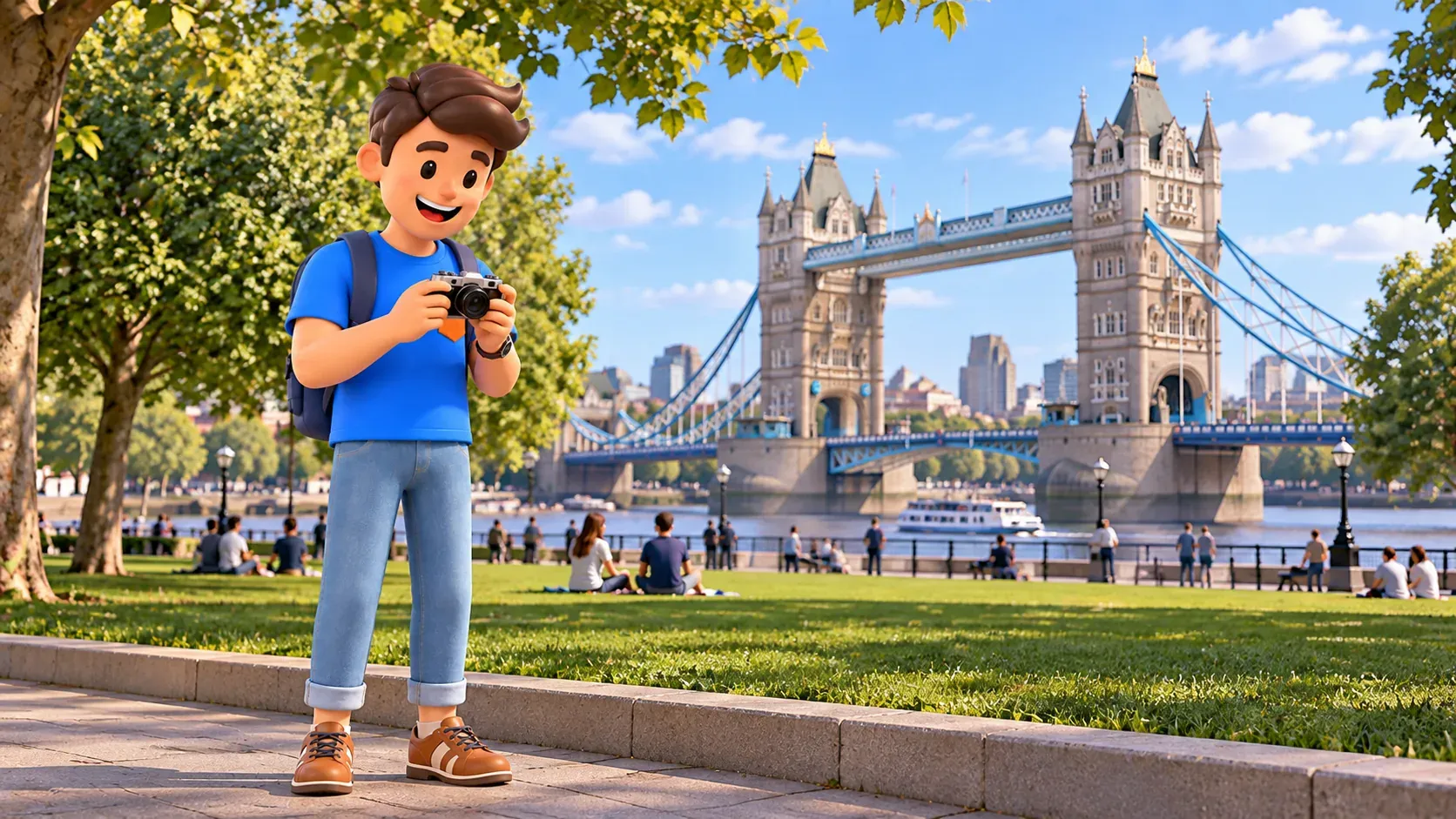
From the Tower area, approach Tower Bridge and cross by the pedestrian pavement at road level when the crossing is available. Follow current signs and any temporary restrictions. The high-level Walkways, Glass Floors and Engine Rooms belong to a separate visitor attraction. Walking across the bridge does not include those spaces or their ticketed experience.
On the southern side, turn west towards the London Bridge area. The river can guide your sense of direction, but the public route may use connecting streets as well as the waterfront. Tower Bridge and London Bridge are different crossings. Keep the Thames generally to your right as you move west; use current navigation for the exact open path.
Borough Market: a lunch stop with a calendar
Plan lunch around Borough Market and nearby Southwark Cathedral. The market is free to enter and normally trades Tuesday to Sunday, with Monday closure and holiday exceptions. Its Sunday day is shorter than Saturday's, so lunch is a more useful target than assuming all stalls will still be serving in the evening. Check the actual date before making food here essential to the plan.
Choose a meal first, then browse. Food counters, produce and narrow passages can turn a quick look into a longer stop, especially when the market is busy. If the space feels crowded, move to a nearby eating place rather than making the queue the centre of the afternoon. The cathedral exterior offers another architectural pause close to the market; an interior visit would depend on its own arrangements.
Bankside and one optional art visit
Continue west through Bankside towards Tate Modern, following available public paths. The sequence shifts from food and small streets to a broad cultural riverfront. Notice the changing scale of buildings and the view across the water. You can enjoy this section as a walk without assigning a separate visit to every building you pass.
Tate Modern's general gallery admission is free, while special exhibitions and events can charge separately. If the Tower remained an exterior stop, choose a modest art visit here, perhaps around an hour to an hour and a half as your own planning limit. If you spent the morning inside the fortress, retain Tate as an exterior landmark and use the time for rest.
Make the second day work for your own priorities with RoadMe, which helps build a personal programme around the experiences you enjoy. Download London while online beforehand so that offline maps and navigation are ready when you explore Bankside.
End across Millennium Bridge
Cross the pedestrian Millennium Bridge towards St Paul's Cathedral when the route is open. After several hours beside the river, changing banks gives the day a clear final movement. Look back towards Bankside, then continue to the public streets around the cathedral. The dome becomes a destination rather than another distant feature in the panorama.
The main plan finishes outside St Paul's. Sightseeing inside is a separate ticketed visit with its own calendar and last-entry arrangements, so do not leave it as an assumed late-afternoon extra. If the cathedral interior matters most, give it an earlier block and reduce the Tower or gallery section. A deliberate finish is more useful than arriving after the visit you wanted has closed.

Adjust the plan before the day becomes tiring
For rain, give each day one indoor focus: the Abbey or National Gallery in the centre, then the Tower or Tate on the riverside day. Reduce the exposed walking around that choice. For a gentler trip, finish day one at Trafalgar Square and day two near Borough Market or Tate. There is no need to preserve every final section after a long admission.
Before leaving, check your journeys to the starts and from the finishes, selected tickets, market trading and any access needs. These broad walks do not guarantee that every approach avoids steps or that lifts are operating. Comfortable shoes, water and rain protection matter, but so does leaving room to sit. Two days become more memorable when each has a character of its own and enough space for the places you especially enjoy.


