
One Day in London: Westminster, a Royal Park and the Thames
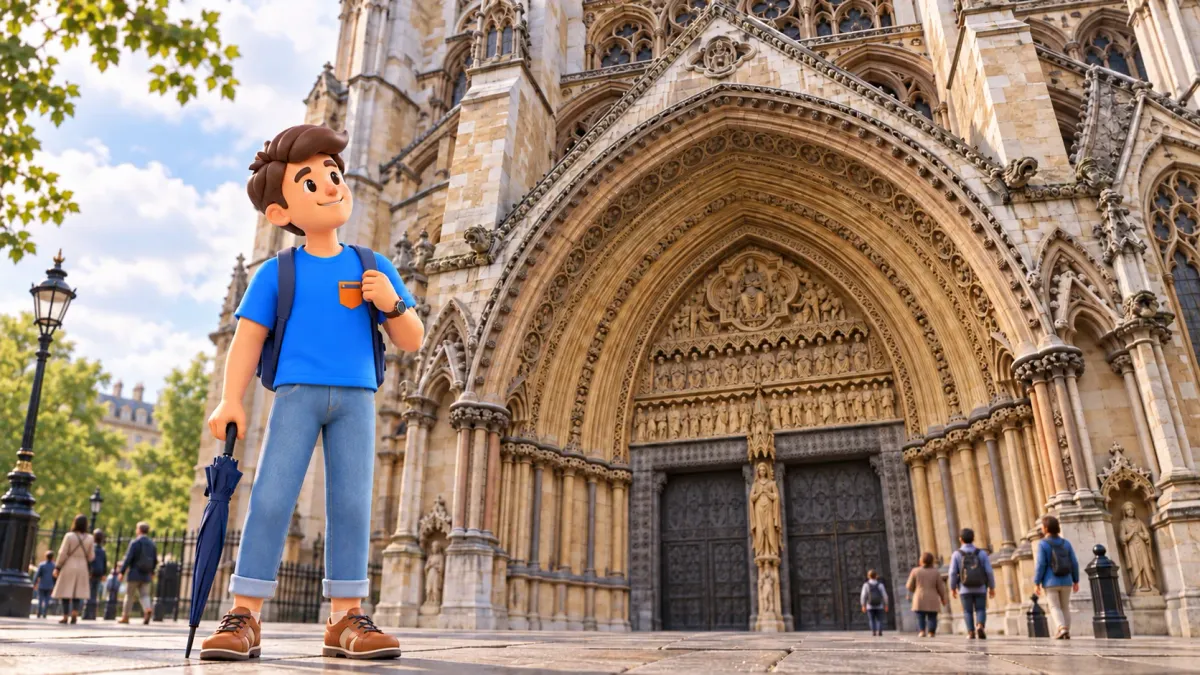
For one day in London, choose a connected walk: Westminster in the morning, St James's Park and Buckingham Palace before lunch, Trafalgar Square around the middle of the day and the south bank of the Thames afterwards. The sequence gives you famous buildings, a green pause and river views, with time to notice the city between the landmarks.
The main version is an outdoor itinerary. Add the National Gallery as one optional visit if paintings appeal to you. Entering the Abbey, touring palace rooms or riding the London Eye requires a different allocation of time. If you are still choosing an approach, start with our guide to the best starting area for your first London walk.
The shape of the day and who it suits
Start around Parliament Square and finish on South Bank, near the National Theatre or Oxo Tower. The main sequence does not require transport between attractions. Plan your journey from your accommodation to the start, and your return afterwards, separately. This is a full free day in the city, rather than a suggestion for a brief airport connection.
Allow roughly five to seven kilometres of walking, including approaches and small detours. This is an estimate for the chosen sections, not a recorded distance. Park paths, entrances and your finishing point will affect the total. Set aside about seven to nine hours overall, including food, pauses and a possible gallery visit. Walking time alone does not describe the workload.
- Morning: Parliament Square, the Abbey exterior and the river by Westminster Bridge.
- Later morning: St James's Park and Buckingham Palace from outside.
- Middle of the day: The Mall, Trafalgar Square, lunch and an optional National Gallery visit.
- Afternoon: cross the Thames on a Golden Jubilee pedestrian bridge and walk towards the National Theatre.
- Optional continuation: the riverside stretch towards Oxo Tower.
Make this day easier to plan around your own interests with RoadMe: the app develops a personalised route around your dates, pace and budget. It turns a general walking idea into a programme for your particular trip that is convenient to use while exploring.
All durations are approximate. The schedule does not depend on the Changing of the Guard or a particular queue. If a substantial interior visit is your priority, choose it first and reduce the outdoor sections to match, rather than asking the rest of the day to absorb the extra time.
The first hour: Westminster and the river
Approach Parliament Square and establish how the Abbey, Parliament and the clock tower relate to one another. The Abbey is separate from the parliamentary building. Big Ben is the great bell within the Elizabeth Tower. Small distinctions like these help a familiar postcard view become a group of places with different purposes, without turning the morning into a long history lesson.
Make a short approach towards Westminster Bridge for the river view, then return to the direction of the park. In the main itinerary, there is no need to cross to the south bank yet. The river crossing comes after the royal quarter and Trafalgar Square, keeping the day in a clear sequence instead of doubling back through the centre.
If Westminster Abbey is your main reason for coming, replace this first outdoor hour with a proper visit and reduce the later programme. Tourist admission requires its own ticket; on Sundays the Abbey opens for services rather than ordinary sightseeing. Attending worship should not be treated as access to the sightseeing route. Check arrangements for your actual date before booking and setting out.
St James's Park: changing the scale
After the monumental buildings, head towards the eastern side of St James's Park, using the Horse Guards and Birdcage Walk area as orientation. Follow public streets and available park entrances rather than assuming a straight line through unfamiliar passages. Continue beside the lake towards Buckingham Palace, choosing an open path that suits the conditions.
The park began as part of the royal landscape: Henry VIII made this a deer park. On today's walk, notice the result of later changes in the water, trees and gradually opening views. The formal city is connected to somewhere you can simply sit. A pause here gives a different kind of attention to the morning after looking at large facades and busy crossings.
Use the park for your first real break. If you want longer by the lake, shorten an optional admission later rather than sacrificing the pause. In wind or rain, choose a shorter path towards the palace instead of making a complete circuit. The park is part of the experience, not an endurance task to finish before reaching the next important building.

Buckingham Palace without relying on a ceremony
At Buckingham Palace, pause near the public frontage and Victoria Memorial. The broad space lets you see the building from a distance. Separate three activities: looking at the palace, waiting for the Changing of the Guard and entering the State Rooms. Only the first belongs to this itinerary's main version.
If the ceremony matters, confirm its date and arrangements, then reshape the morning around it. Do not assume that a relaxed park visit, a convenient viewing position and the original lunch time will all fit unchanged. A free event still needs time for approaching and waiting. Without a ceremony, the setting remains a worthwhile part of the walk.
The State Rooms open in summer, with selected special tours at other times. A palace ticket therefore adds a substantial separate visit. If that is your choice, omit the gallery or the long riverside finish. A single day has a useful natural limit: a few meaningful experiences are easier to appreciate when there is space between them.
Along The Mall to Trafalgar Square
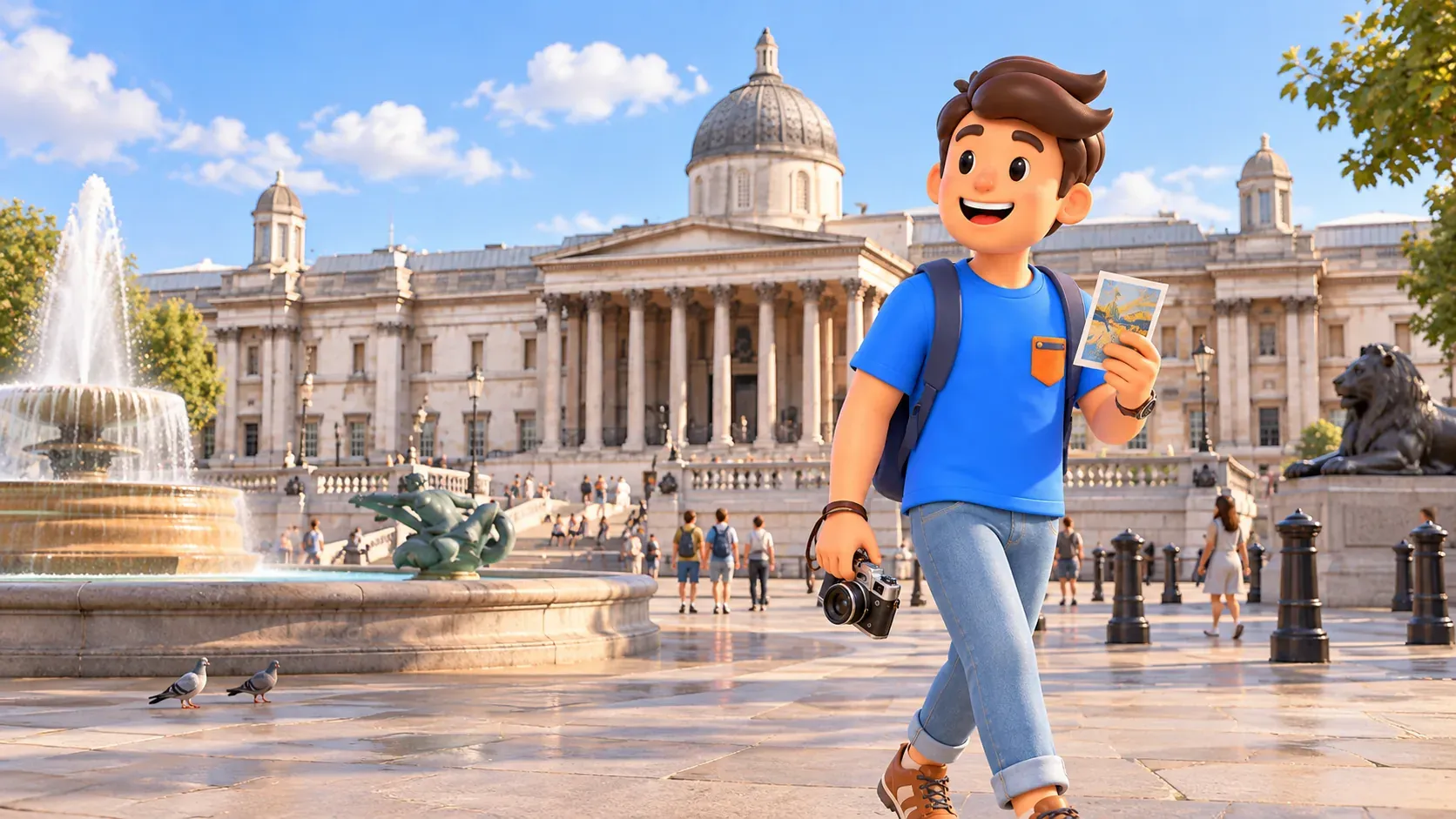
Continue from the palace along The Mall towards Trafalgar Square. The long urban perspective changes the rhythm after the park paths. On reaching the square, take a moment before heading to any museum entrance. Find Nelson's Column and decide where to look across the space. This short pause marks the transition from the royal quarter to a busier central setting.
Have lunch around this part of the day. Choosing somewhere near your current section is more practical than crossing London for a single celebrated restaurant. The itinerary does not require a particular venue or pretend to know your food budget. What matters is allowing a proper break, then deciding whether a museum still sounds enjoyable.
With less time, Trafalgar Square can conclude the first part. The river then becomes a separate short continuation rather than another obligation. Avoid moving every possible addition into the evening: waiting and crowded streets can create fatigue that the kilometre count alone does not capture. An enjoyable shorter day is still a worthwhile introduction.
One optional admission: the National Gallery
The National Gallery is directly beside the square. General admission is free. You can book a free ticket for fast-track entry, and walk-up admission is also available. Some exhibitions charge separately. The main entrance is in the Sainsbury Wing. These general visiting arrangements were checked on 16 October 2026.
For this itinerary, choose a small group of galleries or a few paintings that interest you. Allow roughly an hour to an hour and a half in addition to lunch. That is a planning boundary you set, rather than a prescribed museum duration. If you want to stay longer, use a shorter river finish. Some rooms may close for work, so the usual location of a particular painting is not guaranteed.
If paintings are not your interest, skip the visit without feeling that the day is incomplete. The square and neighbouring streets offer an experience of their own. Use the time for rest or a more attentive riverside walk. A museum's fame is a reason to consider it, rather than an instruction to enter regardless of what you enjoy.
Afternoon: cross the Thames and reach South Bank
From Trafalgar Square, approach the river via Northumberland Avenue and find the Golden Jubilee pedestrian bridges beside the Hungerford railway bridge. The pedestrian crossings are separate from the railway. Follow the open approach and signs on the day. If lifts and a route without stairs are essential, verify the specific approach in advance rather than assuming that every bridge access is equivalent.
On the south bank you arrive near the Royal Festival Hall. Built for the 1951 Festival of Britain, it introduces a different historical theme connected with post-war culture. After royal facades and a possible painting collection, this part of the day offers another way to understand how London uses its public spaces. The riverside is a change of scene, not merely a transfer.
Continue towards the National Theatre, looking at the water, bridges and the opposite bank. The London Eye is west of this stretch. Seeing it in the river panorama and going to its entrance are different choices. A ride is not included in the main schedule and would need its own booking and time allocation. Keep the afternoon focused on the walk unless you deliberately redesign it.
For a continuation suited to your own interests and pace, try RoadMe: the app helps develop a personalised walk instead of leaving you with a general list. Download London while online beforehand to use offline maps and navigation along the river afterwards.
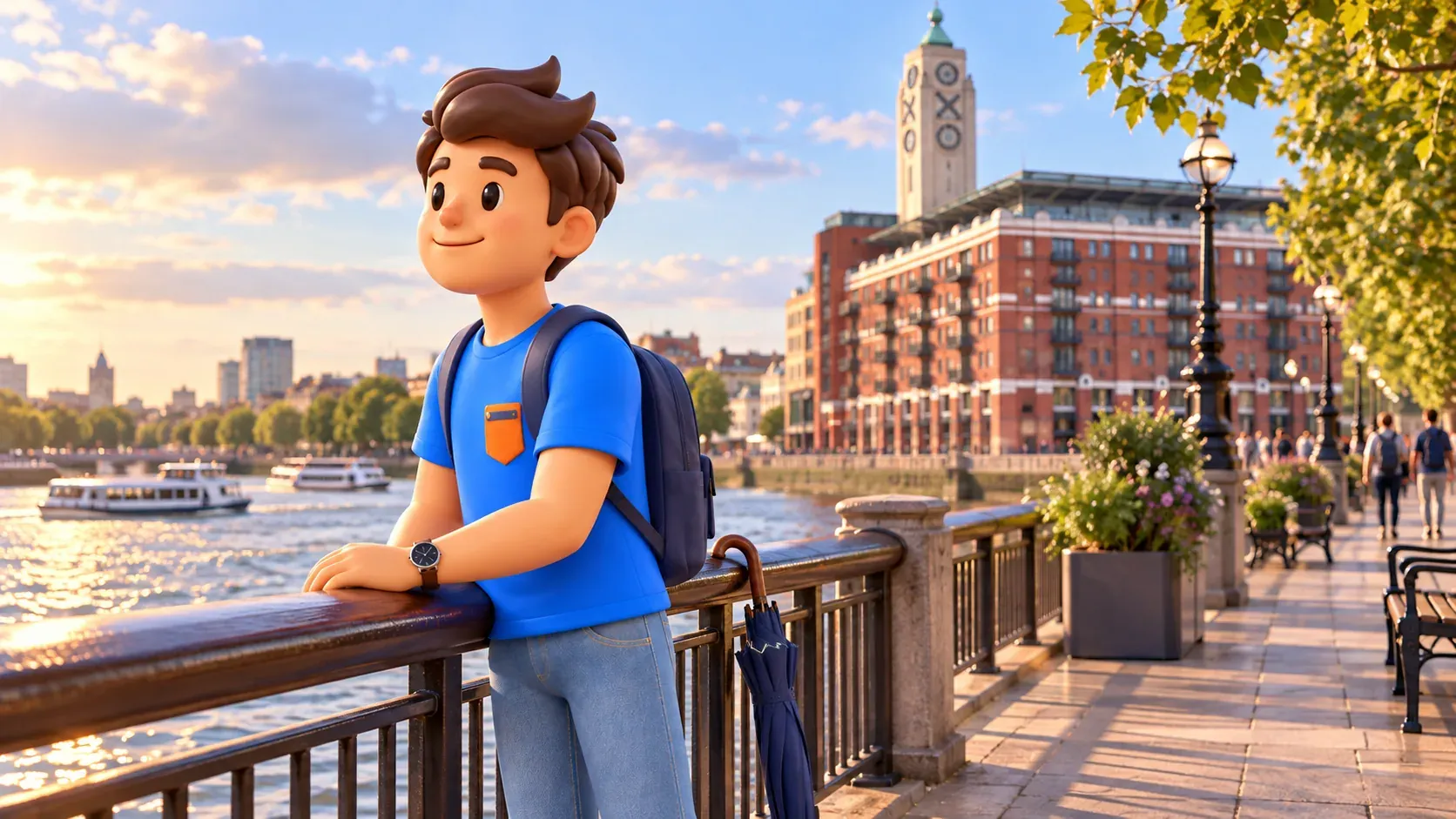
If you feel comfortable, continue towards Oxo Tower and choose a convenient way off the riverside. If you are tired, the National Theatre already gives a clear finish, with the option to head towards Waterloo. Do not add Tower Bridge simply to collect another landmark: it is a substantial extension beyond this day's planned area.
Shortening the day and adapting to the weather
With a late start, keep Westminster, a short park section and the palace, then decide whether Trafalgar Square still fits. If the river is your priority, cross Westminster Bridge after the morning views and spend the day on the south bank, omitting the royal loop. This is a shorter alternative, not an attempt to complete the entire original route more quickly.
On a rainy day, let the gallery become the main visit and shorten either the park or riverside. Confirm its calendar for your date, including holiday exceptions and temporary room closures. Replacing each wet section with another museum can accidentally create several large admissions in a row. One indoor focus usually makes the altered plan easier to understand.
Before setting out, check the journey to the start, any selected admission and the return. Bring comfortable shoes, water and suitable rain protection. The central decision is already made: move through a few connected parts of London, allowing yourself to stop where the city becomes particularly interesting, rather than measuring success by the number of famous names reached.


