
Two Hours in Trastevere: A Walk Between Two Basilicas
Two different pauses can introduce you to Trastevere: Santa Cecilia at the start and the square outside Santa Maria in Trastevere at the finish. Between them are smaller streets, a crossing of Viale di Trastevere and time to sit down. This route explores changes in space and attention rather than supplying a long monument checklist or requiring dinner at a particular restaurant.
Begin at Santa Cecilia and end at Santa Maria. Allow roughly two hours, including rest and a brief introduction to the basilicas. A short visit to a main church is possible if it is open and conditions allow; underground areas, separately accessed frescoes and lengthy visits are excluded. The timings are an illustrative allocation, not measured walking times. Travel to the start and onwards from the finish is additional.
Let the basilicas set the rhythm without losing the streets
This walk suits travellers who want some art and time for the neighbourhood itself. The basilicas are close on a map, but the aim is not the fastest door-to-door connection. Keep room for façades, street corners and a seated pause. If detailed study of painting or sculpture is the priority, choose one longer visit and expand the overall programme.
RoadMe makes it easier to develop the walk within a personal plan for your whole trip, shaped around your interests, dates, pace and budget. With the itinerary and map together, the programme becomes more convenient and effective to use in Rome than a set of ideas assembled separately on the street.
Check Santa Cecilia's access before choosing a starting time: the complex has a midday break, and arrangements differ by day and part of the visit. Santa Maria also requires attention to services and current visiting conditions. An exterior neighbourhood walk does not depend on every interior being available; an outing centred on specific artworks does.
A 120-minute example
| Time from the start | Stage |
|---|---|
| 0–25 minutes | Santa Cecilia: approach, exterior and a brief main-church introduction if available |
| 25–45 minutes | Eastern neighbourhood streets with small observation stops |
| 45–60 minutes | Cross Viale di Trastevere and approach the western side |
| 60–80 minutes | Seated rest, including a short approach to the chosen place |
| 80–95 minutes | Streets towards Piazza di Santa Maria in Trastevere |
| 95–120 minutes | The square, basilica façade and brief main-church visit if available |
Each basilica block includes the exterior approach; it does not provide twenty-five uninterrupted minutes inside. Extend the walk if you study art at length, wait for an opening or choose a café with slower service. With a firm deadline, reduce the number of street observations while keeping rest, or concentrate on one basilica and its surrounding streets.
The route moves from east of Viale di Trastevere to the west and slightly north. This broad urban avenue needs an actual permitted crossing. Avoid imagining the whole district as a pedestrian maze without traffic. Current mapping helps connect the stages, while open passages and signs on the ground determine how you move that day.
Santa Cecilia: notice the transition from street to church
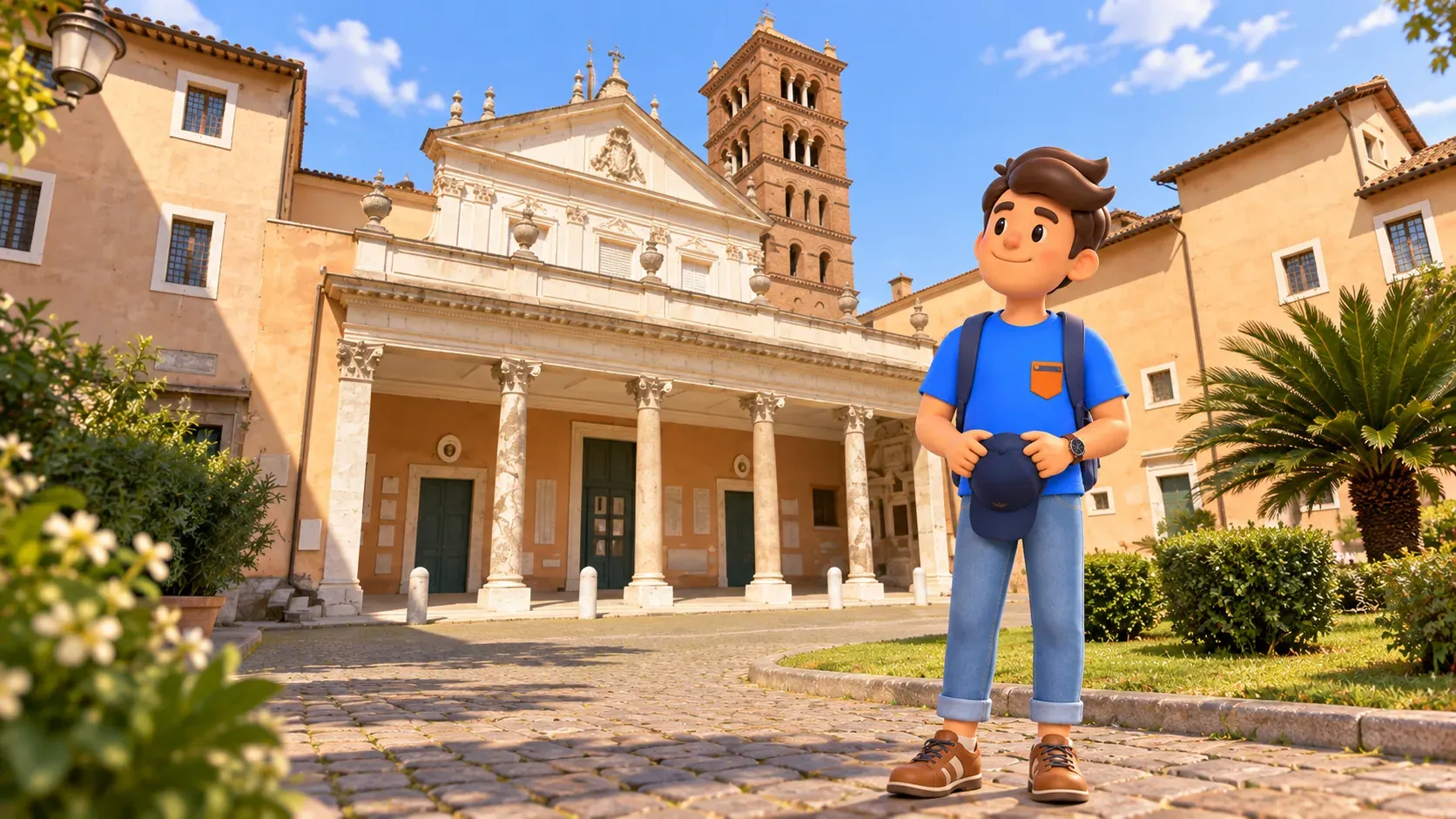
At Santa Cecilia, begin with the changing sense of space as you approach the façade. The city street gives way to a more contained arrangement with a portico and bell tower. Look into the courtyard if it is accessible, without treating every passage through the monastic complex as an open continuation of the walk. The exterior already provides a gentle beginning.
Inside the basilica, when visiting is possible, choose one line of sight from the nave towards the altar and apse. A ninth-century mosaic survives here, while the Gothic canopy over the altar is Arnolfo di Cambio's work dated 1293. These different artistic languages show how a church could change while retaining its purpose.
Stefano Maderno's sculpture of Saint Cecilia dates from 1600. During a short introduction, notice its position and expression without trying to turn a few minutes into a complete art-history analysis. Stories about the saint belong to religious tradition; understanding the building does not require presenting every legend as a documented event.
Cavallini's fresco requires a separate decision
Pietro Cavallini's Last Judgement at Santa Cecilia cannot be seen from the main worship hall. It is in the monastic choir and has separate visiting arrangements. If that work is your main reason for coming, establish its access before setting out rather than after a brief basilica visit. An open main door does not establish access to the entire complex.
The fresco, crypt and archaeological area are outside the basic two-hour programme. Allow separate time and check the current arrangements for the specific part you want. Independent access and a monastery-organised guided visit are different formats, with their own dates and procedures. A casual addition can change a small neighbourhood outing into a different kind of day.
This is a useful moment to choose your emphasis. Some visitors want a brief mosaic introduction followed by streets; others prefer to stay for painting. Discuss that before leaving, especially with companions whose interest in church art differs. Then nobody has to wait at the gate for an unexpected extra visit.
The eastern streets: give ordinary details your attention
After Santa Cecilia, leave twenty minutes for a small section east of the avenue, gradually approaching a suitable crossing. Around Via di Santa Cecilia and Via dei Genovesi, notice the scale of houses, doorways and the way a narrow street opens into a smaller space. Follow public streets on your map without cutting through private courtyards.
A simple observation can help: find three different materials or façade colours. It encourages closer looking than a continuous search for the next famous name. It need not become a compulsory game. Walk slowly and occasionally stop clear of the flow. A residential neighbourhood does not have to resemble a prepared film set at every moment.
Make room for everyday life: people at doorways, deliveries and movement along narrow sections. Avoid photographing into residential windows or blocking an entrance for a picture. An attractive courtyard beyond an open door can be observed from outside without entering uninvited. Attention to the neighbourhood matters more here than the number of images collected.
Cross the avenue and take a real break
Crossing Viale di Trastevere is a stage of its own, not an invisible line on the plan. Find a permitted crossing and pay attention to signals and traffic. The table allows fifteen minutes for crossing and the approach to the western streets, including orientation. It does not promise a particular traffic light or a passage permanently open on a specified side.
A twenty-minute seated rest follows. Choose somewhere suitable or a café whose menu and arrangements work for you. A small coffee may fit the block; a substantial lunch needs separate time. Assess the likely wait before committing to an establishment for a short pause, rather than ordering first and worrying about the schedule afterwards.
Use the break to compare impressions and choose what you want from the finish. If tired, continue to Santa Maria's square without extra turns. If attention remains fresh, keep a few small observations along the way. Preserve enough energy for the final basilica instead of arriving simply to confirm that it has been reached.
Towards Santa Maria: fewer addresses, more street character
Continue through the western streets towards Piazza di Santa Maria in Trastevere; the Via della Lungaretta area helps orient the approach. Check the actual connections on your map. This fifteen-minute block provides for walking and small observations, not a wide circuit of the entire western district. Browsing and photographs also use that allowance.
Compare this section with the start: where does a street feel wider, how do doorways and signs change scale, where are conversations more noticeable? Such observations depend on the day. Avoid expecting a guaranteed quiet east and noisy west. Seeing the differences yourself is more interesting than checking the district against somebody else's fixed impression.
For photographs, choose one overall street scene and one façade detail. If serious photography is the aim, expand the walk or return separately. Trastevere need not be collected in its entirety in two hours. A small coherent section often leaves a clearer memory than dozens of almost identical corners.
In rain, pay attention to surfaces and shorten stops where standing is awkward. A compact umbrella can help on exposed sections; leave other people room in narrow passages. Wet façades and reflections may change the street scene, but a photograph matters less than secure footing. Any church has its own access conditions and cannot be assumed to provide guaranteed shelter.
Santa Maria in Trastevere: begin with square and façade
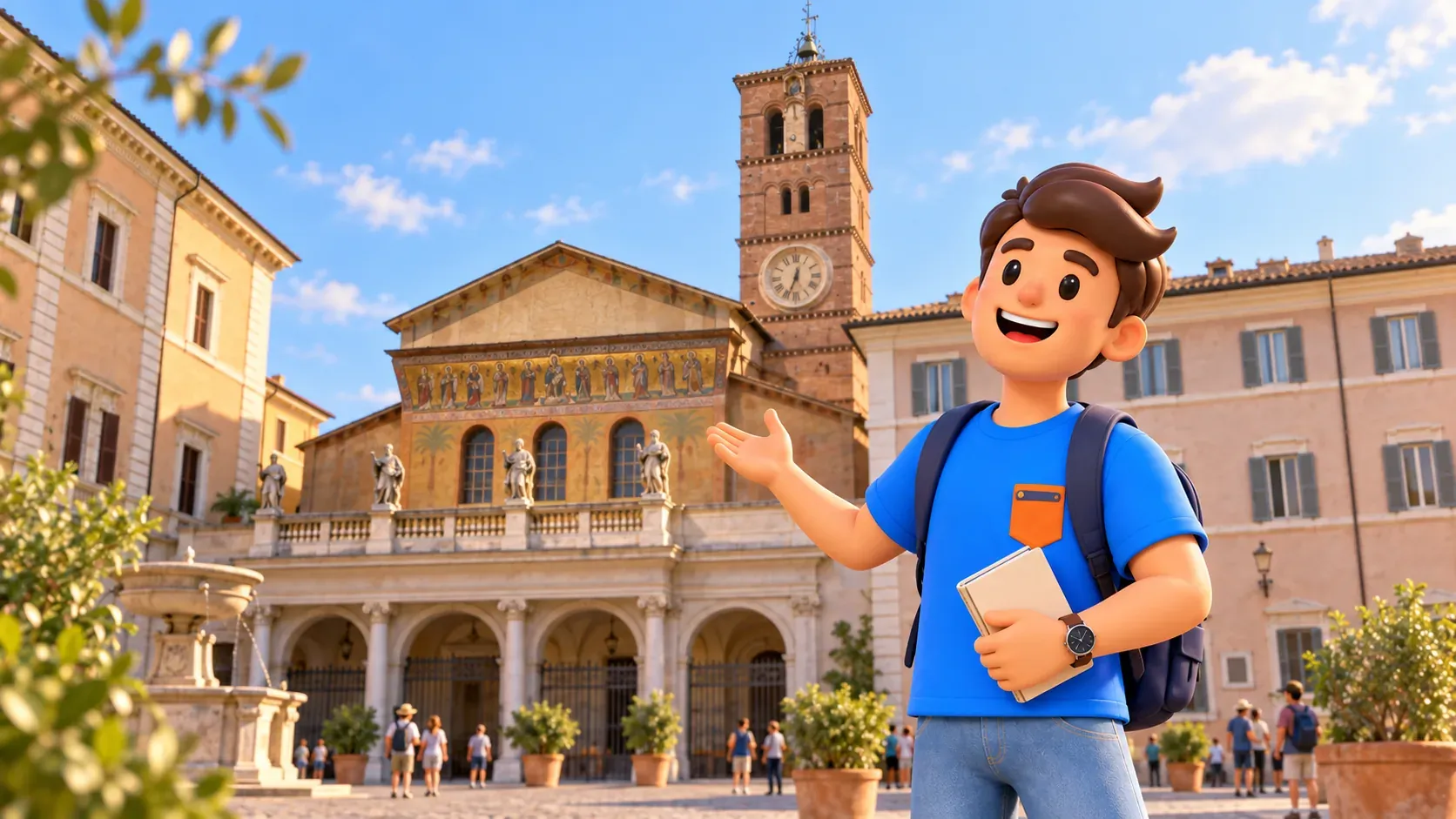
At the finish, first look at the basilica from the square. Its bell tower and façade mosaic band provide landmarks before you enter. Many parts of the present building date from the twelfth century; Carlo Fontana later remodelled the portico. The exterior already reveals several periods, while the piazza presents it within neighbourhood life rather than as an isolated monument.
If the main church is open for visiting, enter quietly and make the mosaics your main experience. The apsidal area contains work from different medieval phases, including scenes by Pietro Cavallini. Identifying every story in one short visit is unnecessary. Notice how gold, figures and architectural form direct your attention.
This is an active basilica: sightseeing and photography during a service may be inappropriate or restricted. Follow local rules, remain quiet and leave worshippers undisturbed. If entry is unavailable, save the interior for another time and finish with the view from the square. Two basilicas are the walk's anchors, not a guarantee of access to every artwork.
If Bernini's sculpture is your particular interest
San Francesco a Ripa is a possible separate alternative for sculpture enthusiasts. It houses Bernini's Ecstasy of Blessed Ludovica Albertoni. The church lies south of Santa Cecilia, so it is not automatically an extra stop between the two main anchors. Choose it instead of one visit or allow more time, checking the new walking sequence and access arrangements.
For such a change, avoid treating every part of the church as one freely available visit: individual spaces may have their own conditions. Santa Cecilia, the streets and Santa Maria are enough for the basic two-hour version. A single artistic theme can be more rewarding than several famous names with little time for the works themselves.
In RoadMe, those interests are easier to develop into a personal plan for the whole trip, taking your pace, dates and budget into account. The app helps work through the combination of walks and visits so that the finished itinerary is more convenient and effective to use on the ground.
For different experiences across several days, see our three-day Rome plan. Leave time after Trastevere for food and the onward journey. Two basilicas, the streets between them and a rest already form a complete outing, without the feeling of an unfinished checklist.


