
Torricelle: a Hillside Walk Above Verona
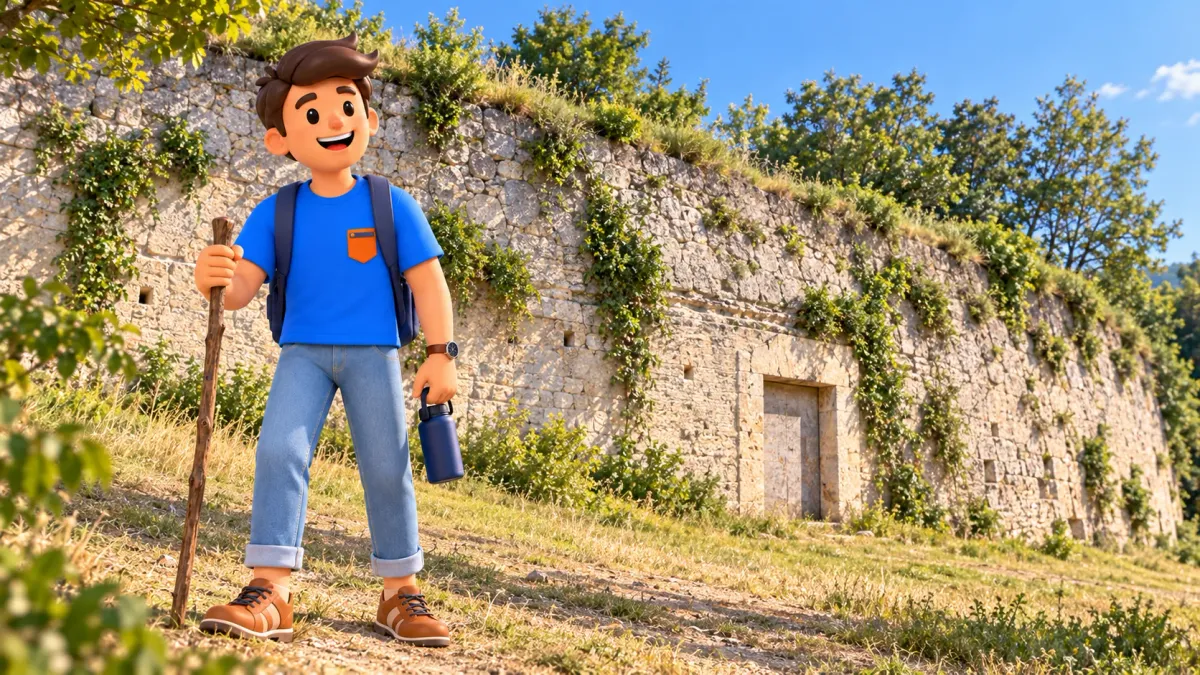
Above the streets of Veronetta, Verona changes scale. Houses become part of a larger pattern, greenery appears between the stone and the walk begins to depend on the slope beneath your feet rather than a count of attractions. The Torricelle offer that change without a journey far outside the city.
For a first encounter, choose one manageable ascent: from San Giovanni in Valle through Fontana del Ferro to the exterior of San Felice, returning along the familiar connection. Allow roughly three to four hours with stops. This is a daytime hillside outing, rather than a promise to see all the Torricelle or follow a level route in ordinary city shoes.
Choose one hill rather than every viewpoint
Torricelle names a hill area north of the historic centre. It is not one park with a single gate or one viewing terrace. Define a small section in advance rather than collecting every well-known panorama, fort and sanctuary associated with the name into a single day.
RoadMe makes it easier to develop a personal trip plan around your interests and pace, giving a hill walk its own place while distributing other neighbourhoods across your days. Try planning your Verona visit in the app to choose an amount that feels comfortable for you.
Begin outside San Giovanni in Valle. Continue towards Fontana del Ferro, then use the open, marked public paths towards the fortifications by Rondella della Grotta and San Felice. After looking from outside, return by the same connection to this part of Veronetta. Repeating the route is intentional; this is not an advertised loop with a new descent through unfamiliar land.
For planning, allow 90–120 minutes of movement uphill and down, 35–45 minutes of looking, another 35–45 minutes of rest and some flexibility. These are our estimates, not GPS measurements or hiking speed standards. Count the approach from your accommodation separately. At a slower pace, shorten the upper part rather than rushing the descent.
San Giovanni in Valle: begin without hurrying
The church exterior and surrounding streets are enough at the start. Its Romanesque appearance has a story of its own, but a detailed interior visit is not necessary for this outing. A closed church or a service does not change the starting idea: you have come to the neighbourhood at the foot of the hills, rather than a compulsory museum entrance.
This is a good place to prepare for the change from city paving to less even surfaces. Wear shoes that support the foot and grip well. Carry daytime water and light sun protection despite the nearby centre. Do not expect cafés, shops or drinks for sale between every stop.
Begin at a pace you can keep when the ground rises. The opening minutes do not represent the whole effort: a short level connection can be followed by steps and gradient. With companions, agree to wait at clear public places instead of disappearing round a bend with a vague promise to meet somewhere above.
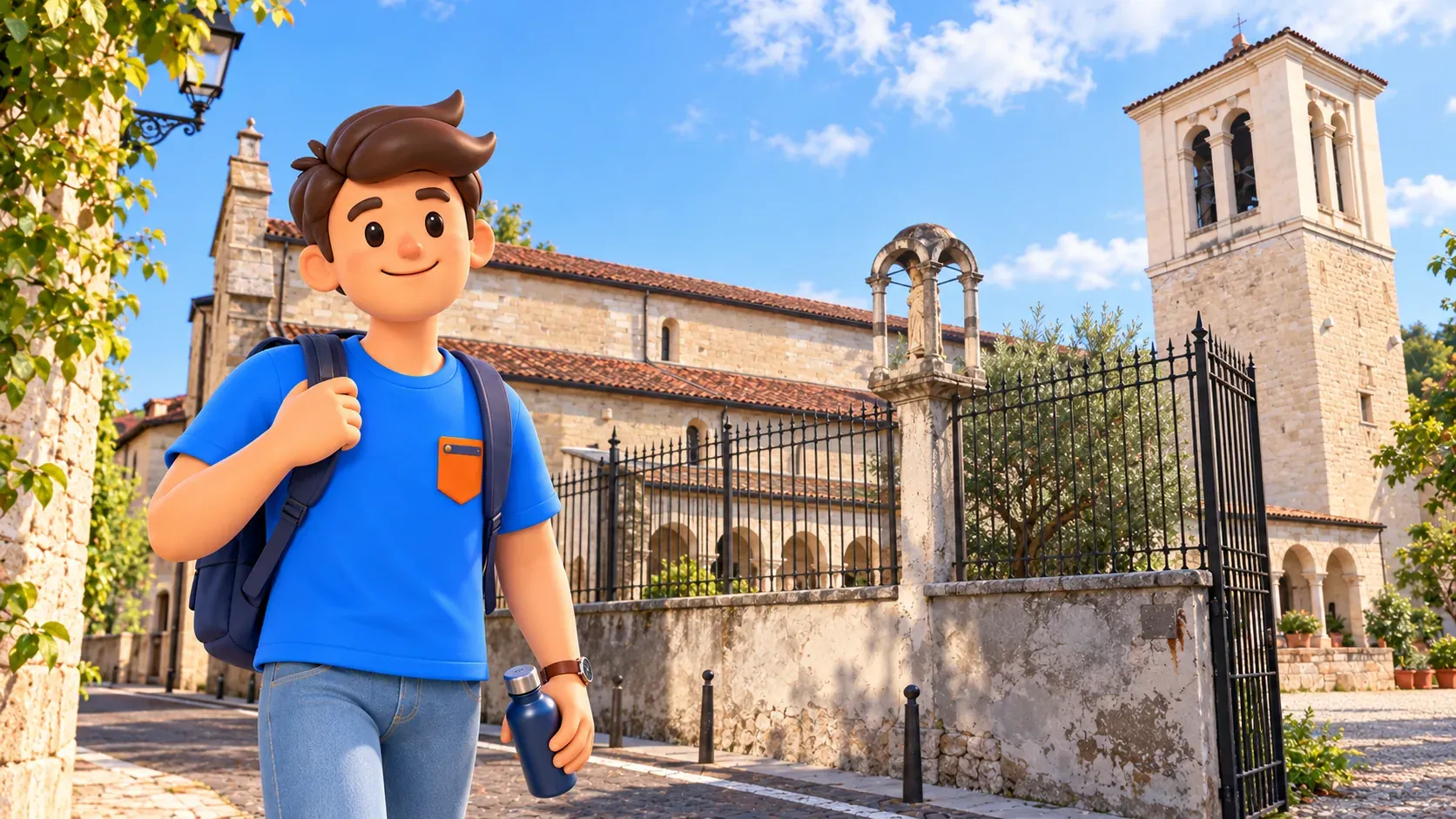
Fontana del Ferro: the city gives way to the slope
From the church area, head towards Salita Fontana del Ferro. Local streets meet the rising path to the fortifications near the historic spring. The connection shows that the hills are part of Verona: old movement routes, water places and residential streets lead into them.
Make a short stop at Fontana del Ferro without interpreting the historic spring's name as a guarantee of drinking water. Refill only at a clearly identified, functioning drinking tap. Stories about water properties do not replace current information on site, so carry your main supply beforehand.
Continue on the open public route indicated towards the walls and San Felice. Check direction at junctions rather than choosing whichever path appears prettier. A track through grass may end at a fence or lead towards private ground. A closed passage is not an invitation to skirt it across the hillside.
The transition itself is interesting: windows and plaster gradually give way to earth, grass, stone walls and trees. Watch that change rather than expecting a continuous panorama. Sometimes the rewarding stretch is a short shaded passage where the city can be heard in the distance.
Climbing by the fortifications
Paths near the walls differ from a central square. Surfaces change, gradients feel different uphill and down, and a quiet-looking section can become slippery after rain. Choose dry conditions where possible and walk in daylight, keeping time for the return. The city's proximity does not turn a slope into pavement.
There is no need to climb parapets, look for a wall-top route or leave the path for a photograph. View the fortifications from permitted ground. Their interest lies in the terrain: heavy stone does not merely stand against a pleasant backdrop, but works with the shape of the hill.
A small historical connection is useful here. Verona's defences developed in several periods, so the visible structures should not all be assigned to one ruling power. San Felice belongs to late-medieval construction under the Visconti, followed by Venetian and later changes. It is a layered system rather than a single untouched castle.
The name Torricelle also recalls small defensive towers, including round structures of the Austrian period. But this outing is not a circuit of all four well-known towers. You do not need to find them at any cost by following someone else's much longer itinerary. This half-day has a deliberately limited purpose.
Stop at a safe widening and compare materials: rough wall, grass above it, roots or shadows. These details can create a sense of place even when foliage hides the city. A hill walk has several scales, and not all of them need to become a distant postcard view.
San Felice: an exterior encounter
At San Felice, look at the accessible outer walls and open space according to current arrangements. The interior is not a guaranteed tourist visit. A closed door does not make the route a failure: the approach, terrain and outside form are the main experience.
Do not expect a mandatory tall fairytale tower. Defensive architecture also involves low substantial walls, contact with the earth and closed openings. Notice how the structure uses the slope instead of judging it only by the spectacle of its façade. An understated exterior can tell more than expected.
Choose a permitted stopping place without blocking the route. Rest, look around and decide whether you have enough impressions. The return is part of the outing, rather than a minor detail after reaching the goal. Keep attention for the descent, especially if climbing feels psychologically easier than coming down.
A pause and a limit to extensions
Parco delle Colombare is another green space in these hills, associated with Via Castello San Felice. Consider it as a separate extension when an open public approach is clear and enough time remains. It is not automatically included in the basic allowance for the Valle–San Felice outing and return.
Avoid adding the Lourdes sanctuary in another part of the hills, Forte San Mattia and sunset at Castel San Pietro all at once. Names look close on a map, but moving between slopes and directions creates another programme. One ascent makes a better first introduction to the terrain.
To combine hills with museums, gardens and city food, let RoadMe work out a personal plan for the whole trip. The app makes it more convenient to distribute those interests across your days and choose a sequence of walks that suits your pace, with room to rest.
Rest where it is permitted and convenient, leaving passage free. A longer meal or seated break can wait until you are back in the neighbourhood. Do not make a successful outing depend on one particular empty bench: it may be occupied, while a pleasant open patch can become too sunny in heat.
Put the phone away before an uneven stretch. Stop first, then look at the screen, rather than sharing attention between framing and footing. To observe birds, quiet and distance are enough; do not leave permitted ground for a closer photograph.

Return along the known connection
On the way back, keep the familiar link through Fontana del Ferro towards San Giovanni in Valle. A changed viewpoint and downhill direction can make a turn look different. Check junctions and follow current signs, particularly where temporary arrangements alter movement.
The basic route does not depend on the staircase by Rondella della Bacola or improvised passages around Castel San Pietro. Individual sections have their own histories of restrictions and repair. If your way is closed, return along permitted ground and shorten the outing rather than improvising around a road bend.
After the descent, neighbourhood streets restore a more intimate scale. Finish here or choose a gentle continuation from our San Giovanni in Valle walk. That route explores the foothill area; another complete programme does not need to be attached to this one.
Who will enjoy this outing?
Choose it if you like going up and down, moving from paving onto paths and not requiring another entrance every twenty minutes. It suits a separate active part of the trip, rather than the last spare half-hour before dinner. The basic route is not universally convenient with a pushchair or difficulty using stairs.
In heat, plan around the temperature and retain the option to turn back sooner. In wet weather, a plan made earlier should not become an obligation. The Castel San Pietro funicular rises to its own terrace but does not replace every connection on other hills. Different parts of the Torricelle need different decisions.
The reward is a different Verona rhythm remarkably close to the central squares. Stone, greenery and gradient change your view without requiring every fortification in one day. A clear ascent and a calm return provide enough for a first encounter with the Torricelle.


