
San Giovanni in Valle: a Walk through Veronetta at the Foot of the Hills
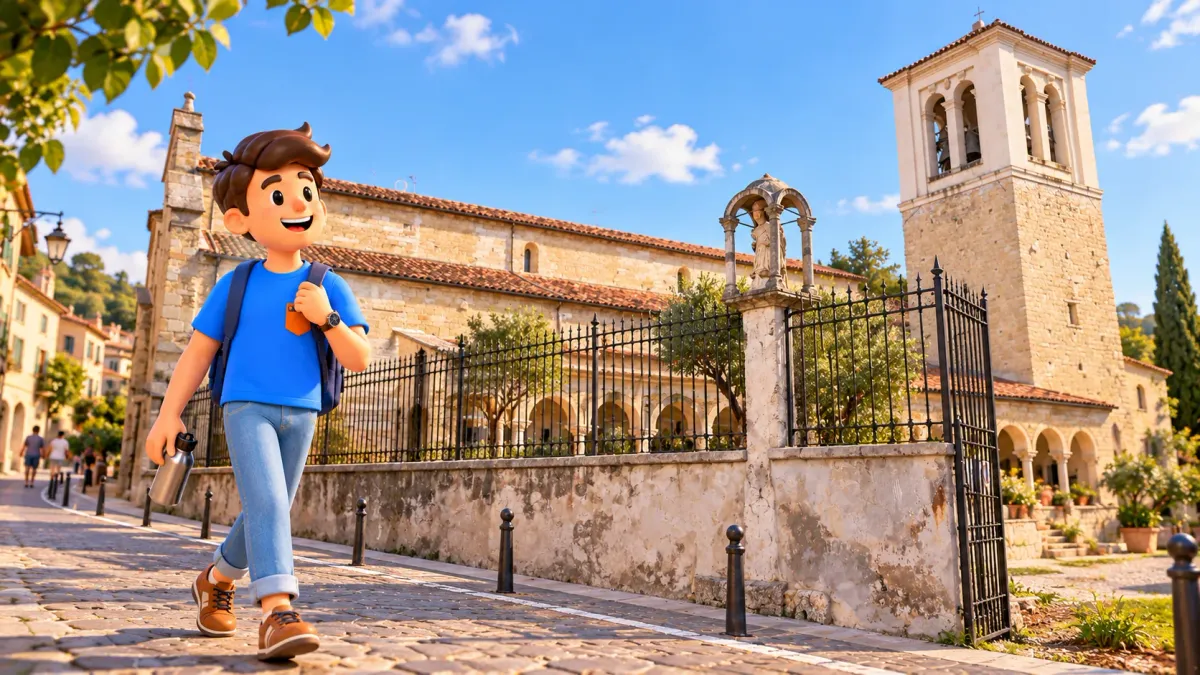
For a smaller-scale outing in Verona, walk from Piazza Isolo towards San Giovanni in Valle. The interest is in the approach as much as the church: streets become more intimate, the ground begins to rise and the hillside setting feels closer. You can give one Romanesque building proper attention without adding a long excursion above the city.
Allow roughly two to two and a half hours from Piazza Isolo back to the same square, including a rest and a church visit when public access is available. These are planning estimates. If the interior is important to you, choose the day around its visitor calendar; the outside walk is a shorter alternative, not the same experience.
Choose a short walk with one main destination
The outline runs from Piazza Isolo past the exterior of Santa Maria in Organo, then along the public streets of Via Santa Maria in Organo and Via San Giovanni in Valle to the church. Return through the same area to Piazza Isolo. This keeps the route easy to understand and leaves the main attention for the neighbourhood and one interior.
A useful allowance is 50–60 minutes of walking spread through the outing, 30–40 minutes for the church, 25–30 minutes for a rest and 15–20 minutes of flexibility. Together those estimates make two to two and a half hours. They are not measured walking times; your journey to the square, a full meal and further sightseeing come separately.
To make a smaller walk like this fit your whole stay, try RoadMe: it develops a personal trip plan around your dates, interests, pace and budget. It is a convenient way to give a favourite kind of place enough time within a Verona itinerary that suits you.
This route is a good choice if you enjoy architectural details and the feeling of walking into a different part of a city. It works less well as a hurried gap between two timed bookings. Leave enough room to stop when something catches your attention, and let the church be the reason for coming rather than another box beside several larger visits.
Begin at Piazza Isolo and follow the streets inland
Start on Piazza Isolo already in Veronetta. If arriving from the old town, include the bridge crossing and approach in your own travel time. Take a moment to orient yourself before setting off: the route leads inland towards the foothill streets, rather than along the Adige. You will return to the square, so this is also a useful place to arrange your later plans.
Santa Maria in Organo gives the first part of the walk a clear architectural marker. An exterior look is enough here. The church has its own visitor arrangements, and adding an indoor visit would require extra time. Keeping it as a passing point helps distinguish this outing from a broader Veronetta route with several cultural stops and a garden.
Continue towards Via San Giovanni in Valle along public streets, noticing the changes in scale. A doorway, a low wall or a section of stone paving can be enough to make the approach interesting. You do not need to identify the history of every house. The pleasure comes from seeing how the environment changes around a single chosen destination.
Use normal pedestrian space and let local traffic and residents move through. Streets that feel intimate are still working parts of Verona. If you stop for a photograph, find somewhere with room to stand rather than occupying a narrow passage. That simple habit lets you look for longer without making the neighbourhood feel like a stage arranged around your visit.
Let the foothill setting set the pace
The ground and paving deserve a little attention. This is a walk towards the foot of the hills, with slopes and uneven surfaces rather than a universally level route. Comfortable footwear helps, and a small amount of water is useful on a warm day. Travel lightly enough that a short rise does not feel like carrying your entire day’s equipment uphill.
The place can suggest a small settlement within the larger city, but do not expect guaranteed silence. A car, a conversation or other visitors can be part of the scene. Look instead at the proportions: streets against walls, rooflines against the hillside and the way a church appears within its immediate surroundings. Those relationships remain interesting even when ordinary life is busy.
Keep this approach separate from a larger hill walk. You do not need to add Castel San Pietro, the funicular, the Scala Santa or a route through the Torricelle to make the outing worthwhile. They involve different time and effort. Here the aim is to arrive at San Giovanni in Valle with attention left for the building and enough energy for the return.
If slopes or uneven paving are difficult for you, consider the route as a whole before choosing it. A church’s individual access arrangements do not establish the suitability of all the streets leading there. You can shorten the approach, ask about the parts of the visit that suit your needs or choose a different outing. There is no reason to make a compact walk unnecessarily demanding.
At San Giovanni in Valle, start with the building
San Giovanni in Valle is dedicated to John the Baptist. Its Romanesque appearance belongs to rebuilding after the earthquake of 1117, while the site and the older crypt connect it to an earlier history. That makes the church more than a single building date. You are looking at a place that has been used and reshaped across different periods.
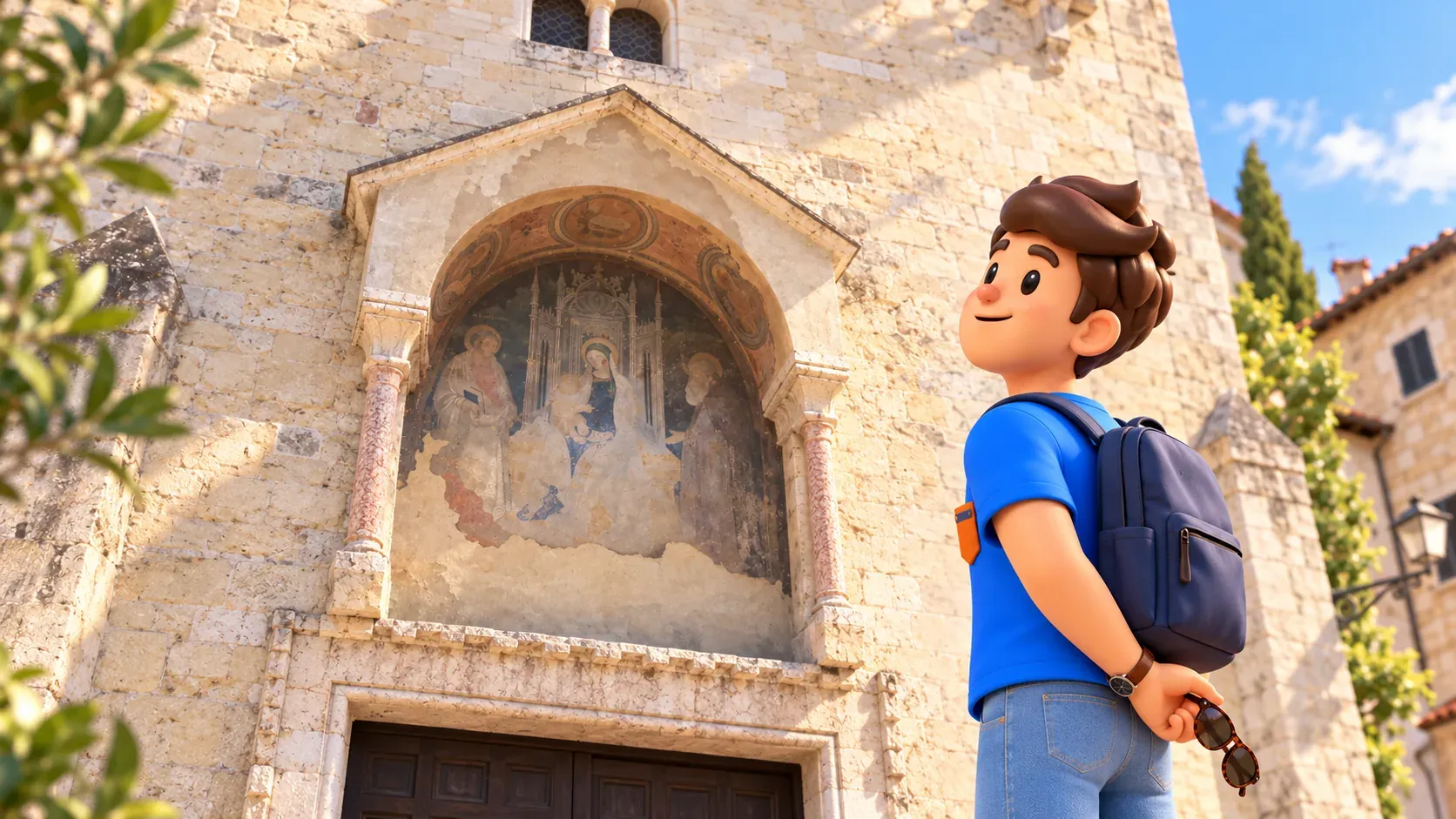
Take a few moments outside before entering. The pale masonry and the modest scale invite a closer look than a distant panoramic photograph. Let your eye move between the wall surface, the openings and the entrance. You can appreciate those elements without memorising a full sequence of architects or restorations, keeping the visit focused on what is actually in front of you.
The difference from one of Verona’s larger church squares is part of the appeal. Here the setting encourages you to notice smaller relationships: the building beside its boundary, the approach from the street and the way a tower rises from the surrounding structures. A little time outside helps give the interior a context when the visitor route is open.
Any painted or carved detail deserves a respectful distance. Look rather than touch, and follow the available public access. An attractive gate or courtyard does not automatically mean you can wander through it independently. The useful aim is to enjoy the parts being welcomed that day, not to find a way into every space that appears close to the church.
Inside, give the older layers a little time
The crypt contains two ancient sarcophagi, one of the church’s notable features. They offer a way to think about the relationship between ancient objects and later religious life. Begin with their overall form and then look at a detail of the surface. You do not need to turn the stop into a catalogue of every scene to find something memorable.
Notice how different the scale of looking becomes. Outside, you were following streets and walls; here, a much smaller area can hold your attention. A shape, a carved line or the arrangement of figures can be enough for a patient pause. That shift is a good reason to leave some flexibility in the outing instead of allocating every minute to movement.
The older crypt also reminds you that the church’s history reaches beneath its present appearance. Rather than expecting every visible part to have the same age, think in layers. This gives a useful framework for a short visit and avoids the common temptation to label an entire historic place with one century and stop looking for differences.
Follow the route and guidance offered on the day, especially around the crypt and any changes in level. Ask which areas can be visited if you are unsure. People may be praying, and some spaces may be unavailable at a particular moment. The visit can still be meaningful when you give the accessible parts attention and avoid rushing to make up for what is not open.
Use the visitor calendar to choose the day
When checked on 17 October 2026, the Italian information from Verona Minor Hierusalem lists volunteer visitor welcome on Saturday, 10:00–17:30, with free admission. Confirm the current calendar before travelling, including special changes and the interruption of visits for services. Do not treat an open worship timetable or an older general listing as a promise of sightseeing access on any day.
If the church is the reason for coming, it is worth planning this small outing around that confirmed window. Leave enough time to arrive and look comfortably before the end of the welcome period. The suggested 30–40 minutes is an editorial allowance, not a last-entry rule or a promise about how long each part of the visit takes.
When the interior cannot be visited, choose deliberately between returning on another day and enjoying a shorter exterior walk. Neither choice requires filling the gap with several new destinations. You may want to spend more time observing the approach or to return early for a café pause. A change of plan can remain simple because the route has a clear focus.
Pause, then return to Piazza Isolo
Keep around 25–30 minutes for a rest in an appropriate public place or a café on the return towards the square. Choose somewhere that suits your comfort and appetite; a full meal is additional. A short pause helps separate the close attention of the church visit from the walk back, especially if you have already spent much of the day on foot.

You can organise that balance more conveniently in RoadMe, which creates a personal day-by-day plan around your interests and preferred pace. Try it when you want cultural visits, shorter walks and time to rest to work together across the whole trip.
Return through the same public streets rather than searching for an unfamiliar shortcut through the hills. The repeated approach need not feel wasted: a building detail can look different when seen from the other direction. If you prefer taking photographs, choose one wider street view and one closer architectural detail, leaving the rest of the way for simply looking.
Rain or uncomfortable footing is a reason to shorten the walking portions and reconsider the outing, not to force the original timing. Keep some energy for getting back to Piazza Isolo. Once there, the route is complete; your journey to the hotel or the next part of Verona begins afterwards, with no further climb included in the estimate.
For a longer visit with the garden as a main stop, see our half-day walk through Veronetta. Choose it as another outing when you want more variety. This shorter route is for giving one church and its foothill surroundings enough time to become a clear memory of Verona.


