
One Day in Tokyo: Asakusa Morning and Shibuya Evening
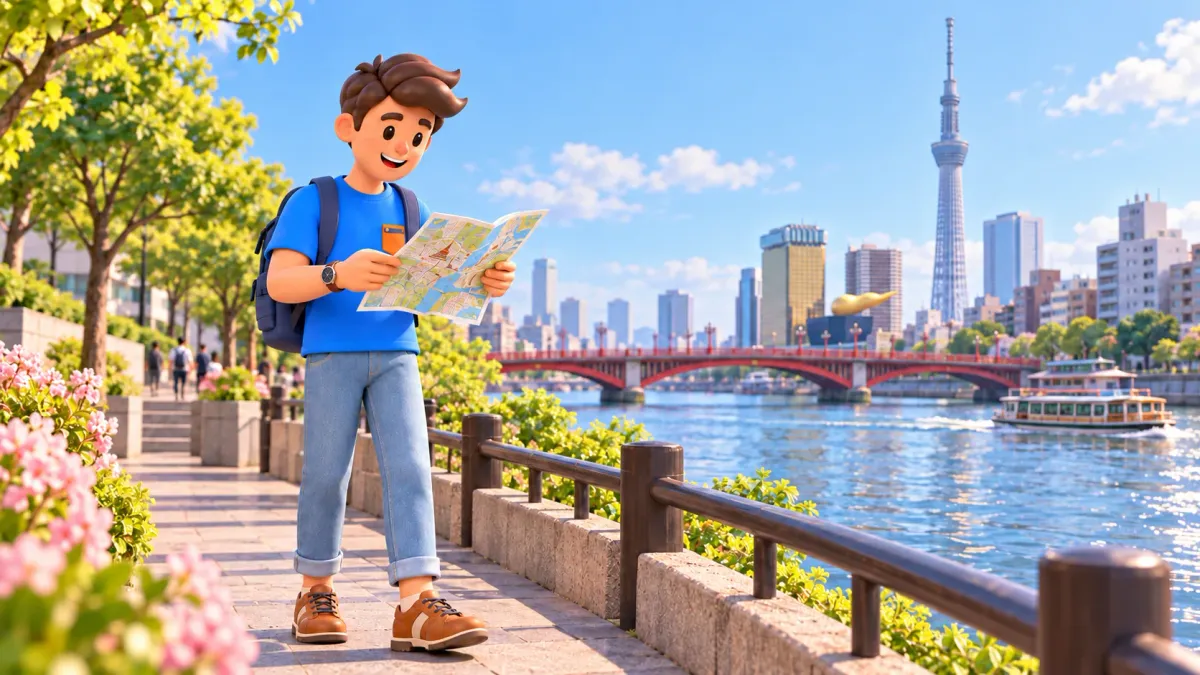
For one full day in Tokyo, make the morning about Asakusa and the evening about Shibuya. Begin with the approach to Sensoji, leave a little time for the Sumida riverside, then take the Ginza Line across the city. Finish around Hachiko and the famous crossing, with dinner and some unstructured time in the surrounding streets.
This is a two-area introduction with one substantial transfer. It suits a first visit when you want traditional religious surroundings and the movement of contemporary Tokyo in the same day. It is designed for a day already available in the city, rather than a short airport connection. The starting and finishing times below are planning estimates, not measured promises.
A one-day plan with two clear priorities
Start around 9 a.m. near Kaminarimon in Asakusa and aim to leave the afternoon and evening for Shibuya. The main sequence is simple: temple neighborhood, river, lunch, train, city walk. Keep the meal and rest periods even if you decide to shorten the sightseeing. They are what make the two-area plan comfortable enough to enjoy.
To make a short visit much easier to organize, try RoadMe: it develops a personal day plan around your interests and preferred pace. Prepare the route in the app so your available time becomes a coherent trip rather than a collection of separate sightseeing ideas.
| Approximate part of the day | Main plan | What can become shorter |
|---|---|---|
| Morning | Kaminarimon and the Sensoji area | Extra browsing in the surrounding streets |
| Late morning | A short Sumida riverside walk | The length of the waterside detour |
| Midday | Lunch and the Ginza Line to Shibuya | Keep this as practical time |
| Afternoon and evening | Hachiko, the crossing and the neighborhood | Shopping or an optional observation deck |
The table is a framework, not an appointment sheet. You can spend longer looking at the temple approach, choose a slower lunch or reach Shibuya earlier. What matters is keeping the order clear. Adding an unrelated museum or another district would change the nature of the day and should replace something substantial rather than sit on top of it.
Morning: approach Sensoji through Asakusa
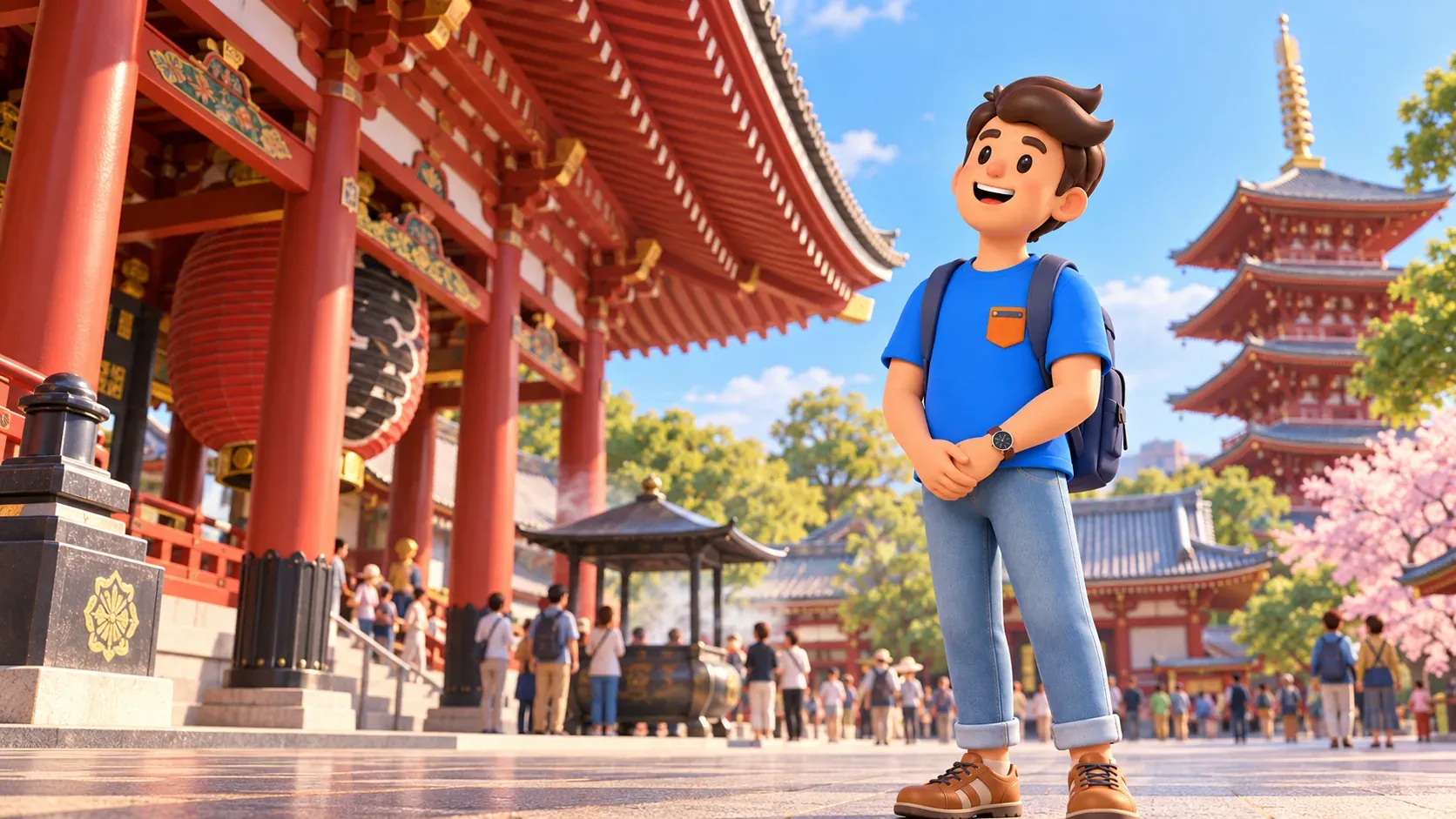
Use Kaminarimon as your first recognizable reference. Pause outside the main flow of people, look at the gate as a whole and then continue toward the temple area. There is no need to turn every feature into a separate destination. The sequence from street to approach and religious space is the morning's main experience.
Sensoji belongs to the Buddhist tradition and remains a place of worship. Notice the difference between people visiting for prayer and those exploring the surroundings. Keep entrances and circulation routes clear, follow signs about photography and treat any restricted space as a real boundary. A thoughtful visit does not depend on knowing every ritual or architectural term.
Give the area roughly two hours as an initial allowance, including the approach and pauses. That is an estimate for this plan, not a recommended duration for every visitor. If you prefer a very brief exterior visit, shorten it; if you want extensive shopping or a more detailed exploration, accept that the riverside or afternoon will need less time.
The surrounding streets can supply a small amount of wandering, but avoid making every shop another task. You are still at the beginning of a day that crosses the city. Pick one or two details that catch your attention, then move on with enough energy left for the contrast later.
Late morning: change the pace beside the Sumida
After the temple area, walk toward the Sumida for a different kind of space. Sumida Park and the riverside provide views that open out beyond the street frontage. Treat this as a short change of pace, not a long expedition along both banks. You can appreciate the river without covering every bridge or finding a particular photograph.
The Tokyo Skytree is part of the wider skyline here. Seeing it from the river does not require adding a visit to its observation decks. For this one-day plan, choose the riverside view as the default. A booked tower visit would be a major alteration, especially if you also want to keep Shibuya as the evening focus.
Allow perhaps half an hour to an hour for this part, depending on where you enter the riverside and how often you stop. These are editorial estimates. Check the practical return toward the Ginza Line before you become committed to a longer walk. Ending the detour while it is still enjoyable is better than creating a rushed lunch.
If conditions make the river unappealing, omit it and keep a longer indoor pause instead. You do not need to replace every omitted outdoor segment with another attraction. The temple neighborhood already supplies a complete morning focus, and the main contrast of the day still lies ahead.
Lunch and the transfer: keep an honest allowance
Have lunch before setting off across the city, or make a clear plan to eat after arrival in Shibuya. Avoid the vague idea that you will somehow fit it between platforms and sightseeing. A seated break gives the morning a useful ending and makes the afternoon easier to adjust.
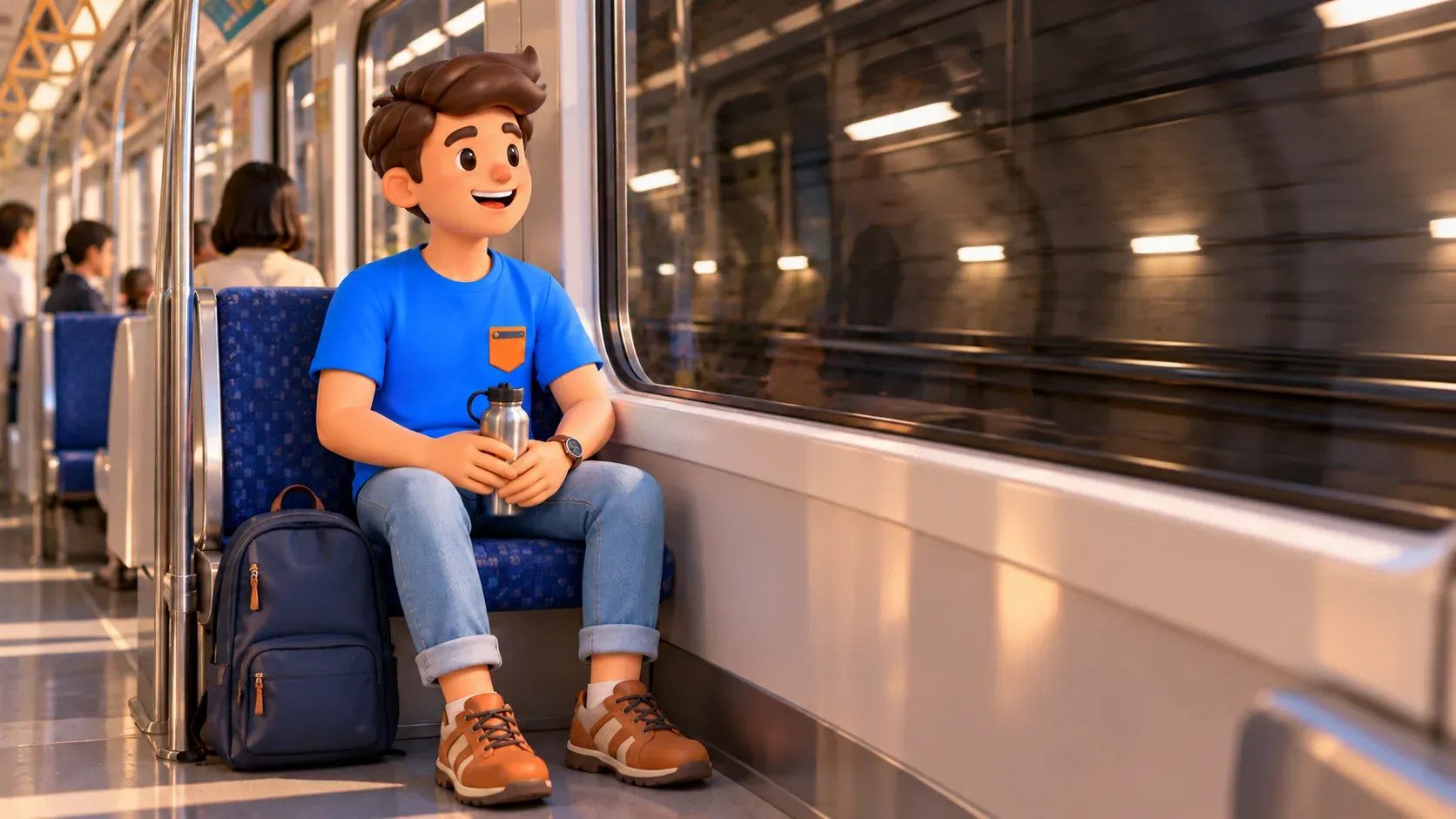
The Ginza Line links Asakusa and Shibuya directly. Look for the Tokyo Metro Ginza Line at Asakusa rather than assuming every station entrance with the same area name serves the same operator or line. Check the direction for Shibuya and follow the current signs. This is a rail connection, not a walk between neighboring districts.
Tokyo Metro's published major-section information gives approximately 33 minutes between Shibuya and Asakusa on the Ginza Line. For a day plan, leave about an hour or more for the whole movement, including reaching the station, waiting, finding the right exit and a small margin. The larger allowance is a planning estimate; it is not a statement that every journey takes exactly that long.
If luggage or a particular access requirement is involved, check station facilities before relying on the simplest-looking entrance. The train connection and the route through a station are different questions. A little preparation here is more useful than trying to add one more sightseeing stop during the transfer.
Afternoon: begin Shibuya with Hachiko and the crossing
On arrival, use signs toward the Hachiko area as a practical reference, while allowing time to orient yourself. Shibuya is a major interchange, and reaching the street you want is part of the visit. Do not judge the whole afternoon by how quickly you get out of the station.
The Hachiko statue gives this part of the day a small human story. It commemorates the Akita dog who continued waiting for his owner after the owner's death and became a symbol of loyalty. A brief encounter with that story is enough for this route; the statue does not need to become a lengthy historical lesson.
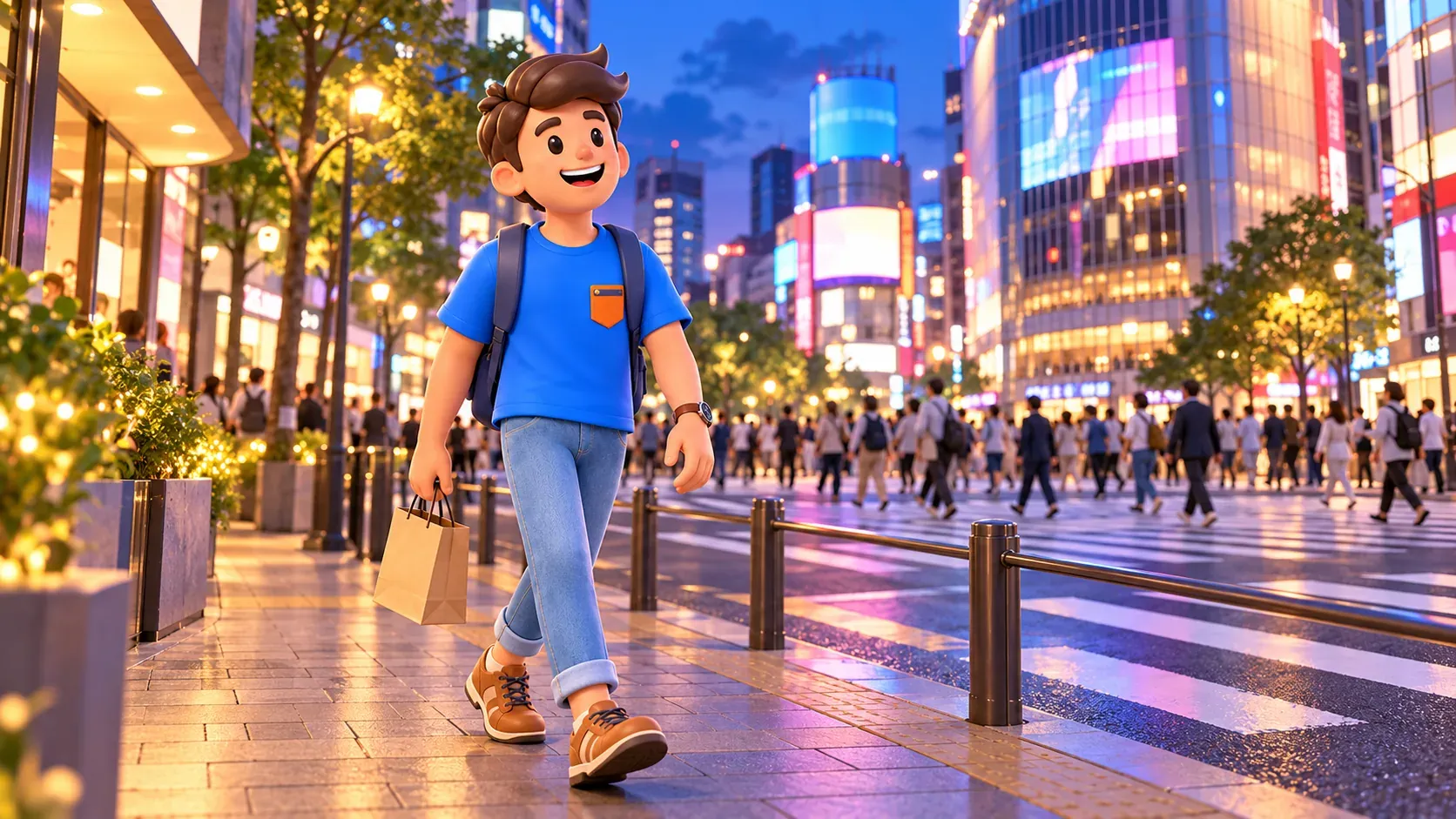
The crossing then offers a change from Asakusa's temple approach. Observe it from a place where you are not obstructing pedestrians, cross when the signals allow and continue into the surrounding streets. The experience comes from movement, scale and ordinary city activity, rather than from standing in one position until a perfect empty frame appears.
Keep this part open enough to notice what interests you. You may want buildings, shops, food or simply a place to watch the flow of the city. You do not need a long checklist to make the afternoon worthwhile. Agree on a clear meeting point if your group separates, because a popular landmark can also be a busy place to find someone.
Evening: choose one ending
Use dinner and a final neighborhood walk as the default ending. This gives the day a complete shape without adding another reservation. Decide how much energy remains, choose a manageable area and check your route back before becoming tired. Evening lights can be an experience in themselves.
If Shibuya Sky is the particular view you most want, make it an intentional alternative and check its current booking and operating conditions separately. Do not assume a suitable entry time will be available simply because you have reached Shibuya. Fit it into the afternoon by reducing other activities rather than treating it as a guaranteed extra.
For a more convenient personal version of this day, use RoadMe to develop a route around the experiences you care about and the pace you enjoy. Planning the trip in the app helps give the morning, transfer and evening a practical place in one coherent itinerary.
There is no requirement to stay out until a specific hour. If the temple visit, river and crossing have already given you the contrast you wanted, an earlier finish is a successful result. A single day in Tokyo is easier to remember when its main experiences have room to settle.
If you start later, shorten browsing and the river detour first while preserving lunch and the transfer margin. With only a few hours available, choose one area rather than compressing the entire day. The journey across town is useful when it supports two real visits, not when it becomes most of the remaining time.
What to leave for another visit
For this version of the day, leave the big Ueno museums, Meiji Jingu, the Imperial Palace gardens and Odaiba to separate plans. Each deserves its own attention and travel allowance. Choosing two areas is what makes this itinerary workable; it is not a claim that the other parts of Tokyo matter less.
Before setting off, check access to any indoor spaces you specifically want, current train information and the weather for your outdoor segments. Keep your actual hotel or starting station separate from the route's first sightseeing point. Those final practical checks turn a useful outline into a day that fits the trip you are really taking.
For a different focus, compare areas in our guide to choosing Tokyo neighborhoods for a first visit.


