
Three Days in London: Landmarks, the City and South Kensington
Three days in London give you room for three different experiences: the royal centre, the streets of the City and a museum day in South Kensington. Keep each day geographically focused, choose the interiors that matter to you and leave the rest of the time for walking, food and pauses. The result is a fuller introduction without making every day equally demanding.
This plan is for three full days in the city. Airport transfers, arrival and departure need their own time. Most landmarks are exterior stops. If your stay is shorter, use our two-day royal and riverside itinerary rather than trying to squeeze this programme into an arrival afternoon and one free day.
Give each day a clear purpose
Day one links Westminster, St James's Park, Buckingham Palace and Trafalgar Square, with Covent Garden as a possible finish. Day two starts at St Paul's, continues through Leadenhall Market and the garden at St Dunstan in the East, then approaches the Tower and crosses Tower Bridge towards Borough Market. Day three centres on one South Kensington museum and a shorter walk near Kensington Gardens.
For planning, allow about four to six kilometres outdoors on each of the first two days and two to four on the museum day. These are broad estimates, not recorded tracks; museum corridors add walking that an outdoor distance does not include. A comfortable full day might occupy seven to nine hours with breaks, while the final museum day can finish earlier.
Build a programme around your own interests with RoadMe: the app develops a personal plan using your dates, pace and budget. It is a convenient way to turn these three broad day ideas into a trip that fits how you actually enjoy exploring.
The numbered order is flexible. Check any chosen admission, the market calendar and the weather before assigning dates. One important reservation may determine a morning; it should not force several unrelated visits into the same afternoon. Give each day one main purpose, with a nearby continuation that you can shorten.
Day one: recognise the royal centre
Begin at Parliament Square. Look at the Abbey, Parliament and Elizabeth Tower from the public spaces and make a short approach towards Westminster Bridge for the Thames view. If Westminster Abbey is your main admission, reserve time for it and reduce the later programme. Sundays are for worship rather than ordinary tourist sightseeing.
Continue towards the eastern side of St James's Park through public streets around Horse Guards and Birdcage Walk, then take an open path towards Buckingham Palace. Use the lake and trees for a real break. The palace frontage and Victoria Memorial complete the outdoor sequence. A guard ceremony or State Rooms tour would be a separate choice requiring its own date and time arrangements.
Follow The Mall towards Trafalgar Square and have lunch nearby. The National Gallery can be today's alternative main interior if you chose not to enter the Abbey. General admission is free, while some exhibitions charge separately. Otherwise continue towards Covent Garden for its piazza, market buildings and surrounding streets. An evening show is optional and needs a separate booking and an earlier sightseeing finish.
Day two morning: St Paul's and Leadenhall
Start the City day around St Paul's Cathedral. The main version uses the exterior as an architectural beginning. If the interior is important, arrange its ticketed sightseeing visit earlier in the day and reduce the later walk. Leaving it as an assumed late extra can bring you to the cathedral after the last admission.
From here, head east through the City towards Leadenhall Market using current pedestrian navigation. Look for changes in scale: stone church architecture, narrow streets and modern commercial buildings. You do not need to enter an observation deck to appreciate these contrasts. The route is about how different parts of the City occupy the same relatively compact area.
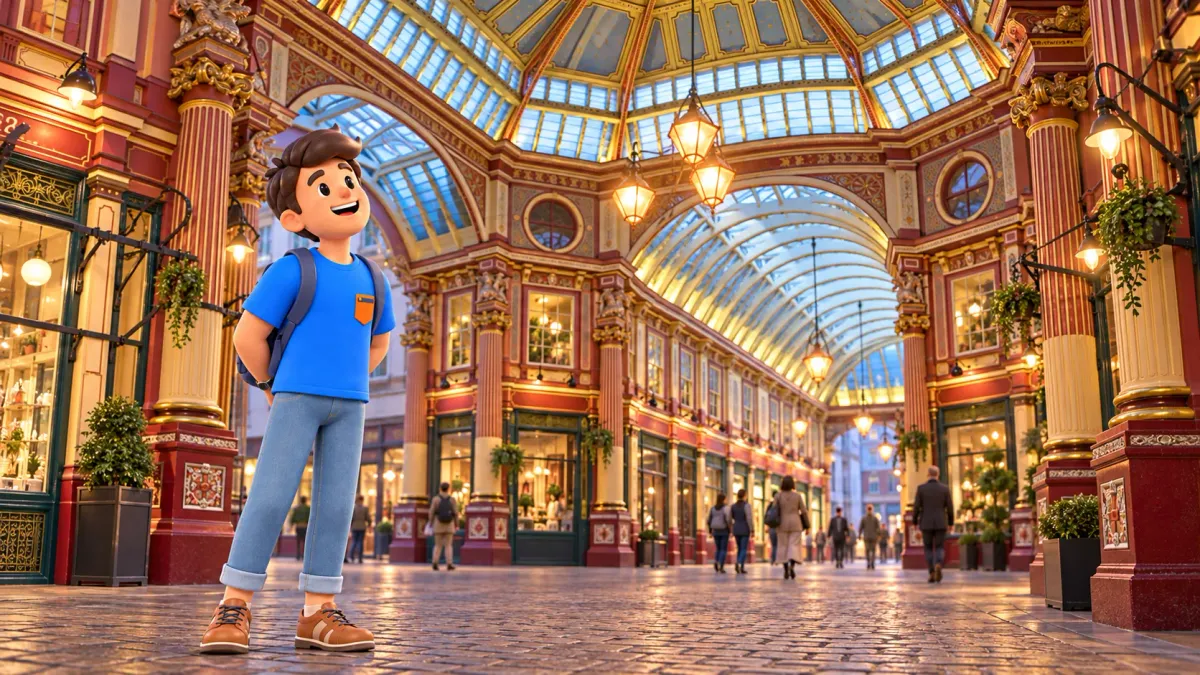
Leadenhall introduces a covered Victorian setting. Sir Horace Jones redeveloped the market in 1881, replacing the earlier structure with iron and glass. Look upwards at the roof and repeated structural details, then return your attention to the passages below. Treat architectural access and individual businesses as different questions: do not assume every shop or restaurant follows the same opening pattern.

A garden pause before the river
Continue towards St Dunstan in the East, where a garden occupies the remains of a church. The building was severely damaged in the 1941 Blitz; the garden opened in 1970. The relationship between greenery and surviving walls gives the place its value. You can notice a significant layer of London's history without adding another large indoor visit.
If the garden is open, let it be a quiet pause. Respect other visitors and any current access arrangements. If it is unavailable, continue towards the Tower area rather than waiting indefinitely. The larger day remains understandable without depending on a particular small gate being open.
At the Tower of London, the main plan looks at the fortress from outside. A full admission is a substantial activity: the operator recommends at least three hours depending on queues. If you choose it, let it replace much of the City walk rather than adding it unchanged to the afternoon. Decide which experience matters more before booking.
Cross Tower Bridge and finish near Borough
Approach Tower Bridge and cross by the pedestrian pavement at road level when available, following current signs and restrictions. The upper Walkways, Glass Floors and Engine Rooms are a separate visitor attraction. An ordinary street-level crossing and a visit inside the bridge are different uses of the same landmark.
On the southern bank, move west towards the London Bridge area and Borough Market. The river provides a general direction, although the public path can use connecting streets. Plan food as a late lunch rather than assuming the market operates into the evening. It normally trades Tuesday to Sunday and closes on Mondays, with holiday exceptions.
If the market is closed, keep the City walk and choose lunch elsewhere, or swap the order of your days when the market is a priority. The area around Southwark Cathedral offers a clear finish. You can see the cathedral exterior before returning from the London Bridge area; a separate visit inside would need its own arrangements.
Day three: choose one South Kensington museum
The Natural History Museum, Science Museum and V&A South Kensington are close enough to tempt you into visiting all three. A more useful choice is to decide which kind of curiosity you want to follow. Choose nature and the history of life, science and technology, or art and design. Then leave enough time to enjoy the chosen museum rather than move continually between entrances.
- Natural History Museum: general galleries are free. Book a free entry ticket to guarantee admission; busy walk-up periods may involve queues. Some exhibitions and events have separate tickets.
- Science Museum: general admission is free, and the museum asks visitors to book a free ticket in advance. Check any separate experience you want as well as the general admission. The museum has announced a full closure on 11 November 2026.
- V&A South Kensington: general admission is free without booking, while some exhibitions and events charge separately. Choose the collections currently open rather than relying on an old list of famous galleries.
These conditions were checked on 16 October 2026. In particular, the V&A's permanent Fashion Gallery is closed for redevelopment until autumn 2028. Fashion may be part of the museum's wider identity, but that does not make this gallery available for your visit. Recheck current closures before choosing a particular collection as the main reason for coming.
For a museum day that reflects your interests, try RoadMe, which helps develop a personal programme instead of treating every famous museum as compulsory. Prepare the plan around the experiences you enjoy, then download London while online for offline maps and navigation afterwards.

Make the museum day comfortable
Choose two or three themes within your main museum and let those guide the visit. Allow a generous morning or afternoon, including entry and a break. A free ticket changes the cost of admission, not the amount of attention a large collection needs. Two hours can be your initial planning block; leave room to stay longer when you find something absorbing.
Have lunch in the museum or nearby according to what is available and what suits your budget. If you are visiting with other people, agree on the main interests and a meeting point before splitting up. A shorter shared visit is often easier to enjoy than trying to keep everyone interested in every room.
A shorter finish near Kensington Gardens
After your museum, take a walk towards the Royal Albert Hall area and the Albert Memorial at Kensington Gardens, if weather, daylight and park access suit your date. This keeps the continuation near South Kensington. The memorial's elaborate silhouette provides an architectural change after the museum, followed by the possibility of a quieter park section.
Choose a short open path and a convenient exit rather than adding the entire park as a final obligation. Kensington Palace admission is not included. Check the park's gate times for your date, especially if the museum took most of the afternoon. If you are tired or it is raining heavily, finish around South Kensington and keep the park for another visit.

Check the dates, then leave some room
Before setting out, review the journey to each start, the return, your chosen tickets and any access needs. These general walks do not promise that every approach avoids steps or that lifts are working. Take comfortable shoes, water and suitable rain protection, while keeping enough space in the plan to sit or change the finishing point.
Use the third day to deepen the trip rather than collect every remaining landmark. The first day establishes familiar London, the second reveals the City's texture and the third follows your curiosity indoors. That difference between the days is what makes the plan useful: you can remember several distinct experiences instead of one long sequence of rushed entrances.


