
Three days in Amsterdam: canals, museums and NDSM
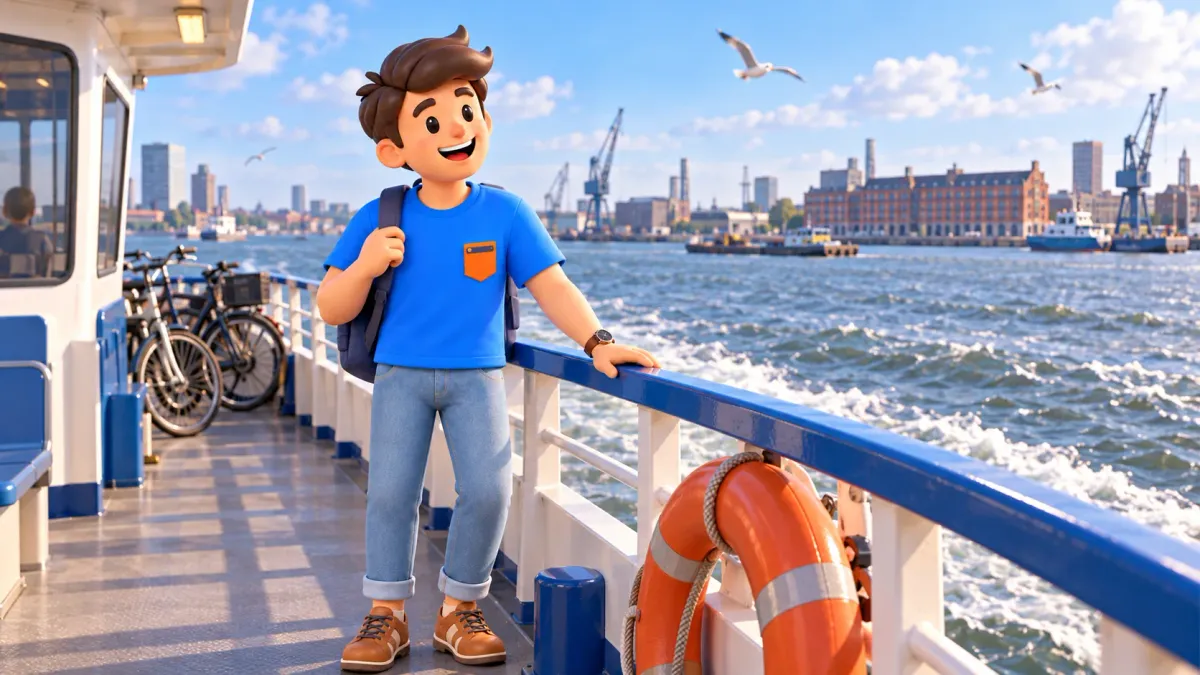
Three days in Amsterdam let you move beyond a first look at Dam Square and the canals. Give one day to the historic centre, another to art and green space, and a third to the former NDSM shipyard across the IJ. The result is three different impressions of the city, without turning the trip into a competition to collect attractions.
This plan assumes three full sightseeing days. Travel from your accommodation and the journey home afterwards need their own allowances. If you arrive after lunch or leave early on the third day, count the available hours again: three hotel nights do not automatically provide three complete days for exploring.
Three days with three different themes
The outline has two museum visits on separate days: one major art museum and STRAAT. Streets, a park and food fill the spaces between them. Find a suitable admission time for your main museum first, then check STRAAT against your dates. You can swap whole days; keeping each day's places together matters more than its number.
RoadMe makes it much easier to turn this outline into a complete personal trip plan, with days shaped around your interests, dates, pace and budget. Tell the app how much time you want for art, neighbourhood walks and food, so the route fits the way you like to travel.
| Day | Theme and main places |
|---|---|
| Day one, roughly 09:30–16:30 | Centraal, Damrak, Dam Square, Begijnhof, the canals and Jordaan |
| Day two, roughly 09:30–16:30 | One major museum, Museumplein, Vondelpark and Foodhallen |
| Day three, roughly 10:00–16:30 | F4 ferry, NDSM, STRAAT, lunch and a return to Centraal |
Times and walks are estimates for planning, not field measurements. They do not guarantee an empty restaurant, a short queue or a ticket at a particular hour. Secure the important visits, then preserve space for walking, meals and breaks rather than filling every gap with another sight.
For a shorter stay, use our two-day plan with the canal museum and De Pijp. This third day deliberately introduces another urban setting. A windmill excursion or a neighbouring town would take a separate day and replace part of the programme, so neither is included here.
Day one: understand the historic city
Morning: Damrak, Dam Square and a quiet courtyard
Start on the city side of Amsterdam Centraal. Follow Damrak towards Dam Square, allowing about ninety minutes for the walk and stops. There is no need to hurry this introduction: the meeting of water, narrow façades and large public buildings explains why Amsterdam is more interesting than a single familiar photograph.
Look at the Royal Palace from the square. It began as the city hall, brought into use in 1655. Remembering that change from a civic to a royal role is a useful starting point without learning the building's entire history. Admission is not included in this morning; if the palace is a priority, give it a separate allowance and check access.
Continue via Kalverstraat to Begijnhof. Visitor access is from Gedempte Begijnensloot, and the courtyard's published opening is daily, 09:30–18:00. That does not mean every surrounding room or building is open. This place associated with the Beguines deserves a quiet visit, without loud conversations or exploring private doorways.
Around noon, continue through public streets towards Spui and Singel. If the courtyard is temporarily unavailable, the rest of the walk still works. Do not spend the morning waiting for an uncertain opening. A few stops that you can properly enjoy are more useful than a chain of places where you only had time for a photograph.
After lunch: the canal belt and Jordaan
Keep around an hour for lunch, perhaps 12:30–13:30. Then work from Singel towards Herengracht, Keizersgracht and Prinsengracht, gradually heading towards Westerkerk and Jordaan. You are not trying to walk the complete length of each canal. Choose a connected section and allow time to look at the relationship between buildings, bridges and water.
The canal ring developed through planned urban expansion in the late sixteenth and seventeenth centuries. That makes the repeated lines of streets, water and development worth noticing alongside individual façades. Compare two neighbouring bridges or gables. Once you recognise the broader pattern, the walk becomes more than a search for the next compulsory viewpoint.
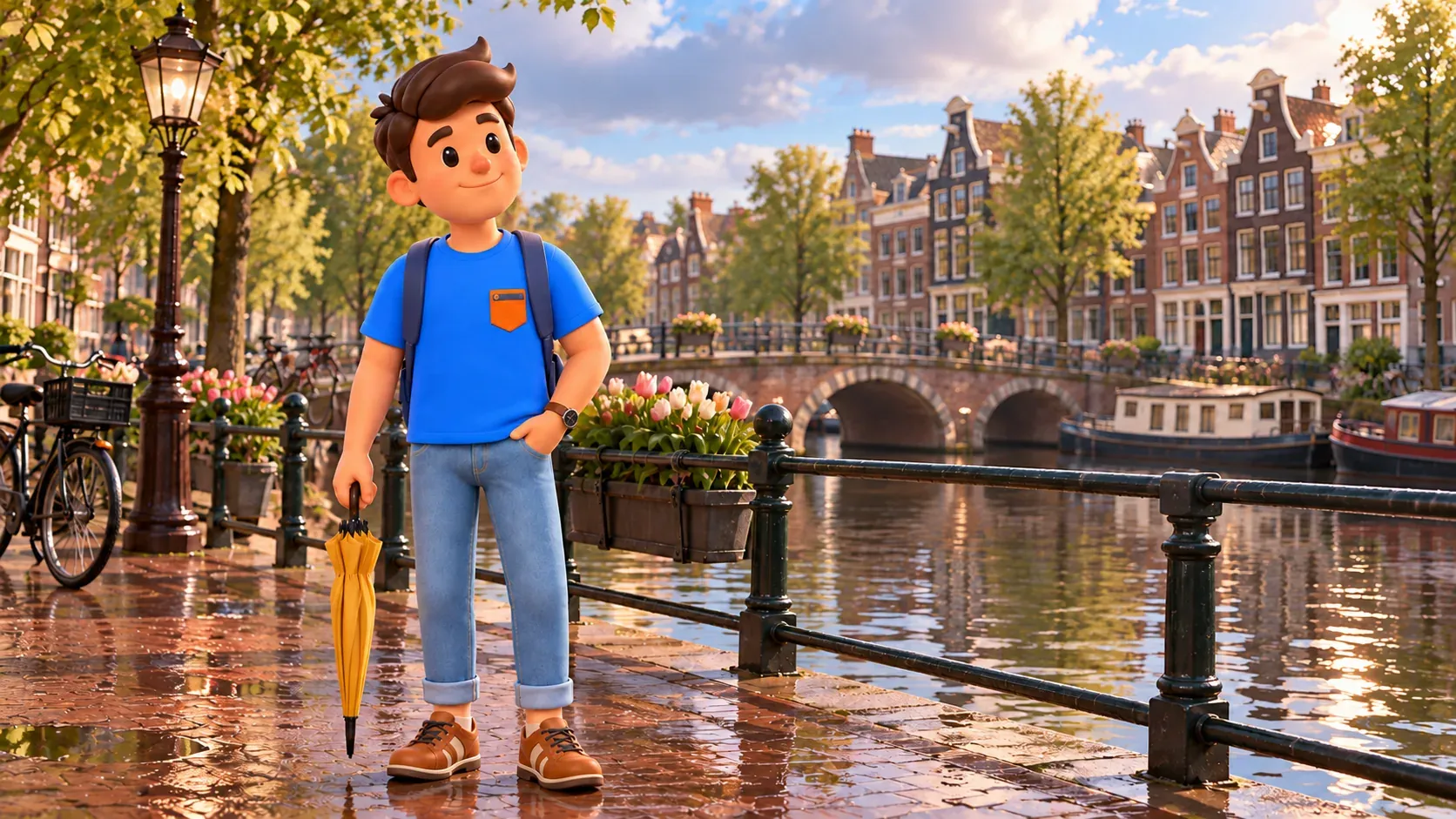
Near Westerkerk, leave the main canal walk and continue into Jordaan. The church, its tower and the nearby Anne Frank House are exterior reference points here, not promised indoor visits. If you have already secured an Anne Frank House visit, allocate its actual time within the afternoon and shorten the wandering instead of adding it on top.
Finish around 16:30 wherever it makes sense for your accommodation. You do not have to walk back to Centraal simply because it was an easy place to start. Keep the evening for dinner, conversation or a short walk without another arrival deadline. Ending before you are exhausted is part of making three days enjoyable.
Day two: art, a park and a former tram depot
09:30–13:30: a museum morning and lunch
The main version uses the Rijksmuseum. Its present building by Pierre Cuypers opened in 1885, and the brick, pale stone and strong rooflines deserve a look before entering. The important practical decision, though, is a suitable ticket with a starting time. Our example uses 09:30; your actual start depends on availability.
The Rijksmuseum publishes daily opening of 09:00–17:00, including holidays. Standard admission requires a starting time, and limited entrance tickets are not a dependable replacement for advance arrangements. Allow about two and a half hours for a selective visit. You cannot examine the whole collection in that period, so choose the subjects you want to prioritise.
You can choose the Van Gogh Museum instead. Ordinary tickets are sold online with a starting time; check its opening for your specific date separately. The two museums do not share an automatic timetable. Trying to fit both into one morning changes the pace substantially, while a park can make a welcome change after concentrated viewing.
From noon to around 13:30, leave room for Museumplein and lunch nearby. Sit down, talk about the collection and give your eyes and feet a different task. The afternoon heads west, so returning to Dam Square just to eat would break the day's flow. A simple meal nearby keeps the route together.
13:30–16:30: Vondelpark and Foodhallen
Head towards the eastern part of Vondelpark through the Hobbemastraat and Vossiusstraat area. Allow roughly ninety minutes for the approach and an unhurried section of the park. Opened in 1865, it introduces another form of city leisure after the museum. You do not need to reach the far end; a short walk and a waterside pause are enough.

For Foodhallen, work towards the Kattenlaan exit, then the Overtoom, Ten Katestraat and Kinkerstraat area. Allow about half an hour for the urban walk from the north side of the park, checking the appropriate pedestrian route locally. These are ordinary streets rather than a continuation of the park paths, so treat the transfer as a change of neighbourhood.
Foodhallen is within De Hallen, a former tram depot. Food from different cuisines under one roof makes it a useful place to finish with people who want different things. You may be able to share a communal table if seats are available. This is not a promise of the cheapest dinner or an exclusively Dutch menu.
The venue's current regular hours are daily, 12:00–23:00, with closure on 25 December. On Christmas Eve and 31 December it closes earlier, at 20:00. Our afternoon stop fits those earlier evenings, but check holiday exceptions and occasional events for your date. Available seating is not guaranteed, so keep the final meal flexible.
Day three: cross the IJ for NDSM and STRAAT
10:00–12:00: the ferry and former shipyard
Go to the IJ side of Centraal. You want the direct F4 ferry to NDSM, which is free for pedestrians. Do not confuse it with F3 to Buiksloterweg or F7 from Pontsteiger. Check the destination before boarding and look up current departures. The crossing itself takes less than fifteen minutes; waiting and walking need additional time.
Allow around an hour for the transfer as a whole, then explore the public shipyard grounds before the museum. NDSM has a history of shipbuilding and repair, later followed by studios, cultural spaces and public art. The scale of the sheds and open ground immediately contrasts with the tightly packed streets of the old centre.
Access to the site does not mean access to every shed, studio or hotel. Do not build the visit around an open door you happen to find. Events can change the setting, and IJ-Hallen should not be treated as an everyday flea market. The public wharf and one chosen museum are enough to give this day a clear focus.
12:00–14:30: STRAAT and lunch
STRAAT is devoted to street art and graffiti in an industrial space at the former shipyard. Large works encourage a different way of looking from a conventional gallery: your distance from the art and the volume around it matter. After the previous day's classical museum setting, the change of scale gives the trip another visual language.
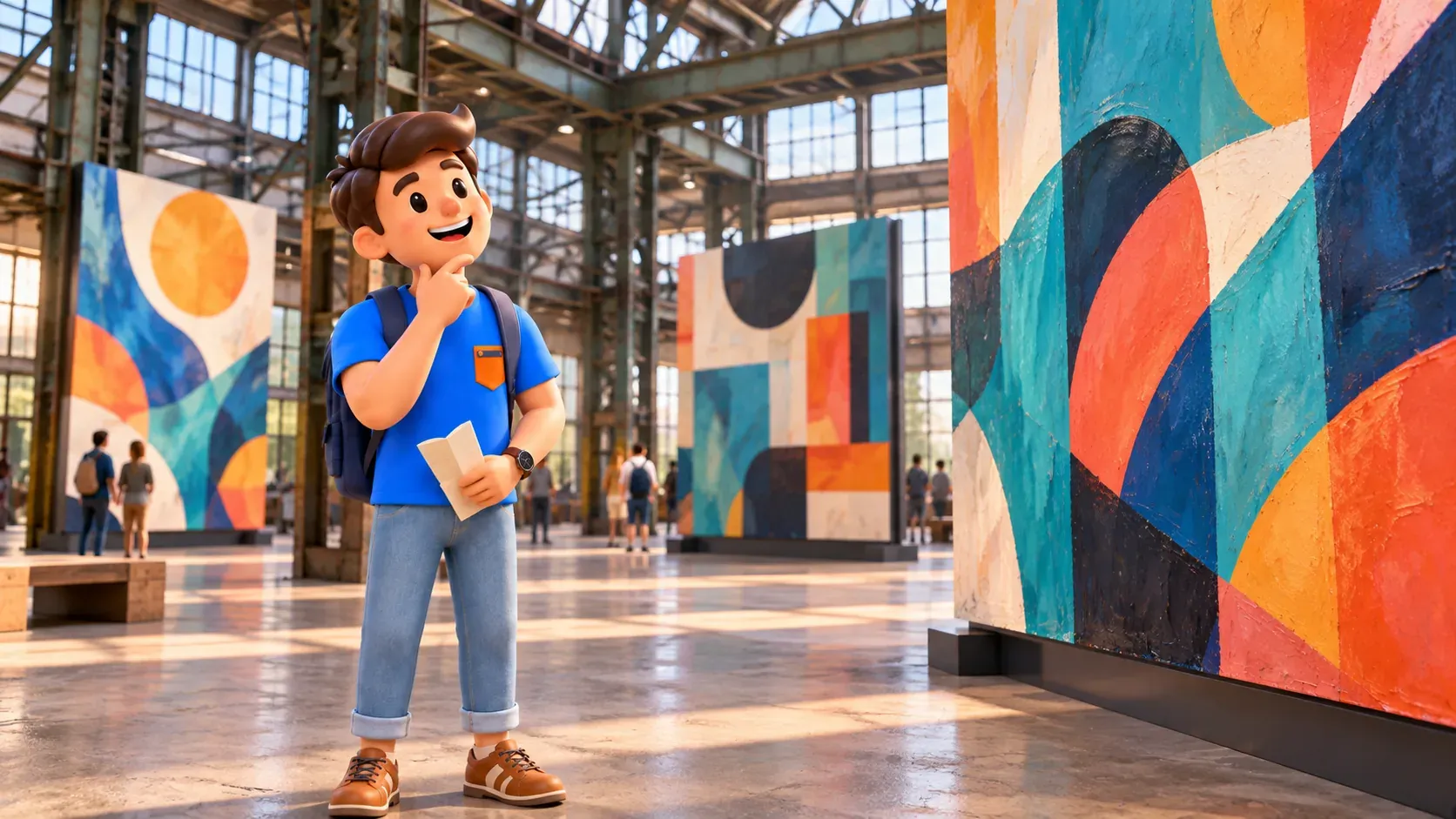
Allow about ninety minutes from noon. On a regular Monday, STRAAT opens at 12:00; on other regular days it opens at 10:00. On 25 and 26 December 2026, opening is also at noon. Advance tickets are recommended, and date-specific exceptions need checking. At the time of review, announced closures include 27 October and 5 November 2026, and 1 January 2027. Do not place this museum visit on those dates.
The industrial exhibition hall is not fully temperature controlled. It can be chilly in winter and warm in summer, so it is not a guaranteed warm refuge in every kind of weather. Afterwards, take roughly an hour for lunch, around 13:30–14:30, before deciding how much more time you want outside by the water.
RoadMe can work out a complete personal trip plan if you want more contemporary art, longer pauses or a different balance of neighbourhoods. Instead of assembling dozens of separate notes, try an itinerary the app prepares around your interests and usual pace.
Afternoon: a flexible finish and the return crossing
Keep about an hour for NDSM's public spaces, then return to Centraal on F4. Allow for waiting rather than reaching the landing just before a train departure. If the ferry service changes, check the current options with GVB; another crossing does not automatically deliver you to the same place.
If you leave that evening, you can move the northern day earlier in the trip. Save the central area or a shorter walk for the final day, with luggage collection and airport travel outside the sightseeing timetable. In strong wind or rain, reduce the exposed outdoor sections rather than forcing a whole day outside.
This plan has not been assessed as a step-free route: check bridges, surfaces, entrances and ferry boarding against your own needs. Its purpose is to help you choose connected days. Amsterdam can then remain in your memory through the differences between canals, museums, parkland, food spaces and a former industrial waterfront.


